
- The intricacies of preparing Georgian-style eggplant for the winter
- How to choose and prepare "blue"
- The best recipes for cooking Georgian-style eggplant
- Pickled
- With hot sauce
- Sliced into circles
- Baked
- With tomatoes
- With bell pepper
- Georgian-style fried eggplant stew
- Stuffed eggplant rolls with nuts and cilantro
- In a multicooker
- Without sterilization
- Storage conditions for canned food
It's nice to serve a delicious dish reminiscent of summer in the bitter cold of winter, especially if it looks beautiful and exudes a piquant aroma. This article explores a variety of Georgian-style eggplant recipes for the winter, making it a unique and delicious appetizer for any meal.
The intricacies of preparing Georgian-style eggplant for the winter
Eggplants prepared according to the recipe for a traditional Georgian dish have a rich and piquant flavor. However, different cooks using the same recipe don't always produce the same result. Choosing the right recipe and meticulously maintaining the correct proportions of ingredients isn't enough.
To ensure that your dish looks attractive and has a refined taste, it is important to consider a few subtleties:
- Eggplants can be preserved in two ways: whole or sliced. For the former, use small eggs that fit comfortably in the jar. If you plan to slice blue ones, choose medium-sized, firm, and not overripe ones.
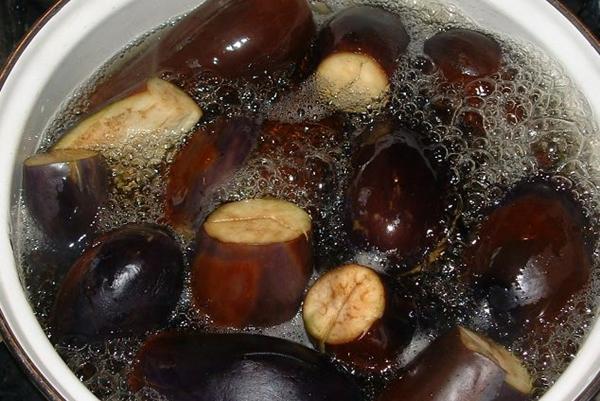
- Due to the presence of a harmful component—corned beef—it is necessary to remove it by soaking the fruit in a saline solution (30 grams of salt per three liters of liquid). The "blue" fruits are soaked in the solution for about twenty minutes, then rinsed under running water to remove excess salt.
- After the above procedure, dry the vegetables with napkins, otherwise the pulp will be too watery;
- frying the "blue ones" gives them an appetizing appearance and improves their taste, helping them to retain their shape;
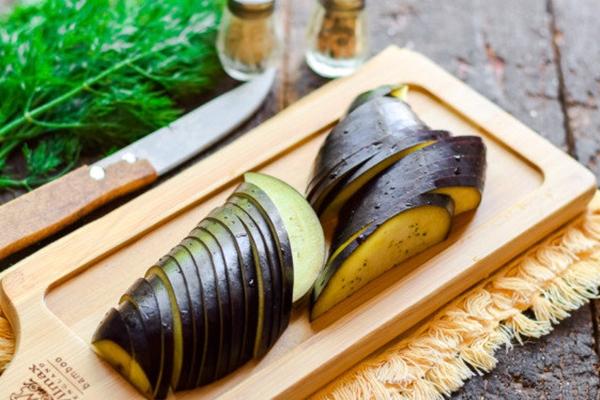
- Don't peel the eggplants to preserve the integrity of the individual pieces. The slices should be medium-thick to ensure a more appetizing appearance and to avoid loss of integrity.
- Georgian-style eggplants need to be sterilized. At home, a regular large saucepan will do the job. Line the bottom with a cloth to prevent damage to the jars during heating. Select jars of similar size, place them tightly in the saucepan, and fill with cold water up to the shoulders. Place the saucepan over low heat, and as the water heats, the contents of the jars are heated. The sterilization time is measured from the moment the water begins to boil.
- Before filling, jars with lids must undergo additional sterilization. Lids intended for sealing are first boiled.

By following these recommendations, you will be able to ensure that your dish tastes good and looks attractive.
How to choose and prepare "blue"
When choosing eggplants, you need to pay attention to the following points:
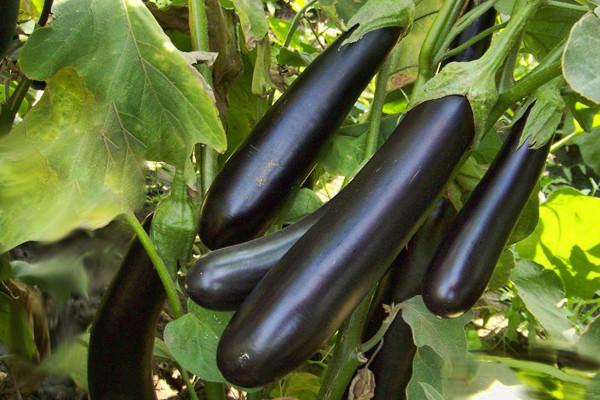
- appearance – fruits are medium-sized, firm, with shiny, intact skin;
- Ripeness – not overripe, to exclude fruits with high salt content and hard seeds. Ripeness is determined by pressing with a finger: if this pressure leaves an indentation, the vegetable is overripe and should not be purchased; young eggplants quickly regain their shape;
- The pulp is uniform, without voids or veins. "Blue" fruits with dark seeds and an unpleasant odor are unsuitable for processing. Test method: after cutting, the fruit should retain its original color for thirty seconds;
- freshness: if the stalk is green, the fruit was recently picked; a brown, dry stalk and similar spots on the skin indicate that the product has been stale;
- size - too large "blue" ones are grown in conditions of excessive fertilization, they are not useful.
Preparation of eggplants includes the following procedures:
- cut off the part of the fruit adjacent to the stalk - this is where the highest concentration of nitrates is found;
- wash thoroughly under running water;
- remove the corned beef by soaking it in a brine solution (as noted above);
- Rinse, removing excess salt, let drain and dry with a towel.
After preparing the vegetables and containers, the main preservation process begins.
The best recipes for cooking Georgian-style eggplant
Recipes used by Russian cooks vary slightly from the traditional Georgian dish. This is due to the adaptation of the recipe to the crops grown in the Russian climate. However, the basic principle remains the same. Below are some of the most common recipes for preparing Georgian-style eggplant.
Pickled
Pickled eggplants Georgian recipes have a refined flavor. They're easy to prepare, but the process is time-consuming. The fermentation process takes a full week.
The fruits are cut lengthwise into three-quarters, and the stems are removed. The vegetables are placed in a container of salted boiling water and boiled for about five minutes, then placed under pressure for one hour.
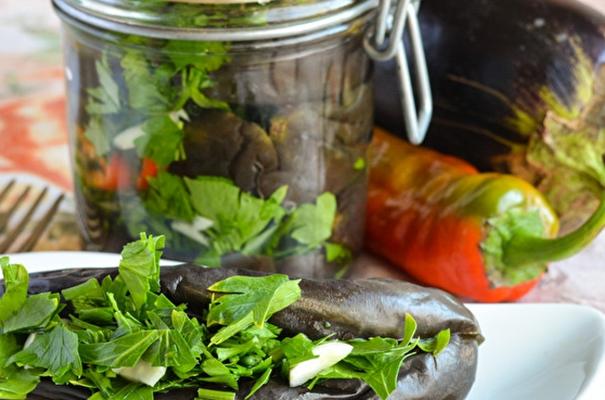
During the specified time, prepare the filling: long, grated Korean-style carrots are mixed with crushed garlic, finely chopped herbs, ground pepper is added, and the ingredients are thoroughly mixed.
The filling is placed inside the slit, the vegetables are tightly packed in an enamel or glass container, and the brine is poured over them. For the brine, boil water, add salt, sugar, and vinegar, and simmer for five minutes.

The container with the infused eggplants is tightly covered with a lid. Fermentation takes four days at room temperature, plus three days in the refrigerator.
With hot sauce
To prepare this savory dish, the prepared eggplants are sliced into rings and fried on both sides. Meanwhile, prepare the hot sauce: remove the stems and seeds from the sweet and hot peppers and mince them. Peel and mince the garlic in the same manner. Season the mixture with salt, oil, and vinegar, and mix thoroughly.
Fried eggplant pieces are dipped in sauce on both sides and placed in jars, which are then lowered into a saucepan to sterilize. Boil for fifteen minutes. The jars are removed and sealed.
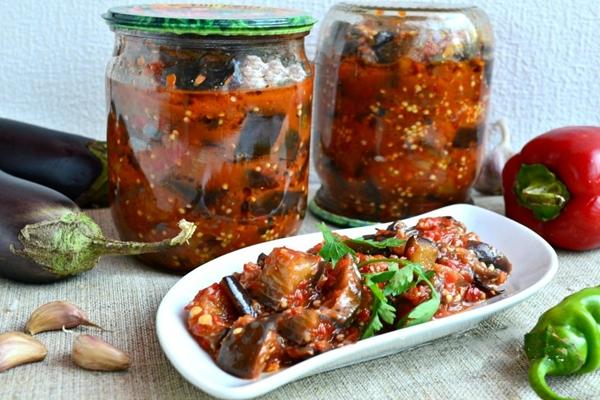
Sliced into circles
To prepare Georgian-style eggplant slices, you will need to prepare the following ingredients:
- several onions;
- tomatoes – three hundred and fifty grams;
- eggplants – one kilogram;
- parsley, celery, cilantro - to taste;
- garlic - one glass of crushed;
- hot pepper – two or three pieces;
- cloves - five pieces;
- bay leaf – three pieces;
- peppercorns (hot and allspice) – half a teaspoon;
- salt – eighteen grams;
- sugar – fifteen grams;
- vinegar (nine percent) – thirty milliliters;
- Sunflower oil for frying – one hundred and fifty grams.
The eggplants are sliced and fried on both sides. The onions are also fried. The tomatoes, peppers, and garlic are minced and added to the onions, mixed thoroughly, and the herbs and spices are added.
Place all the prepared ingredients in a large enamel saucepan. The contents are placed in jars, sterilized, and sealed.
Baked
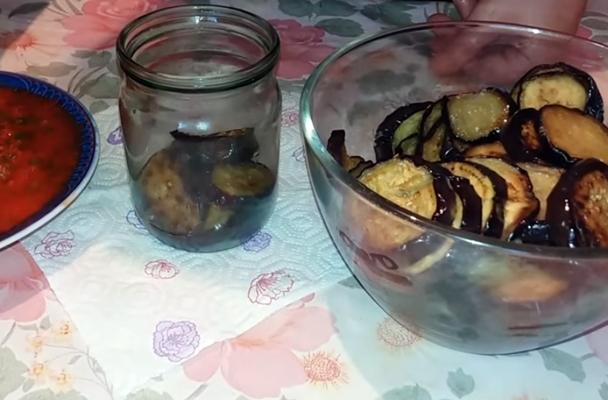
A wonderful appetizer is baked Georgian-style eggplant. The "blue" ones are baked with the skin on, then peeled and mixed with ground nuts and garlic. Olive oil, wine vinegar, salt, and khmeli-suneli are added. The dish is refrigerated for 24 hours.
With tomatoes
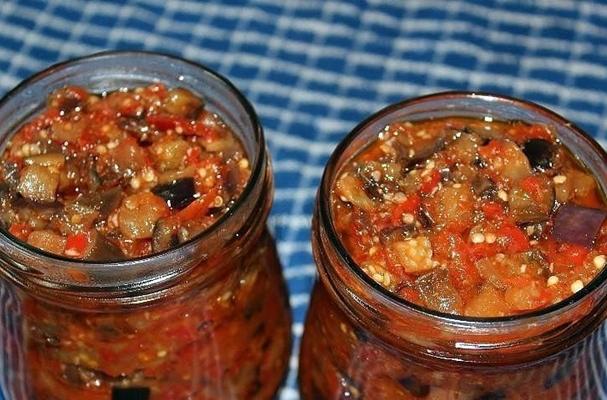
Another cooking option is tomato sauce. "Blue" ones are prepared the traditional way: tomato juice is made with ground sweet and hot peppers, garlic, and spices. The boiling sauce is then poured into jars containing fried eggplants. Sterilization is not required.
With bell pepper
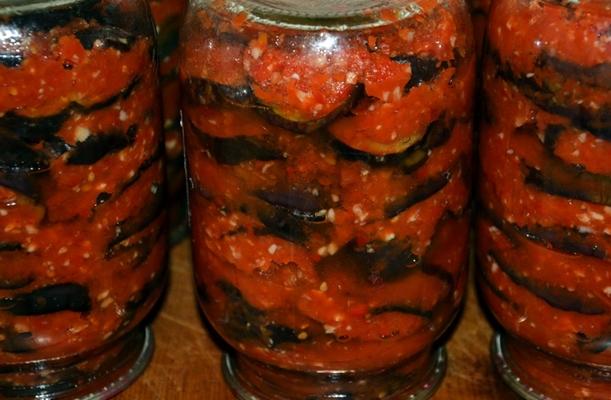
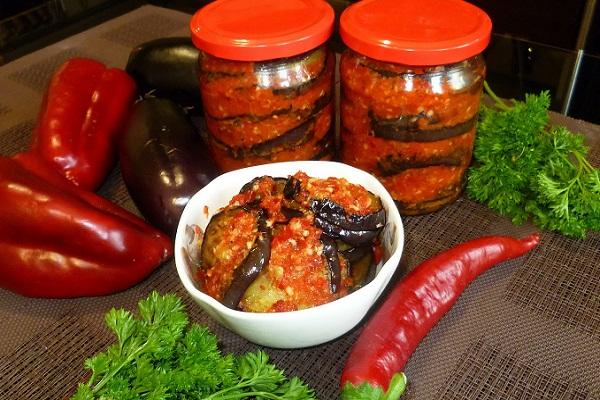
For this dish, for one kilogram of eggplant, you'll need five hundred grams of sweet bell pepper, a couple of onions, a head of garlic, a large bunch of cilantro, a red pepper, and half a teaspoon of utskho-suneli. The sliced "blue" peppers are fried.
The peppers are sliced into rings and fried in the same way as the eggplants. A dressing is prepared from onions, garlic, spices, and vinegar and added to the vegetables. The dish is marinated for twelve hours, then placed in jars, sterilized, and sealed.
Georgian-style fried eggplant stew
For the stew called ajapsandali, you will need one eggplant, three tomatoes, two bell peppers, three chili peppers, two potatoes, an onion, half a head of garlic, cilantro, basil, half a teaspoon of hops-suneli and paprika, and salt to taste.
The dish is cooked on the grill. The vegetables are fried separately, then placed in a pot and simmered with tomato until tender.
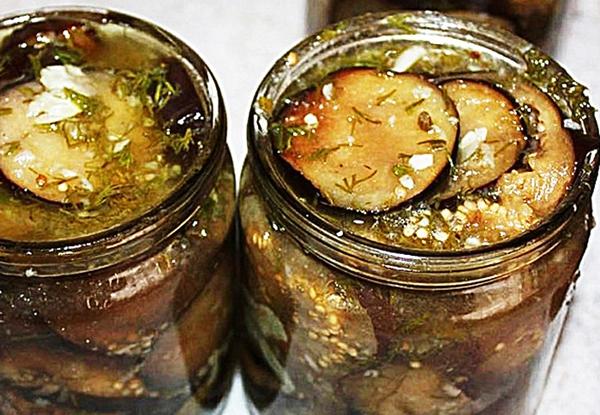
Stuffed eggplant rolls with nuts and cilantro
The blue ones are sliced, and a filling of onions, garlic, and nuts is prepared, minced. The cilantro is chopped, and the ingredients are blended until smooth, adding salt, spices, and vinegar. The fried and cooled eggplants are spread with the filling and rolled into rolls. The dish is refrigerated.
In a multicooker
The "Fry," "Bake," and "Stewing" modes allow you to cook "blue" vegetables with proper and thorough cooking. Vegetables are fried in small batches individually, then combined, seasoned, and simmered with the sauce.
Without sterilization
Any of the above methods can be performed without sterilization. To do this, pour boiling sauce over the dish. The preservation of the product is ensured by adding natural preservatives – wine vinegar and salt.
Storage conditions for canned food
The product is stored in a cool place. The shelf life is up to eighteen months. Unheated dishes are placed in the refrigerator, where they will keep for about one month. Pickled "blue" mushrooms can be stored for up to a year in a cool place (cellar).
As you can see from the material presented, this delicious appetizer is easy to prepare at home and serves as a wonderful addition to the table on weekdays and holidays.
Related posts:
 80 Best Eggplant Varieties for Different Regions with Descriptions and Characteristics
 How to quickly prepare pickled eggplant in jars for the winter, the most delicious recipes and storage conditions for the preparations
 26 Best Recipes for Delicious Eggplant for the Winter
 27 of the most delicious eggplant appetizer recipes for the winter
 18 of the best step-by-step recipes for cooking eggplant with tomatoes for the winter
 14 quick recipes for marinated eggplant with garlic and herbs for the winter
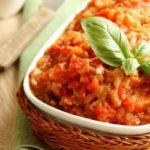 Making finger-licking good eggplant caviar with peppers and tomatoes
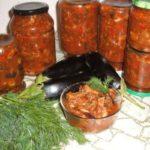 The best eggplant lecho recipes for the winter, with and without sterilization.