
- Beneficial properties and harm
- Prepare the main ingredient
- Options for preparing horseradish for the winter
- The classic method of canning
- Without sterilization in a jar
- Recipe with beets
- Lime and Sea Salt Preserve
- Canning with garlic and tomatoes
- With vinegar
- Appetizer with carrots and apples
- With mayonnaise
- Marinated
- Freezing of roots
- Drying
- How to preserve horseradish
This traditional Russian seasoning for meat and fish dishes has retained its popularity, despite competition from mustard. Horseradish is typically served fresh, when it has its full range of aroma and spiciness. Preserving horseradish for the winter, using numerous recipes, allows you to prepare your favorite dishes no matter the season. Canned horseradish retains its culinary qualities.
Beneficial properties and harm
The leaves and roots are used in canning. The plant is recognized by its distinctive, pungent odor and sharp taste. The source of this strong aroma and pungent flavor is the essential oil found in all parts of the horseradish plant. The volatile component is allyl mustard oil, which has a pungent odor and causes a burn when it comes into contact with the skin.
Fresh root juice contains vitamins:
- WITH;
- B1;
- B2;
- provitamin of vitamin A.
The rhizome is rich in starch, carbohydrates, fatty acids, and minerals:
- potassium;
- calcium;
- iron;
- magnesium;
- copper;
- phosphorus.
The presence of lysozyme, a natural probiotic, in the underground part makes the plant medicinal.
Vitamin C, carotene, and alkaloids were found in the leaves.
Its most famous use is as a pungent condiment, rivaling mustard. The grated and chopped root is used as a spice and in sauces. The leaves are used in pickling, marinating, and fermenting.

Eating horseradish-based dishes helps stimulate appetite and promotes digestion. This spicy spice will alleviate a sore throat, increase bile flow, and eliminate pathogenic flora in the stomach and intestines.
However, if you have chronic gastrointestinal, kidney, or liver diseases, consuming this spice will worsen the condition. Mustard oil in large quantities can cause burns to the mucous membranes of the throat, esophagus, and stomach. Horseradish in any form is contraindicated for children under eight years of age, pregnant and breastfeeding women, and during menstruation.
Prepare the main ingredient
When choosing a root, you need to pay attention to the following points:
- The spine thickness should be at least 1 centimeter.
- Colour: light, dark brown.
- When the shell is broken, a horseradish aroma should appear.
- The length of the root is 25-30 centimeters.
- White flesh when cut.
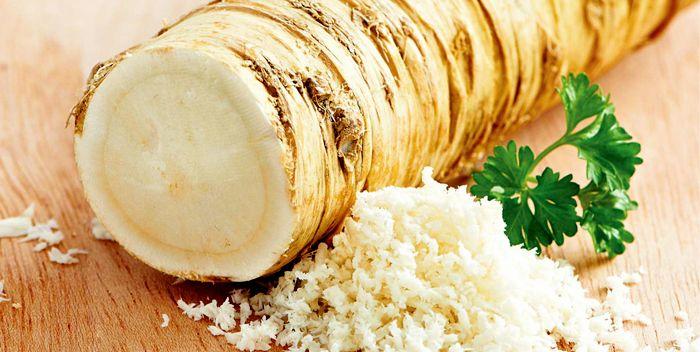
The rhizome should be fleshy, dry, firm, clean, and free of mold and mildew. The essential oil evaporates quickly, leaving only a bitter taste. When using the plant's root in preserves, its distinctive aroma is preserved by tightly sealing it.
The leaves do not have such a pronounced aroma and have a milder taste.
Roots quickly lose moisture when exposed to air and are difficult to process. Before grinding, they must be placed in a container with fresh, cold water. Before grinding, the rhizomes should be washed under running water and their outer covering removed.
The soaking time depends on the freshness of the horseradish:
- for a period of up to 24 hours, 10-20 minutes is enough;
- for 2-3 days it will take up to an hour;
- for a very dry root - up to 24 hours.

The caustic root is ground for harvesting. This can be done manually (using a grater) or mechanically (using a blender, meat grinder, or food processor). The acrid fumes it produces make processing horseradish unpleasant, especially when using a grater. The essential oils cause watery eyes and irritation of the nasopharynx. The juice can cause a chemical burn on the hands.
Take a look Also

Grinding large quantities of horseradish is not recommended. Protective equipment such as gloves, goggles, and a respirator will be required. The aroma of horseradish will permeate the kitchen, and it will take time to dissipate. When grinding through a meat grinder, place a plastic bag over the outlet to reduce evaporation. Using a blender with a closed bowl minimizes the release of essential oil into the air.
After chopping, the prepared horseradish is stored in a glass container with a tight-fitting lid.
All canning ingredients must be mixed with the horseradish quickly. The longer the horseradish sits unopened, the more it will lose its pungency. For the same reason, avoid preserving horseradish in large quantities or containers larger than 500 milliliters. Ideal containers are 50, 100, or 200 milliliters, ensuring the product is used within 2-3 days.
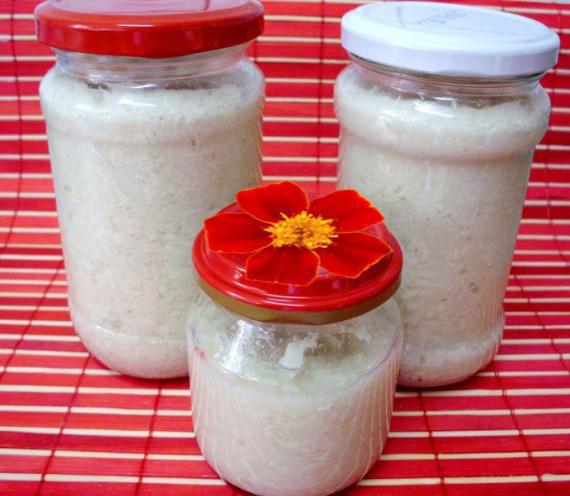
Use only glass containers for storage. The horseradish smell will linger on lids (metal or plastic) and glass, making these containers unusable for other purposes.
Options for preparing horseradish for the winter
Horseradish is classified as "Russian-style," "Polish-style," and "Caucasian-style." In its pure form, without any additives, the Russian horseradish root, even when sealed, loses its spicy, pungent properties after two days. The essential oil evaporates, leaving only a bitter taste. Vinegar distorts the horseradish's flavor, imparting a sour note, but delays its evaporation.
In the Caucasus, beetroot juice is added to create a beautiful, tangy seasoning. Tomatoes and beets are soaked in the juice and retain its golden flavor until the container in which the seasoning or snack is stored is opened.

For long-term storage, chopped or grated horseradish is preserved with vinegar or other flavorings. This makes it suitable for preserved salads and condiments. Preserves can be prepared with or without sterilization. Heat treatment softens the pungent flavor. The root can be dried and frozen. Dried horseradish is used as an additive to spice mixes. Defrosted horseradish can be used to make any dressing or appetizer.
The classic method of canning
To prepare 0.5 kilograms of roots you will need:
- ½ tablespoon each of salt and sugar;
- 3 tablespoons of vinegar 9%;
- 0.1 liters of liquid.
The first step is to prepare the vinegar filling. Add sugar and salt to the water. After boiling for 5 minutes, add the vinegar, bring to a boil, and remove from the heat. Cool to room temperature, covered.
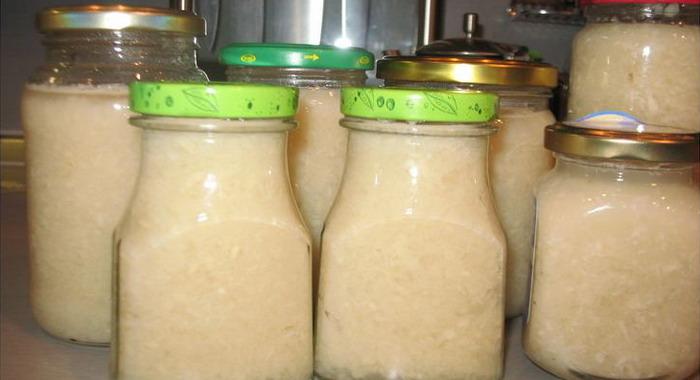
During this time, prepare the root: wash, peel, and chop it using a convenient method. Mix with the marinade, place in a container, and store in the refrigerator.
Without sterilization in a jar
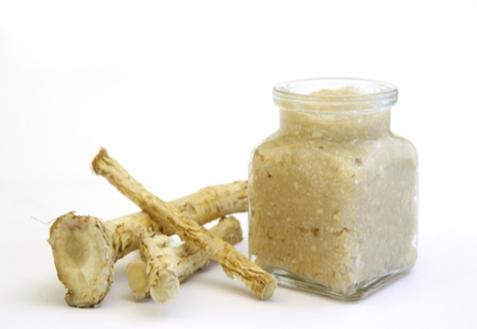
A seasoning prepared using the hot packaging method preserves the flavor and aroma of horseradish. Half a kilogram of chopped horseradish is mixed with a tablespoon of salt and 1.5 tablespoons of sugar. Place the mixture in a sterile container and add 10 grams of lemon juice. Pour boiling water over the prepared mixture, using a ratio of 250 milliliters per volume. Seal the jars with lids and cover with a warm cloth until cool.
Recipe with beets
The root can be mixed with beetroot juice or boiled beets:
- Beetroot juice can be made using a juicer or blender, after which the chopped beets are squeezed through cheesecloth. The finished juice is placed in the refrigerator for 2 hours to settle and remove foam.
Add a tablespoon of sugar and ½ tablespoon of salt to a glass of juice and boil for 3-4 minutes. Add a teaspoon of vinegar essence to the cooled solution. Add grated horseradish. Stir. Divide among jars.
Take a look Also

- Boil 4 medium beets and grate them coarsely. Use 2 beets for the dressing. Mix the beets, horseradish, salt, sugar, and vinegar (additional ingredients – 15 grams each). Mix well and sterilize for 5 minutes from the moment it boils. The initial sterilizer temperature is 40 degrees Celsius.

In the first recipe, beetroot horseradish is used as a seasoning, in the second – as an appetizer.
Lime and Sea Salt Preserve
The combination of horseradish and lemon adds a piquant flavor to sauces and salads. Lime zest is used. Sea salt contains iodine, making this seasoning useful for those with iodine deficiency.
Preparation:
- the zest of 1 lime is rubbed through a fine grater;
- mix in equal proportions zest, sea salt, ground black pepper (a tablespoon each);
- bring 400 milliliters of water to a boil;
- add a mixture of zest, salt and pepper;
- cook for 5 minutes;
- pour in a tablespoon of vinegar;
- boil;
- add horseradish (500 grams);
- package;
- sterilize.
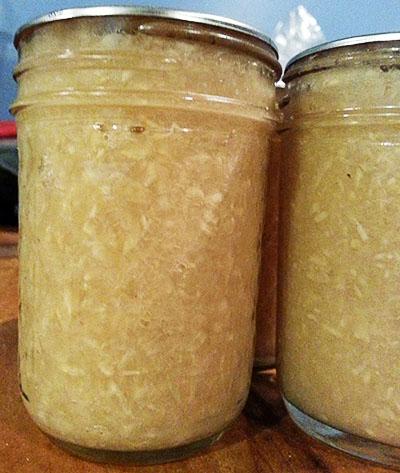
Heat treatment time: 0.5 liters – 5 minutes, 1.0 liters – 7 minutes.
Canning with garlic and tomatoes
The ratio of garlic and tomatoes to horseradish can be changed to suit your taste.
More tomatoes will make the seasoning less spicy; garlic will balance out the horseradish's spiciness.
Horseradish appetizer proportions (classic method):
- prepared root – 500 grams;
- ripe, thin-skinned tomatoes – 500 grams;
- garlic – 1 head;
- salt – ½ teaspoon;
- sugar – ½ teaspoon.
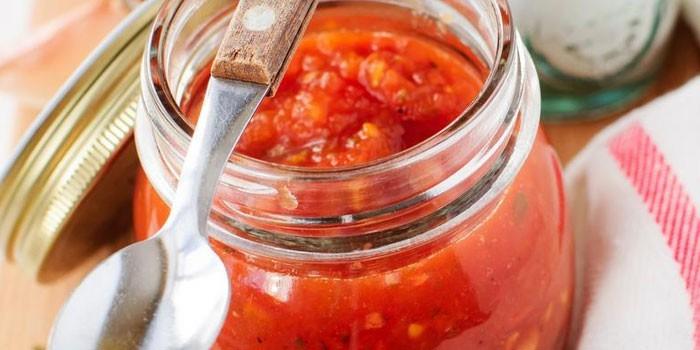
Preparation: Grate the tomatoes on a coarse grater; finely grate the garlic cloves. Mix all ingredients in a bowl, pack into jars, and store in the refrigerator.
With vinegar
Preserving the root with vinegar allows you to use it fresh in the fall and winter. It can be used as an additive to sauces for meat and fish dishes; for a piquant flavor, it can be prepared with sour cream.
Ratio of ingredients:
- 200 grams of grated horseradish;
- 1 tablespoon of vinegar 9%;
- 1 tablespoon of boiled water at room temperature;
- ½ teaspoon salt;
- ½ teaspoon sugar.

The prepared mixture is transferred into a jar, tightly closed, and placed in the refrigerator.
Appetizer with carrots and apples
To prepare this appetizer, you'll need half a kilogram of sweet and sour apples, preferably Antonovka. The fruit should have firm, juicy flesh. The amount of carrots depends on their size: two medium or one large, at least 200 grams. Peel and core the apples, and grate them on a coarse grater. If you preserve the fruit after blending it, you'll end up with a mush. Peel the carrots and grate them on a coarse grater. For added spiciness and flavor, a small portion of the chopped root (4-5 centimeters) is sufficient.
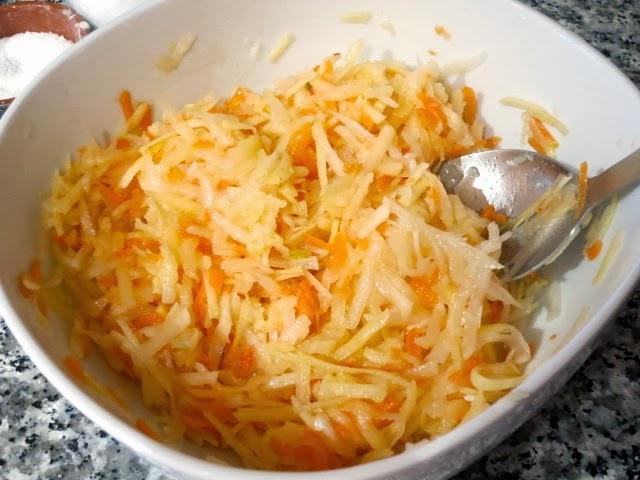
Add salt and sugar to taste. Store the jars of this vitamin-rich snack on the top shelf of the refrigerator for up to 2 months.
With mayonnaise
Mayonnaise contains vinegar or citric acid, which allows it to be used to preserve horseradish. For long-term storage, a 1:1 ratio of horseradish to mayonnaise is recommended. Sweet or dietary mayonnaises are not used. Sweet mayonnaises are intended for sandwiches, while dietary mayonnaises contain fruit and berry purees.
Domestic mayonnaises have a fat content of 67%, with Provencal being the most common brand. In addition to vinegar, the sauce contains vegetable oil, sugar, and salt. No additional ingredients are required when mixing mayonnaise and horseradish. Store the mixture in the refrigerator.


Marinated
To pickle horseradish, you'll need vinegar, sugar, salt, cloves, allspice, and hot pepper. For 0.5 kilograms of horseradish, blended or ground, you'll need:
- 60 milliliters;
- ½ tablespoon each;
- 2-4 pieces of each.

Add all ingredients except vinegar to a glass of water and simmer for 10 minutes. Add vinegar and bring to a boil. Divide the horseradish among jars, pour boiling marinade over them, and sterilize. Marinate for 15 minutes.
Freezing of roots
Roots can be frozen whole or pureed. In both cases, the rhizomes, after peeling and washing, are soaked in cold water for several hours.
Freezing methods:
- The roots are dried with paper towels and cut into pieces up to 3 centimeters long. Each piece is sealed in an airtight bag and placed in the freezer.
- The dried roots are grated finely, placed in ice cube trays, and sealed with cling film. Store in the freezer.

Frozen roots don't have such a pungent odor when processed. Don't wait until they're completely thawed before using them in seasonings and snacks. Ground parts should be thawed and then added to dishes.
Drying
The rhizomes will need to be dried into coarse shavings. The grated root is spread on a sheet and placed in an oven preheated to 70 degrees Celsius (165 degrees Fahrenheit). The oven door should be slightly ajar to improve ventilation. The dried shavings should be brittle and free of moisture.
Dried horseradish is ground in a coffee grinder to a powder. Store in a glass container. It is used to preserve vegetables and salads for the winter, giving them a sharp and crisp texture. Its bactericidal properties prevent the brine from becoming cloudy.

How to preserve horseradish
Fresh roots are stored until spring in a layer of sand, kept constantly moist, in a cool, shaded area. The temperature should be maintained between 0°C and 20°C. The rhizomes should not touch each other. The rhizomes should be free of any defects, including mechanical damage, mold, or mildew.
Storage location: basement, insulated balcony. For short-term storage (up to a week), peeled and cut horseradish into pieces (up to 5 centimeters) and store in the refrigerator in sealed plastic bags.
The freezer should be kept at a constant temperature. As long as the temperature remains at -18°C (-64°F), frozen roots will last all winter.
Dried horseradish is placed in a glass container with a tight-fitting lid. Store at room temperature. Unsterilized canned horseradish should be refrigerated. Warmed in a double boiler, it retains its potency at room temperature. Opened jars should be used within 2-3 days, before the essential oil evaporates.
Related posts:
 7 Best Step-by-Step Recipes for Cooking Horseradish-Spiked Cucumbers for the Winter
 TOP 22 delicious recipes for making pickles for the winter at home
 The benefits and harms of ginger for the female body, medicinal properties and contraindications
 The most delicious recipes for raw and cooked homemade adjika with horseradish for the winter, and how to store the prepared ingredients
 The best eggplant varieties for growing in a polycarbonate greenhouse: planting and care
 How to use ginger for weight loss at home
 Simple recipes for pickling milk mushrooms at home using cold and hot methods for the winter, and storage rules
 How to quickly and deliciously pickle squash for the winter, with jarred recipes