
Zucchini is a healthy, tender vegetable that almost every gardener grows in their garden. However, many consumers consider it bland. This is partly true, but that's the beauty of this vegetable—it can be given a variety of flavors by using other ingredients and spices.
One of the most popular dishes among housewives is Georgian-style zucchini for the winter.
How to cook Georgian-style zucchini for the winter
You need to know some nuances to ensure the preparation turns out delicious:
- You can use classic white zucchini or squash. The skin of young zucchini can be left on—it adds a piquant flavor to the dish. With mature zucchini and squash, the skin and seeds should be removed.
- In original Georgian zucchini recipes, they are cut into rings. You can dice or mince them if you prefer, but the whole, round pieces of the vegetable are the hallmark of these dishes.
- If a recipe calls for fried zucchini, don't add salt. Otherwise, the vegetables will release juice, even though they should retain it.
- If, on the contrary, you need to get rid of excess water, it is better to salt the zucchini beforehand or soak it in a salt solution for no more than 10 minutes, and then rinse it under running water.
For winter storage, use 9% vinegar. If you don't plan on storing it for long periods, you can use wine or apple cider vinegar.

How to choose zucchini
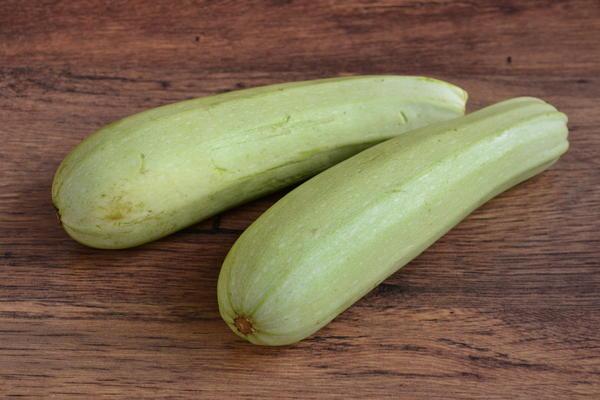
The main ingredient for these Georgian appetizers requires careful consideration. It's best to use a young vegetable with thin, not hardened skin and seeds still present. This rule is especially important for recipes that don't require the zucchini to be chopped.
It is better to put adult specimens with large seeds through a meat grinder or chop finely with a knife.
There's no fundamental requirement to use zucchini or squash in Georgian winter appetizers, so you can choose any vegetable to suit your taste.
Preparing vegetables
Preparing vegetables for Georgian winter appetizers doesn't require much effort. The main ingredients should be thoroughly washed and dried (pat dry with a paper towel or a simple towel). If necessary, peel and seed zucchini, remove stems from tomatoes, peppers, and eggplants (the most commonly used vegetables), remove the seeds from peppers, peel onions and garlic, and rinse and sort the greens.
Take a look Also
Recipes for cooking Georgian-style zucchini
There are many recipes for Georgian-style zucchini. All are distinguished by their spiciness, pungency, and unique aroma. The amount of herbs and spices can be adjusted to suit your taste, making the dish spicier or vice versa.
Spicy Georgian-Style Zucchini "Finger-Lickin' Good"
This is one of the most popular dishes. Most housewives begin their acquaintance with Georgian winter appetizers with "finger-licking good" zucchini.
Ingredients:
- zucchini 1 kg;
- tomatoes 0.3 kg;
- bell pepper 0.3 kg;
- hot pepper 1 pod;
- garlic 1 head;
- onion 1 pc.;
- sunflower oil for frying;
- 9% vinegar 0.03 l;
- hops-suneli 4 tsp;
- salt 3 tsp;
- sugar 3 tsp;
- parsley 1 bunch.
Preparation:
- Cut the prepared young zucchini into rings of equal thickness and fry in a frying pan in hot oil until lightly browned.
- Place the vegetables on a plate lined with paper towels to drain the oil.
- Cut the prepared sweet pepper into pieces.
- It is better to peel and chop the tomatoes, cut the onion into pieces, and chop the hot peppers roughly.
- In a blender, combine all the prepared vegetables except the zucchini, adding the herbs and peeled garlic. Blend until smooth.
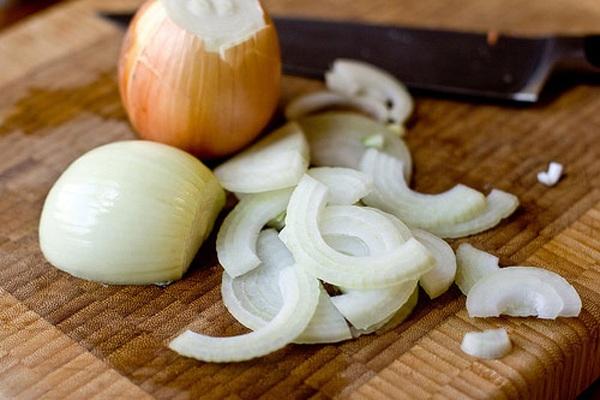
- Next, you need to pour the mixture into a saucepan, add hops-suneli, salt, sugar, stir and put on the fire.
- Simmer under the lid for about 10 minutes.
- A couple of minutes before the end of the process, pour in the vinegar.
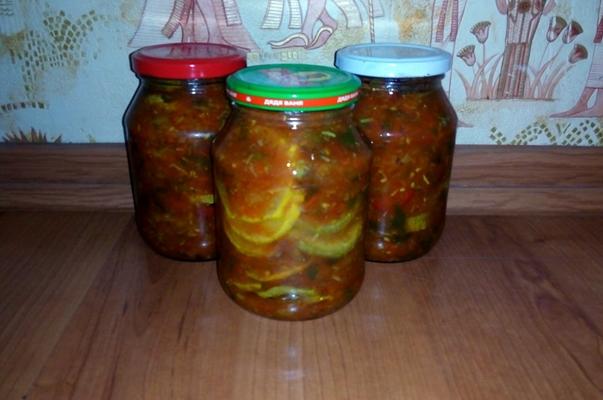
- Now take a sterilized container, arrange the zucchini in 1-2 layers, and pour the resulting mixture on top. Repeat the layers until the jars are completely filled. The final layer should be the dressing.
- Next, seal the jars. Place them on the lids, wrap them, and leave them for 24 hours to cool. Then, they can be moved to a cool place for long-term storage.
Spicy salad "Mother-in-law's tongue"
Ingredients:
- zucchini 3 kg;
- tomatoes 1.5 kg;
- bell pepper 5 pcs.;
- hot red pepper 1 pc.;
- garlic 0.1 kg;
- sunflower oil;
- sugar 1 tbsp.;
- salt 3 tsp;
- vinegar 2 tbsp.
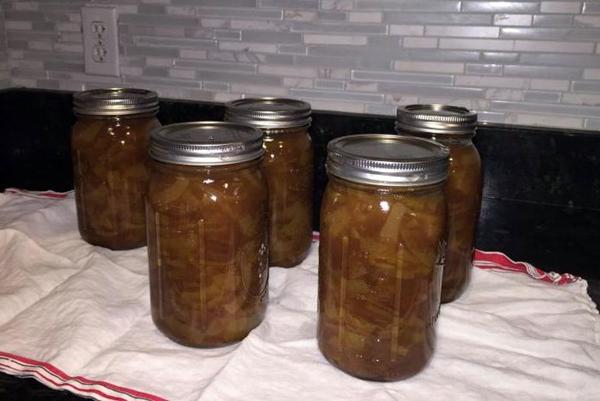
Preparation:
- Cut the prepared tomatoes and peppers (sweet and hot) into pieces and put them through a meat grinder (select a large mesh).
- Pour the resulting substance into a saucepan and place on the fire.
- Cut the zucchini into large pieces. If the vegetable is young and still has seeds, simply rinse and dry it. For more mature zucchini, peel and remove the seeds.

- When the mixture boils, add the zucchini. Add butter, sugar, and salt. Mix everything together and simmer for about half an hour.
- Add crushed garlic and vinegar. Stir. Cook for another 5-7 minutes.
- Divide the snack into sterilized jars. Seal the jars, place them on the lids, and wrap them in a blanket or similar material for 24 hours. Then store them.
Assorted eggplants
Some Georgian appetizer recipes call for eggplant. Eggplant lovers will love this recipe.
Ingredients:
- eggplants 1 kg;
- zucchini 1.25 kg;
- tomatoes 0.4 kg;
- bell pepper 0.4 kg;
- carrots 0.5 kg;
- onion 0.5 kg;
- garlic 0.05 kg;
- dried basil 0.02 kg;
- bay leaf 4-5 pcs.;
- ground black pepper 1 tbsp;
- chili pepper 1 pc.;
- 9% vinegar 1 tbsp;
- salt 1.5 tbsp;
- sunflower oil.
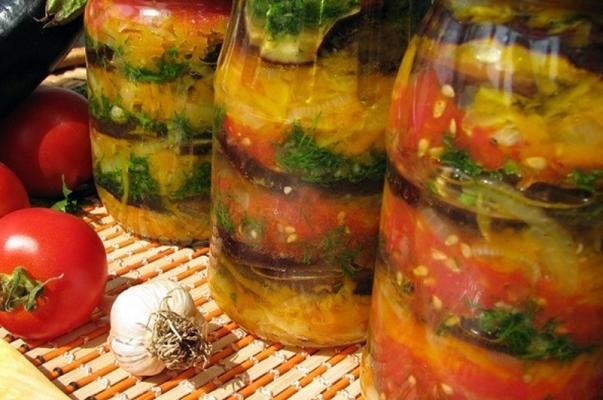
Preparation:
- Cut all vegetables (prepared in advance), except tomatoes and carrots, into cubes.
- Pour boiling water over the tomatoes and peel them, grate the carrots.
- Next (either one at a time or in separate pans at the same time), fry the zucchini and eggplant in hot oil for about 15 minutes. Stir the vegetables frequently. Fry the onion separately, then add the carrots and fry for another 7-10 minutes. Then add the peppers (chili and bell pepper) and cook for another 5 minutes, covered.
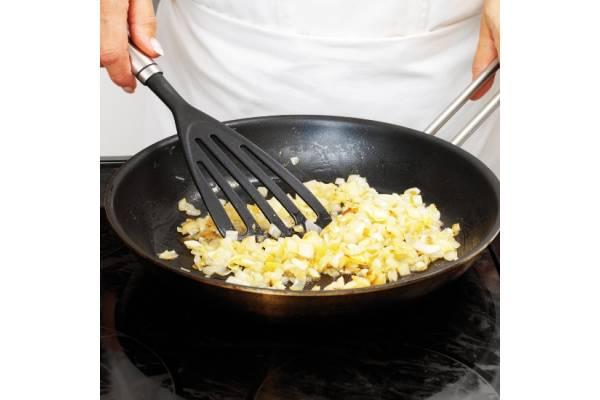
- Next, you need to combine everything that was fried earlier, add tomatoes and cook for another 10 minutes, covered with a lid.
- Then add a little oil, salt, pepper, basil, and bay leaf and simmer for another 20 minutes. A few minutes before the end of the process, pour in the vinegar and crushed garlic.
- Place the finished snack into sterilized jars. Seal the jars, place them on the lids, and wrap them in something warm for 24 hours. Then store.
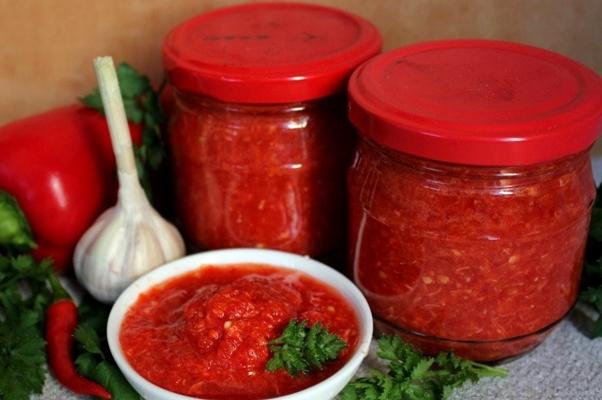
Adjika in Georgian
Georgian adjika will appeal to connoisseurs of Caucasian cuisine.
Ingredients:
- zucchini 0.9 kg;
- tomatoes 0.3 kg;
- pepper 0.25 kg;
- garlic 7 cloves;
- onion 0.12 kg;
- walnuts 0.1 kg;
- vinegar 20 ml;
- cilantro 1 bunch;
- sugar 0.02 kg;
- sunflower oil.

Preparation:
- Grind the prepared vegetables using a meat grinder or blender.
- Add a little oil, salt and sugar and simmer in a saucepan for 30-40 minutes.
- Before removing from heat, add cilantro, chopped garlic, and vinegar. Mix well.
- Divide the finished snack into sterilized jars. Seal the jars, turn them upside down, and wrap them in a blanket for 24 hours. Then store them.
Expiry date of blanks
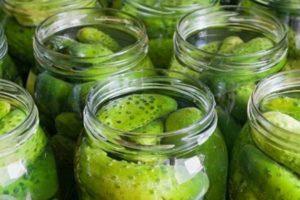
The standard shelf life of canned goods is 24 months. However, homemade preserves are often consumed even after several years. In reality, the shelf life directly depends on the storage conditions and how well the jars were sealed. Snacks without vinegar or in unsterilized containers have a significantly shorter shelf life.
Products sealed with metal lids have a shorter shelf life than those sealed with glass lids.
To avoid missing the expiration date, you need to inspect the jars: swollen lids, mold, or a sour smell are all signs that the product has gone bad and should not be eaten. To avoid wasting a lot of food, it is recommended to prepare for just one season.
Further storage
It's best to store winter preserves in a cool, dry place, protected from light. A basement is ideal for this purpose. If this isn't possible, you can also store them indoors at room temperature. The main requirement is that there are no heating appliances nearby. Some housewives store their preserves on the balcony.
But you need to monitor the temperature: it shouldn't fall below 0 degrees. You can also put the jars in the refrigerator, provided there's enough space.
And the main advice: try to preserve enough food for the winter to last until summer. Avoid preserving food for five years in advance to avoid problems.
Related posts:
 How to cook fried zucchini with garlic for the winter, finger-licking good recipes and without sterilization
 Amazing recipes for zucchini in tomato sauce for the winter, you'll lick your fingers, with and without sterilization
 TOP 20 simple recipes for pickled zucchini for the winter
 TOP 40 New Year's 2020 Meat Recipes Using Pork, Beef, Chicken, and Lamb
 TOP 13 delicious recipes for spicy zucchini for the winter
 TOP 40 Hot Dish Recipes for New Year 2020: What to Cook
 11 Best Recipes for Pickling Zucchini with Garlic for the Winter
 21 step-by-step recipes for making zucchini jam for the winter