
- The benefits of harvesting tomatoes in wedges
- What varieties are suitable for canning?
- Preparing vegetables and containers
- Delicious recipes for winter preparations
- Classic cooking method
- Spicy green tomatoes in slices for the winter
- Marinated with citric acid
- The original recipe for tomatoes in red wine
- With spices without sterilization
- With herbs and hot peppers without sterilization
- Garlic halves
- Finger-licking good gelatin recipe
- With carrots and horseradish
- Spicy appetizer with chili pepper
- Pickling chopped tomatoes
- Duration and storage conditions
Pickles always help make the table rich. Not everyone preserves tomatoes in slices for the winter. But this recipe has its own unique charm. Adding your favorite spices to the brine makes for a delicious appetizer. This can be used to preserve large tomatoes that aren't suitable for whole pickling. You can also make salads with various vegetables.
The benefits of harvesting tomatoes in wedges
A homemaker might not always have tomatoes in her garden that can be pickled whole. There are large varieties that won't be pickled, and these are the ones best used for pickling. Sliced tomatoes offer the following advantages:
- portioning;
- pickling any tomato;
- better salting;
- the taste is more intense;
- The tomatoes are tender.
This preparation will appeal to those who prefer tender, rather than crunchy, tomatoes.
If you add a few other vegetables, the flavor will be rich and piquant, since all the vegetables will saturate the tomatoes with their juices.

What varieties are suitable for canning?
Almost any variety can be used for this type of preparation. Those that can't be pickled whole are used. It's generally suitable for larger tomato varieties:
- Grandma's secret;
- Bull's heart;
- King of Kings;
- Delicious;
- Alsou;
- Openwork F1;
- Gull.
You can use other varieties, but small ones aren't suitable, as they might simply fall apart. Also, avoid ones that are too juicy, as they'll quickly lose their shape.
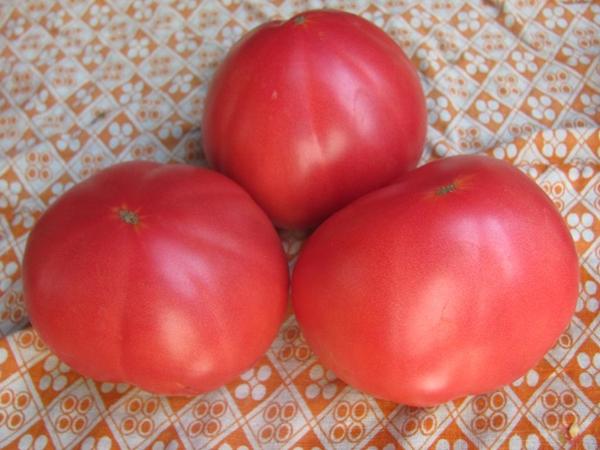
Preparing vegetables and containers
Before you begin canning, gather all the vegetables and herbs and wash them. It's best to pour boiling water over the herbs and let them dry on a clean counter or cheesecloth. All vegetables should be free of any damage, mold, or bruises. You also need to pay attention to ripeness; they should be edible, but not overripe or withered.
The jars need to be sterilized. This can be done by heating them in a microwave or oven. A special cover with a hole cut into the jar neck is also placed on the saucepan, and the cover is sterilized using steam. The lids are boiled separately in the saucepan for about 10 minutes.
Delicious recipes for winter preparations
The recipe is all about choosing the right ingredients and preparing them. You can add peppers for a sweet and spicy flavor.
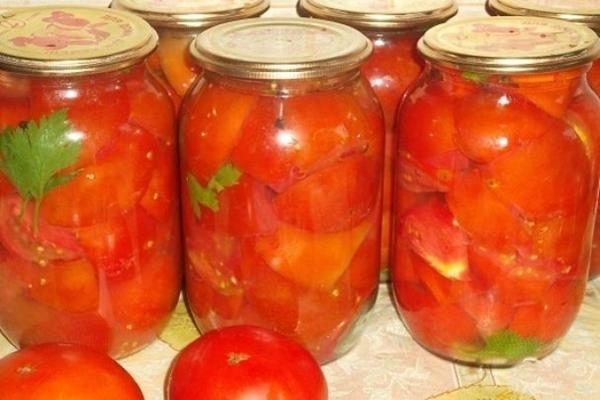
Classic cooking method
All ingredients are calculated individually for a specific container. You will need:
- tomatoes;
- garlic;
- bay leaf;
- black peppercorns;
- green;
- vinegar;
- salt and sugar.
Place garlic and herbs on the bottom, followed by tomatoes and black peppercorns. Pack the cloves tightly. Pour boiling water into the jar, let it steep for 10 minutes, and strain into a saucepan. Bring the marinade to a boil, adding sugar, salt, and vinegar. Pour into the jars. Now it's time to seal the tomatoes.
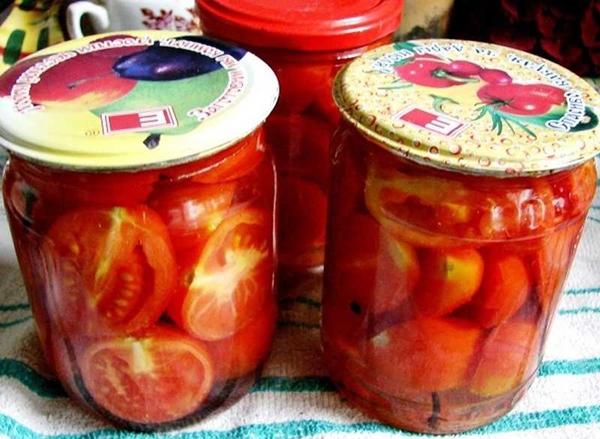
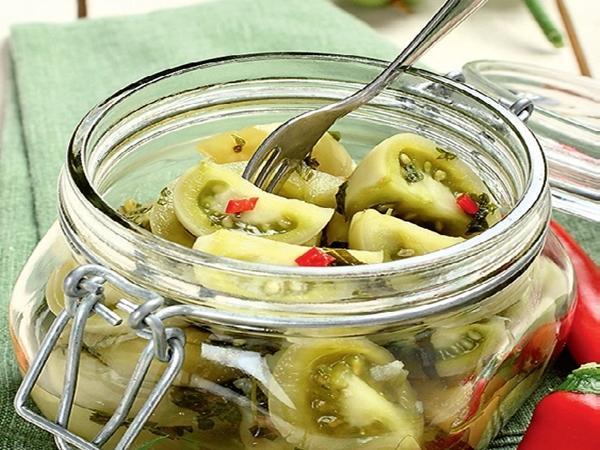
Spicy green tomatoes in slices for the winter
This appetizer will appeal to those who enjoy spicy and unusual flavors in homemade pickles. You'll need:
- green tomatoes;
- parsley;
- Chile;
- vinegar 9%;
- garlic;
- salt and sugar.
Cut the tomatoes into pieces and place them in a container. Add chopped parsley, garlic, and pepper. Mix with the seasonings and vinegar, stir, and let steep for 15 minutes. Arrange the tomatoes in liter jars and pour in the juice. Place in a large pot for sterilization. Pour in water, cover with lids, and sterilize for about 15 minutes.
Before removing, add boiling water to the jars. Remove and seal the jars. After cooling, you can transfer them to the cellar.
Marinated with citric acid
This recipe is perfect for those who don't want to use vinegar. You'll need:
- tomatoes;
- citric acid - half a teaspoon (for 3 liters);
- Chile;
- dill;
- garlic;
- black peppercorns;
- salt and sugar.
Wash the tomatoes and cut them into several pieces. Place peas, dill, and garlic in the bottom of the jars. Add the tomatoes, covering them with herbs. Pour boiling water over them, let steep for about 15 minutes, and drain the water through cheesecloth into a deep saucepan. Bring this brine to a boil. Repeat this process several times. Add spices and citric acid.
Preserving should be done only in clean containers, preferably sterilized beforehand. Pour this brine over the containers and seal. The salted tomatoes can be stored in the refrigerator or cellar.

The original recipe for tomatoes in red wine
You can prepare these tomatoes using regular wine. You will need:
- wine and water (a little more water);
- tomatoes;
- green;
- garlic;
- bay leaf;
- vinegar;
- black peppercorns;
- salt and sugar.
Place the herbs, peppercorns, garlic, and bay leaf at the bottom of the jar. Add all the tomatoes. Bring the wine, water, sugar, and salt to a boil in a saucepan, add the vinegar, and remove from the heat. Preserve the tomatoes using the marinade. Seal the lid and let the jar cool.

With spices without sterilization
You can prepare the snack without sterilization if you use already sterilized jars. This way, you won't have to boil the jars in water. Simply rinse them with boiling water several times or warm them over a steaming pan beforehand.
Parsley, dill, cloves, bay leaf, coriander, ground black pepper or whole peppercorns, and mustard are used as spices.
With herbs and hot peppers without sterilization
For those who like it spicier, you can add chili pepper to the dish. You will need:
- tomatoes;
- hot pepper;
- garlic;
- onions;
- green;
- vinegar;
- salt and sugar.
When canning tomatoes without sterilization, use clean jars to avoid boiling the containers. All vegetables should be finely chopped, except for the tomatoes, which can be divided into 4-6 pieces depending on their size.
Place in jars, cover with boiling water, drain, bring the brine to a boil, add spices and vinegar. Pour the marinade over the jars and seal.
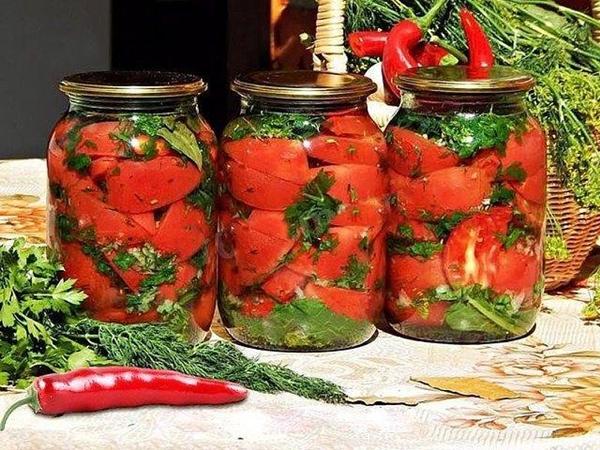
Garlic halves
Garlic tomatoes have a rich flavor. You can add more herbs and garlic to the dish. The standard ingredients are placed in a jar. Garlic is added in both cloves and crushed. Boiling water is poured into the jar, drained, and the brine is prepared. The tomatoes are seasoned with the marinade and canned for the winter. The jars are turned upside down and allowed to cool. They are then stored in the cellar.
Finger-licking good gelatin recipe
To cook tomatoes with gelatinCalculate the amount according to the instructions. Add the herbs, tomatoes, and seasonings as usual. Dissolve the gelatin and add it to the brine, then pour it into the jars. All that's left is to roll up the tomatoes.

With carrots and horseradish
The dish requires everything in the classic version, plus the carrots and horseradish. They need to be sliced, the carrots into rounds and the horseradish into small sticks. Carefully place all the ingredients in a container. Pour boiling water over them, drain, and prepare a brine by adding sugar, salt, and vinegar.
The marinade is added to the jars, which need to be closed and rolled up.
Spicy appetizer with chili pepper
To make this appetizer spicy, simply add a little chili pepper to the classic recipe to taste. This can be finely chopped seedless chili or dried and ground chili.
Place the herbs and peppers in sterilized jars, add the tomatoes, and pour in the brine. Seal the jars. To check for leaks, place the jar on the lid. If it doesn't leak, the lid is sealed.
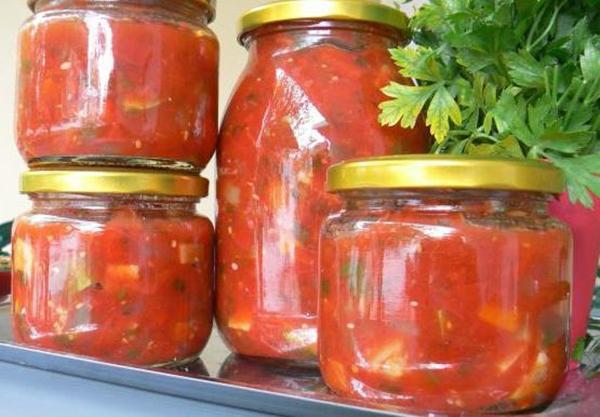
Pickling chopped tomatoes
You can pickle chopped tomatoes using herbs, vinegar, bay leaves, and seasonings. Wash all ingredients and chop the tomatoes. You can pickle both large and small tomatoes by cutting them up.
Place all ingredients in a jar and prepare a brine. Add salt, sugar, and vinegar before removing from the stove. Pour into jars and seal. Chopped tomatoes are salted better, so you need to add less preservatives to them.
Duration and storage conditions
The finished dish should be stored in a basement or cellar. This way, it will last longer, as the temperature should be around freezing. It can be eaten all winter and can be stored until summer.
Related posts:
 TOP 40 New Year's 2020 Meat Recipes Using Pork, Beef, Chicken, and Lamb
 TOP 40 Hot Dish Recipes for New Year 2020: What to Cook
 TOP 17 recipes for pickled sweet tomatoes for the winter
 10 simple Armenian-style pickled hot pepper recipes for the winter
 TOP 17 simple homemade tomato ketchup recipes for the winter.
 27 of the most delicious eggplant appetizer recipes for the winter
 11 quick and delicious recipes for pickling squash for the winter that will make you lick your fingers
 Preparing pickled peppers in oil for the winter using simple recipes and storage conditions