
Watermelons are a summer treat enjoyed by children and many adults. The rinds are often thrown away, never realizing that they can be used to make a preserve that will certainly be a true highlight not only for tea parties at home, but also for holiday feasts. watermelon jam The crust is rich in useful substances and does not cause allergies, so it is recommended for use even by children.
How to make jam from watermelon rinds
For home canning, it's recommended to use watermelons with thick rinds. Don't worry about the taste of the jam; it doesn't taste anything like the striped berry. The flavor is unusual, especially if you add spices or citrus.
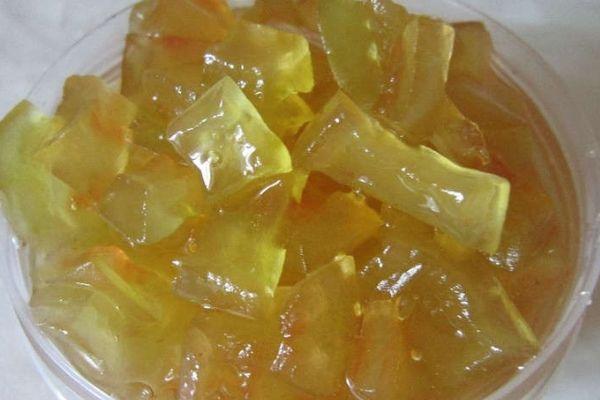
Making this unusual jam correctly isn't easy; it's recommended to use tried-and-true recipes that feature watermelon rinds as the main ingredient. It's best to make the jam quickly—extending it at high temperatures for too long can cause the ingredients to lose not only their nutritional value but also their flavor.
The main rule to follow when preparing a watermelon rind dessert for the winter is not to start preserving too early. The best season is midsummer. If you buy unripe fruits or striped giants saturated with harmful substances, you're unlikely to reap any benefits from them—even heat treatment can't remove nitrates or excess fertilizers.
Preparing the main ingredient
Preparing the main ingredient for the preserve is not difficult, although there are a few tricks recommended for canning. Only fresh watermelon rinds should be used for the jam—even if they've been sitting for a while, they'll develop a rather unpleasant odor.
This will also affect storage – the product will spoil quickly.
Before preparing the rind, rinse it with plenty of water, then soak it in a baking soda solution. This process will enhance the crunchiness of the jam. The resulting jam will resemble thick honey, with hard, crispy slices floating in it. Preparing the solution is simple: dissolve 20 g of baking soda in warm water (1 liter) and pour the liquid over the main ingredient, which has been previously dried on a napkin.
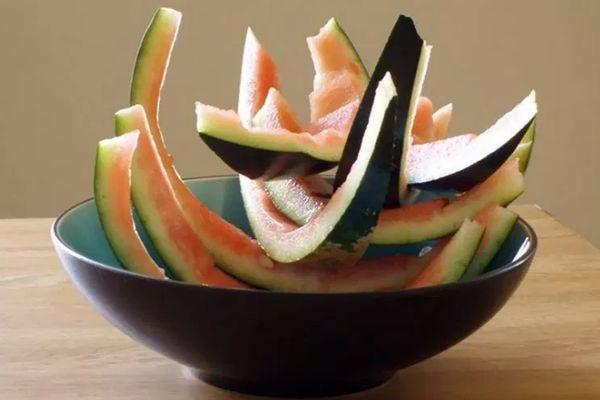 Soak for two hours. During this time, stir the ingredients several times to ensure even soaking.
Watermelon rind jam for the winter: the easiest recipe
The simplest recipe involves just two ingredients: rind and sugar. If you bought the watermelon at the market, it's recommended to wash the surface with warm, soapy water and rinse thoroughly. When making jam, keep in mind that the best flavor will come from leaving some of the red flesh.
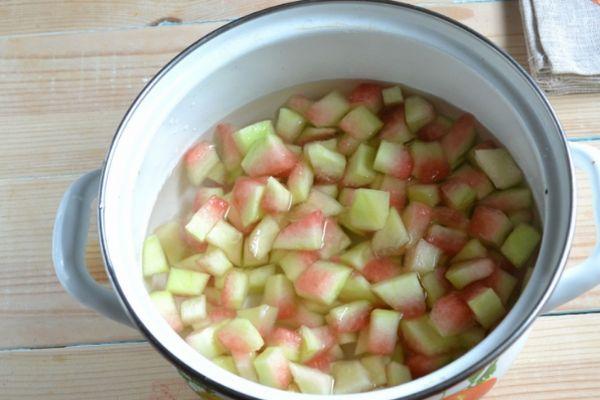
Step-by-step recipe for preparing a fragrant delicacy:
- Remove the green part from each peel and cut into random slices (most often, cutting is done into small cubes).
- The ingredients are taken in equal parts; you can do this by eye, but it is better to weigh the peels first - this will allow you to measure out the required amount of sugar.
- Place the mixture in a cool place and wait until the juice begins to come out.
- Cook the preserves in one go. Cooking time is half an hour.
Place the prepared mixture in a container sterilized in boiling water and seal. Cool under a blanket—this will prevent the jam from cooling too quickly and will effectively sterilize it, maintaining a high temperature.
Watermelon rind jam in a slow cooker
If you don't have time to cook jam for a long time, you can use a slow cooker, which will eliminate the need for long periods of stirring. Just remember to periodically skim off any foam, which can cause the finished product to spoil quickly. Simple jams are usually made in a slow cooker, with a little acid or lemon juice added.
Preparation:
- Cut the watermelon rinds (1.2 kg) into cubes.
- Place the raw materials in a multicooker and add sugar (1 kg).
- Squeeze the juice of 3 lemon wedges directly into the mixture (replace with 5 g of acid if necessary).
- Cook without steeping, do it in the “Bake” mode.
- Cooking time: 1 hour. If the watermelon wedges are too large, increase the cooking time slightly.
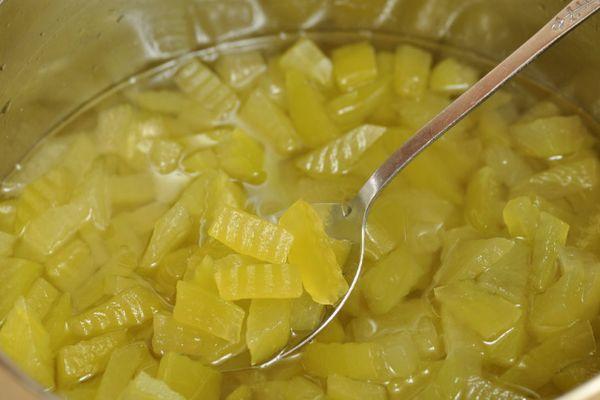
Place the watermelon treat in containers, which should be sterilized in a hot oven beforehand. Seal and cool in a warm place (under a blanket or throw).
Watermelon peel jam with orange
A delicious treat with an enticing citrus aroma is easy to make from watermelon rinds with the addition of oranges. This preparation is often used as a standalone dish on the holiday table—it makes a perfect dessert, especially if served freshly baked. No soaking is required before cooking—even without the baking soda solution, the watermelon rind will retain its crispness.
Take a look Also

Preparation:
- Cut the watermelon rind into long strips (you will need 1.3 kg).
- Pour in a little water and boil the mixture for a quarter of an hour.
- Combine sugar (1.3 kg) and water (650 ml), grate the zest of one orange into the liquid, then squeeze the juice into it.
- Place the syrup on the fire, bring to a boil, and simmer for 5 minutes.
- Combine the peel and syrup and cook everything together for a quarter of an hour.
- During the boiling process, remove foam with a slotted spoon.
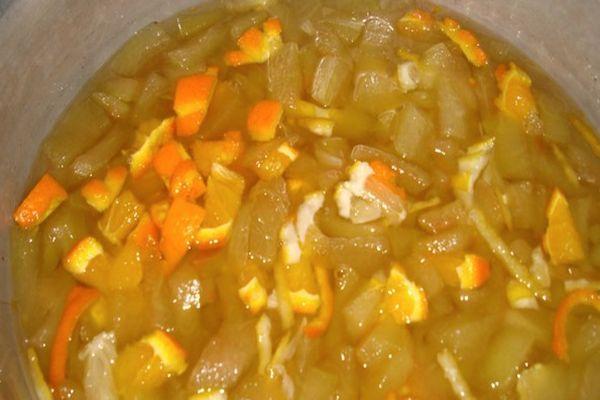
Using a large spoon, spoon the hot mixture into the prepared containers (it's recommended to sterilize them in the oven first). Seal the containers; there's no need to place them under a blanket to cool; you can place them directly in a cool basement.
Watermelon rind jam with lemon
Preserves made with watermelon rind as the main ingredient are quite sweet and cloying, so many cooks prefer to add sour ingredients. Lemon is often used for this purpose, adding a piquant tartness and enhancing the flavor of the preserve.
Preparation:
- Soak the rinds (2 kg) in a solution with the addition of soda and cut into bars or large cubes.
- Cook sweet molasses (combine 1.5 kg of sugar and 600 ml of water and bring to a boil).
- Pour the boiling sweet solution over the cubes of peels and leave for half an hour.
- Place the container with the watermelon mixture on high heat.
- Grate one large lemon into the mixture, do not peel it, use the citrus fruit with the peel.
- If there is no lemon, it is recommended to replace it with citric acid (10 g).
- Stir, cook, regularly skimming off the foam, for 35 minutes.
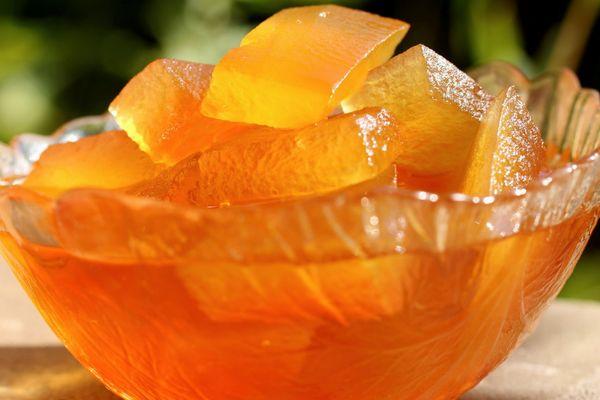
Place the prepared jam in a glass container. Immediate sealing is not recommended; to extend shelf life, sterilize the jam. The process takes about 15 minutes.
After sealing, be sure to place the jam jars on a flat, level surface, turning them upside down first. To prolong cooling, use a warm blanket. It is recommended to store the jam only after 24 hours. It is important that the jam jars are sealed tightly—careless handling of this important process can cause the preserves to spoil quickly.
A simple trick can help you check the seal's integrity. Place a clean sheet of paper underneath the jars when turning them upside down. If stains remain on the paper after cooling, this indicates the seal is broken. You need to sterilize them again before sealing them.
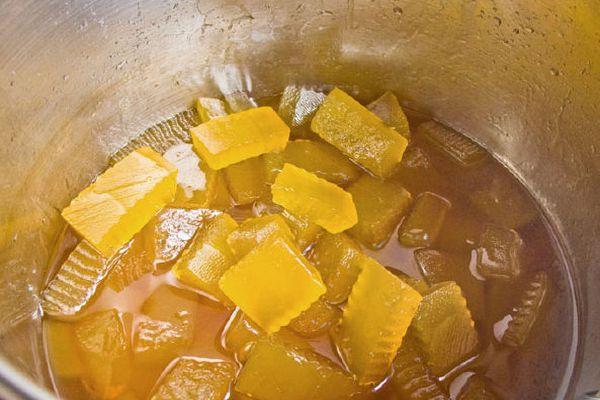
Storing jam
The main rule to follow when storing watermelon rind jam is to jar it immediately after boiling and seal it, ensuring it's airtight. It's recommended to store it only after it's completely cooled. The preserves should be kept at a consistent, cool temperature at all times.
Even minor temperature fluctuations can cause the finished product to spoil. It's recommended to refrigerate the treat immediately after preparation. Stored on the bottom shelf, it will retain its flavor and nutritional value for up to a year.
If you're using a cold storage container, you'll need to regularly check the quality of your jam. Carefully inspect the surface of the preserves—if any signs of mold appear, open the jars immediately and discard any spoiled jam. Place any remaining jam in a saucepan, set over low heat, bring to a boil, and simmer for 15 minutes. Be sure to stir the mixture vigorously to prevent burning.
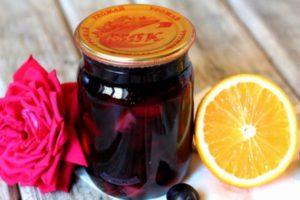
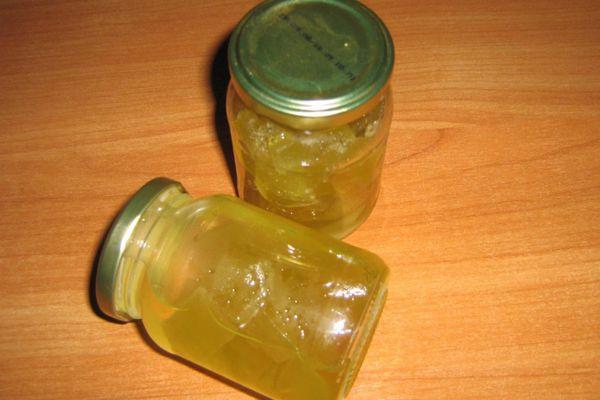
It's not recommended to store revived jam. It's best to refrigerate it and serve it with morning pancakes or crepes. The preserves can also be used in baked goods. The key is to consume it within a week; if spoilage begins again, it won't be possible to save it.
Jam made from watermelon rinds is a delicacy that's hard to compare with other winter preserves. It differs in both taste and texture. Crispy slices in a honey sauce are the most fitting description for this winter preserve made from a product often thrown away, without even realizing how easy it is to make a delicious dessert.
Related posts:
 Simple step-by-step recipes for making watermelon jam for the winter at home, with and without gelatin
 Simple step-by-step recipes for making melon jam for the winter and tips on choosing the fruit and storing the preserves
 15 simple recipes for making blueberry jam at home with apple and lemon in a slow cooker
 Simple step-by-step recipes for making lingonberry jam for the winter
 27 Best Homemade Pear Jam Recipes for the Winter
 TOP 10 recipes for jam from garden and wild strawberries for the winter, in a slow cooker and on the stovetop
 Simple recipes for making cherry plum jam with and without pits for the winter
 14 Best Step-by-Step Recipes for Making Apricot Jam for the Winter