
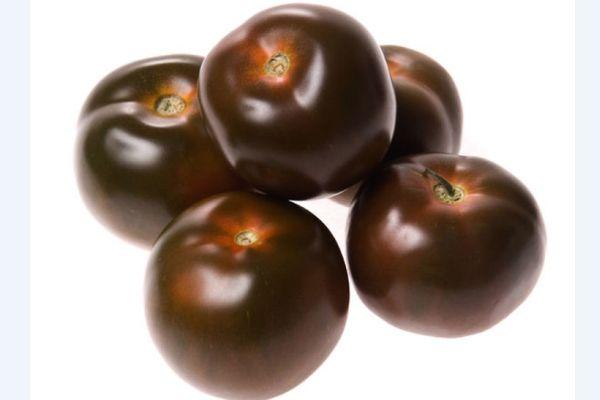
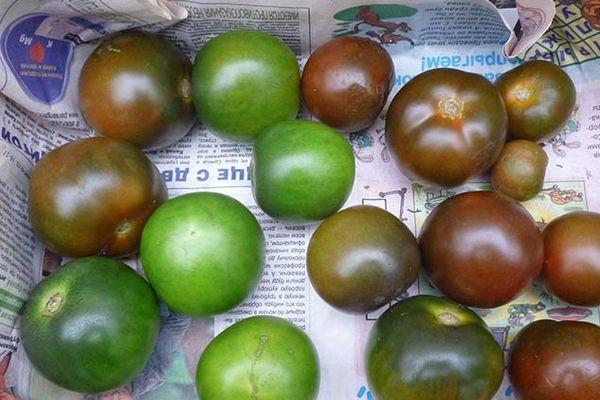
There are dark-colored tomato varieties. Some are a combination of red and green tones, but black Kumato tomatoes fall into a different category. These black-skinned berries contain a large amount of the pigment anthocyanin, giving them a color similar to that of eggplant skin.
General description of the plant
The Kumato variety is a plant developed by European breeders and known worldwide. Its distinctive black fruits are grown in Turkey and several European countries, but for about 10 years now, these tomatoes have also been known in Russia. The variety is not included in the State Register of Breeding Achievements of Russia.
This heat-loving plant produces fruit well in central Russia only in protected soil. Due to its relatively late ripening period (approximately 120 days from germination), it will not ripen in time and accumulate sufficient sugars in open soil. Kumato tomatoes can only be truly appreciated when grown in a greenhouse.
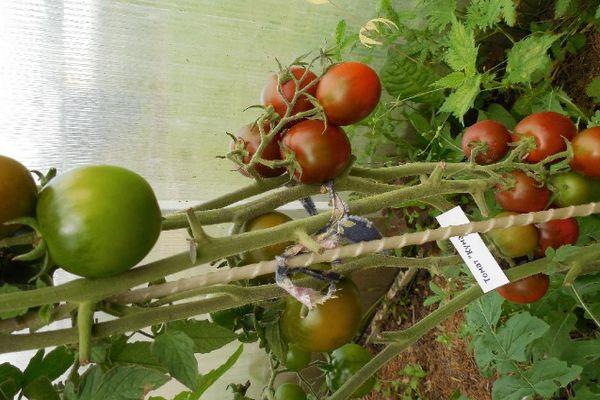
The bush is indeterminate and tall (up to 2 m or more). The plant is trained into 1-2 stems and tied to a trellis. To ensure the fruit receives more nutrients and sunlight, leaves below the developing flower clusters should be removed.
This variety is resistant to the main tomato infections that occur in the warm, humid microclimate of greenhouses. Dark fruits are not affected by Alternaria wilt, and the green parts of the plant are also resistant to the mosaic virus. The tomato tolerates high temperatures well.
The variety's characteristics and description note that the fruits become sweeter with plenty of sun and slightly dry soil. However, Kumato's roots are located in the very top layer of soil, so it shouldn't be allowed to dry out more than 1-2 cm deep.
The average yield is 7-8 kg of vegetables per plant. Kumato doesn't thrive in dense plantings, so only 2-3 plants can be planted per square meter. Higher planting densities result in lower yields.
Take a look Also
Features of the fruit variety
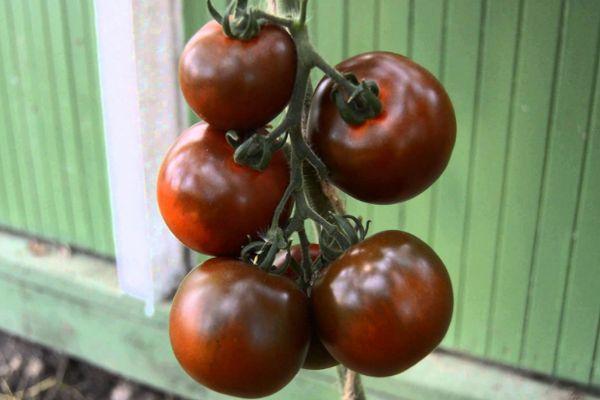
Kumato tomatoes are small and round. They occupy a middle ground between cherry tomatoes and regular varieties with medium-sized fruits. Each berry weighs approximately 80 g and is 4.5-5 cm in diameter. The fruits on the cluster and on the entire bush are almost identical in size and weight, with 8-10 on a vine.
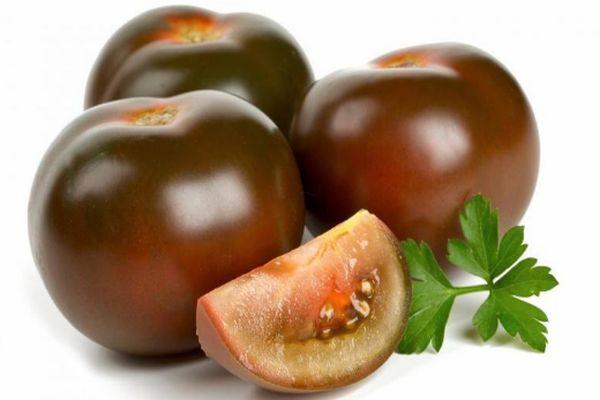
The skin is very dense and strong, with a rich brownish-purple hue when biologically ripe. Unripe tomatoes are dark green, turning brown as they blanch. These tomatoes do not crack when ripe, withstand long transportation well, and can be stored for at least two weeks without losing their marketable appearance. Tomatoes can ripen further after being picked from the vine, with virtually no loss of flavor.
The flesh is an interesting brownish color; when fully ripe, it becomes almost purple near the skin and greenish in the core. The consistency is firm, very elastic, but without crunch. The tomato contains two large seed chambers.
The taste is highly valued. Gardeners who have grown black tomatoes note their sweet flavor, almost complete lack of acidity, and rich, fruity aroma, reminiscent of blackberries or prunes. The health benefits of the Kumato tomato variety include its high content of anthocyanins, which are beneficial for vision and have antioxidant properties (rejuvenating the body). Furthermore, tomatoes contain a range of vitamins and microelements, sugars, and proteins beneficial for humans.
Black tomatoes are considered an exotic delicacy. They are eaten fresh, incorporating these unusual fruits into gourmet appetizers, holiday platters, and salads. A vegetable gardener who grows them in their garden can incorporate Kumato into their daily diet and surprise their guests with these unusual tomatoes. However, in the home garden, the Kumato tomato variety is often used just like ordinary red tomatoes.
Surplus produce can easily be preserved for the winter. Black berries retain their texture during pickling and can beautifully complement the color scheme of a vegetable platter. These tomatoes are easy to dry: they contain a lot of dry matter and a small amount of juice, ensuring high-quality products. Unripe, but already colored, Kumato tomatoes make a beautiful exotic jam.
How to grow black tomatoes?
The Kumato tomato is grown according to the same rules as all tomatoes. The seeds are sown 50-60 days before planting in the greenhouse to prevent the seedlings from becoming too tall. The soil is prepared from equal parts sand, humus, and fertile soil. The mixture is heated in the oven or soaked in a hot solution of potassium permanganate.
Seeds germinate well at temperatures no lower than 25°C. Spread the seeds over the surface of warm, moist soil and cover with a thin layer of dry sand and soil (0.5 cm). Cover the trays with plastic wrap to retain moisture until the seeds germinate, and place the seeds in a warm location. Seedlings usually appear within 4-5 days.
When the plants develop 2-3 true leaves, the seedlings should be transplanted (pricked out) into individual 0.5-liter containers. Care for the seedlings consists of regular watering.
Kumato seedlings can be transplanted into the greenhouse in mid-May (in central Russia). The main indicator is soil temperature. The soil must warm up to +20°C, otherwise the tomatoes will take root poorly.
It's best to plant the elongated seedlings in a 20-cm-deep trench, placing the stems horizontally and leaving 3-4 pairs of leaves above the surface. As the tomatoes grow, shape them by removing all side shoots except one, which should be left above the first flower cluster.
When caring for Kumato, remember that the variety has a well-developed shallow root system, growing from the deep part of the stem. This root system is particularly susceptible to moisture stress and can be damaged by loosening the soil. Therefore, tomatoes need to be watered regularly and the soil should not be loosened more than 1 cm deep.
Related posts:
 Description of the best varieties of black tomatoes for open ground and greenhouses
 16 Best Quick Pickled Tomato Recipes for the Winter
 TOP 17 recipes for pickled sweet tomatoes for the winter
 The 14 Best Tomato and Aspirin Recipes for a 3-liter Jar for the Winter
 15 simple recipes for pickling tomatoes in jars for the winter
 How to make marinated tomatoes in jars for the winter using a Bulgarian recipe
 Recipes for amazing tomatoes in jelly for the winter, with and without sterilization, you'll lick your fingers
 Description of the best tomato varieties for open ground in the central zone