
- Features of preparing Bulgarian-style pickled tomatoes
- Selecting and preparing tomatoes for canning
- Methods for preserving tomatoes in Bulgarian style
- Classic recipe
- With hot pepper
- Sweet and sour tomatoes
- Without sterilization
- With vinegar essence
- The secret to cooking like in the USSR
- Sweet and sour marinade recipe
- With onions and garlic
- Without vinegar
- How and how long do Bulgarian-style canned tomatoes last?
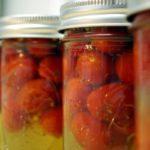
Tomatoes, whose homeland is considered to be Latin America, absorb the energy of the sun, and along with it, substances that are essential for human health. Tomatoes are rich in vitamins and microelements. They act as natural antioxidants and improve digestion. Lycopene, found in tomatoes, prevents cell degeneration. Many women preserve Bulgarian-style tomatoes for the winter. This appetizer is perfect for both a formal lunch and a family dinner. The vibrant, sweet and sour vegetables retain their flavor and nutrients during canning.
Features of preparing Bulgarian-style pickled tomatoes
Many recipes for canning tomatoes were popular back in Soviet times, when store shelves weren't overflowing with canned goods. And although supermarkets now offer a wide variety of vegetables, both fresh and jarred, many families prefer homemade preserves.
You can add various seasonings to Bulgarian-style tomatoes, each of which adds its own nuances, changing both the taste and aroma of the tomatoes.
These vibrant fruits impress with a unique combination of sweetness, spiciness, and a hint of acidity, thanks to a marinade containing familiar and readily available spices and seasonings. The preparation process itself is straightforward.
Selecting and preparing tomatoes for canning
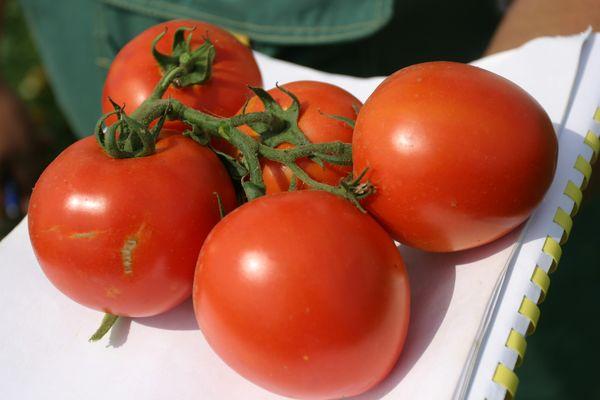
To ensure that vegetables pass easily through the neck of the container they are sealed in, they should be medium or small in size. Fruits that are bruised, cracked, or have spots are not suitable for canning. Not only ripe tomatoes are pickled, but also green ones; overripe ones are only suitable for making ketchup and sauces. Miniature cherry tomatoes and cream tomatoes look beautiful in jars.
Wash the tomatoes, dry them, and remove the stems. To allow the brine to penetrate the flesh more quickly, pierce the skin with a sharp, thin object. If small tomatoes are unavailable, larger tomatoes are separated into wedges. To add a sweet flavor to the tomatoes, peppers, carrots, or apples are added during the pickling process. Horseradish leaves and garlic add a spicier flavor.
Methods for preserving tomatoes in Bulgarian style
Brightly colored fruits are preserved for the winter using various techniques and marinade ingredients. Some home cooks sterilize tomatoes, while others add preservatives such as vinegar, aspirin, natural juice, and citric acid.
Classic recipe
Many women prefer the traditional Bulgarian method of preserving tomatoes. The pickling process is not very spicy, but has a pleasant flavor. For one and a half kilograms of tomatoes, you'll need:
- 100 g sugar;
- dill umbrellas;
- garlic - 4 pcs.;
- salt - 1 tbsp;
- vinegar - 50 ml.
Place the tomatoes in a 3-liter container. No other spices are needed in the classic recipe. The preparation and marinating process involves several steps:
- Tomatoes are washed under the tap, the stems are removed, and the skin is pierced.
- Dill umbrellas are placed in sterile jars, and tomatoes are placed on top of them.
- The container is filled with 1.5 liters of boiling water and sterilized for a quarter of an hour.
- The liquid is taken from the container into a saucepan and boiled together with salt and sugar.
- Finely chopped garlic is added to the tomatoes, vinegar and marinade are poured in.
Jars of vegetables are sealed with tin lids, placed upside down, and covered with a towel. Once cool, they are transferred to the refrigerator or taken to the cellar.
With hot pepper
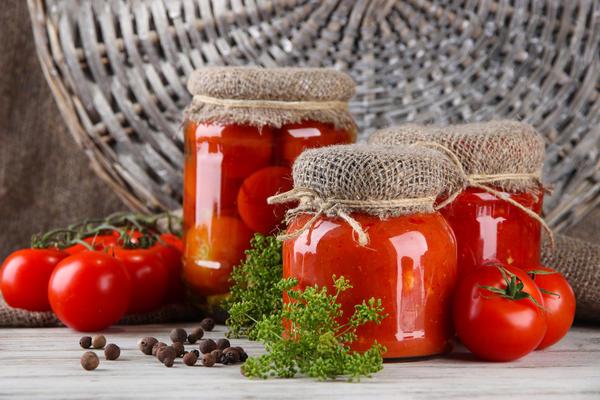
Pickled tomatoes are a family favorite; they go great with mashed potatoes and meat. To please those who enjoy a spicy snack, tomatoes canned with hot peppers and garlic.
Add salt, sugar, and a couple of bay leaves to boiling water (1 liter per kilogram of vegetables). Simmer the marinade for 5–6 minutes. Once the liquid has cooled, add the allspice and vinegar.
Peel and chop five garlic cloves, then place them in a glass jar. Top with tomatoes, then hot peppers, and then more garlic cloves. Season all the ingredients with the boiling marinade, drain it after 10 minutes, reheat it in the pan, and then fill the jar with the appetizer.
For canning you will need:
- 30 g salt;
- vinegar essence - 1 tbsp;
- sugar – 1 tbsp.
The preserves are sealed with tin lids, and the containers are placed upside down. The cooled preserves are taken to the cellar.
Sweet and sour tomatoes
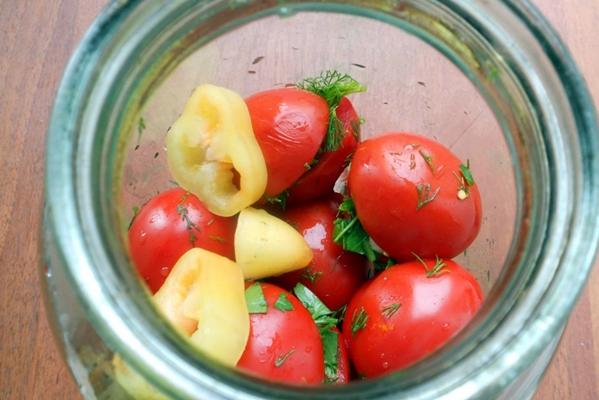
Tomatoes acquire a refined flavor when marinated with currant leaves, horseradish, and a pod of red hot pepper. To prepare the marinade, you will need:
- water - 1000 ml,
- salt - 30 g;
- sugar - ½ cup;
- vinegar 7% - 3 spoons.
Line the bottom of the jar with the leaves, then place the tomatoes on top, then place the garlic cloves underneath and on top. Fill the jar with boiling water, which is then poured into the pan after 15 minutes, seasoned with spices and vinegar, and simmered for about 5 minutes. This marinade imparts a sweet and sour flavor to the tomatoes. Fill the jars with the water, seal them, and place them on the neck.
Without sterilization
When cooked, vegetables lose some of their vitamins. To preserve the nutritional value of tomatoes, various preservation methods are used. Preservatives are used instead of sterilization. To preserve 2 kg of tomatoes for the winter, you will need:
- garlic - ½ head;
- sugar - half a glass;
- salt - 15 g;
- water - liter;
- vinegar essence - 1 tsp;
- dill umbrellas;
- pepper - 5 peas;
- cherry or currant leaves.
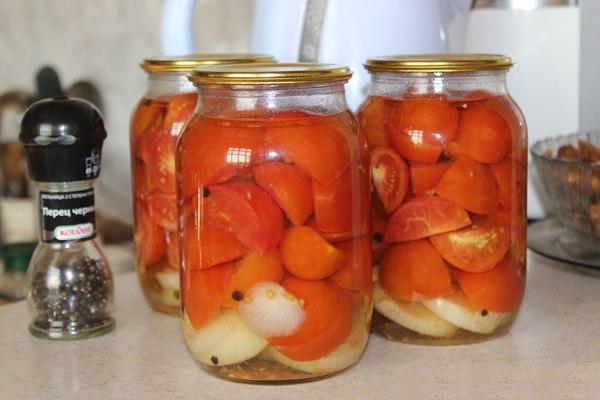
Garlic, herbs, and stemless tomatoes are placed in jars. A brine of water and spices is boiled in a saucepan. This brine is poured into the jars with the tomatoes and covered. After 15 minutes, the marinade is poured out and boiled again for 5 minutes before filling the jars. Vinegar is added before canning the vegetables; it serves as a good preservative. This ensures that the hermetically sealed snack will keep well without spoiling or turning sour.
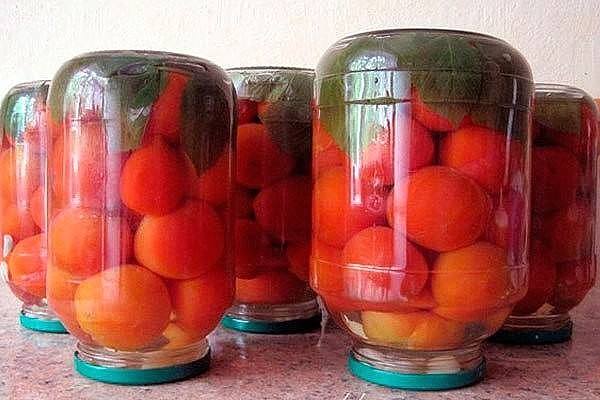
With vinegar essence
Tomatoes are preserved for the winter with aspirin, in their own juice, or apple juice. Those who enjoy a spicy snack will appreciate tomatoes marinated in vinegar essence.
A teaspoon of this preservative is added to the prepared marinade, which is boiled with salt and sugar. Garlic, herbs, and hot peppers are placed in jars, filled with tomatoes, and poured with boiling liquid.
The secret to cooking like in the USSR
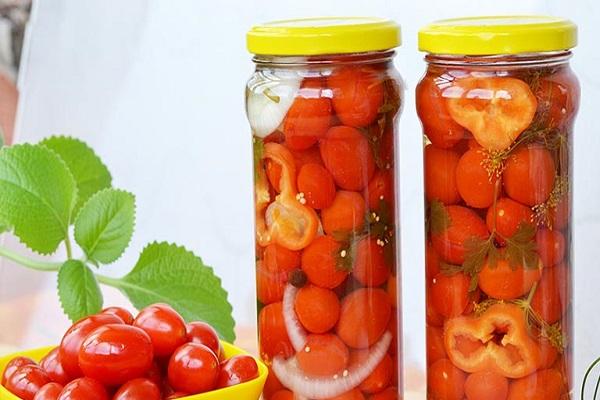
During Soviet times, vegetable store shelves were stocked with canned goods, the recipes for which were borrowed from socialist countries. Bulgarian-style tomatoes had a pleasant flavor; they were preserved with spices, unripe tomatoes were used, and lots of herbs were added. These were preserved in large quantities, as vegetables were inexpensive in the USSR in the summer, but finding them fresh in the winter was difficult.
To preserve 5 kg of green tomatoes, you'll need 3 liters of marinade. Boil it by dissolving 2 cups of sugar and 1 cup of regular salt in water. Once boiling, add 200 ml of acetic acid.
Clean, steamed jars are filled with celery, parsley, dill, and garlic, and tomatoes are added. The jars with the herbs and tomatoes are seasoned with the marinade. The vegetables are not sealed immediately, but after about 15 minutes, they are taken to the cellar.
The secret of canning in the USSR lies in the significant concentration of fresh herbs and spices.
Sweet and sour marinade recipe
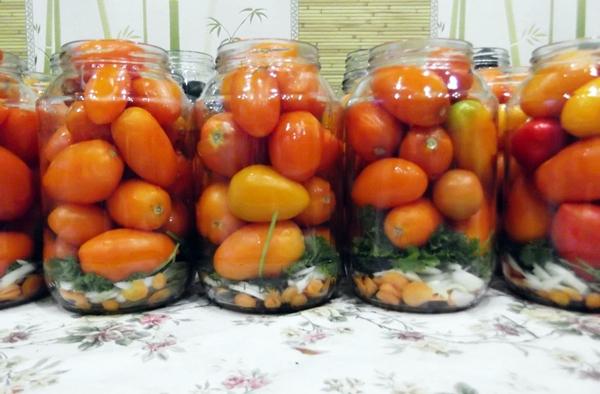
The flavor of vegetables depends on the brine and any additional ingredients used during preparation. Tomatoes are both spicy and sweet and sour when preserved with sugar, cayenne pepper, and horseradish root. Currant leaves add a pleasant aroma.
To make the marinade, in addition to these ingredients, take:
- acetic acid - 1 spoon;
- garlic;
- water - from 1.5 to 1.7 l;
- pepper - 6 peas;
- dill;
- horseradish leaves.
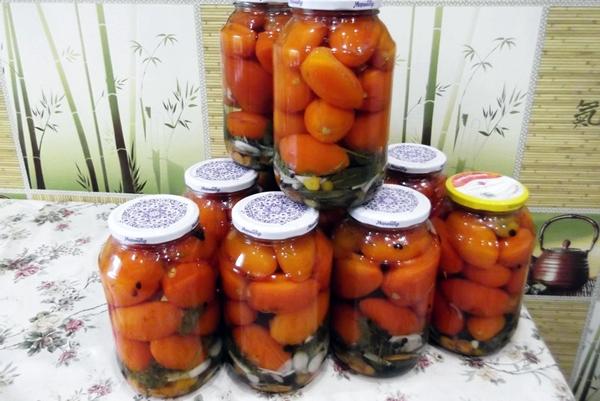
For 1.5 kg of red tomatoes, you'll need 1.5 tablespoons of salt and 3 tablespoons of sugar. Rinse the tomatoes under running water, chop the roots, cut the greens into pieces, and place them in sterilized jars. Add peppercorns and dill sprigs. Fill the jars to the top with clean, dried tomatoes and add boiling water. After 15 minutes, transfer the liquid to a saucepan, add salt, dissolve the sugar, and simmer briefly. Add the marinade and vinegar to the tomatoes.
With onions and garlic
You can preserve Bulgarian-style tomatoes for the winter using a simple recipe that requires just a few ingredients.
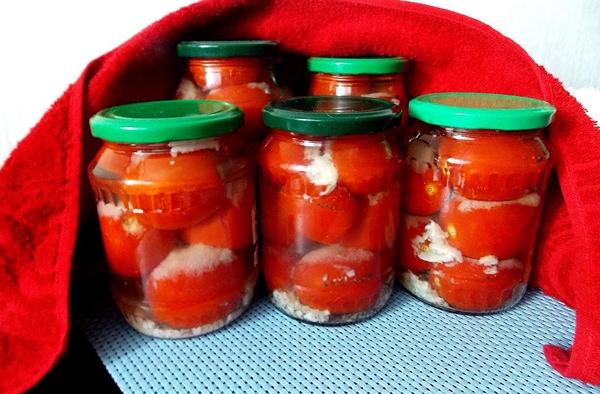
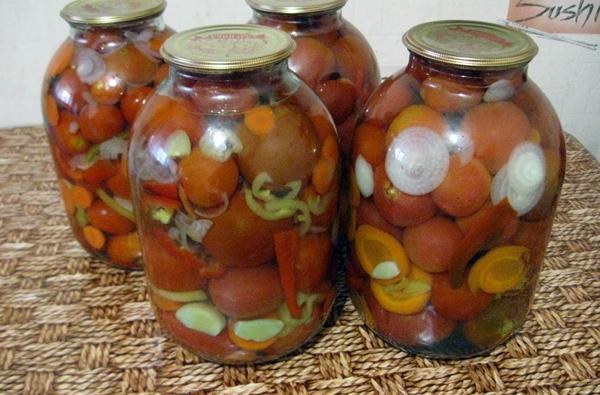
To make a 3-liter jar of spicy snack, you need:
- 60 g salt;
- vinegar - 20 ml;
- sugar - 3 spoons;
- a liter of water;
- onion;
- a head of garlic.
Firm, dent-free tomatoes are rinsed under the tap, removing the stems. Sugar, vinegar, and salt are added to the boiling water. The mixture is simmered for about three minutes.
Place onion rings, garlic cloves and tomatoes in layers in a sterile jar, fill it to the top with marinade and sterilize for a quarter of an hour.
Without vinegar
Children should not be fed spicy vegetables. In families with small children, many women tomatoes are canned with citric acidThe tomatoes aren't as spicy as those with a bite. Add a couple of cloves, tarragon, and a few allspice berries and black peppercorns to the jars.
To prepare the marinade you need to take:
- a liter of water;
- 100 g sugar;
- a spoonful of rock salt;
- citric acid - 1/3 tbsp.
Prick the tomatoes with a fork and place them in jars. Cover with boiling water for 10 minutes. Then, transfer the liquid to a saucepan and make a marinade, which is then poured into the jars containing the tomatoes.
How and how long do Bulgarian-style canned tomatoes last?
It's best to store finished preserves in a basement or cellar with ventilation, constant humidity, and a temperature no higher than 6°C. Tomatoes canned with a strong flavor, essence, or citric acid will keep for several years. Sterilized tomato preserves can be stored on pantry shelves or on a glassed-in balcony, but be careful not to let the brine freeze, otherwise the jar will crack.
Related posts:
 15 simple recipes for pickling tomatoes in jars for the winter
 TOP 40 Hot Dish Recipes for New Year 2020: What to Cook
 TOP 17 recipes for pickled sweet tomatoes for the winter
 TOP 40 New Year's 2020 Meat Recipes Using Pork, Beef, Chicken, and Lamb
 How to make pickled tomatoes without skins for the winter, quick pickling recipes
 16 Best Quick Pickled Tomato Recipes for the Winter
 Recipes for amazing tomatoes in jelly for the winter, with and without sterilization, you'll lick your fingers
 Delicious recipes for canned tomatoes with honey for the winter, preparation steps
