
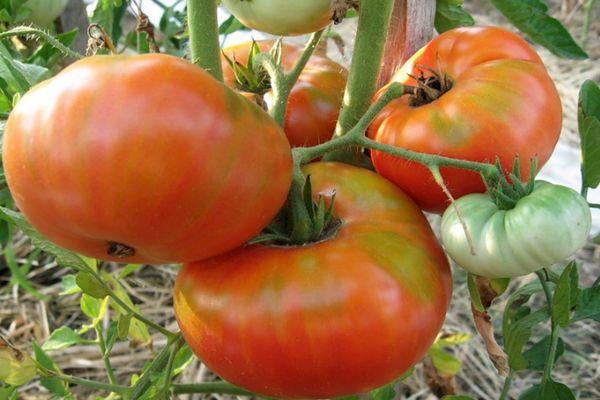
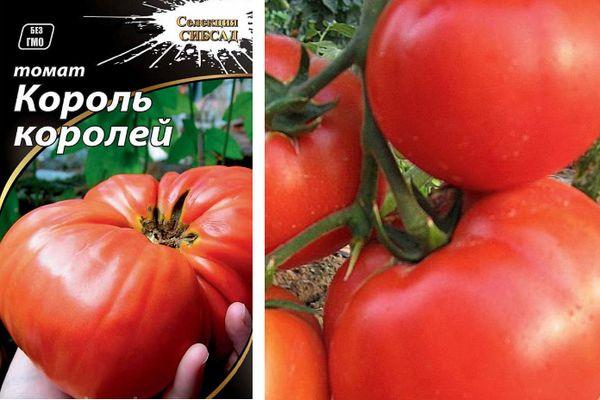
The King of Kings tomato got its name from its large fruit. This new variety of tomato, with its truly regal size and flavor, was developed at the Institute of General Genetics in Moscow. Scientists bred it for cultivation in greenhouses and hothouses. However, the variety also produces large fruits outdoors in the southern regions of the country.
What is the King of Kings tomato?
This tomato is included in the State Register as a large-fruited hybrid. It is grown commercially. Gardeners love these tomatoes for their flavor, high yield, and disease resistance.
Similar varieties of this species can also be found in garden plots and homesteads. These include:
- Tomato Honey King.
- Golden King.
- Pink King tomatoes.
- King King.
- King of the big ones.
- Tsar.
- King Lear.
- Royal.
In particular, the Zolotoy variety is characterized by large ripening fruits, but not as large as the King of Kings variety. Fruit weight ranges from 400 to 500 g. They are used for salads and canning.
King tomatoes are slightly larger, but smaller, than the King of Kings. Therefore, they are suitable for gardeners who prefer medium-sized fruits. Pink King tomatoes have the same fruit characteristics as King tomatoes. Growing and maintenance conditions for these varieties are similar to those for Lir and King of Kings.
Description of fruits
Characteristics and description of the variety:
- Reviews from those gardeners who planted this variety on their own plots indicate that the bushes are very tall.
- The average stem height is 1.5-1.8 m.
- A highly branching bush.
- The foliage on the plants is average.
- The first cluster forms only after the ninth leaf emerges. After that, clusters appear after every third leaf.
- The bush must be formed into 1-2 stems.

Plants require staking to trellises and supports. Staking is done as the bushes grow. Sometimes this procedure may need to be repeated three or four times during the season. It's important to monitor the bush's growth, as the stems quickly bend under the weight of the fruit.
Tomatoes can be called leaders in weight and size among other tomato plants.
species, as indicated by the following parameters:
- The weight of one fruit varies from 1.3 to 1.5 kg. The minimum weight of a tomato is 300 g.
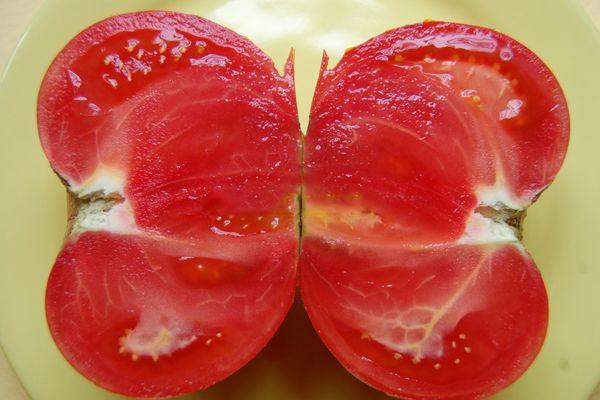
- Inside there are from 4 to 8 seed chambers.
- Contains 10% dry matter, high content of microelements, antioxidants, vitamin C, fructose.
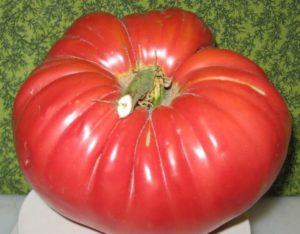
- When ripe, the fruits turn bright red, while tomatoes of the related Pink variety, according to reviews and characteristics, have a pinkish color.
- The taste is pleasant, slightly sour, sweet.
- Each brush produces up to 5 fruits.
- The fruits have slight ribbing.
- Large shape, semicircular, flattened at the top and bottom.
- Excellent shelf life.
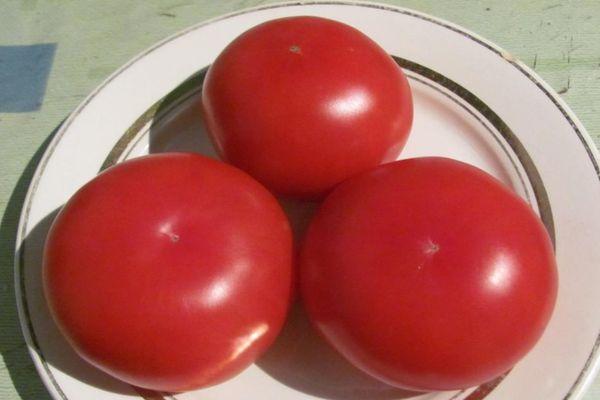
The harvested fruits can be stored in boxes for a long time, maintaining their marketable appearance for 35 to 40 days.
Can be transported over long distances.
This variety can be called the king among others. And not only because of its size, but because of its versatility. Created as a salad variety, it's used in pies, juices, sauces, tomato juice, pickles, marinades, and casseroles. Canned only as part of vegetable salads.
How to grow tomatoes?
Let's consider the specifics of tomato cultivation. This variety produces high yields in southern latitudes; in temperate or northern climates, fruit size decreases and the fruiting period changes. Low temperatures negatively impact tomato establishment in the ground, so gardeners must provide artificial lighting. Fluorescent lamps are used in greenhouses and hothouses.

To grow in greenhouses, you must adhere to the following care principles:
- Top dressing.
- Watering.
- Ventilation.
And all this must be done regularly to obtain a high-quality harvest.
In greenhouses and outdoors, the optimal temperature range is between 18 and 25°C. This variety grows well in cool, sunny summers.
The bushes begin to bear their first fruits 110-120 days after the seeds have been sown for seedlings.
The description would be incomplete without mentioning that tomatoes are resistant to diseases and pests such as late blight and whitefly. If whiteflies attack the bushes, a solution based on Actellic or Mospilan should be used.
Related posts:
 Description of the hybrid tomato Pink King and characteristics of the fruits
 80 Best Eggplant Varieties for Different Regions with Descriptions and Characteristics
 Description of the King of the Market hybrid and recommendations for growing the plant
 Description of the King of Early tomato, cultivation features, and temperature requirements
 Description of the King of Siberia tomato variety, planting instructions, and care
 Description of the King of Large Tomato and cultivation of the mid-season variety
 Description of the Golden King tomato and recommendations for growing the variety
 Description of the King London tomato, cultivation, and planting instructions