
- Description and characteristics of the Pink Elephant tomato
- Origin of the variety
- Landing region
- Ripening time and yield
- Pros and cons of the variety
- About growing tomatoes
- Peculiarities of planting seedlings
- Backlight for seedlings
- Picking
- Hardening off seedlings
- Planting in the ground
- Caring for mature plants
- Top dressing
- Watering and loosening
- Pinching out side shoots and shaping the bush
- Prevention of diseases and pests
- Reviews from gardeners who planted
Growing tomatoes is no easy task. To ensure a good harvest, consider not only the regional characteristics, growing conditions, and development, but also the characteristics of the varieties. For regions with unfavorable conditions, it's recommended to choose hybrids that are resilient to external factors. The Pink Elephant tomato variety has been bred for growing in a variety of soil types and boasts high yields.
Description and characteristics of the Pink Elephant tomato
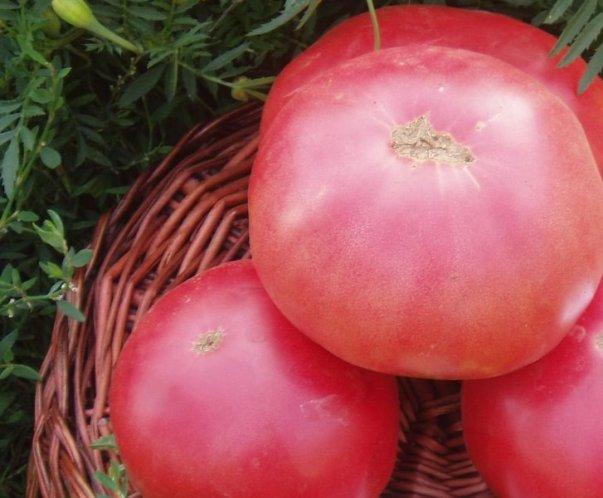
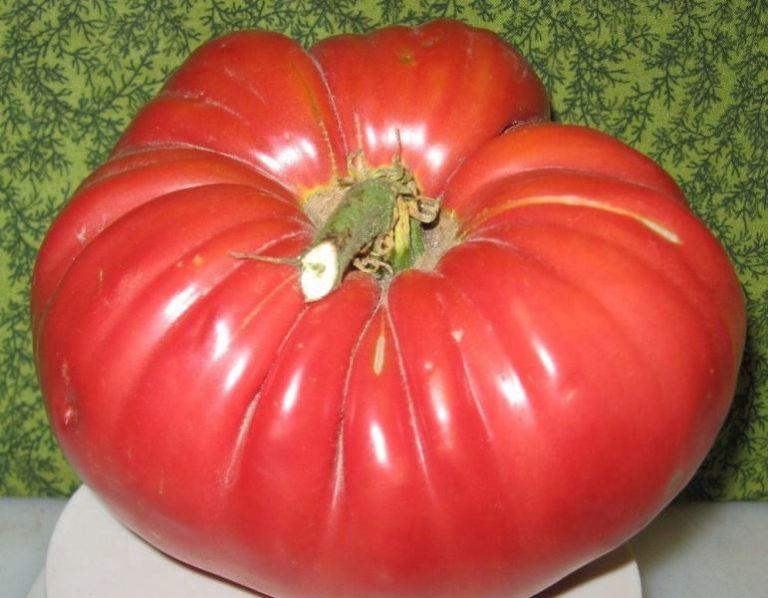
This variety is classified as semi-determinate, meaning its height is intermediate between that of tall and short bushes. Fruit characteristics:
- average weight – from 280-300 grams to 1000 g;
- Suitable for salads, preparations, and fresh consumption.
Origin of the variety
The hybrid was developed last century by Russian breeders. Its distinctive and recognizable characteristic is the crimson color of the tomato flesh.
Landing region
Pink Elephant is suitable for planting in various regions of the country and performs well both in open ground and greenhouses. Experts recommend using additional plastic covers when planting unprotected.
Ripening time and yield
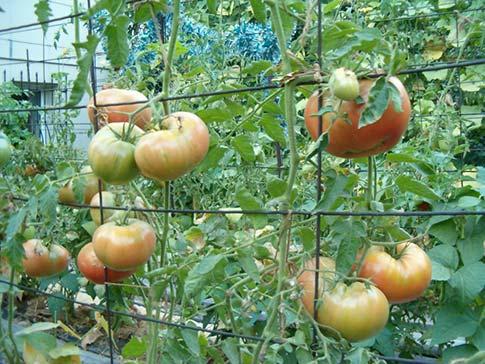
The hybrid exhibits increased yields: 1 square meter yields approximately 10 kilograms of dense tomatoes. Their weight can reach 1 kilogram. A distinctive feature of hybrids is that the largest fruits grow on the lower branches.
Pink Elephant is a mid-season variety, with harvesting beginning 110 or 115 days after germination.
Pros and cons of the variety
The Pink Elephant tomato is one of those varieties that has almost no drawbacks.
| Pros | Cons |
| Memorable taste | The amount of feeding is above average |
| Large fruits | Temperature requirements |
| Stable yield indicators | Compliance with the principles of bush formation |
About growing tomatoes
Tomatoes of this variety are included in the State Register and are annually ranked among the top twenty tomatoes in the country. To achieve good results, certain requirements must be met, starting from the very first stage.
Peculiarities of planting seedlings
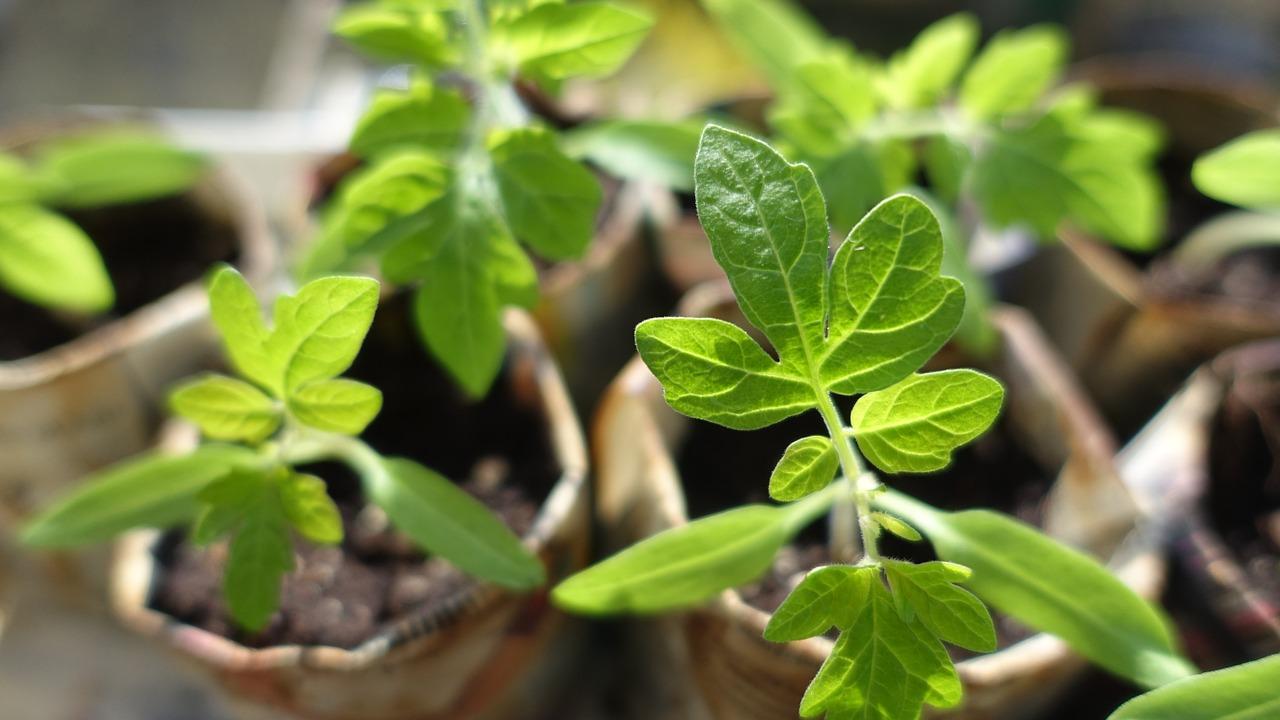
Seeds are sown two months before planting in the ground. Gardeners typically plan to sow in the second half of March. Beforehand, prepare special containers:
- containers with lids;
- deep containers with a tray and the ability to make drainage holes.
Before sowing, seeds are typically specially treated. They are soaked for 10 hours.
Information! For soaking, use a saline solution or growth stimulator.
For sowing, use a mixture of garden soil and humus; it is recommended to add river sand or wood ash.
- The soil is placed into containers.
- The seeds are planted 2 centimeters deep.
- The plantings are sprayed with water.
- Cover with film to create a greenhouse effect.
- The film is removed after the seedlings appear.
- For good growth and development of seedlings, provide access to light and regular watering with warm water.
Backlight for seedlings
If there's insufficient light, tomatoes need additional sources. Fluorescent lamps are suitable for this purpose, but the method requires maintaining a balance between light and watering.
Picking
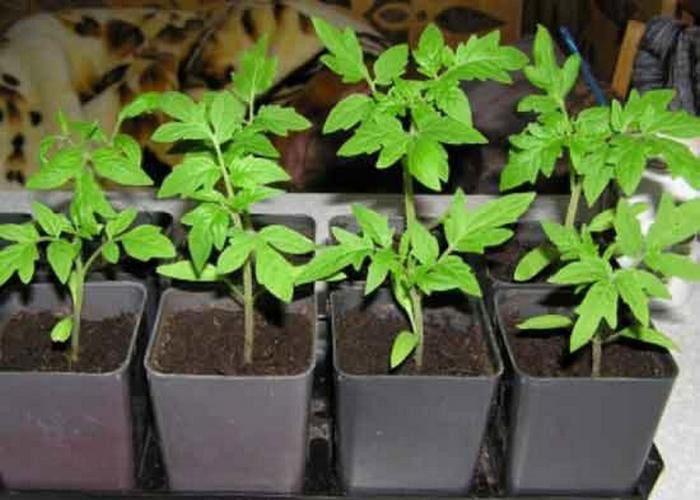
The seedlings of this variety need to be pinched after the first leaves appear. These are removed, and the sprouts are replanted in separate containers.
Hardening off seedlings
This technique is used to grow strong seedlings that are resilient to temperature fluctuations. The seedlings are kept under plastic film for the first five days. After this, the film is removed, and the soil temperature drops to 15-16 degrees Celsius. It then gradually returns to room temperature.
Planting in the ground
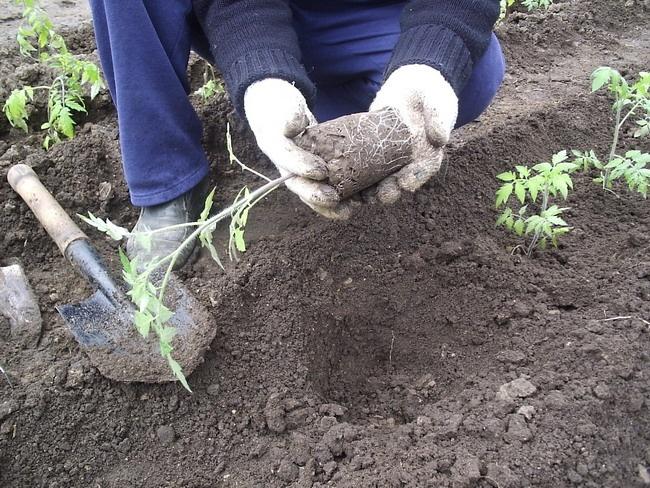
Planting in open areas is carried out only when the soil has warmed up sufficiently. To facilitate this process, the soil is dug up a week before planting and then covered with plastic sheeting. Greenhouse conditions require simple tilling.
A layer of ash is placed in the hole, then the seedling is placed. It is dug into the ground, compacted, and watered. A trench is dug around the plant to ensure proper soil conditions. This allows the soil to retain moisture and facilitates subsequent watering.
A specific landing scheme has been adopted for the Pink Elephant:
- open ground – beginning of June;
- greenhouse conditions – second half of May.

Caring for mature plants
After planting in the soil, the next step is to follow the rules for caring for growing tomato bushes.
Top dressing
The hybrid's distinctive feature is the formation of large fruits on medium-height bushes. To ensure the plant's natural development, breeders have developed a special fertilizing regimen:
- After planting, it is recommended to use organic or mineral complexes as fertilizer;
- The flowering period is a signal for gardeners to change the type of fertilizer (during this period, tomatoes need potassium, nitrogen, and phosphorus).
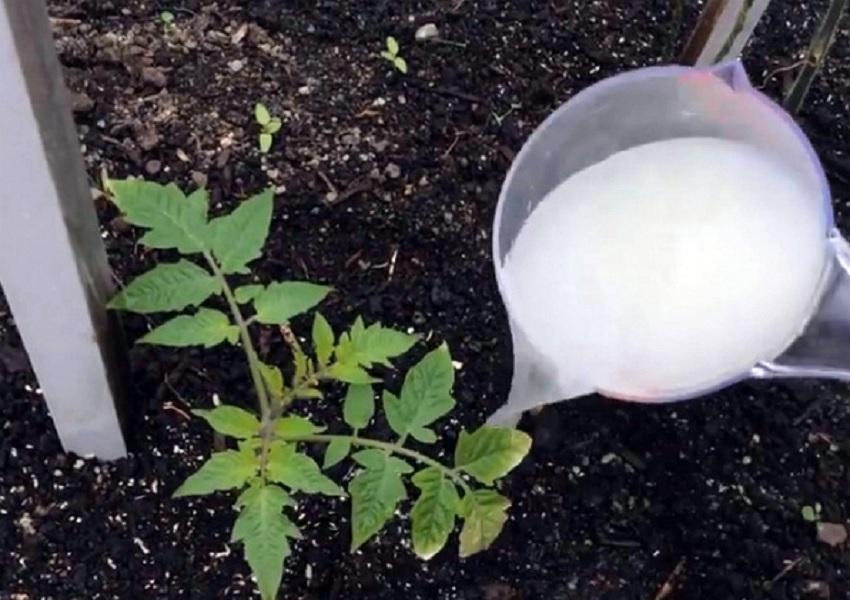
An effective organic fertilizer is a homemade mixture of 1 liter of boiling water and 1 glass of wood ash. This solution is sprayed on plants when buds appear on the bushes.
Watering and loosening
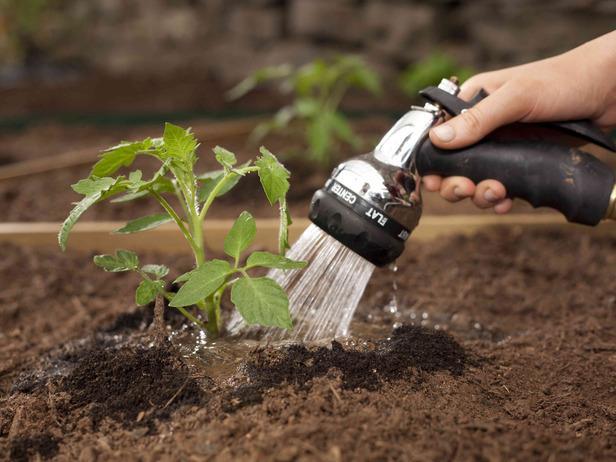
The pink elephant requires abundant and frequent watering. The first watering is done at planting, then repeat 2-3 times weekly. Experts recommend 10 liters of water for a mature bush.
During periods of drought, it is recommended to cover the soil with sawdust to retain moisture.
In greenhouse conditions, a drip irrigation system is recommended to maintain the required humidity. Between waterings, the soil should be loosened to provide additional aeration.
Pinching out side shoots and shaping the bush
The hybrid has features that must be taken into account when planning care:
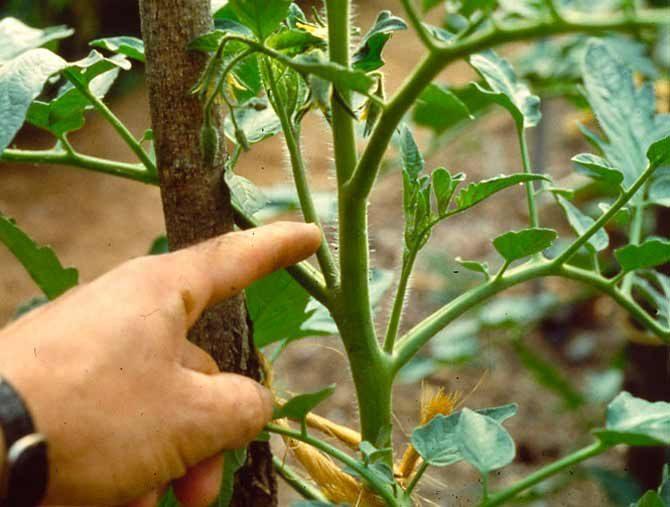
- the bush produces a good harvest when one or two stems are formed, no more;
- Stepchildren are removed as the bush develops;
- The bushes require garters due to the increased weight of the fruits;
- recommends plucking buds before they begin to open, as this procedure reduces the plant's costs for forming a full-fledged flower;
- The lower leaves are regularly torn off, this procedure is carried out weekly, thus reducing the possibility of fungal infection.
Prevention of diseases and pests
The pink elephant exhibits above-average disease resistance. The risk of infection can be avoided with timely preventative measures:
- Before planting, it is recommended to treat the soil with a solution of manganese or copper sulfate (this disinfects the soil);
- the risk of developing root rot is reduced by timely weeding and removing all weeds;
- if there is a minimal risk of developing late blight, and dark spots appear on tomatoes or bushes, they are treated with preparations containing copper;
- Monitoring the hybrid helps to promptly resolve the problem of potassium deficiency in the soil: a stunted and diseased appearance is evidence that the tomatoes need additional feeding;
- when cobwebs appear, the bushes are treated with soap solutions;
- Insect pests are removed using soft brushes.
Tip! Plants that help prevent infestations in greenhouses include mint, parsley, and celery.
Reviews from gardeners who planted
Those who have been growing the Pink Elephant hybrid for several years recommend additional measures to improve the taste of tomatoes. These methods are known only to experienced gardeners. To preserve the sweetness and juiciness of the pulp, it is recommended to water the tomato plants with wood ash. The formula for this mixture is 10 liters of water per 1 cup of ash.
Reviews from gardeners who grow tomatoes in poor and depleted soils indicate that regular watering with herbal infusions or manure helps enrich the soil with nutrients. Add 1 liter of the ingredients to 10 liters of water. Tomatoes are watered with these mixtures once every two weeks.
To care for the hybrid, it is recommended to use special staking tools. Reviews from gardeners indicate that the hybrid is not suitable for commercial cultivation; significant changes in weather conditions can affect the yield. Pink Elephant is suitable for growing in small garden plots and, with proper care, will provide owners with tasty, large fruits.
Related posts:
 Description of Sugar Elephant tomatoes and characteristics of the fruits
 Characteristics and description of the Orange Elephant tomato variety
 The best eggplant varieties for growing in a polycarbonate greenhouse: planting and care
 Description and characteristics of the Pink Giant tomato variety, yield and cultivation
 The best grape varieties for growing in the Urals, planting and care rules in summer
 Description and cultivation technology of the Dubovsky Pink grape variety
 Methods for planting and propagating cherries at home
 Description of the Pink Leader tomato, growing seedlings and care instructions