
- General description of tomato
- Varietal characteristics of tomatoes
- Productivity and fruiting
- Application of fruits
- Resistance to diseases and pests
- Advantages and disadvantages of the Pink Giant tomato
- How to grow tomatoes?
- Seed preparation
- Sowing seedlings
- Pricking out and care
- Transfer to a permanent location
- Further care
- Tying up bushes
- Watering plants
- Weed control
- Bush formation
- Top dressing
- Fruit ovary
- Pest and disease control
- Harvesting
- Storage of the harvest
- Vegetable growers' opinions about the variety
Lovers of large-fruited dessert tomatoes have long been familiar with the Pink Giant variety. This tomato isn't known for its high yield, but its flavor is truly impressive. It can be grown both in open beds and greenhouses. This plant requires a lot of attention and careful care to ensure a high-quality and abundant harvest.
General description of tomato
This indeterminate tomato bush reaches 2.5 meters in height. It's considered a mid-season variety. This supergiant has good resistance to major diseases and is grown both in greenhouses and outdoors.
The pink giant requires mandatory tying and bush shaping. It requires constant care, fertilizing, and irrigation. Plant the bushes exclusively in a well-lit area.
Varietal characteristics of tomatoes
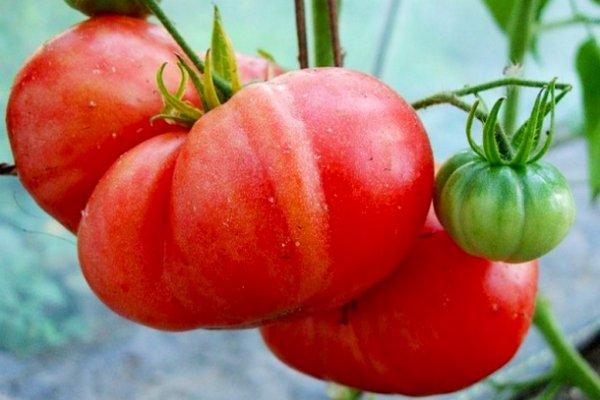
The Pink Giant differs from its competitors in its varietal characteristics, by which connoisseurs can easily recognize it.
Productivity and fruiting
With proper cultivation practices, the Pink Giant produces up to 4 kg of fruit per bush, and up to 12 kg of tomatoes per square meter. This figure is considered average. Fruiting lasts for a long time, and you can enjoy delicious tomatoes until the first frost.
Application of fruits
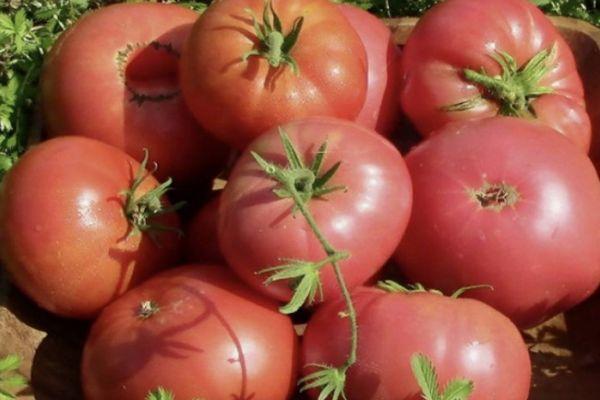
Large, fleshy, and sweet fruits are suitable for fresh consumption. Surplus produce is used to make sauces, juices, and ketchup. These tomatoes should not be used for whole-fruit canning or pickling, as they are not only large but also thin-skinned.
Resistance to diseases and pests
With timely preventative measures and seed and soil treatment before sowing, Pink Giant is not susceptible to fungal diseases. The plant's immunity is considered average.
Advantages and disadvantages of the Pink Giant tomato
This variety boasts significant advantages over its competitors, making it a favorite among many gardeners. Its advantages include:
- large fruit size;
- excellent taste;
- beneficial properties of the harvest;
- good disease resistance;
- resistance to temperature changes;
- good tolerance to insufficient hydration;
- The harvest is suitable for long-distance transportation.

Experienced gardeners also point out minor disadvantages of the variety, among which are:
- demanding in care;
- the need for garter and shaping of the bush;
- unsuitability of fruits for pickling and whole-fruit preservation;
- relatively low yield rates.
How to grow tomatoes?
Growing the Pink Giant can present certain challenges for beginning gardeners. The process has its own peculiarities and nuances.
Seed preparation
Seed preparation begins a week before planting. They should be soaked for several hours in a weak solution of potassium permanganate to kill pathogens. After this, the seeds are treated with a growth stimulant and placed in a cool place for three days. Then, the seeds are removed, soaked in a damp cloth for four days, and allowed to germinate. They are then carefully washed.
Sowing seedlings
Before sowing the Pink Giant, treat the soil with a weak solution of potassium permanganate and copper sulfate. Three days later, add a solution of mullein, superphosphate, and bird droppings. Make small holes in the fertilized soil, no more than 1 cm deep, leaving about 2.5 cm between them. Place a couple of seeds in each hole, cover with soil, and then moisten thoroughly before placing in a well-lit, warm location. Seedlings should appear within a week.
Pricking out and care
Pink Giant is a fast-growing variety, so after germination, the container should be placed in a cool room with a temperature no higher than 15°C for a week. This will prevent the seedlings from stretching. Pricking out occurs after three true leaves appear.
The tomatoes are watered generously, removed from the container, and the longest middle root is slightly shortened, after which they are planted in prepared individual pots.
Transfer to a permanent location
Transplant the Pink Giant to its permanent location once the threat of night frost has completely passed. No more than three plants should be planted per square meter, with row spacing of 70 cm. Choose a well-lit, draft-free planting site. It's a good idea to fertilize the area with organic matter in the fall.
Further care
The quality and quantity of the resulting harvest largely depends on proper care and adherence to recommendations for a given variety.
Tying up bushes
Pink Giant requires staking, so when planting, immediately drive in two stakes about 2 meters long nearby to serve as support. You can tie the tomato plant directly to the stakes or to a trellis.
Watering plants
The Pink Giant tomato does not tolerate excessive watering. Water it frequently, but with small amounts of warm water applied to the roots. This is done in the evening. Once a week, apply an infusion of onion or egg peels.
Weed control
The area intended for growing tomatoes must be free of weeds. Weeds are removed by loosening the soil, which should be done after each watering. Dried grass can be used as mulch.

Bush formation
The Pink Giant tomato plant is trained into one or two stems. A side shoot is left on the bottom of the second stem. All other side shoots must be removed.
Top dressing
For fertilizing the Pink Giant, apply complex mineral fertilizers, including those containing nitrogen and potassium, three times during the growing season. The first application is at planting, then at the beginning of flowering, and when fruit set begins.
Fruit ovary
When fruit sets are forming, leave no more than four tomatoes in each cluster; carefully remove the rest. Otherwise, the fruits will be medium-sized. Leave four clusters on each plant.
Pest and disease control
To prevent diseases, tomato plants are periodically sprayed with iodine, boric acid solution, and potassium permanganate. Moderate watering and good ventilation help prevent fungal diseases. The use of pesticides protects tomatoes from the Colorado potato beetle, late blight, black leg and other pests.
Harvesting
Harvesting begins 110 days after the Pink Giant's seedlings emerge and continues until approximately mid-September. Harvesting is best done in dry weather to extend the tomatoes' shelf life.
Storage of the harvest
At ambient storage temperatures of approximately 4°C, Pink Giant fruits retain their quality for approximately one month. Lowering the temperature to 2–0°C extends the shelf life to 1.5 months. This preserves not only the marketability but also the flavor.
Vegetable growers' opinions about the variety
The Pink Giant is no longer a new addition to gardeners' beds, so it's worth asking for feedback from those who have personally planted these tomatoes. Their comments can help you identify the tomato's strengths and weaknesses.
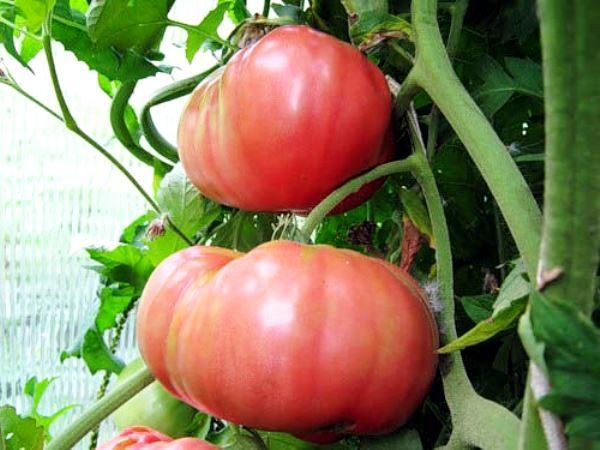
Irina Grigoryevna, a gardener: "I use the Pink Giant in my greenhouse. At first, I had some trouble. The large fruits would break off the branches, and I had to pick them unripe. Over time, I learned how to properly tie the plants and manage the harvest, and now I'm very happy with the results."
Viktor Kirillovich, owner of a private plot: "I grow Pink Giant in open ground. It's a fussy tomato and requires a lot of attention. Because I'm retired and have a lot of free time, I can provide the variety with the proper care. We use the harvest fresh, and sometimes my wife makes ketchup out of the excess. The taste is simply amazing."
Inga Vladimirovna, a village resident, said: "I bought Pink Giant seeds at the store along with other tomatoes. I liked the picture on the packaging. I cared for the tomatoes as I did with the others, but then I ran into a number of problems. The branches couldn't support the large fruits, bending heavily and falling to the ground. Due to insufficient light, the tomatoes developed uneven coloring. The harvest from this variety wasn't very large. What pleased our family was the very good taste of the fruits, which the children ate with pleasure."
Related posts:
 Description and characteristics of Giant tomato varieties for growing in greenhouses and open ground
 Description of varieties of sowing peas and cultivation, to which family they belong
 Description and characteristics of the sweetest tomato varieties for greenhouses and open ground
 Description of the best tomato varieties for open ground and greenhouses in the Krasnodar region
 Description and characteristics of the Pink Elephant tomato variety, yield and cultivation
 The best eggplant varieties for growing in a polycarbonate greenhouse: planting and care
 Description and cultivation technology of the Dubovsky Pink grape variety
 Description of the Raspberry Giant tomato variety, cultivation and care features