
The mid-season Tsar Bell tomato is characterized by its unique shape and mild, delicious flavor. Its fruits are versatile and can be eaten fresh, preserved, or incorporated into dietary foods. The compact plants are highly productive.
Benefits of Tomatoes
The Tsar Bell tomato is a hobby selection and is included in the Russian State Register. The variety's characteristics and description indicate that it can be grown in both open ground and plastic greenhouses.
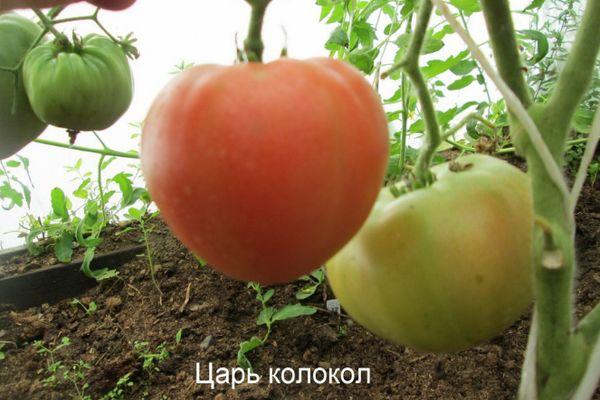
A mid-season tomato that begins to bear fruit 100-105 days after emergence.
The bush is compact, determinate, and standard, reaching a height of 80-100 cm during the growing season. The plant has a moderate number of large, rich green leaves. The bushes require shaping, tying to a support, and additional support for the fruit clusters.
A simple inflorescence begins at the 9th leaf, with subsequent flower stalks forming at intervals of 1-2 leaves. High yields are achieved by cultivating a bush with 2-3 stems.
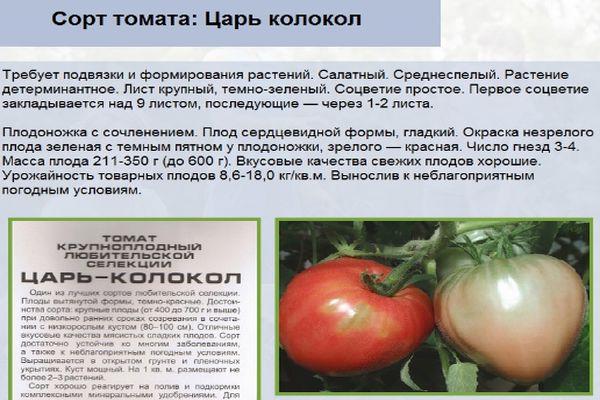
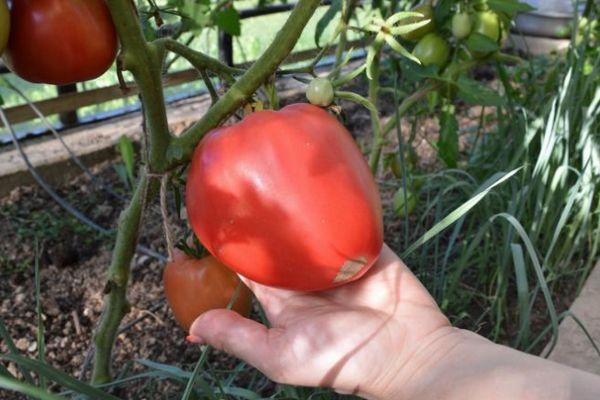
Fruit descriptions focus on shape and flavor. Tomatoes are large, weighing 400-800 g. Depending on the growing region and quality of care, yields can reach 8.6-18 kg per square meter.
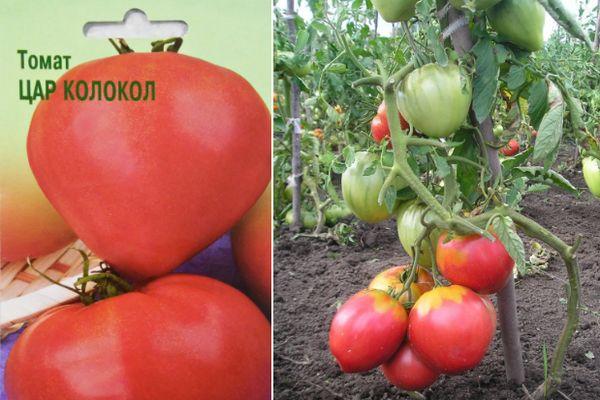
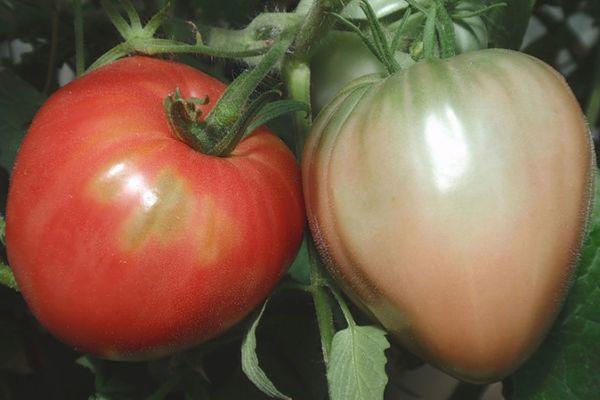
The first fruits are larger in size. The tomatoes are round, slightly elongated, and have a slightly ribbed surface.
At biological maturity, tomatoes are pale green. As they ripen, they acquire an intense, dark pink color. The fruit's skin is firm but not thick, preventing cracking during ripening.
The pulp is juicy, meaty, not watery, with a distinct sweet flavor. The fruits are high in beta-carotene, making them ideal for baby food and dietary supplements.
In cooking, tomatoes are used fresh, in sauces, purees, juices, and hot dishes. They are also used as an ingredient in canning.
Harvested fruits withstand long-distance transportation well and retain their flavor during storage. Tomatoes harvested at the technical ripeness stage are ripened in a warm environment.
This variety is resistant to fungal and viral diseases of nightshade crops. It adapts to temperature fluctuations and tolerates adverse weather conditions.
Cultivation techniques for the variety
To grow a bountiful harvest, special attention must be paid to seedling preparation. Seeds are sown in early March. Use a light soil consisting of humus and turf. Washed river sand can be added to the mixture to improve the soil structure.
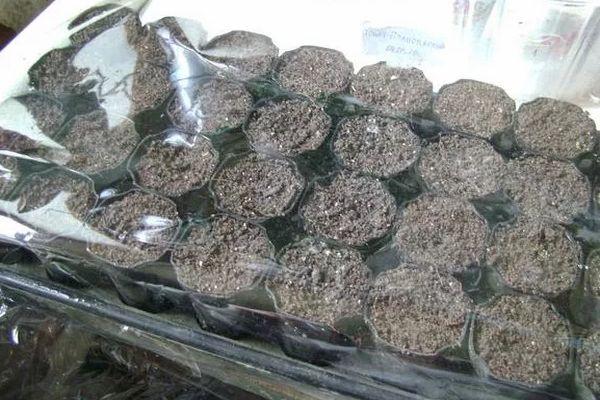
Before planting, treat the seeds with a growth stimulant. Pour the soil mixture into the container, compact it lightly, sow the seeds, and cover with a 1.5 cm layer of peat moss.
The seeds are watered with warm water using a spray bottle, and the container is covered with plastic wrap or glass until the sprouts emerge. Germination requires maintaining the air temperature at 25°C. Once the sprouts emerge, the temperature is lowered, and the containers are exposed to bright light.
When the first true leaves are forming, the plants are pricked out. This procedure allows us to weed out weak seedlings and stimulates root development. Plants planted in individual containers thrive and have access to fresh air.
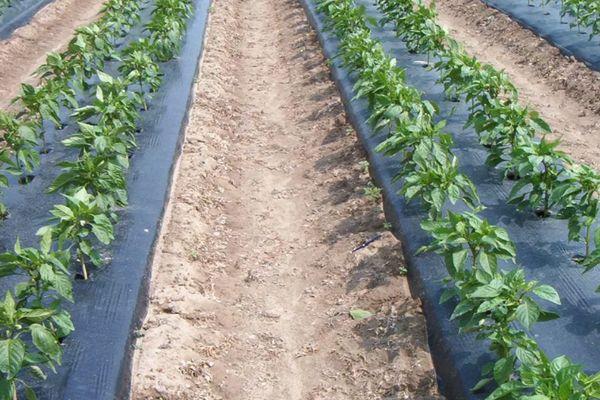
It is recommended to plant bushes in open ground after the end of spring frosts. Cover the bushes with plastic film for the first few days after planting. It is recommended to plant three bushes per square meter.
During the season, the bushes are fed 3-4 times with complex mineral-based fertilizers. For normal plant development and fruit ripening, moderate watering is required.
Mulching can prevent the topsoil from drying out. Use black fiber or organic materials (leaves, wood shavings, straw) as mulch. This ensures drip irrigation and prevents weed growth.
Fungal diseases are controlled through preventative measures. Before planting, the soil is treated with a hot, aqueous solution of potassium permanganate.
When growing seedlings, the bushes are regularly sprayed with special preparations. Regular ventilation of the greenhouse, loosening the soil, and removing excess lower leaves also help.
To combat biological pests, weeds are removed, which are the natural habitat of aphids and beetles. When signs of damage to plants appear, use folk remedies (soap solution, hydrogen peroxide, celandine decoction).

Opinions and recommendations of vegetable growers
Reviews from gardeners who grow Tsar Bell tomatoes attest to the variety's undemanding nature. Those who have planted this variety report abundant fruit production and excellent taste.
Evgeny Evdokimov, 57 years old, Adler.
We've been growing the Tsar Bell tomato in an open field for many years. It requires little care throughout the growing season. With proper cultivation practices, including timely watering and weed control, you can reap an excellent harvest. It requires mineral fertilizers containing potassium and phosphorus. The fruits have tender flesh, are pink in color, and have a rich tomato flavor. We primarily eat them fresh.
Related posts:
 What varieties of tomatoes are best to plant in a polycarbonate greenhouse?
 The best eggplant varieties for growing in a polycarbonate greenhouse: planting and care
 Description of the best varieties of black tomatoes for open ground and greenhouses
 The best grape varieties for growing in the Urals, planting and care rules in summer
 Description of the best tomato varieties for open ground in the central zone
 Description of rare collectible tomato varieties from Valentina Redko, new for 2025
 Description of the best tomato varieties and ratings for greenhouses in 2025
 The most suitable tomato varieties for growing in the Donetsk, Kharkiv and Luhansk regions