
Boric acid is essential for plants. It helps improve crop development and increase yields. A deficiency can be easily detected by the plants' appearance. When boron is deficient, crops lag in development, their leaves become brittle and wrinkled, their flower production decreases, and their fruits become smaller and deformed.
Purpose of the substance
Boric acid is often used in gardens and vegetable patches. Boron is an essential micronutrient needed for the healthy development of crops. It has a beneficial effect on metabolic processes, promotes chlorophyll synthesis, and facilitates proper root respiration.
The effects of boron deficiency are noticeable during dry weather. To detect a boron deficiency, inspect the plants, paying particular attention to young parts.
How does the deficiency manifest itself?
The plant needs treatment if the following symptoms are detected:
- chlorotic spots on young leaves and yellowing of veins;
- small sizes, curling and falling of leaves;
- slowing down the growth of apical buds and increasing the development of lateral buds;
- weak flowering of the crop and poor fruit set;
- fruit deformation;
- corking of fruits in pome crops;
- dying off of the bark on the shoots.
Boron deficiency significantly slows crop development. If action isn't taken promptly, there's a risk of losing the entire harvest. However, overfertilizing is also important. Excessive amounts of the mineral cause fruits to ripen faster but don't store as well. Foliage can also be burned.
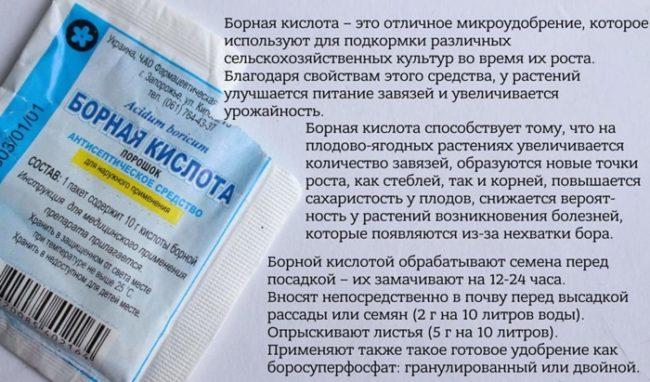
Breeding rules
Boron is insoluble in cold water. Therefore, it must be diluted exclusively in warm liquid. However, heating the entire 10 liters of water isn't always necessary. To achieve the desired result, you can take the required amount of fertilizer and mix it with 1 liter of water at 70-80 degrees Celsius. Cool the resulting stock solution and add water to make 10 liters of the mixture.
Features of use
For potatoes
Symptoms of boron deficiency in potatoes include the development of fungal scab and general stunting. This includes stunted growth, leading to yellowing of the foliage. Petioles turn red and become more brittle.
Potatoes' boron requirements are affected by soil acidity, the mineral balance in the soil, and temperature. If potassium and nitrogen application rates are exceeded, the crop requires more boron. If phosphorus application rates are increased, the requirement decreases.
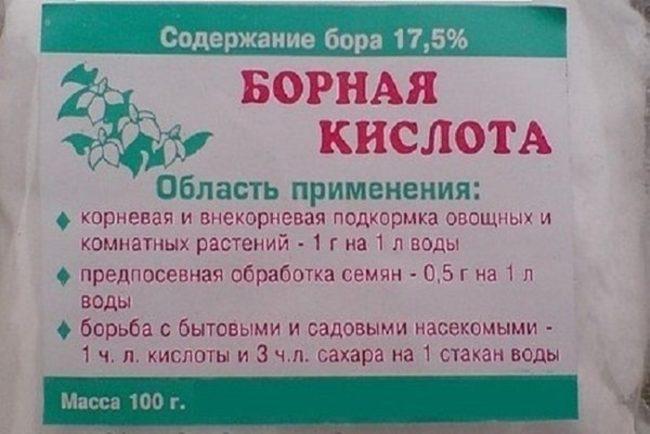
When symptoms of scab appear, it is recommended to use a solution based on 6 grams of boric acid and 10 liters of water. This amount is enough for 10 square meters of beds. To prevent the disease, you can treat the tubers with a 1-1.5% solution. You will need 50 milliliters of the solution per kilogram.
For grapes
Symptoms of boron deficiency in grapes include the formation of chlorotic spots between the veins of the leaves.
At the same time, they gradually increase in size. Other signs of trouble include the absence of ovaries on the clusters. The new seedling dies within a year. This can also occur 1-2 years after planting in a permanent location.
Even a single treatment during the budding stage can increase yields by 20%. Depending on the grape's characteristics, zinc salts can be added to the beneficial mixture. To create a beneficial mixture, it is recommended to use 5 grams of boric acid and zinc sulfate per 10 liters of water.
Fertilizing strawberries
You can fertilize strawberries with boric acid twice a season. However, keep the following in mind:
- The first application should be in early spring. Use 1 gram of boric acid per 10 liters of water. Mix it with a small amount of hot water first. Also add 1 gram of potassium permanganate. Use the prepared mixture to moisten strawberry beds. Use 10 liters of solution for 30-40 strawberry plants.
- The second feeding should be done before flowering begins. This is recommended during the bud formation stage. Spray the plants with a mixture of boric acid, potassium permanganate, and wood ash. Use 300-500 milliliters of the mixture per bush. To prepare this mixture, mix 1 cup of wood ash with 1 liter of boiling water, and let it steep for 24 hours. Strain the mixture. Then, add 2 grams of boric acid, the ash infusion, and 2 grams of potassium permanganate to 10 liters of water.
For tomatoes
Symptoms of boron deficiency in tomatoes include darkening and dying of the growing tip of the stem and rapid growth of new shoots. At the same time, the petioles of young leaves become very brittle.
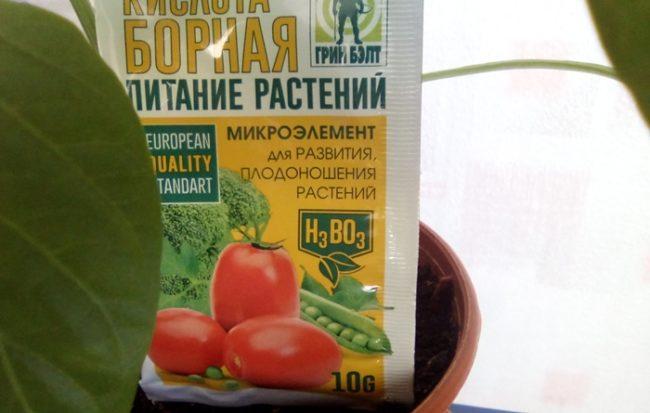
To prevent problems, soak the planting material in a boric acid solution. This requires 0.2 grams of fertilizer per liter of water.
Before planting seedlings, add boric acid to the soil. Foliar feeding should also be used before flowering. Use 10 grams of boric acid per 10 liters of water. Foliar feeding with the same concentration should also be done during the green fruit stage. This will help accelerate ripening and sugar accumulation in the fruit.
For beets
In gardening, signs of boron deficiency in beets include heart rot. This is caused by a fungal infection called phomosis. The leaves become covered with concentric light-brown spots with black dots. The disease subsequently affects the root, causing its center to rot.
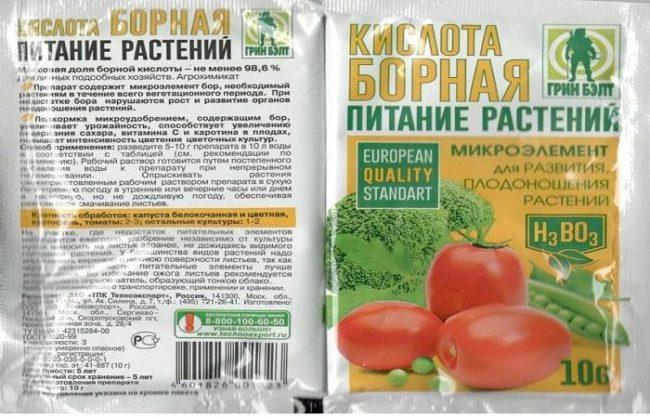
To prevent leaf spot and other diseases, it's recommended to apply a combination fertilizer containing boron. Before planting, soak the seeds in a 0.1% boric acid solution for 10-12 hours. During the growing season, one foliar application at the 4-5 leaf stage is sufficient. To prepare this fertilizer, use 5 grams of the substance per 10 liters of water.
From ants
The product has pronounced insecticidal properties. Spraying garden beds helps control ants in the area. Boron enters the insects' digestive tracts and disrupts their water balance. The effect of the substance manifests gradually, as it accumulates. Ants typically die 10-12 days after consuming the bait.
To achieve the desired results, you can use the following recipes:
- Mix half a small spoon of boric acid with 2 egg yolks. Form small balls from the mixture and place them along the ant trails.
- Mash 3 boiled potatoes and 3 egg yolks, add 1 small spoon of sugar and 10 grams of acid, and stir. Roll into balls and place in areas where ants live.
- Mix 2 tablespoons of glycerin, 1 tablespoon of water, 1.5 tablespoons of sugar, and 1/3 teaspoon of acid. Form the resulting mixture into balls.
For flowering
Boron promotes faster calcium absorption and abundant bud formation. For foliar feeding, use a 0.1% acid solution. Use 10 grams of the solution per 10 liters. When using boron for foliar feeding, the concentration of the active ingredient should be halved. Spray the bushes with the resulting solution during flowering and budding.
For cucumbers
Cucumbers should be fertilized in the same way as tomatoes. A 0.05% solution is recommended. Using boron in gardening helps improve the flavor of fruits, stimulate fruit set, and stimulate fruit growth. This substance also increases plant resistance to drought and strengthens their root system.
For apple and pear trees
Signs of boron deficiency in apple and pear trees in the garden include thickened leaves, darkened veins, and leaf drop. Foliar feeding can help combat this problem. Apply 10-20 grams of the active ingredient per 10 liters of water. Apply in the evening, before sunset.
Precautionary measures
A small amount of fertilizer is harmless to humans. However, when handling it, protective clothing, a respirator, and gloves are required. After spraying, wash your hands and face with soap.
Boric acid is an important substance that helps improve plant growth and increase yields. It's important to follow the instructions when using it.