
The growth, development, and fruiting of garden and vegetable plants directly depend on the quality of the soil. Loose, fertile soil with a neutral acidity level allows for a beautifully blooming garden and high-quality, abundant harvests of vegetables, berries, and fruits. However, in situations where acidity significantly exceeds the acceptable level, liming is used to add essential nutrients to the soil.
Why is soil liming necessary?
In addition to reducing acidity, liming improves the soil's composition and fertility, enriching it with nutrients and beneficial substances. As a result, crops grown in such soil are characterized by excellent fruiting and increased yields.
The main reasons for applying lime to a land plot are:
- During the chemical reactions that occur when lime enters the soil, magnesium and calcium compounds are released, which are necessary for the proper growth and development of plants;
- beneficial bacteria and microorganisms, on which soil fertility depends, do not survive in an acidic environment;
- After liming, the effectiveness of organic and mineral fertilizers increases;
- Slaked lime helps reduce the amount of heavy metals and toxic substances in the soil.
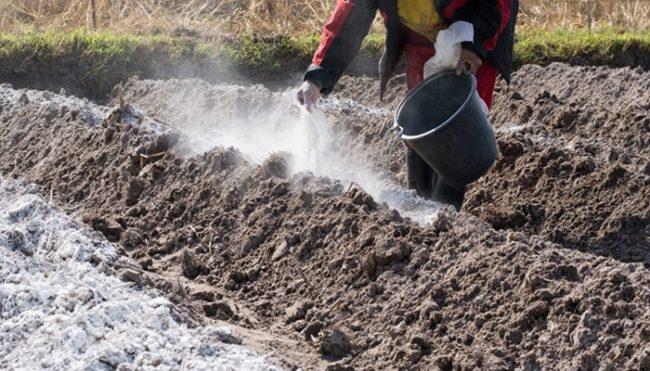
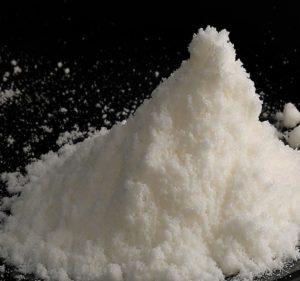
To reduce soil acidity, lime is used, first slaking it with plain, cold water. This solution is called "fluff lime," and it is used in dry form, added to the soil in early spring or fall, after harvest.
Important! Due to the inability to obtain nutrients and moisture from acidic soil, plant growth and development are inhibited or even stop altogether.
What degrees of acidity exist?
The amount of fluff added to the soil directly depends on its acidity.
- A pH value of 6.5 to 7.3 and above is considered neutral.
- Slightly acidic soil is defined as a pH between 5.4 and 6.3.
- Acidic soil is defined as a pH value between 4.6 and 5.3.
- The most acidic soils are considered to be marshy soils with a pH of 3.5 to 4.6.
Acidity levels above 7.4 pH indicate the presence of an alkaline component in the soil. Such soil does not require deacidification and is considered carbonate.
Important! Low or high soil acidity indicates the presence or absence of nutrients and beneficial substances.
Types of soils by acidity
To reduce soil acidity, in addition to calcium oxide or slaked lime, dolomite flour, ash and crushed chalk are used.
Soil that has a whitish tint, indicating a high concentration of acidic substances, requires special attention.
Types of soil requiring deoxidation:
- Lowland peat or marshy soil is considered highly acidic;
- coniferous, clayey and peaty soils also belong to the acidic variety;
- turf and heather soil contains a small amount of acids, therefore it is slightly acidic;
- Humus-rich leaf and turf soil is considered neutral.
Important! If the acidity level exceeds the neutral mark, the soil is considered carbonate, alkaline, and does not require liming.
Methods of determination
pH is determined using specialized devices or litmus paper, which are available at garden centers and stores. If this is not available, soil acidity can be determined using household items.
Soda
To check for the presence of soil with a high acid content in a garden plot, use ordinary baking soda.
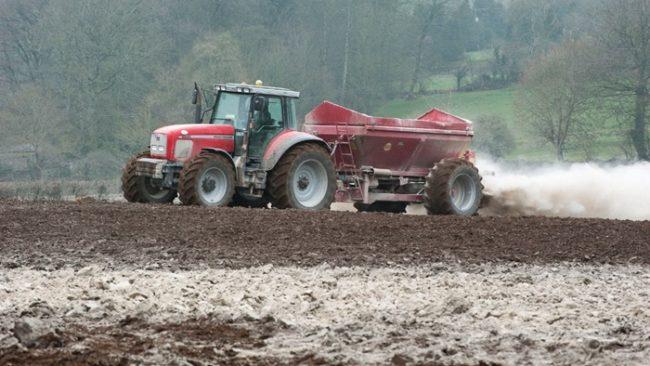
Place a small amount of soil in a suitable container and, using water, form a thick paste. Sprinkle baking soda on top of the resulting mixture. If the mixture starts to fizz or foam, it indicates an increased content of foreign substances in the soil. This type of soil requires liming.
Cherry or currant leaf tea
To determine the quality of the soil in a garden or vegetable garden, you can use green currant or cherry leaves.
- The leaves are collected, brewed with boiling water and left to infuse for 20-30 minutes.
- Add soil from the garden plot to the resulting broth and leave for a few minutes.
- As a result, the liquid should turn blue or green.
Important! If the decoction turns blue, the acidity level is too high. Green herbal infusion indicates a neutral or alkaline environment.
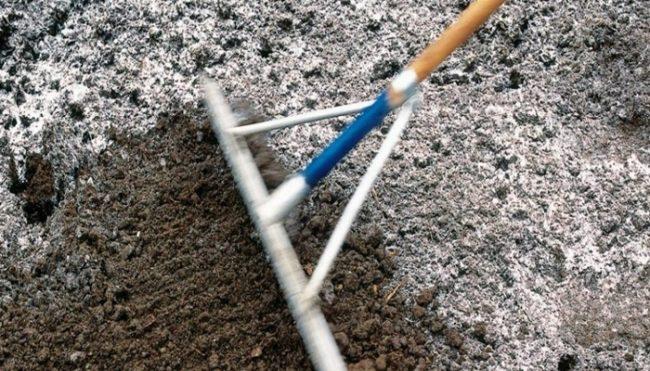
Table vinegar
To determine whether the soil is suitable for planting, use ordinary table vinegar.
Dig a small handful of soil from your garden or vegetable patch and add a few drops of vinegar. If a vigorous reaction occurs, accompanied by hissing and foaming, the soil is neutral or low in foreign matter. The absence of a chemical reaction indicates increased soil acidity.
To identify problem areas, it is recommended to collect a handful of soil from different parts of the garden or vegetable patch.
Grape juice
Using grape juice, soil acidity is tested in early spring, at the beginning of the growing season, or in late autumn, after the harvest.
A handful of soil is poured into a glass containing the drink. If no reaction occurs, the concentration of foreign substances is too high.
Other methods
There are other ways to determine the quality of the soil in a garden plot.
- If dandelions, horse sorrel, peppermint, and plantain are actively growing in the area, the soil's acidity level is too high and requires additional liming. However, overgrown clover and quinoa indicate neutral or alkaline soil.
- A grey or whitish coating on the surface of the soil indicates that the soil is unsuitable for growing most vegetable, berry and fruit crops.
- If after watering or rain a film is observed on puddles and the color of the water takes on a reddish tint, this means that the soil has a high acid content.
Important! Folk methods can determine the presence of acids in the soil, but not the exact pH level, which determines the amount of lime used.
Rules for making
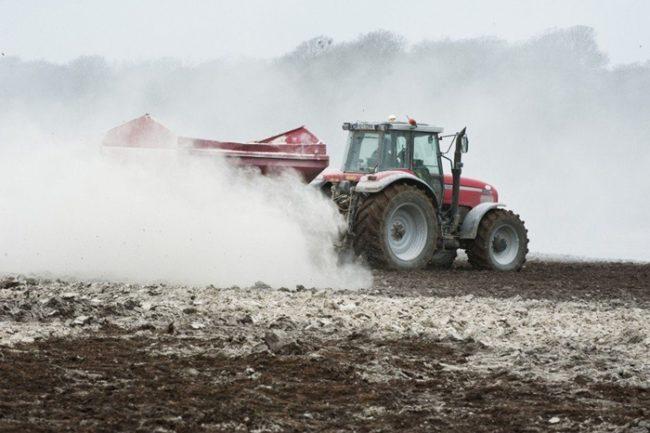
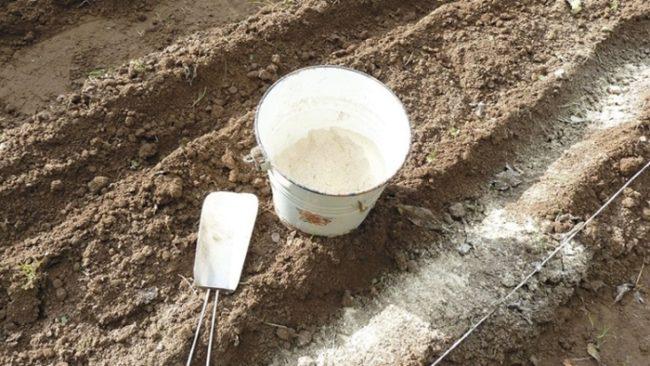
Liming is carried out in early spring, 3-4 weeks before the start of planting, or in late autumn, after the final harvest.
The methods of applying lime and the rate of its application directly depend on the composition and quality of the soil:
- in case of high soil acidity, use up to 900 g of slaked fertilizer or dolomite mixture per 1 sq. m of area;
- in acidic soil add no more than 800 g of slaked lime per the same volume of area;
- with a low acidity level, 500 to 700 g of the preparation per square meter of land will be required;
- For soil with a neutral indicator, no more than 300 g of calcium oxide per 1 sq. m of garden plot is required
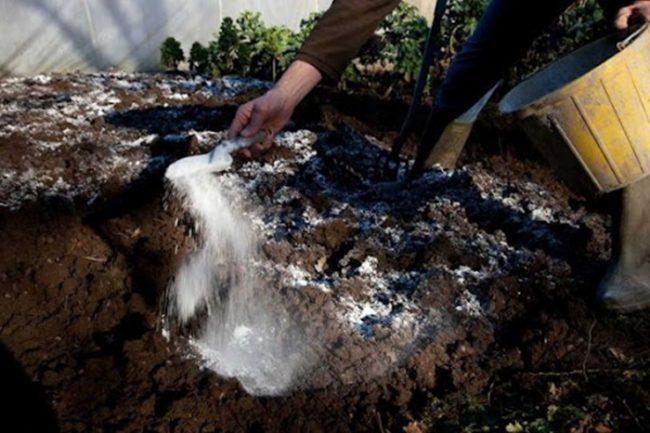
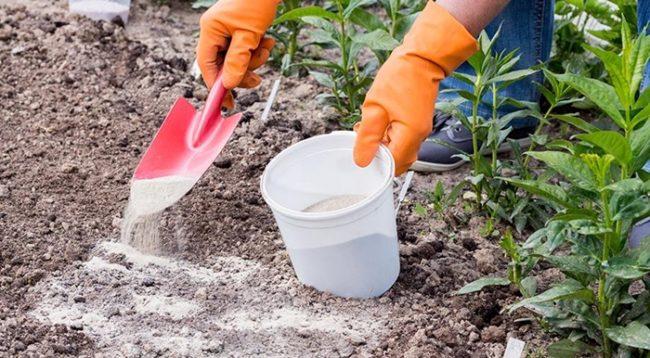
The substance is scattered on the surface of the soil, after which the soil is treated, burying the lime to a depth of 15-20 cm from the surface.
Common mistakes and how to avoid them
To achieve maximum results from soil liming, it is necessary to follow the sequence of operations and avoid the following mistakes:
- Do not use quicklime for this work. It will not benefit the plants and will cause severe burns to the rhizomes.
- Only cold water should be used to slake lime. Adding boiling water to the powder will result in large, hard stones that are unusable.
- Deoxidation work should not be carried out in conjunction with the application of cow manure to the soil. A chemical reaction occurs between these substances, rendering both the manure and the fertilizer useless.
Also, when liming the soil, the use of calcium-based fertilizers is reduced.