
Iron is one of the most important plant nutrients. It is essential for the care of major agricultural crops. Iron deficiency disrupts chlorophyll synthesis in foliage. Consequently, photosynthesis gradually ceases. To prevent this, it's best to use iron chelate-based products.
Characteristics of chelates
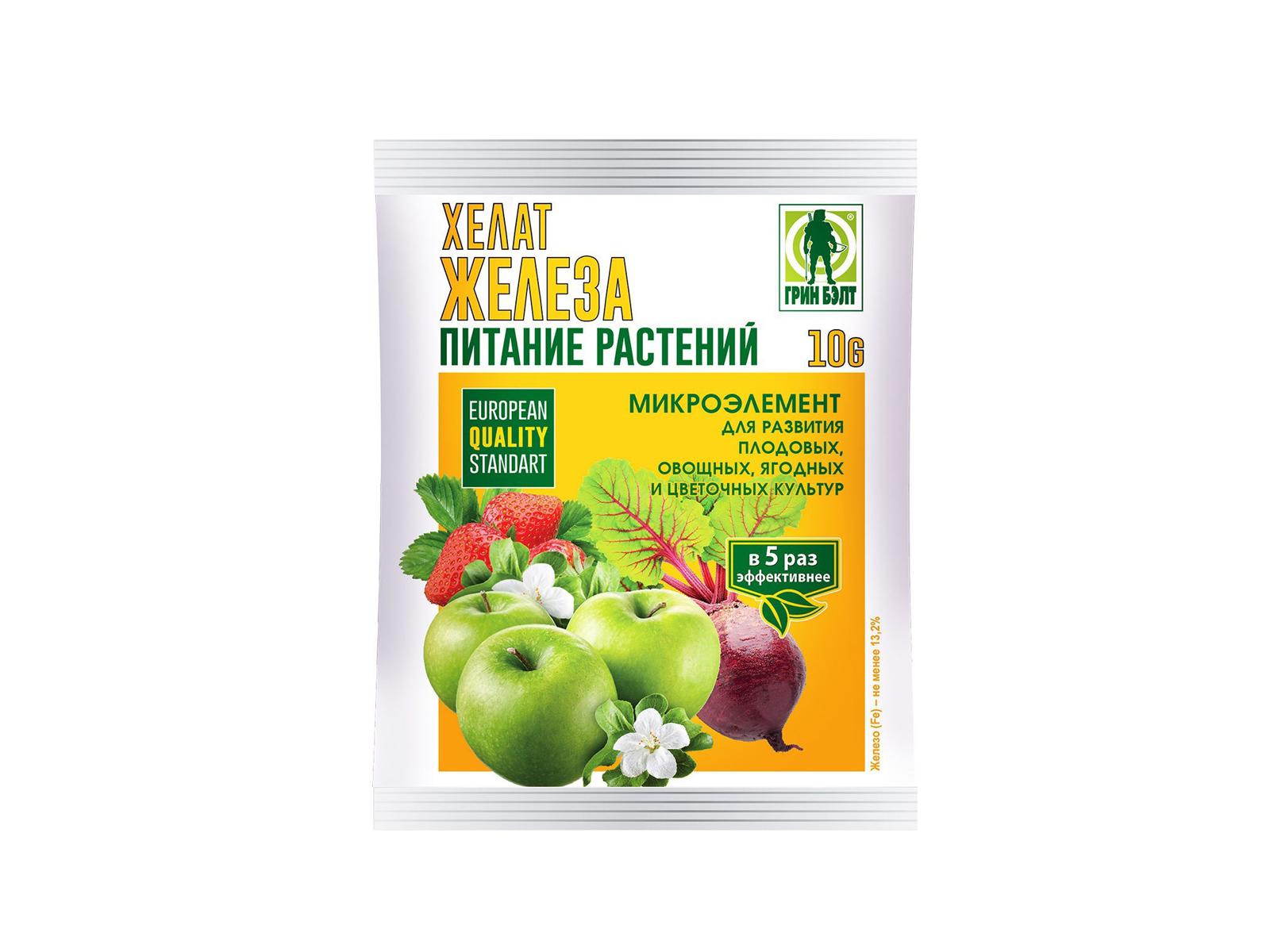
Chelates are complex organic compounds consisting of a chemical bond between a trace element and a chelating agent. In other words, chelates combine organic acids with metal ions. Iron chelate is available as an orange powder with no distinct taste or odor.
Organic acid molecules readily encapsulate metal ions, forming a kind of shell. This allows the micronutrient to reach crops without being destroyed by moisture, soil, or air.
The agent firmly holds the metal molecule until it reaches the crop. Chelating agents then release the metal and transform it into biologically available elements. The agent itself also breaks down into chemical elements, making them easily absorbed by plants.
Chelated complexes are biologically active. Furthermore, their structure resembles natural elements. This makes them easily absorbed by plants. Therefore, chelated fertilizers are completely safe even for young plants.
Under natural conditions, these substances are formed under the influence of humic acids. This is responsible for the biological activity of the fertilizer. While a standard complex is only absorbed by 30-40%, a chelated complex absorbs 90%.
Advantages and disadvantages of using as a fertilizer
The key benefits of iron chelate include the following:
- absence of toxic effect;
- compatibility with many complex fertilizers;
- stability of operation in soils with different acidity levels;
- no reaction with poorly soluble substances;
- no influence of soil microorganisms on the properties of fertilizer;
- easy to dissolve in water;
- good absorption by cultures;
- the possibility of combining with any pesticides;
- High efficiency when applied foliarly.
When applied to the soil, iron chelate remains available for root uptake for a long time. After three days of active interaction with cells, the metal cations are transformed into tissue metabolites and significantly stimulate photosynthesis.
Iron chelate has virtually no drawbacks. The only downside is the risk of overfeeding plants with iron when applied in excess. This negatively impacts their development.
How to make it yourself
Making chelated fertilizer isn't particularly difficult. You can use a variety of recipes:
- Mix 4 grams of citric acid with 1 liter of boiled water. Then add 2.5 grams of ferrous sulfate. The resulting solution will be light orange in color. It contains a complex salt of divalent iron. This solution can be used for watering and spraying.
- Mix 10 grams of ferrous sulfate with 1 liter of water. Then add 20 grams of ascorbic acid. The resulting solution can be used for watering and spraying plants affected by chlorosis.
Homemade solutions are considered just as effective as store-bought ones. However, homemade solutions cannot be stored for long periods of time. After 3-4 days, the metal precipitates. As a result, treatment with the solution becomes useless.
Terms of Use
To ensure the desired effect from iron chelate, it's important to strictly follow the instructions. This also applies to the specific plant species being treated.
Use for indoor plants
The rules for using chelated fertilizers for indoor plants depend on their appearance and health. For preventative purposes, plants are treated regardless of their condition.

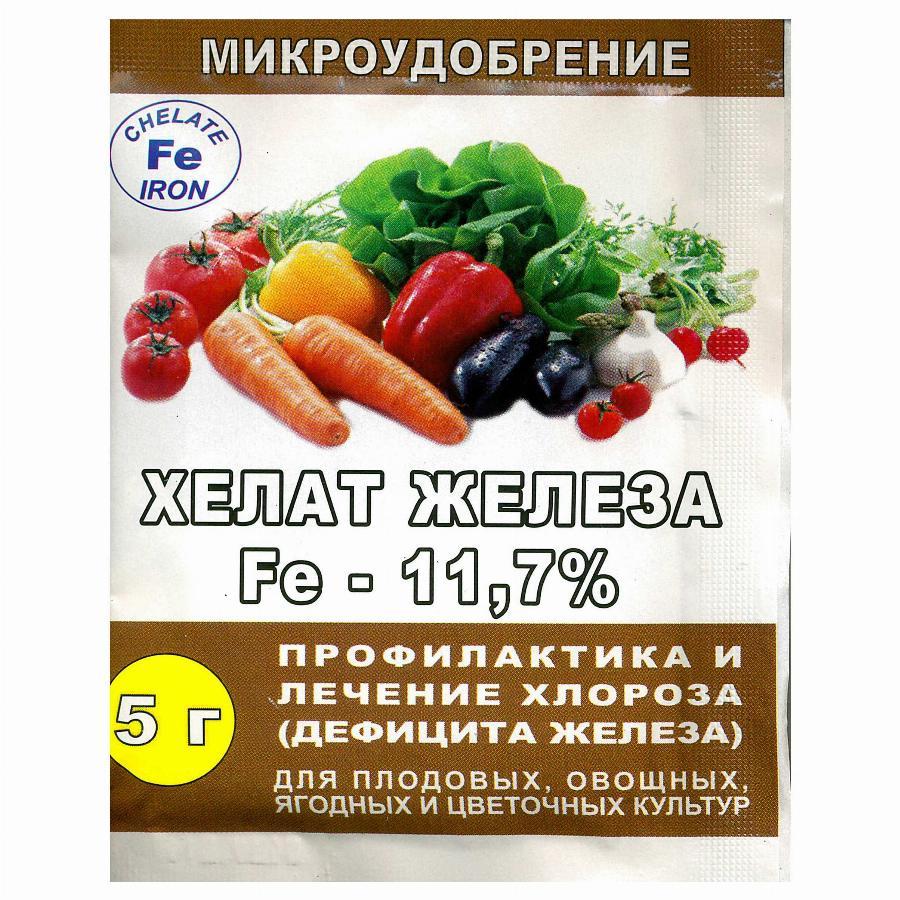
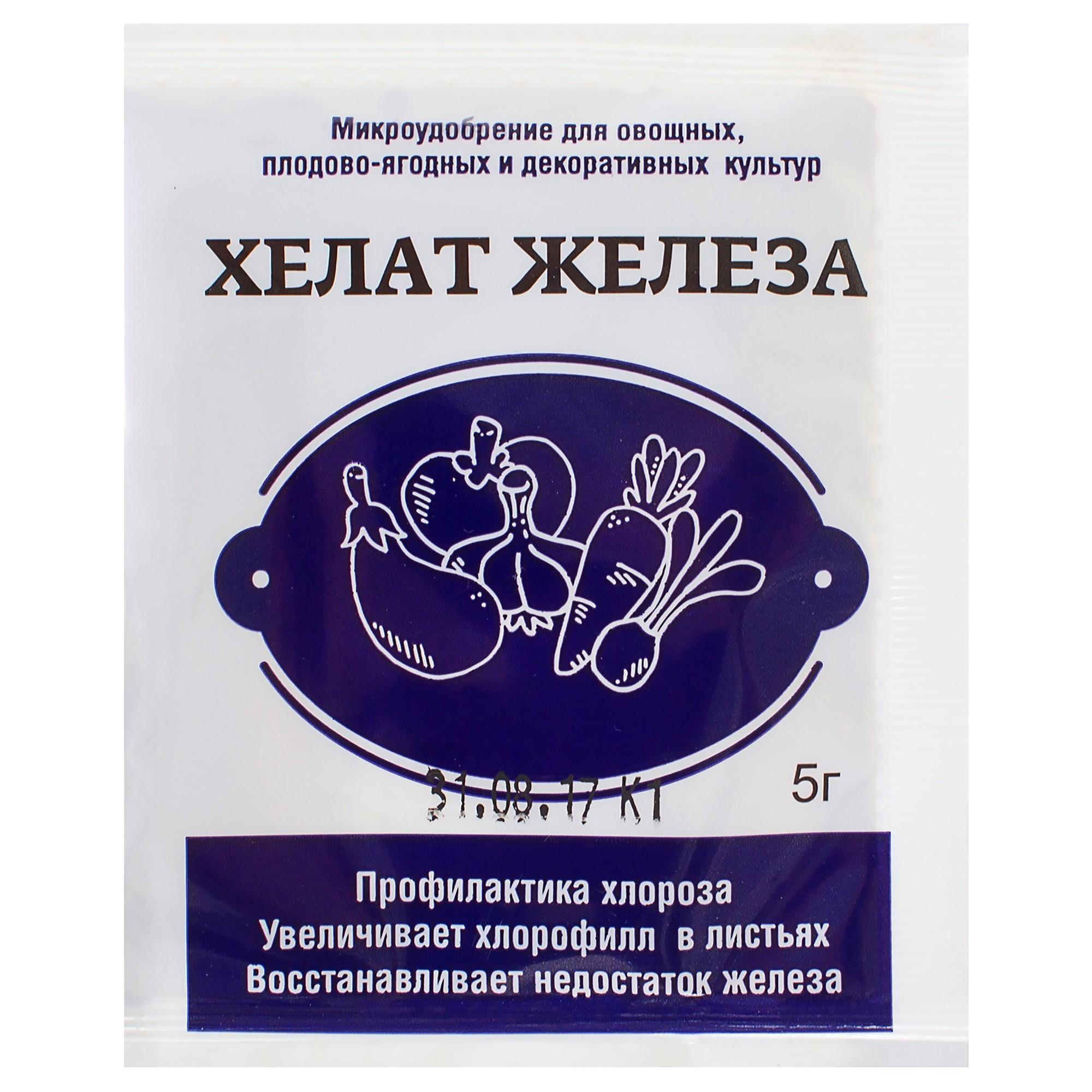
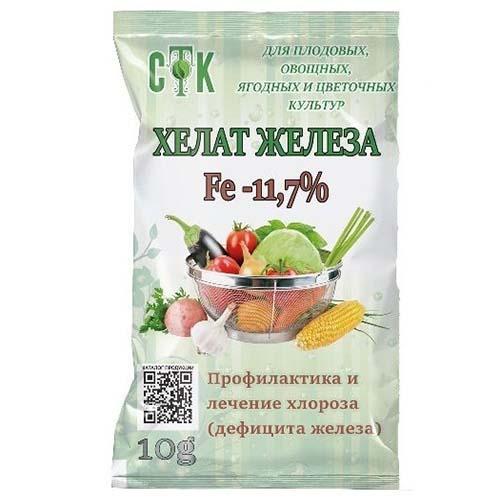
To prepare a beneficial mixture, take 5 grams of chelated fertilizer and add 10 liters of water. It is recommended to mix the ingredients thoroughly and let it sit for 10-15 minutes. Spraying should begin after the first leaf appears. At least two applications are required.
Treatment of chlorosis
To prevent chlorosis, spray the crops. This should be done every two weeks from the time new foliage emerges until flowering begins. However, this should be done at least twice. To do this, prepare a solution of 5 grams of iron chelate and 10 liters of water. Use 1 liter of the working solution per 10 square meters.
To treat chlorosis on fruit trees, prepare a solution of 5 grams of chelate and 5 liters of water. To treat the disease on vegetable crops, prepare a solution of 5 grams of fertilizer and 8 liters of water. Treatments should be performed at least four times, spaced two weeks apart. To eliminate deep chlorosis, water the plants at the roots. For this, use 2 liters of the solution per square meter.
Foliar treatment
This procedure is used for both treatment and prevention. To prevent the development of pathologies, spraying is performed twice. For therapeutic purposes, this is required 4-5 times. The interval between applications is 2-3 weeks.
It is recommended to treat fruit crops with a solution with a concentration of 0.8%. For other crops, including grapes, a concentration of 0.4% is sufficient.
Root application
This method is commonly used to feed fruit plants. Iron chelate is most often used for raspberries and grapes. The solution concentration should be at least 0.8%.
When fertilizing cucumbers during transplanting or root feeding, apply the fertilizer directly into the holes, which should be 20-25 centimeters in diameter.
When treating plants with roots, you should follow these guidelines:
- for vegetable and berry plants, use 5 liters of the substance per 10 square meters;
- for shrubs it is worth using 1500 milliliters per 1 adult bush;
- For trees, it is worth using 2 buckets of solution per adult plant and 1 bucket per young seedling.
Safety precautions
The fertilizer has no negative effects on humans. However, safety precautions must still be followed when using it:
- When working with the solution, wear rubber gloves;
- use special clothing;
- protect your head with a headdress;
- When spraying the substance, protect your eyes and respiratory organs with goggles and a mask;
- After completing work, wash exposed areas of the body with running water and soap;
- If the feed comes into contact with mucous membranes, rinse them with running water.
Is compatibility possible?
Iron chelate solution is neutral in pH. It can be used with chemicals and fertilizers. However, when preparing a hydroponic mix, there is a risk of sedimentation, as more ingredients are used than usual. Therefore, it is recommended to add iron chelate separately to the solution.
How and how long to store
The product should be stored in a dry, dark place. It should be kept out of the reach of children and animals. Store-bought products have no expiration date. The prepared working solution must be used within 24 hours.
What to replace it with
Many fertilizers contain iron in the form of chelates. It is permissible to use "Microvit K-1, "Solu Micro Fe D 11", "Solu Micro Fe 13".
Iron chelate is an effective product that has a comprehensive effect on plants and helps prevent the development of dangerous diseases. To ensure the desired effect, it must be used strictly according to the instructions. Compliance with storage and safety regulations is also crucial when handling the product.