
To achieve a bountiful harvest, every gardener needs a good understanding of fertilizers. Many crops require fertilizers with an NPK complex. These substances include nitrogen, phosphorus, and potassium. These components can be present in varying ratios. For the product to be effective, it's important to choose the right one for the crop type and follow the instructions for use.
Description of NPK fertilizers
NPK fertilizers contain several important elements that enrich the soil with valuable nutrients. These include the following:
- Nitrogen is a component of various proteins, vitamins, and amino acids. This substance is a building block for many cells. It stimulates the growth of stems and foliage in crops and increases the productivity of vegetable plants. Nitrogen deficiency causes stunted growth of the above-ground parts of crops and pale foliage. Excess nitrogen causes excessive foliar growth at the expense of fruit, nitrate accumulation, and reduced crop quality.
- Phosphorus stimulates root development. This element helps lengthen and increase the number of root hairs. This accelerates seed germination and improves seedling survival. Consequently, yields and fruit quality are increased. A phosphorus deficiency slows flowering and crop ripening. Crop growth is also impaired. Excessive phosphorus causes vegetables to ripen too early, leading to disease and pest infestations.
- Potassium is not an organic compound, but it facilitates the transfer of plastic substances from vegetative parts of crops to productive parts. It also promotes the production of many vitamins and carbohydrates. It reduces nitrate accumulation in vegetables. Potassium deficiency reduces the synthesis of vitamins and carbohydrates. This also leads to a sharp increase in nitrate levels and reduces the shelf life of produce. Excess potassium slows metabolic processes and reduces the absorption of other nutrients.
Take a look Also
Varieties
Today there are quite a lot of effective fertilizers NPK, which differ in composition and properties.
What are the three-component ones?
Effective drugs with 3 components include the following:
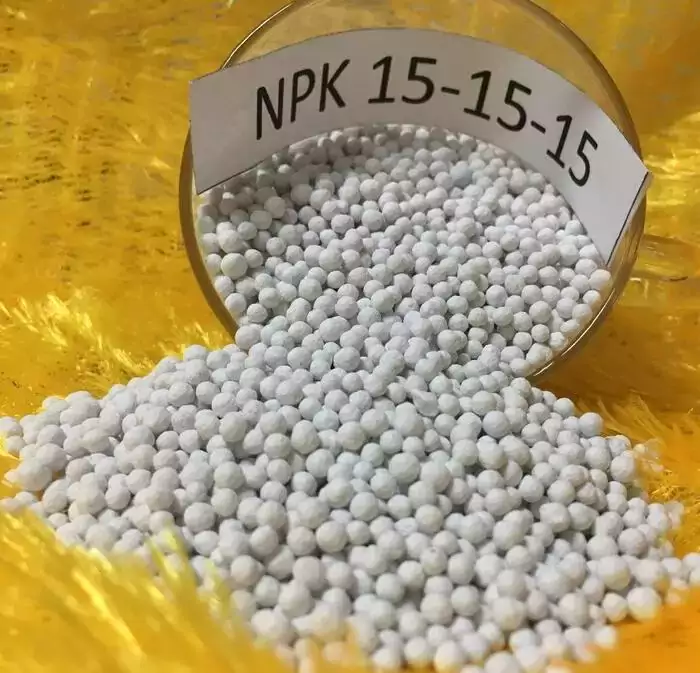
- Azofoska or nitroammophoska. These include products with ratios such as 15:15:15, 16:16:16, and 17:17:17. These substances are suitable for all crop varieties. They can be applied before planting and during the growing season.
- Ammophoska. This product may contain an NPK complex in ratios such as 9:20:20 or 15:15:12. It can be used in all soil types. However, it is particularly effective when growing crops in sandy, peaty, or clay soils. It should not be applied in the fall, as it promotes rapid foliar growth.
- Nitrophoska. The ratio of active ingredients can be 10:10:10 or 11:10:11. The product can be applied to any soil. However, it is most suitable for neutral and acidic soils.
- Diammophoska. The NPK complex is contained in a ratio of 10:26:26. This product is suitable for various soil types. It can be applied in the spring before planting or during the growing season.
Descriptions of two-component
The most common two-component products include the following:
- Ammophos. In this case, the NPK ratio is 12:52:0. This compound can be applied in spring or fall. The product mixes well with water and is chlorine- and nitrate-free. Therefore, it is suitable for use on cucumbers.
- Potassium nitrate. The product can be used in proportions of 13:0:46 or 14:0:44. It is most often used indoors. It is applied to vegetable crops during the ripening stage. The product can be used in dry or liquid form.
- Superphosphate. Single superphosphate contains an NPK complex in a ratio of 6:26:0. Double superphosphate is characterized by a ratio of 10:46:0. Both substances can be used in open ground and greenhouse conditions. They are suitable for all plants and any soil.

What is the NPK requirement for different crops?
The exact nutrient requirements of crops are difficult to determine. Much depends on climate and soil fertility. When applying fertilizer, consider the following:
- Ornamental plants. They primarily require nitrogen. Nitroammophoska can be applied starting in May and continuing until the end of July. Apply at two-week intervals.
- Lawn grass. This plant requires constant nitrogen feeding. Nitroammophoska should be applied in early summer. Then, increase the amount of phosphorus and potassium.
- Vegetables, berries, and leafy plants. From May to mid-summer, it is recommended to use azophoska and nitroammophoska. Apply at 10-day intervals. In the fall, reduce the amount of nitrogen.
- Trees and shrubs. From May to mid-summer, diammophoska is recommended. Apply it every 10 days. Then, reduce the nitrogen application rate.
- Conifers require fertilizing twice during the season. Nitroammophoska is recommended in May, and diammophoska is recommended in late summer.
Instructions for use
Application methods vary depending on the type of product and the crops being treated. Three-component products include the following:
- nitrophoska – used for all types of soil, especially neutral and acidic;
- Ammophoska – suitable for sandy and clayey soil;
- Azofoska – suitable for all crops.
Two-component fertilizers include ammonium phosphate, potassium nitrate, and superphosphate. Ammonium phosphate can be applied in spring and fall. Potassium nitrate contains potassium and nitrogen. It can be used in greenhouses and during the ripening stage of fruit. Superphosphate contains phosphorus and nitrogen. It can be used both outdoors and indoors.
How to solve the problem of insufficient or excess fertilizers
To prevent fertilizer deficiency, it is important to follow these rules:
- follow the manufacturer's recommended dosage;
- control the pH parameter – it should be 5.5-6.5;
- monitor the condition of the root system.
To eliminate the problem of excess nutrients, thoroughly water the soil with clean water. When using fertilizer in a hydroponic system, the solution should be replaced with clean water with optimal pH parameters.
Fertilizers containing NPK complexes are essential for the normal development of crops. To ensure the desired effect, it's important to choose the right product and strictly follow the instructions for its use.