
Manufacturers produce a variety of products that make planting and care easier for gardeners. Vermiculite simplifies the process of growing seeds and creates a favorable environment for root development. When purchasing vermiculite, it's important to select the appropriate mineral grade for use in open-field, indoor, or greenhouse gardening.
Description of vermiculite and its varieties
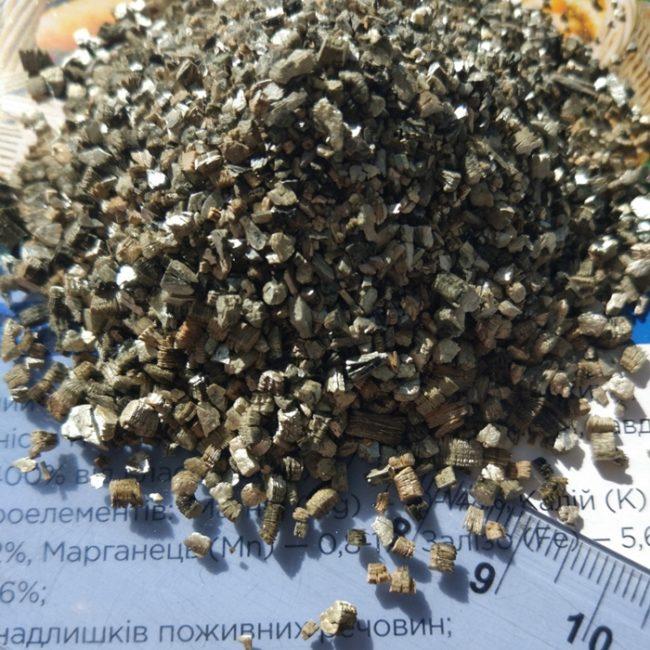
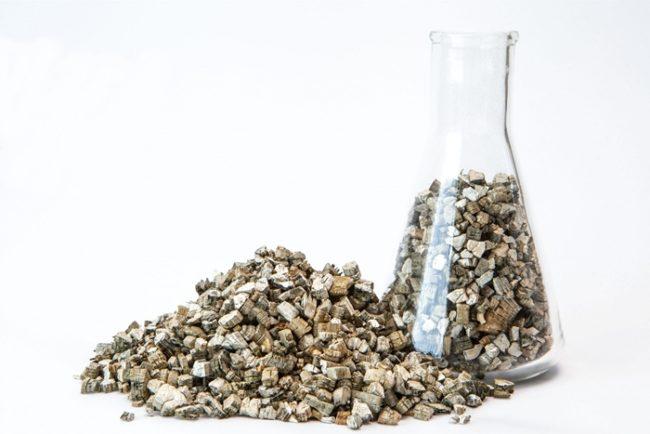
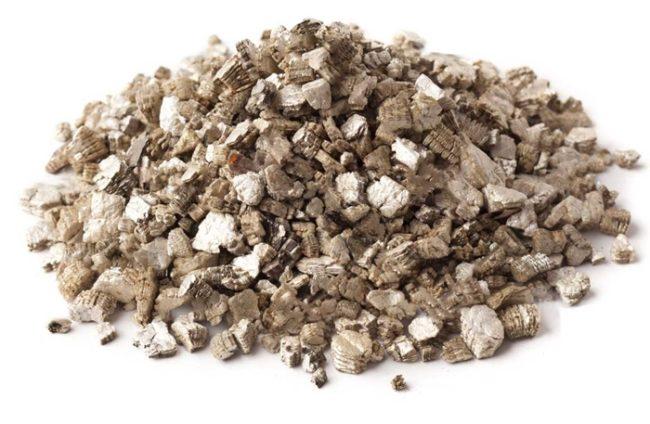
Vermiculite is a mineral with a layered structure, appearing as large, plate-like crystals of brown or golden-yellow hues. It has gained particular popularity in plant growing. Vermiculite is used for flowers as a mulch and soil aerator, enriching the plants with beneficial microelements. Vermiculite comes in several varieties:
- Batavit – non-iron vermiculite;
- Copper vermiculite contains some copper;
- istonite is a silvery-white substance;
- Lucasite is a mineral containing chromium.
The quality of a mineral depends on the region where it is mined. Vermiculite from Kazakhstan is suitable for growing potted plants or dwarf crops. The mineral from the Altai Mountains contains increased amounts of potassium and magnesium, making it popular for seed germination.
Vermiculite from the Kola Peninsula is suitable for seed germination. In this case, the finely ground fraction is mixed with peat and used for planting and growing seeds, as well as rooting seedlings.
Foamed vermiculite is used for commercial purposes (wall insulation, decorative plaster mortar, filler for paints, plastics, rubbers).
Physical properties and chemical characteristics of the substance
The material's use in plant growing is due to its biological stability: it does not rot or decompose under the influence of microorganisms, does not create a favorable environment for rodents or insects, and is neutral to the action of acids and alkalis. Physical properties:
- is not subject to abrasion, and has lubricating properties similar to graphite;
- swells when heated to a temperature of about 1000° C, increasing in volume by 15-20 times;
- melts at 1350° C;
- hardness index on the mineralogical scale is 1.0-1.5.
For plants, the benefit of vermiculite lies in its high absorption coefficient (100 g of mineral absorbs 400-530 ml of liquid).
Advantages and disadvantages
Like any mineral, vermiculite has positive and negative qualities.
Benefits of the substance:
- Long service life. The substance retains its qualities for more than 10 years;
- by neutralizing the increased acidity of the soil substrate, unfavorable conditions are created for the development of pathogenic fungi;
- when moisture is absorbed, the volume of crystals does not increase, therefore the structure of the soil is not disturbed;
- the growth of roots through the layer of crystals does not lead to a disruption of the air supply;
- due to low thermal conductivity, young plant roots are protected from freezing when covered for the winter;
- opaque, which eliminates the possibility of soil acidification.
The advantages of vermiculite when used in plant growing can be considered disadvantages in commercial applications: the need to provide ventilation gaps when installing insulation, for waterproofing purposes, the product is specially treated to ensure water protection, and its high cost.
Purpose
Vermiculite is most often used in crop production to loosen heavy soils. As a sorbent (water accumulator), the mineral is used in all types of soil. In general, the substance improves the exchangeable water capacity of any soil. The mineral is used for various purposes:
- for growing potted plants using dry hydroponics;
- for plant cuttings;
- for convenient growing of seedlings.
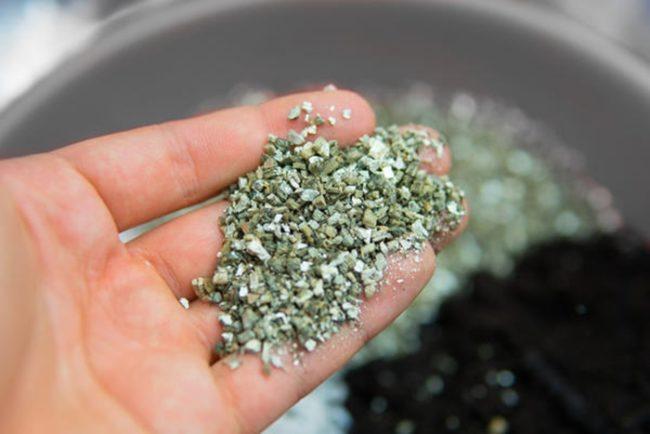
For plant growing, the mineral is produced in two forms: finely ground or in granules (approximately 1 cm in size). Ground vermiculite appears as a fine powder, so it is often used for seed germination as a neutral substrate.
Features of use, instructions
To germinate hardy seeds, use soaked, finely ground vermiculite. The main stages of seedling germination.
- Crushed peat is mixed with ground mineral in a 1:1 ratio.
- A thin layer of the mixture (5-7 cm thick) is placed in a plastic container.
- Sow the seeds, cover the container with plastic film and place it in a bright place, protected from drafts.
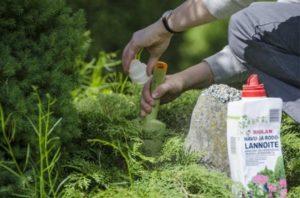
When adding fertilizers to the soil (manure, bird droppings), it is recommended to add some vermiculite to the mixture to disinfect and loosen the soil. When using this mineral, it is important to keep in mind some limitations: do not scatter crumbs or granules when growing strawberries or herbaceous berries, as this increases the alkalinity of the soil.
The mineral is also in demand for harvest preservation. To effectively preserve vegetables, fruits, and tubers, wooden crates are used, in which the fruits are arranged in layers. Each layer of vegetables/fruits is interlayered with granules (2-4 cm thick). Its hygroscopic properties and low thermal conductivity ensure thermal balance and prevent sources of decay.
Precautions when working
The mineral poses no health hazard. However, it's important to take some precautions when adding finely ground minerals to pots. Finely ground minerals release a large amount of silicate dust when poured. Therefore, it's recommended to work with large quantities of the mineral in a spacious, well-ventilated, non-residential area or outdoors.
During the work process, it is mandatory to use personal protective equipment: a respirator, rubber boots and latex gloves, safety glasses, and thick work clothes.
Expiration date and storage conditions
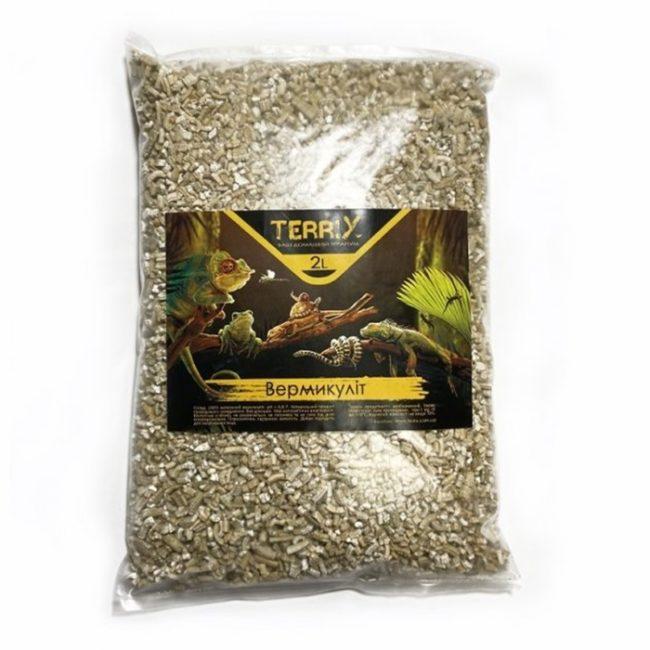
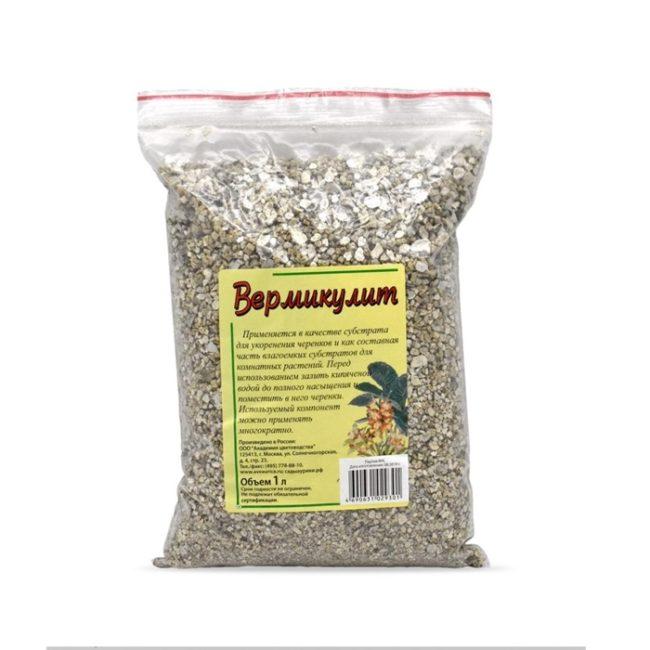
Vermiculite is sold in paper bags. The packaging indicates the mineral fraction and grade, production date, and batch number. The bags are stored in a dry, ventilated area. It is recommended to install shelving for storage. Bags are arranged on shelves according to fraction and grade.
At the same time, moisture, compaction, contamination, and spraying of the material are prevented. Manufacturers typically sell the mineral with an unlimited shelf life, provided it is stored in a dry place.
What to replace it with
When choosing a vermiculite substitute, consider the type of plants being grown. To loosen the soil in pots containing cacti and succulents, simply add sand and a small amount of charcoal. When growing moisture-loving plants, perlite or zeolite can be added to increase the substrate's water holding capacity.
Take a look Also
This natural mineral is used in plant growing to improve soil structure, combat fungal diseases, and promote the full development of root systems. However, it should be noted that this substance is not a complete fertilizer and should not be used as a sole source of nutrition.