
- Release form
- What diseases is it used for?
- Scab
- Root rot
- Withering
- Seed mold
- Powdery mildew
- Brown rust
- Septoria
- Other diseases
- Instructions for use
- Paste
- Powder
- Drops
- Proportions for processing different purposes
- Potato
- Cabbage
- Tomato
- Cucumbers
- Flowers
- Safety precautions when working with the product
- Storage conditions, shelf life
All cultivated crops require regular treatment with pesticides to ensure proper growth and development. Plants are constantly attacked by various infections and parasites. The chemical industry is developing numerous auxiliary products for prevention, control, and pest management. Among the available fungicides, Fitosporin, a modern systemic microbiological fertilizer, stands out for its ability to suppress fungal and bacterial pathogens.
Release form
A new-generation fungicide developed by Russian scientists is effective against many forms of infectious diseases. Its active ingredient acts quickly on the source of infection, destroying it within a short time.
The manufacturer produces the product in various forms, but each formulation allows for the treatment of any plant crop with maximum results. Fitosporin is available to consumers in the following forms:
- liquid made from water, packaged in convenient, capacious plastic bottles:
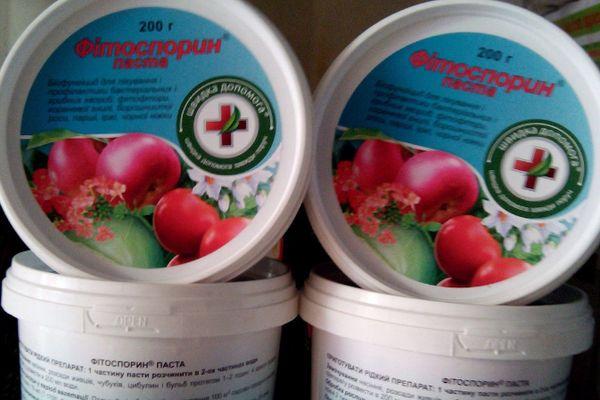
- gel-like paste, packaged in 200-gram plastic bags;
- powder, packaged in single-use sachets, available in ten and thirty gram quantities.

What diseases is it used for?
Modern gardening is a high-risk industry. It's extremely difficult to grow vegetables and fruits while still achieving excellent yields in challenging, variable weather conditions.
Microorganisms and bacteria spread at an incredible rate, destroying a large percentage of crops. Only the latest, highly effective products can effectively combat fungal infections.
Scab
This disease encompasses a whole group of dangerous infections. Microscopic pathogenic fungi and bacteria attack the upper tissues of foliage, inflorescences, shoots, and roots. Signs of damage include irregularly shaped spots, ulcers, warts, and pustules. As the disease progresses, dark spots appear on the leaves, and the fruits become malformed.

Fitosporin is widely used as a safe fungicide. It can be used to treat apple trees against scab even during the ripening period. The active ingredients penetrate the tree bark, destroying fungal pathogens at all stages of development.
Root rot
Sometimes proper care alone can't save plants from dangerous diseases, such as root rot or blackleg. These pathogens initially cause plant sluggishness, followed by leaf wilting, discoloration, lodging, and death. The infection is particularly damaging to seedlings, saplings, and young, immature shoots.

Fitosporin is a systemic product that spreads through the vascular system to the leaves and stems. To ensure its full effectiveness, the first treatment should begin while the seeds are still soaking. Subsequent steps should be carried out according to the instructions on the packaging.
Withering
Fusarium wilt is often the cause of plant wilting. This common and dangerous disease affects plants of any age. The fungus, found in the soil, enters the plant through wounds and injuries. The infection causes root rot at the crown. The tissue turns brown, the stem becomes thin, and the foliage turns yellow. After a while, the plant dies.

To avoid losing crops and subsequently the harvest, use the versatile product Fitosporin to combat fusarium wilt. The live cells and small spores of beneficial bacteria, which form the basis of this product, effectively destroy pathogenic microbes even in severe cases.
Seed mold
After sowing the seeds for seedlings, the container is covered with plastic film until the shoots emerge. After some time, a light or greenish coating appears on the soil surface, affecting both the seeds and the first shoots that have just emerged.

To prevent mold from causing serious damage to seedlings, preventative measures should be taken. This can be done with a solution of Fitosporin. Planting material should be treated before sowing. If these measures are ineffective, additional fungicide sprays should be applied to the seedlings and seedlings.
Powdery mildew
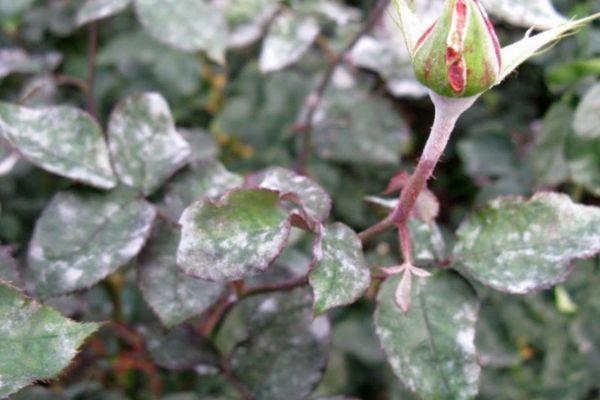
Professional gardeners and flower growers wage an uphill battle against powdery mildew every year. It appears in early spring, destroying the developing fruit of gooseberries and currants. Many vegetable crops and all varieties of roses are constantly affected by this fungal infection.
Only treatment of plantings with Fitosporin preserves the future harvest in good condition, promotes the full formation of buds, and the vibrant flowering of rose bushes.
Brown rust
The disease causes significant losses to wheat crops. Rust diseases slow photosynthesis, increase evaporation, and have an overall negative impact on the development of grain crops. Consequently, the quantity and quality of the grain harvest are reduced. Only the use of agrochemicals at an early stage of infection can correct the situation.
Timely, large-scale treatment with an effective solution of Fitosporin will destroy fungi and spores carried by wind or raindrops.

Septoria
To accurately determine the cause of plant ailments, simply look at the leaves. Rusty and brown spots with a yellow border on the foliage are septoria. The infection has many forms, varieties, and symptoms.
Harmful fungi attack garden plants and pome crops. During the growing season, they form rapidly spreading pyctiform spores. Young shoot growth is reduced, and yields decline.
Only repeated treatments with Fitosporin can completely eradicate a malignant fungal infection.
Other diseases
Diseases affecting cultivated plants are constantly mutating, manifesting themselves in new and varied forms. Bacterial canker, gummosis, rhizoctonia, macrosporiosis, and snow mold are numerous. But only the fungicide Fitosporin can combat a vast number of fungal infections.
Instructions for use
The product is used for a variety of purposes. It's important to note that treatment can be performed in any weather. It works effectively at various stages and times of plant development: during vegetation, flowering, and fruiting.

However, it's important to remember that the effect of the substance is reduced to zero by bright sunlight. To ensure that your efforts are not in vain, spray the plants on cloudy, windless days. If finding such a time is difficult in the summer, apply Fitosporin early in the morning or after sunset.
Paste
The paste contains all the necessary ingredients and components. A standard solution is prepared by mixing 200 grams of paste with 200 milliliters of liquid. If necessary, double the proportions. The prepared concentrate can be stored and re-diluted with water before use. The amount of liquid is determined based on the requirements of the crop being treated.
The following are treated with a concentrated solution:
- flower bulbs and tubers before planting and storage;
- seeds of vegetables and flowers;
- rooted cuttings;
- leafy mass of vegetables, berry flower crops, fruit trees;
- indoor plants, soil in pots.
Powder
The bulk material is dissolved in a one-to-two ratio, an hour or two before treatment. When using the powdered composition, follow these guidelines:
- The treatment is carried out only in dry weather; if the event is interrupted by sudden precipitation, the procedure is repeated after two weeks;
- treat the soil and compost with the prepared solution in early spring or autumn;
- Before planting, potato tubers are dipped into the mixture;
- They process the root crop harvest before sending it for storage.
Drops
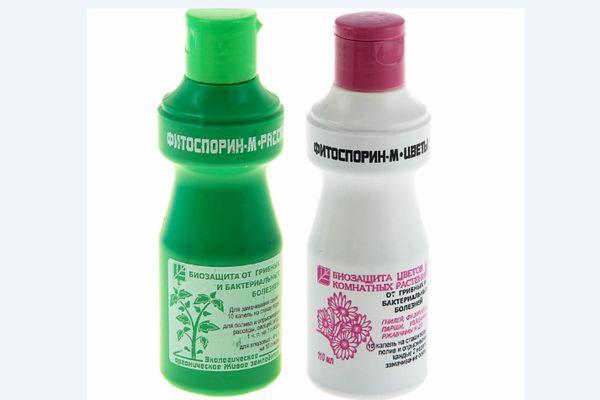
Liquid Fitosporin is used in the form of drops, which are identical to all other formulations in terms of the number of beneficial bacteria, and are intended for foliar spraying on growing plants. The solution is used to treat houseplants, vegetables, fruits, and berries. This is done before storing vegetables. The fungicide drops are available in various formulations. Each bottle is labeled with the appropriate instructions.
Proportions for processing different purposes
The product is multifunctional. However, to avoid harming plants, a specific dosage is prescribed for each crop. The exact proportions are always detailed in the instructions for use. Proper use improves plant growth and prevents infectious diseases.
Potato
Fitosporin-M contains GUMI amino acid fertilizers. They develop and strengthen the potato root system. However, these preparations are used for spraying the tops during the growing season. Other treatments are carried out with a traditional solution, dissolved only in clean, chlorine-free water in the recommended proportions:
- Before storing, the tubers are treated with a liquid of 5 grams of powder per 250 milliliters;
- for spring and autumn soil preparation, take 15 grams of paste per bucket of water;
- Before planting, the tubers are treated in a solution of 5 grams of powder diluted in 250 milliliters of water.

Cabbage
The beneficial bacteria present in the substance are active only when in contact with water, so a working solution in the appropriate dosage is prepared for treating vegetables:
- Before sowing, cabbage seeds are soaked for two hours in a nutrient solution made from 4 drops per glass of water;
- Two hours before planting, the roots of the seedlings are immersed in a solution of 10 drops per 0.5 liters of water. This volume of prepared nutrient is sufficient for 50 seedlings;
- In open ground, cabbage is treated ten days after planting, and again after three weeks with a solution of 10 milliliters per bucket of water.
Tomato
The product is used at any stage of tomato cultivation. Fitosporin works:
- Before pre-sowing treatment. To disinfect the soil, the beds are watered with a mixture of 1.5 tablespoons of powder per 10 liters of water;
- soak tomato seeds for several hours in a nutrient solution of 3 drops of the substance per glass of water;
- During the growing season, as a preventative measure, spray the plants with a solution of several teaspoons of powder diluted in a bucket of water.
Cucumbers
Professional gardeners recommend applying the product several times, starting with soaking the seeds. For each application, dilute the powder in a 1:2 ratio. Repeat the spraying procedure every two weeks.

Flowers
Fitosporin is a biological treatment for flower crops. The fungicide eliminates harmful microflora, boosts plant immunity, stimulates crops with humates, is compatible with other compounds, and is environmentally friendly. It is applied according to the requirements determined individually for each ornamental plant.
Safety precautions when working with the product
The drug is classified as hazard class 4 for humans. It can cause rashes and damage mucous membranes. Each fungicide must be handled with extreme caution, observing all safety measures, which include:
- use of rubber gloves;
- you should not drink, eat, smoke, or talk;
- If the substance comes into contact with the skin, rinse thoroughly with water;
- If drops of the solution get into your mouth, drink a lot of water to induce gag reflexes.

Storage conditions, shelf life
Store all forms of Fitosporin in a cool, dry place, out of reach of children and pets. Keep away from food and other medications.
The product has a shelf life of four years. Store the prepared unused solution in a cool, dry place, protected from sunlight.
Related posts:
 Instructions for using Fitosporin for cucumbers and processing rules
 Instructions for use and composition of the fungicide Fitosporin-M, application rates
 Instructions for use of Fitosporin for grape diseases and dosage
 Description of varieties of sowing peas and cultivation, to which family they belong
 How to propagate and grow peas, cultivation technology, and care in open ground
 Causes and treatment of eggplant pests and diseases, how to combat them at home
 How to control onion flies using natural and chemical methods
 How to properly plant peas in a greenhouse and open ground