
Copper oxychloride is a popular product that helps combat a wide range of plant diseases. It effectively combats late blight, brown spot, and rust. It can also eliminate leaf curl, powdery mildew, and macrosporiosis. This substance can be used as an alternative to Bordeaux mixture. To achieve the desired effect, it is important to follow the instructions.
Description and mechanism of operation
Copper oxychloride is considered a contact fungicide with moderate toxicity. It is used to make various products that help treat a wide range of diseases.
The active ingredient inhibits the mineralization of organic compounds. The formula is easy to prepare and use. To make a solution for treating plants, simply combine the powder with water. A drawback of this product is its rapid evaporation from leaves. This process is significantly accelerated after rain. Furthermore, frequent treatments lead to the accumulation of large amounts of copper in the soil.
Copper oxychloride is added to many agricultural products. It helps combat powdery mildew, scab, coccomycosis, and anthracnose. It also effectively combats fungal infections and various types of rot. Furthermore, it effectively controls pests.
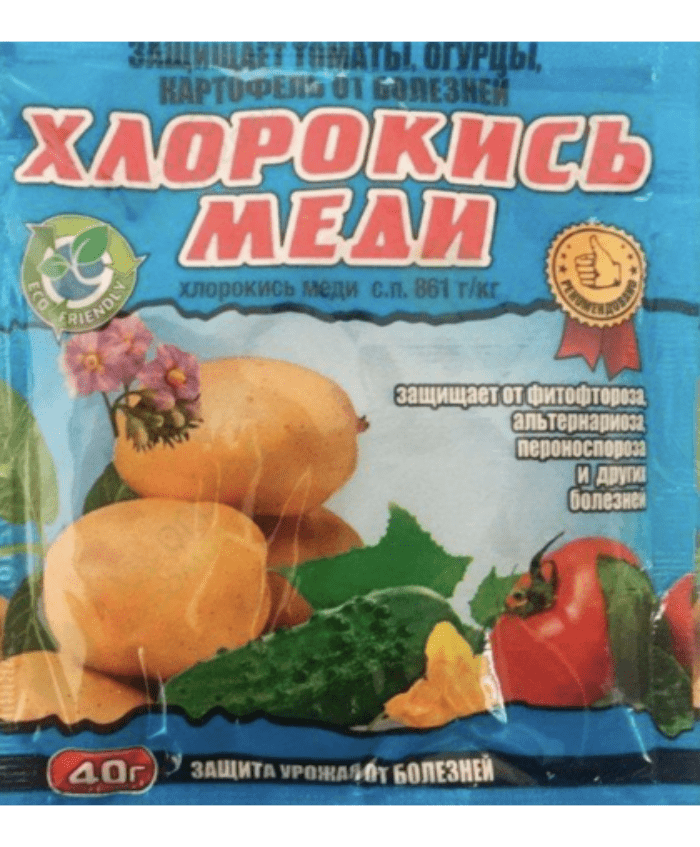
Advantages and disadvantages
The key advantages of the substance include the following:
- safety for beneficial insects;
- absence of phytotoxicity and plant burns when the dosage is observed;
- possibility of use instead Bordeaux mixture;
- active action at low temperatures.
The main drawback of this product is its poor adhesion to plants. The solution is easily washed away by rain. Excessive application can cause leaf burn and netting on fruit. Furthermore, when released into the soil, the active ingredient accumulates rather than decomposes.

Copper oxychloride exhibits excellent compatibility with many pesticides and fungicides. However, it should not be combined with lime.
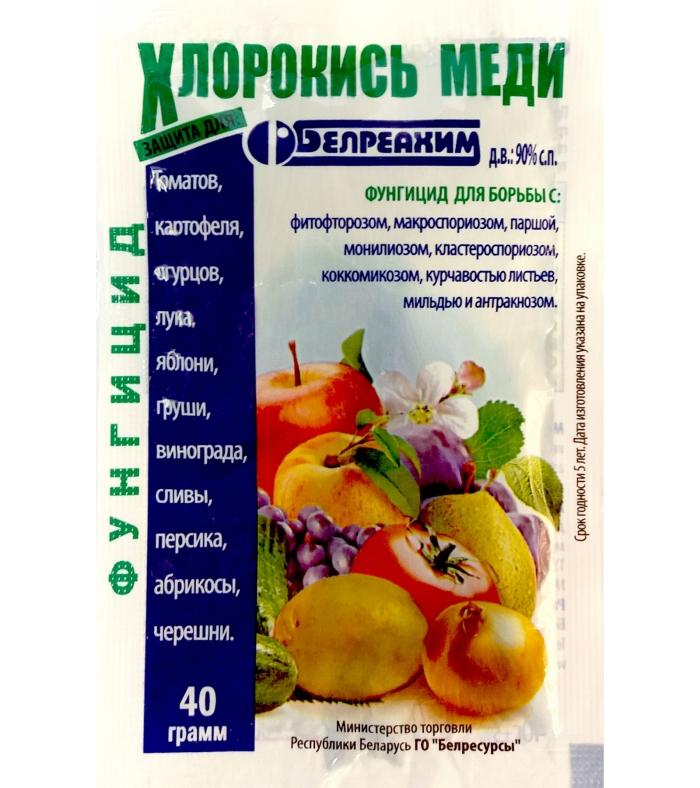
Where it is applied
Copper oxychloride is effective in treating a wide variety of plants. It can be used on both vegetables and garden crops.
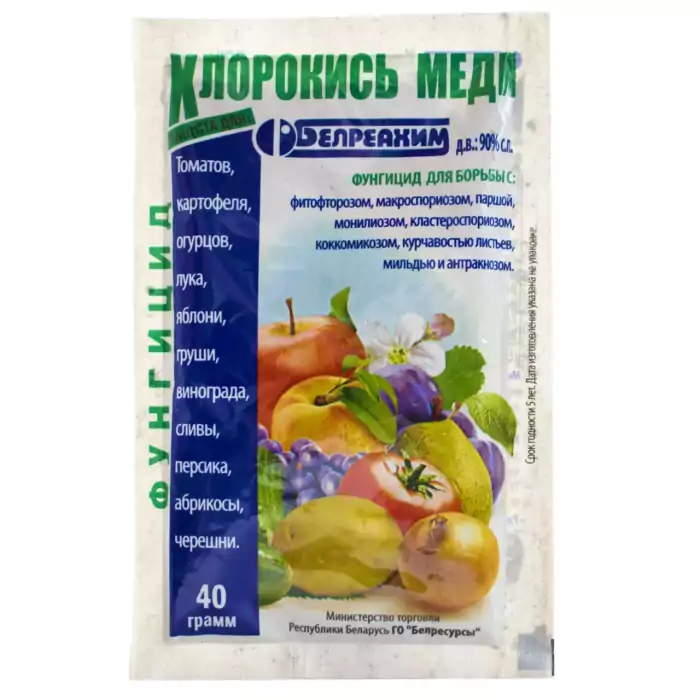
For vegetables
The product can be safely used for spraying vegetable crops. However, it's important to follow certain rules. The product helps protect potatoes from late blight. However, it can be used no more than five times per season. Copper oxychloride also repels Colorado potato beetles and inhibits the development of parasitic larvae.
For 100 meters of plantings, you should take a maximum of 10 liters of the prepared solution.
The composition can also be used for the following plants:
- Cucumbers require a maximum of three sprays. This will help protect plants from bacterial wilt and downy mildew. Use 10 liters of spray solution per 100 square meters of plot.
- Tomatoes should be treated four times during the season. This provides protection against brown spot and macrosporiosis. Use 1 liter of the prepared solution per 10 square meters of garden beds.
- Beets can be treated a maximum of three times per season. This method helps prevent cercospora leaf spot.
It is recommended to spray all vegetable plants during the growing season. Treatments should be carried out at least 10 days apart. The final application should be no later than 20 days before harvest.
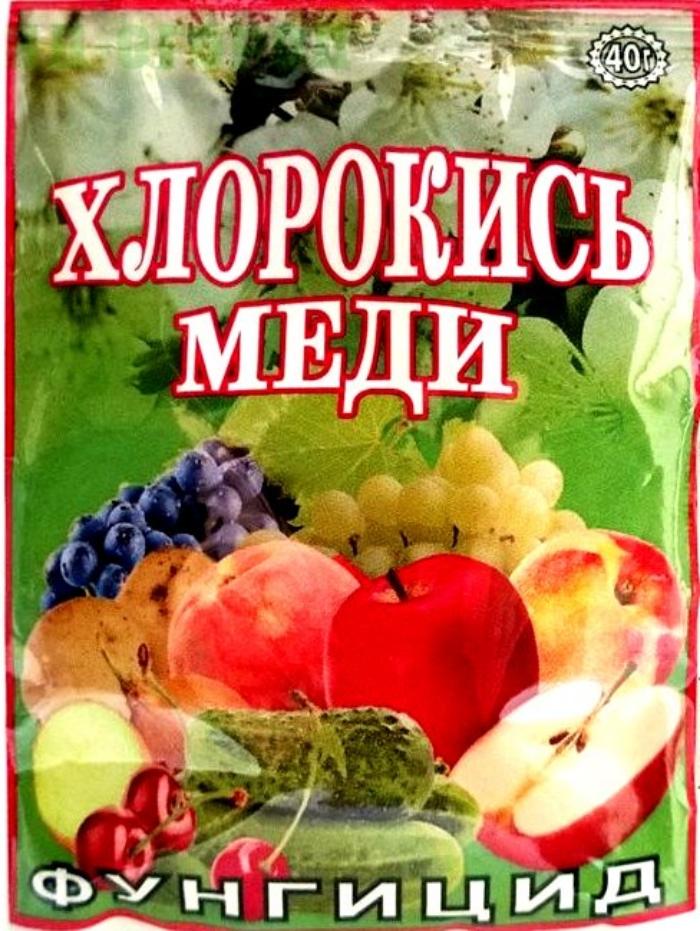
In gardening
Copper oxychloride-based products can also be safely used in gardening. They are used to spray cherries, plums, peaches, and many other crops. The substance provides reliable protection against moniliosis, coccomycosis, leaf curl, and other diseases. Up to 4 liters of the working solution is required per tree. The product can also be used to treat apple and quince trees, preventing the development of scab.

This product is ideal for treating grapes. It will help prevent the development of anthracnose. To prevent the disease from developing, vines should be treated during the growing season. Spraying is allowed up to six times per season. Two liters of the working solution are required for a 10-meter vineyard.
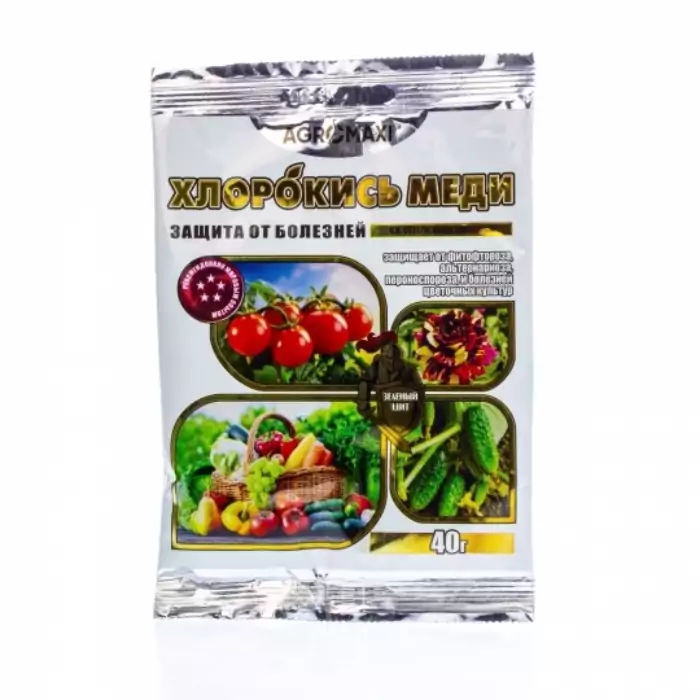
Instructions for use
It is recommended to use the product strictly according to the instructions. Avoid spraying 20 days before harvest. When dosed correctly, the product maintains its fungicidal activity for 10-14 days. Fresh working solution should be used for treating plants.
When spraying crops, it's important to ensure the leaves are evenly wetted. After precipitation, plants require additional spraying. Approximately 1 liter of spray solution should be used per 10 square meters of garden beds.
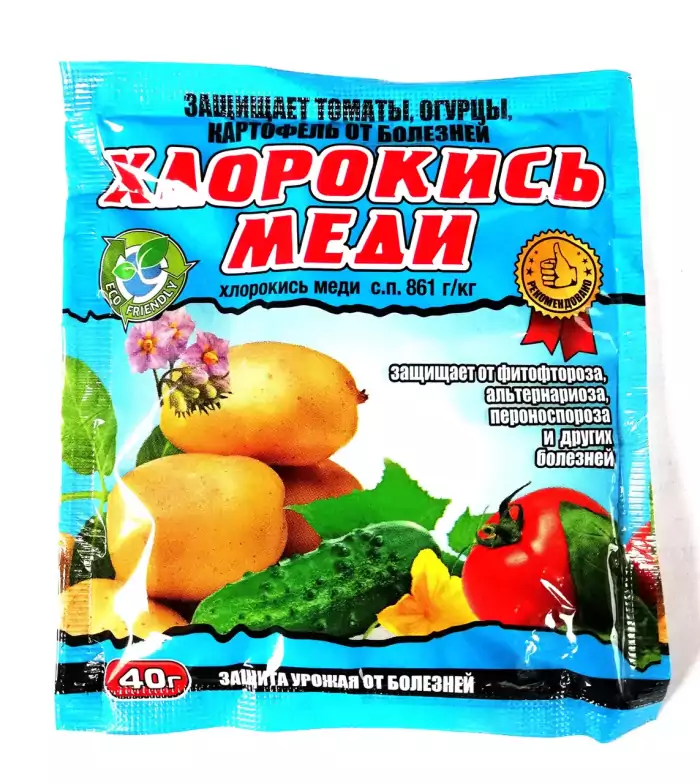
Safety precautions
Copper oxychloride has a moderate toxicity level. However, standard safety precautions should still be followed when using the product. Wearing a protective mask and gloves is recommended. Wearing protective clothing and footwear is also essential.
If the product comes into contact with skin or mucous membranes, there is a risk of allergic reactions, itching, and irritation. In such cases, it is important to immediately rinse the affected area with plenty of water. In severe cases, consult a doctor.
If the product is accidentally swallowed, try to induce vomiting and then take activated charcoal or another absorbent. If the condition worsens, seek immediate medical attention. Do not drink, eat, or smoke while handling the substance.
It is recommended to store the medication in a well-ventilated area. However, do not leave it there for long periods of time.
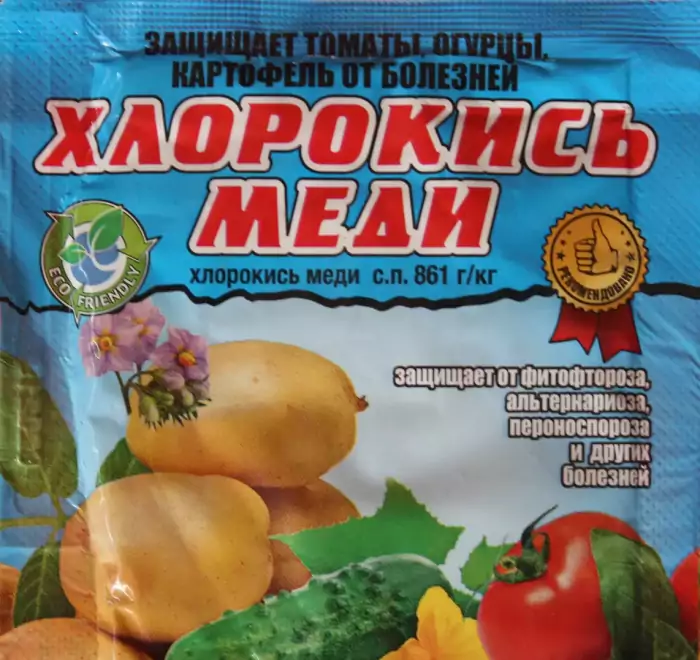
Preparations containing the substance
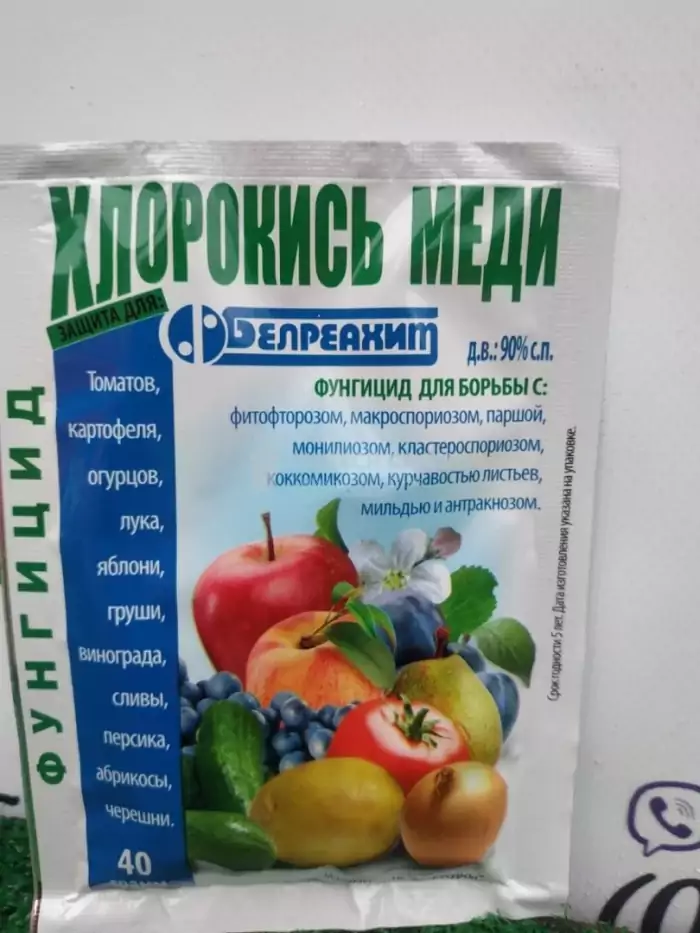
Copper oxychloride is found in many fungicidal preparations. The most effective include:
- "Kuprikol" is a contact fungicide suitable for killing fungi. When mixed with water, it produces a fairly stable solution, ensuring a more uniform distribution of the active ingredients.
- «Hom" – has a broad spectrum of action. It is available in powder form and must be diluted with water. The substance is used for therapeutic and preventative purposes. It successfully combats a variety of fungal infections. The composition is suitable for treating vegetables, fruit, and ornamental crops.
Is there a difference between copper oxychloride and copper sulfate?
Copper sulfate is a crystalline hydrate of sulfuric acid with the formula CuSO4 5H2O. Copper oxychloride has a different chemical formula: Cu3H8O7CuCl2. Therefore, these substances are completely different types of salts. However, both are often used as fungicides, as copper ions help combat fungi.
Copper oxychloride is an effective remedy that effectively treats various conditions. Preparations containing this component can be used for both therapeutic and preventative purposes. However, it is important to follow the dosage and treatment recommendations.