
- Subtleties of cooking
- Useful properties of tomatoes
- Selecting and preparing the product for pickling
- How to preserve tomato halves for the winter
- A classic winter recipe that's finger-licking good.
- Without sterilization
- With onions and butter
- With hot pepper
- With mustard
- With basil
- With onions and garlic in 1-liter jars
- Sweet tomatoes in halves
- Without vinegar
- How and how long canned food is stored?
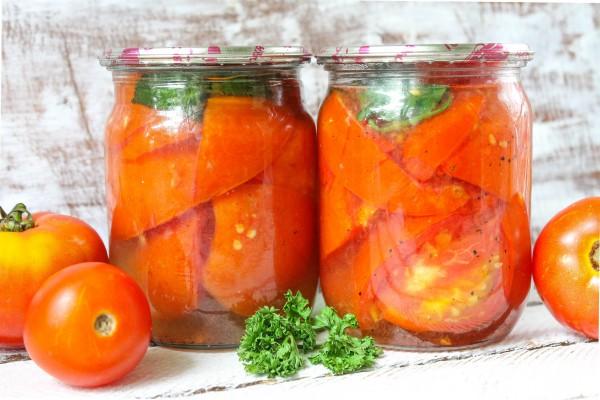
Many housewives face this problem: large, beautiful tomatoes are a joy to show off to neighbors and photograph, but very difficult to preserve. Many believe that if you cut a tomato, it will spread, preventing successful canning. However, this article is dedicated to methods for successfully preserving tomatoes in halves for the winter.
Subtleties of cooking
There are a number of subtleties of preparation that allow you to get delicious and piquant canned tomatoes, cut in half.
Knowing a few simple secrets, you can successfully cope with this preparation.
- When canning, the preserves are sterilized, so they don't require any pre-treatment other than washing. However, boiling the lids is essential.
- For extra flavor, use a variety of herbs and spices.
- The taste can change significantly if you use vinegar.
- When adding ingredients to the pickle, pay special attention to the dosage of salt and vinegar - too much or too little can spoil the taste of the snack.
Useful properties of tomatoes
Tomatoes have won people's love not only for their remarkable taste. They are also known for their many beneficial properties:
- have a positive effect on blood composition;
- thanks to the large amount of vitamins they strengthen the immune system;
- have a positive effect on the condition of the skin;
- improve heart function;
- have a beneficial effect on men's health;
- effectively break down toxins that enter the body when smoking;
- promote weight loss.
As we can see, there are many reasons to love these tasty and healthy fruits and strive to benefit from them not only in the summer season, but also in winter.
Selecting and preparing the product for pickling
Particular attention should be paid to preparing vegetables for pickling. Selecting and preparing the product for pickling is an important step that will determine the quality of the preserve.
- Choose firm varieties for pickling, including pink ones.
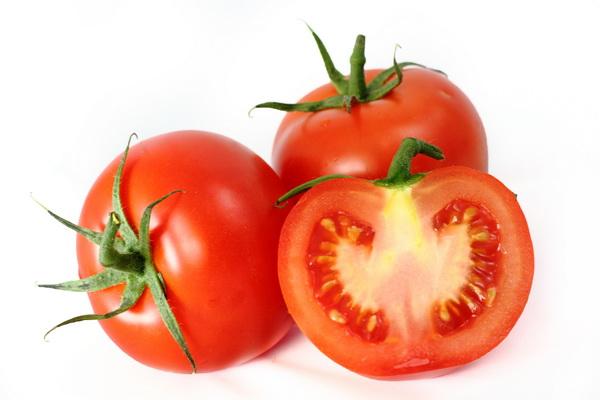
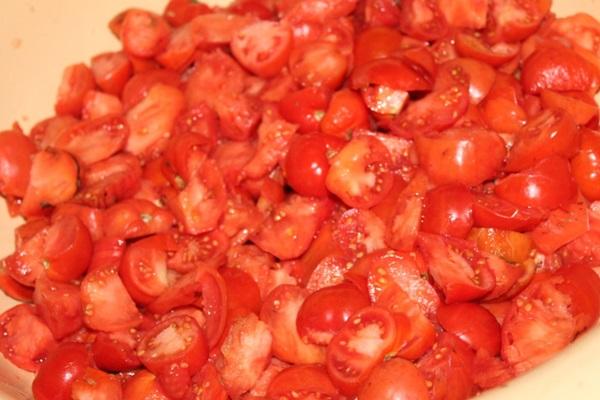
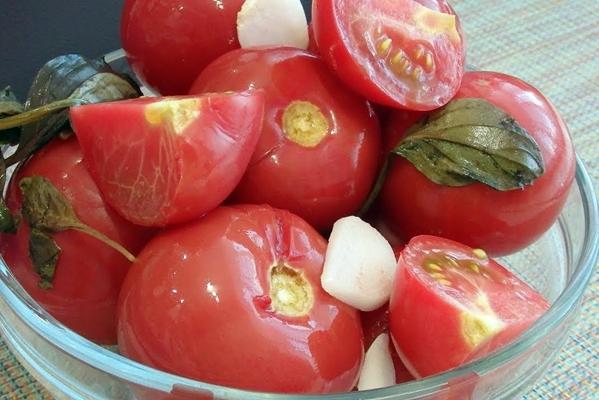
- If possible, cut the fruit through the pulp between the seeds—you can mark them by shaping them near the stem. This will ensure the fruit retains its shape when canned. If you can't cut it this way, it's recommended to remove the seeds.
- Carefully place the vegetable halves into the container, cut side down, so that more of them fit.
- To gently shake the laid vegetables and prevent them from becoming deformed, place the jar on a folded cloth (a towel will do) and lightly tap it on the table surface.
- After sterilization, don't wrap the jars—this softens the vegetables. Leave them upside down until they cool, and after they cool, check that the lids don't leak. If they do, reseal them with a machine.
How to preserve tomato halves for the winter
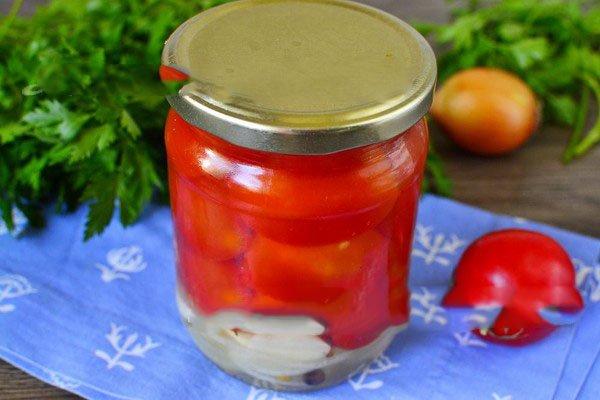
Among the many recipes, there are some particularly successful and popular ones for preserving tomato halves for the winter. Surely, among them, there are some that will take pride of place in your family's recipe collection. We recommend trying each of them.
A classic winter recipe that's finger-licking good.
Vegetables pickled this way got their name for a reason. According to the classic winter recipe—"Finger-licking good"—they truly turn out delicious.
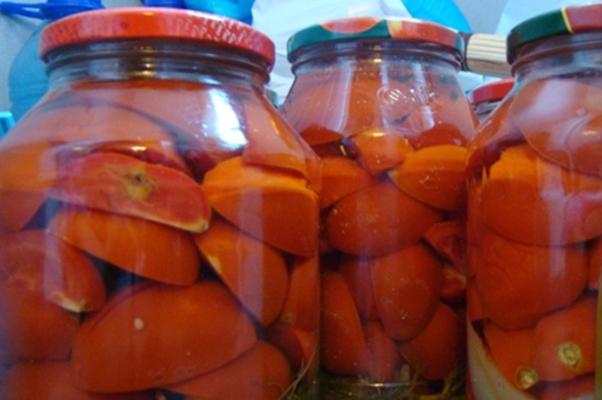
We provide a list of products for containers with a capacity of 3 liters:
- tomatoes - until filled;
- garlic - 1 clove;
- onion - 1 small onion;
- vinegar - 1 tablespoon (no heap);
- bay leaf - several leaves;
- dill - 1 bunch;
- salt - 3 tablespoons (no heap);
- sugar - 8 tablespoons;
- water (boiling water) - 3 liters.
The brine is prepared from water, sugar, and salt, which are added after it boils. The spices are placed in the jar, followed by the tomatoes, vinegar, and then the brine is poured into the jar to the brim. The resulting pickle is left to sterilize for 7 minutes and then sealed.
Without sterilization
Most often, pickling is sterilized, but you can follow the canning recipe described above without sterilization. This is acceptable because tomatoes contain a fairly high amount of acid.
However, if the year turns out to be a good harvest of sweet tomatoes, it is permissible to add additional acid to the pickle.
With onions and butter
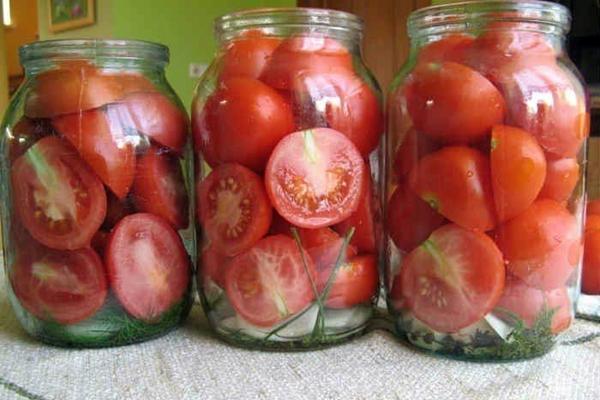
The very name of this recipe whets the appetite! Butter and savory pickled onions—what could be a better complement to home-cooked tomatoes? This recipe is very similar to the classic one. Here we'll look at how to pickle tomatoes with onions and oil in a clean 1-liter jar. You'll need:
- tomatoes - until filled;
- onions - 1-2 onions;
- garlic - 3 cloves;
- vegetable oil - 2 tablespoons;
- salt - 3 tablespoons;
- sugar and vinegar - 2 tablespoons each;
- dill, parsley, allspice, cloves;
- water - 1 liter.
Prepare the brine with boiling water, salt, sugar, vinegar, and half the spices. Place the remaining spices in a pickling container. Slice the onion into rings and place them in the container, alternating with the tomatoes. Next, pour in the oil, followed by the brine, filling to the brim. Let it sit for 7 minutes, then seal.
With hot pepper
If you're a fan of savory snacks, you'll definitely love this method of pickling tomatoes with hot peppers. For a three-liter jar, you'll need:
- tomatoes - until filled;
- chili peppers - 4 pieces;
- garlic - 1 head;
- onion - half an onion;
- carrots - half a root vegetable;
- bell pepper, parsley, dill, bay leaf, allspice, cloves;
- sugar - 5-6 tablespoons;
- salt - 2-3 tablespoons;
- vinegar - 2 tablespoons.
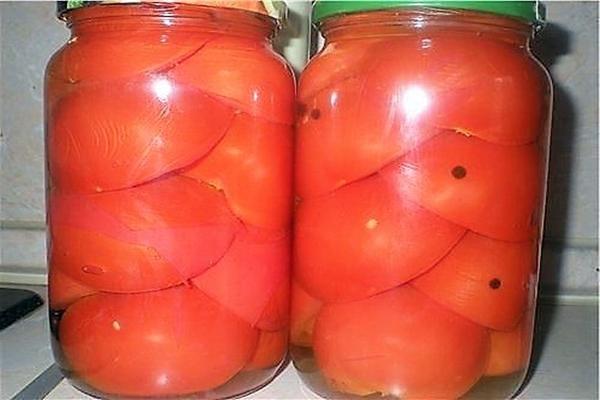
Carrots and onions should be sliced. Spices and vegetables are placed in a pickling jar and topped with tomato halves. Boiling water is poured into the jar to the brim, then left for five minutes, then the water is poured out and the process repeated. Pour the newly added water into a separate brine jar, add salt, sugar, and vinegar, stir, and pour into the jar. Leave the pickling jar uncovered for seven minutes, then seal the lid.
With mustard
This pickling method isn't much different from the classic recipe. The difference is that the two tablespoons of sugar in the mustard recipe are replaced with two tablespoons of mustard powder. When preparing, sprinkle the mustard at the bottom of the jar, then follow the steps in the "Finger-Lickin' Good" recipe and seal.
With basil
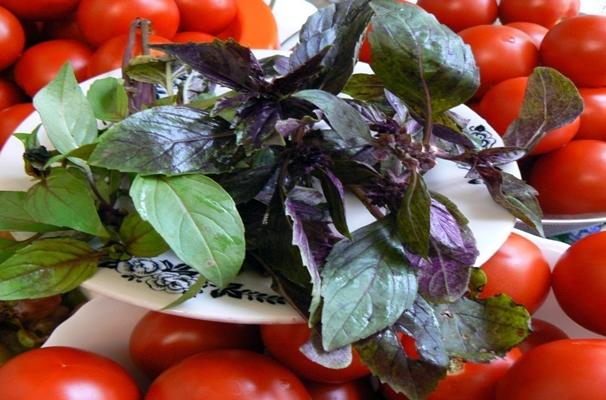
Many world-renowned chefs note that basil is a faithful companion to tomatoes. The method for preparing pickled tomatoes with basil can rightfully be considered one of the most successful.
The ingredients are the same as in the classic recipe, but you'll need to add a tablespoon of oil and some purple and green basil. Preparing the brine and placing the ingredients in the jar is the same. Canning is done the same way: let it sit for 5-7 minutes and seal.
With onions and garlic in 1-liter jars
Sometimes you need to marinate your favorite snack in a small container. We've created a recipe for marinating tomatoes with onions and garlic in 1-liter jars to help you recreate the recipe correctly.
The proportions of most vegetables and spices are the same as in the previous recipes. Add half a horseradish leaf, one whole bay leaf, a spoonful of deodorized vegetable oil, and seven medium allspice berries.
Take a look Also

Make a marinade by boiling water with salt and sugar. Place the ingredients in the jar in the usual order: spices and herbs, then tomato halves, filling the jar to the brim. Then add oil, vinegar, and finally, brine to the brim.
Sweet tomatoes in halves
There's a special method for pickling sweet tomatoes. To do this, you'll need:
- sweet tomatoes in halves - until the jar is full;
- garlic - 1 clove;
- bell pepper - 1 piece;
- chili pepper - ¼ piece;
- bay leaf - 1 piece;
- vinegar - 1 tablespoon;
- salt - 1 tablespoon;
- sugar - 2 tablespoons;
- water - 2 liters.
Place additional vegetables and spices in the jar, then fill it with tomato halves and add vinegar. Prepare a classic marinade of boiling water, salt, and sugar, pour in the brine, and seal after 5-7 minutes.
Without vinegar
Vinegar is a common, but not essential, ingredient when pickling tomatoes for the winter. If you'd like to make tomatoes without vinegar, we recommend this recipe. The ingredient list is the same as in the "With Onions and Garlic in 1-Liter Jars" recipe, but instead of vinegar, use ascorbic acid at a rate of 1 tablet per ¾ liter. You can also add selected currant and cherry leaves, if desired.
This recipe doesn't require preparing a brine. The ingredients are placed in jars according to the classic recipe, then poured with boiling water and sealed after about 5 minutes.
How and how long canned food is stored?
With proper canning, there shouldn't be any problems with storage. However, it's important to check the lids of the preserves for swelling during the first month.
It is recommended to store canned tomatoes in a cellar or cool room for no more than one season.
Related posts:
 15 Best Recipes for Cooking Cucumbers and Onions for the Winter
 Quick recipes for pickled cabbage and beets for the winter, with and without vinegar
 19 recipes for preserving tomatoes with onions and oil for the winter
 TOP 17 recipes for pickled sweet tomatoes for the winter
 6 recipes for canned zucchini with chili ketchup for the winter with and without sterilization
 How to quickly prepare pickled eggplant in jars for the winter, the most delicious recipes and storage conditions for the preparations
 27 of the most delicious eggplant appetizer recipes for the winter
 24 Best Recipes for Preserving Beets for the Winter