
- What you need to make adjika at home
- Preparing vegetables for canning
- Delicious recipes for the winter
- Classic version of the blank
- Spicy adjika without cooking
- With horseradish
- With garlic and bell pepper
- Finger-licking good recipe
- In Hungarian
- With walnuts
- With vinegar essence
- Shelf life and proper storage of canned food
Raw tomato adjika is easy to prepare. But just as quickly as it's prepared, it disappears from the refrigerator shelf, so delicious is it. If adjika is prepared without adding vinegar essence and consumed in moderation, its benefits are undeniable. Raw vegetables that haven't been heat-treated contain more vitamins and microelements. Spices rich in essential oils make adjika more beneficial, especially for flu prevention.
What you need to make adjika at home
Tomatoes can be used to make a variety of dishes, sauces, and seasonings. One of these is adjika. This Georgian dish is traditionally made with hot peppers, garlic, coriander, salt, utskho-suneli, and other spices. In Abkhazia, fresh basil and cilantro are added. All ingredients are ground into a paste.
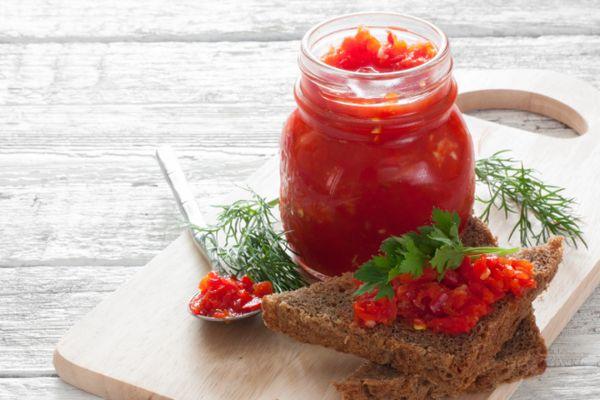
Classic adjika can be very spicy, so in other cuisines it gradually evolved into a milder version using tomatoes. The condiment retained the same name, but the ingredients changed.
Now adjika is the name for a mixture of pureed vegetables and spices:
- tomatoes:
- bell pepper;
- hot ("sparkling") pepper;
- onion;
- garlic;
- dill;
- coriander;
- khmeli-suneli;
- utskho-suneli;
- salt.
Sugar, vinegar, and other additives can also be added. This seasoning can be canned for storage throughout the winter. Many housewives also use another, quicker option, without boiling adjika and sterilizing jars.
Preparing vegetables for canning
To ensure delicious adjika, you need to use only high-quality produce. Since the vegetables aren't boiled, they need to be selected especially carefully. Old, soft-sided ones are fine, but rotten ones are not.
All types of tomatoes can be used to make vegetable paste: greenhouse tomatoes, field tomatoes, and tomatoes of various colors and sizes. Meaty tomatoes, such as plum tomatoes, are ideal. Tomatoes that are too large or too small to be preserved whole are often used for this type of seasoning.

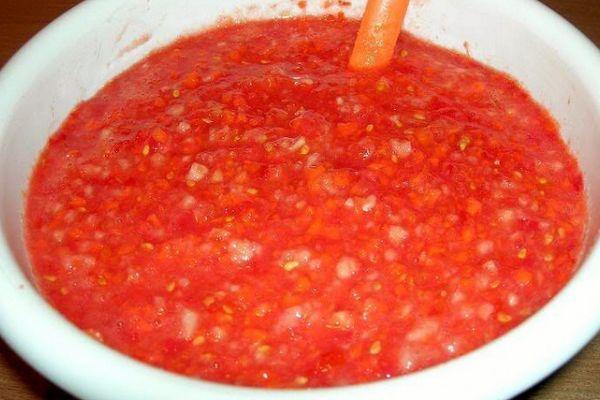
Wash and dry the vegetables. If the recipe calls for peeling the tomatoes, do so as follows: cut the tomatoes crosswise and plunge them into boiling water for 4-7 seconds. After this, the skins peel off instantly.
Delicious recipes for the winter
Here you will read the best recipes for seasonings for every day and for winter preparations.
Classic version of the blank
The classic tomato version keeps for a long time because adjika is boiled during preparation. It's very spicy and pungent, so it should be eaten with caution, adding it little by little to dishes.
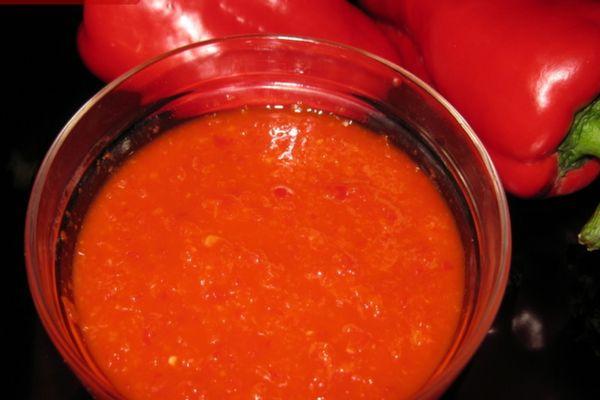
You will need:
- 2.5 kilograms of raw tomato products;
- 1-2 hot peppers;
- head of garlic;
- 2 bunches of any greens;
- a glass of refined oil;
- 1/3 cup (65-70 grams) granulated sugar;
- 35-40 grams of salt;
- 2 tablespoons 9% vinegar.
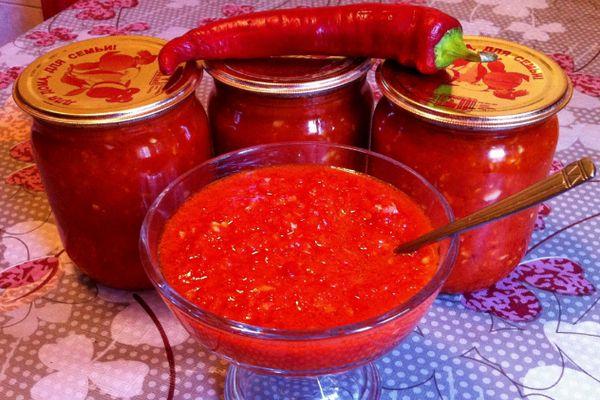
Preparation:
- Chop tomatoes and peppers (coarsely).
- Finely chop the greens.
- Mix all ingredients except garlic. Cook until thickened.
- Mash the garlic into a paste; once the mixture is ready, add it to all the other ingredients.
- Place into carefully sterilized jars and roll up.
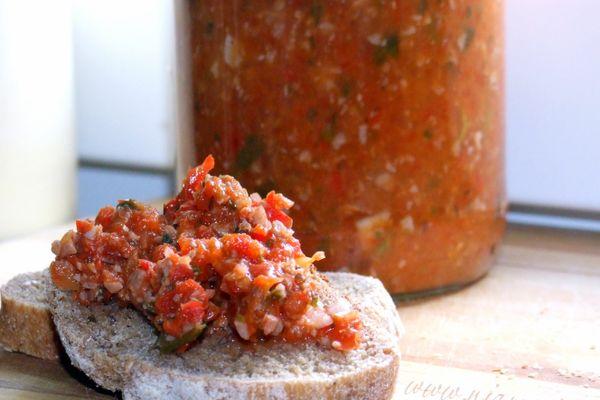
This seasoning is suitable for sandwiches, adding to pizza, pasta, and other dishes.
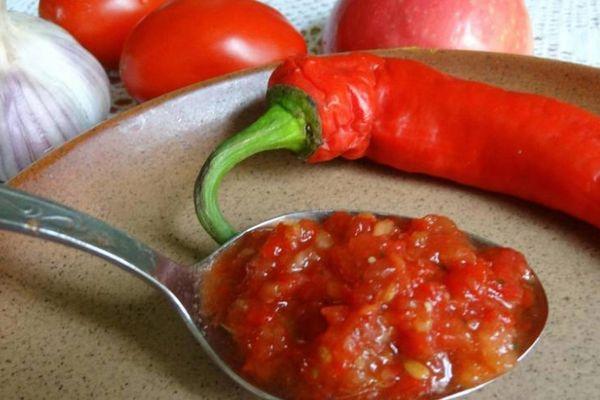
Spicy adjika without cooking
Adjika is delicious without cooking. To avoid it being too watery, it's best to use plump tomatoes with a minimal amount of liquid.
You will need:
- 1 kilogram of fleshy tomatoes;
- 2 hot peppers;
- 0.5 kilograms of sweet pepper;
- head of garlic;
- a bunch of basil or cilantro;
- 2 tablespoons of salt.
Preparation:
- Peel the tomatoes and clean the peppers.
- Puree all ingredients using a blender.
This snack can be stored in a jar in the refrigerator for quite a long time.
With horseradish
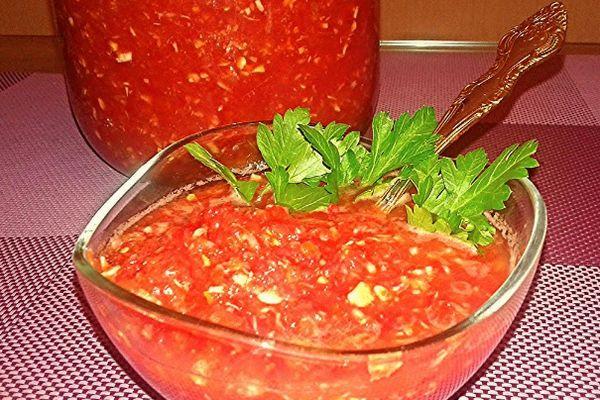
This adjika doesn't need to be sterilized. Horseradish and garlic contain phytoncides that prevent the growth of pathogenic bacteria.
You will need:
- 2 kilograms of tomatoes;
- 1 kilogram of sweet pepper;
- 5 horseradish roots;
- 1 head of garlic;
- 2 tablespoons of salt.
Preparation:
- To puree horseradish, you first need to peel it, cut it into small (2-3 cm) pieces, and then freeze it. Frozen horseradish can be processed easily using a hand grinder.
- Peel the tomatoes, chop the peppers, and peel the garlic.
- Puree all ingredients using any method convenient for you.
This appetizer is very spicy, so those with health problems should exercise caution. During a flu epidemic, it can be added sparingly to various dishes or spread on bread.
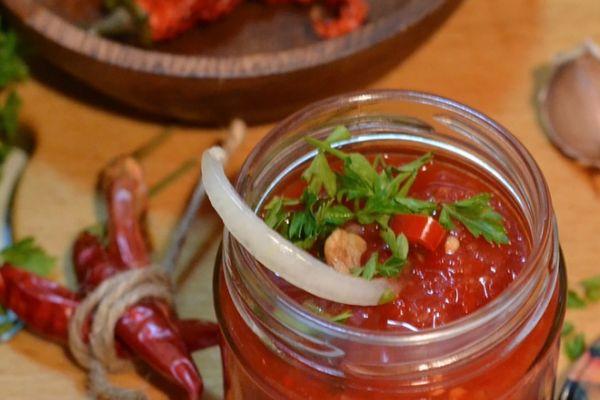
With garlic and bell pepper
You will need:
- 1 kilogram of tomatoes;
- 1 kilogram of bell pepper;
- 1 head of garlic;
- 1 bunch of cilantro;
- 2 tablespoons of salt.
Preparation:
- Remove seeds from the peppers and chop.
- Raw tomato products are peeled and cut into random pieces.
- Garlic can be peeled without any hassle if you soak it in cold water for an hour.
- The greens are chopped without stems.
- Everything is ground using a blender.
This seasoning is stored in the refrigerator.
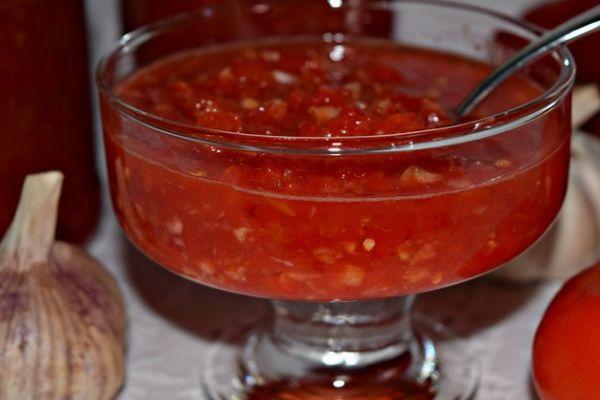
Finger-licking good recipe
To prepare the most delicious adjika, you will need:
- 2 kilograms of tomatoes;
- 1-2 hot peppers;
- 0.5 kilograms of sweet pepper;
- 1 carrot;
- head of garlic;
- a bunch of greens;
- a glass of refined oil;
- 3 tablespoons 9% vinegar (not apple cider);
- 70 grams of granulated sugar;
- 35-40 grams of salt.
Preparation:
- Chop tomatoes and peppers into small pieces.
- Finely chop any greens.
- Grate the carrots.
- Mix all ingredients except garlic. Cook for 1.5 hours.
- Press the garlic through a press and add it 2 minutes before it’s ready.
- Place into sterilized jars and roll up.
This adjika is prepared for the entire winter. Under suitable conditions, it can be stored until the next harvest.
In Hungarian
To make this adjika, you need to take equal parts (by weight):
- tomatoes;
- bell pepper;
- onion;
- carrot;
- green.
Finely chop all the vegetables. For each kilogram of the resulting mixture, add half a head of garlic, a hot pepper, and 1 heaping tablespoon of salt. Boil this mixture and place it in jars.
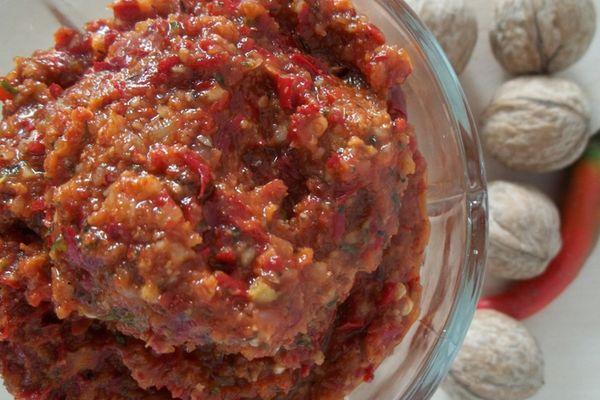
With walnuts
A very tasty recipe. It turns out to be Georgian-style adjika.
You will need:
- 1 kilogram of tomatoes;
- 1 hot pepper;
- 0.5 kilograms of sweet pepper;
- head of garlic;
- a glass of nuts (more is possible);
- a bunch of cilantro (or other greens);
- 30 grams of salt.
Preparation:
- Peel the tomatoes and remove the stems.
- Chop the tomatoes and put them on the fire to boil.
- Grind the sweet pepper through a meat grinder.
- Chop the nuts any way you like. If you prefer them coarser, chop them with a knife.
- Finely chop the cilantro (only the leaves, without the stems).
- After the tomatoes have boiled for 20 minutes, add the remaining ingredients, except for the garlic. Chop it and add it one minute before the end of cooking.
- Cook until it becomes a paste.
With vinegar essence
To preserve the seasoning for a long time, vinegar essence is used. Adding vinegar to raw adjika is also beneficial. However, it's important to remember that the essence is highly acidic and should be diluted when added to dishes.
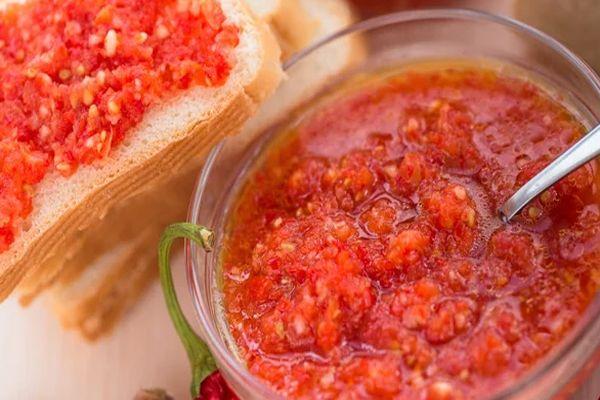
The seasoning can be made with or without sterilization using the essence. The essence is diluted in water and mixed with the other ingredients. This results in a quick adjika that nevertheless has a very long shelf life.
Shelf life and proper storage of canned food
To ensure long-term shelf life, canned food must be properly prepared. It should contain a significant amount of salt, sugar, and vinegar. Before putting the adjika into jars, it needs to be boiled.
Place the tomatoes while still hot, in warm, dry jars. You can use a screw-on lid sealer to seal them. This will keep the preserves until the next tomato harvest.
Related posts:
 The best recipes for making adjika with apples and tomatoes for the winter
 How to make zucchini adjika for the winter using finger-licking good recipes and storage instructions
 Recipes for raw tomato adjika with aspirin for the winter, with or without cooking
 13 simple recipes for making tomato adjika for the winter at home
 TOP 10 ways to prepare adjika according to the classic recipe for the winter
 TOP 15 recipes for making homemade adjika from tomatoes and garlic without cooking for the winter
 18 Best Recipes for Making Delicious Homemade Adjika for the Winter
 The most delicious recipes for raw and cooked homemade adjika with horseradish for the winter, and how to store the prepared ingredients