
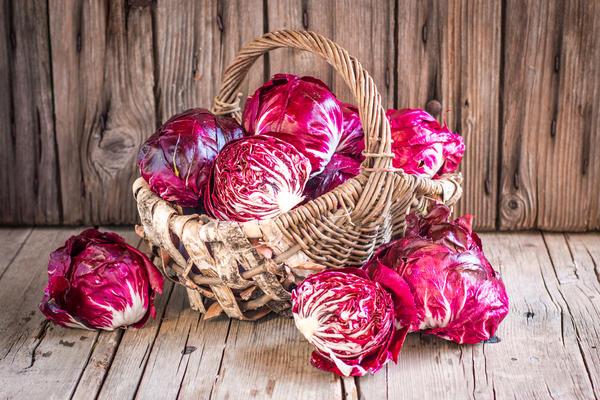
The purple or violet leaves of this plant from the Brassicaceae family, brought to Russia from the Mediterranean, have a rich hue and a spicy aroma. They look unique in salads and are very beneficial for humans. Housewives who pickle or salt red cabbage for the winter, provide households not only with a tasty product but also with vitamins, fiber, and microelements. This vegetable pairs well with root vegetables and peppers, making juicy and crunchy pickles.
Health benefits of red cabbage
Although this cruciferous plant originates from countries with a Mediterranean climate and tolerates temperate climates well, it is much less cultivated in Russia than cabbage, but its nutritional value is significantly richer. The leaves' unusual coloring is due to anthocyanins. These substances help strengthen blood vessel walls, lower blood pressure in those with hypertension, and remove toxins and radionuclides from the body.
Red cabbage contains selenium, which has a beneficial effect on the thyroid gland and accelerates antibody synthesis. Fiber normalizes digestion and cleanses the intestines of fats and toxins. Ascorbic acid strengthens the immune system. Phytoncides present in the leaves fight bacterial infections.
The juice of the vegetable, known in Russia as blue cabbage, has long been used to treat tuberculosis, bronchitis, and stomach ulcers. The leaves of the plant were used to heal wounds, scratches, and scars. Red cabbage is rich in vitamins such as:
- tocopherol;
- folic acid;
- riboflavin;
- retinol.
 This vegetable is beneficial for pregnant women, diabetics, and those suffering from obesity. Regular consumption improves heart function, reduces the risk of cancer, and prevents healthy cells from degenerating.
The purple coloring looks very original in the salad, and the spicy and unusual taste of cabbage fermented for the winter will please the whole family.
Prepare the main ingredients
Before preserving the vegetable, depending on the culinary recipe, the leaves are chopped or cut into pieces, a marinade or brine is cooked, and vinegar or citric acid is added to it.
Red cabbage can be prepared with apples. Wash the apples, remove the core and seeds, and chop them. Peel the onions and garlic and slice them into rings. Root vegetables such as carrots and beets, horseradish, and herbs are thoroughly washed and chopped. Red cabbage with bell peppers makes a delicious combination. Shred or dice the vegetables, removing the seeds.
The jars in which the canned snack is rolled up are washed with soda and sterilized.
Cooking recipes
Red cabbage is pickled like its white relative, but purple or violet leaves have a sweeter flavor and require less sugar. The technology for long-term storage of both types of cabbage is essentially the same.
Classic with vinegar for the winter
The traditional marinade used for preserving red cabbage is made by boiling water, adding sugar, sunflower oil, and salt. Vinegar is added to the hot liquid. To prepare this classic recipe, you'll need:
- bay leaf - 5 pcs.;
- garlic - 1 head;
- hot and allspice - 16 peas;
- 6 cloves.
This amount of spices is enough for 2 small heads of cabbage. Shred the cabbage into thin strips. To prevent the leaves from becoming tough, lightly crush them with your hands. Peel the garlic cloves and chop into circles.
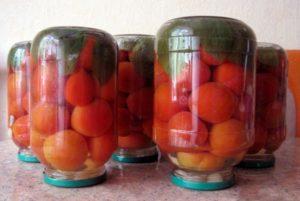
Place the seasoning and cabbage in washed and dried jars, then fill with the marinade. To cook it, dissolve 2 tablespoons of sugar and salt in a liter of water, then add 80 ml of vinegar. Seal the jars with tin lids.
Spicy with beetroot
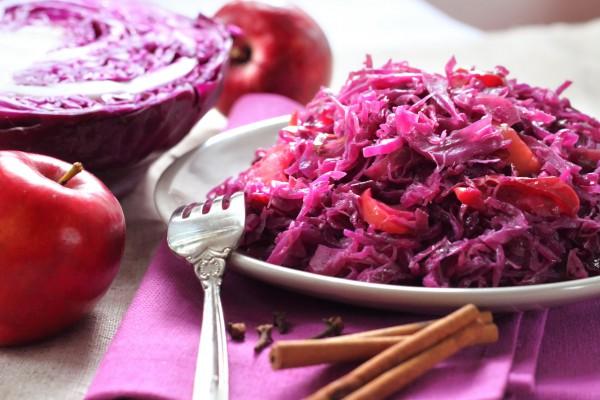
It's unlikely anyone would resist red cabbage marinated with root vegetables in winter. It can be served as a salad or as a side dish for meat. To prepare this spicy dish, you'll need:
- garlic;
- a glass of sugar;
- 2 beets;
- salt - 60 g;
- carrots - 2 pcs.;
- sunflower oil - ½ cup
You'll need red, black, and allspice peas. The pickling process is straightforward:
- Root vegetables need to be washed and peeled.
- The cabbage leaves are separated and cut into pieces.
- Vegetables are grated using a Korean carrot grater.
- The ingredients are mixed and placed in a bowl, where all the pepper is poured - red, black, and allspice.
- Pour water and sunflower oil, half a glass of vinegar into another bowl, add salt, add sugar and bring to a boil.
- The cooled marinade is poured into the vegetables, the bowl is covered and weight is applied.
After 3-4 days, the spicy snack is transferred to jars. The spicy product is taken to the cellar.
With bell pepper
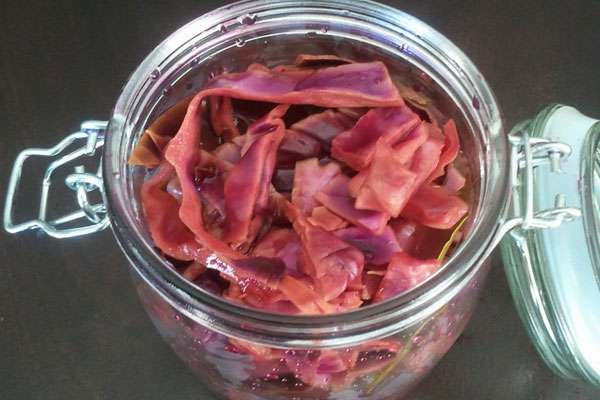
Preserves made from purple leaves are very beautiful and immediately attract the attention of both guests and family members, delighting with their excellent taste and spicy aroma. You can marinate this vibrant cabbage with bell peppers. You'll need about a kilogram of each vegetable, and you'll also need:
- large onion;
- cloves - 2 buds;
- dill seeds;
- sugar - a glass;
- salt - 2.5 tbsp;
- vinegar - 40 ml.
Place the peppers in boiling water for 5 minutes, then return to cool water. Shred the cabbage into thin strips. Chop the peeled onion. Mix all ingredients and grind with salt, transfer to a glass container, pasteurize for about half an hour, and seal with tin lids.
In jars with aspirin
Some women prefer to pickle cabbage with aspirin for the winter. This preservative helps it last longer, retains its color, maintains its juiciness, and prevents mold, resulting in a crispy texture. For half a head of red cabbage, you'll need:
- aspirin - 1 tablet;
- anise seeds - 7 grains;
- salt - 3 spoons.
To give the product a spicy taste and an interesting aroma, mustard powder, chopped fennel, ginger, and hot pepper are added.
Take a look Also
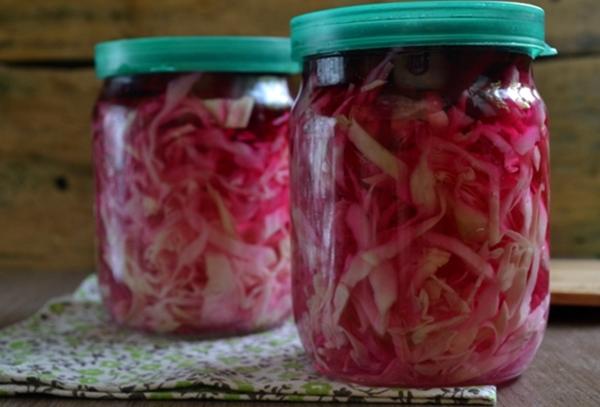
Remove the outer leaves from the cabbage, chop the remaining leaves, mix with salt, add a liter of cool water, and let the cabbage marinate for about 8 hours. Then drain the cabbage. Fry the spices in a frying pan, add 1/2 liter of boiling water and hot pepper, and simmer gently. Fill a jar with the prepared marinade, add an aspirin, and enjoy. After about 3 weeks, the appetizer is ready to serve.
With raisins
Red cabbage with apples is prepared for the winter quite quickly.
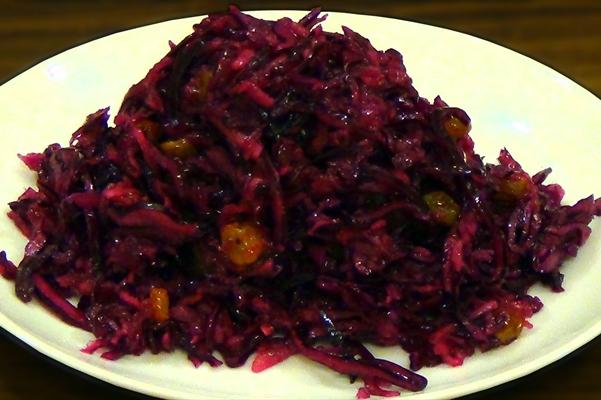
To give it a sweet taste, add a spoonful of honey and 2 seedless raisins, in addition, take:
- fruit vinegar - 40 ml;
- olive oil - 30 mg;
- salt;
- hot pepper;
- parsley leaves;
- walnuts.
Shred the cabbage and apple using a coarse grater, season with salt, and toss to combine. Add herbs and raisins. Make the marinade with vinegar, honey, and oil. The dish can be eaten the next day or preserved in jars for the winter.
Quick-pickled pieces
Shredding cabbage into thin strips takes a lot of time. To preserve it for the winter, you can simply slice the head with a sharp knife—it's much quicker and just as tasty.
For the marinade, you'll need 2 cups of water, one cup each of vinegar and sugar. To prepare the cabbage pieces, you'll need 1 head of cabbage, peppercorns, cloves, bay leaf, and cinnamon.
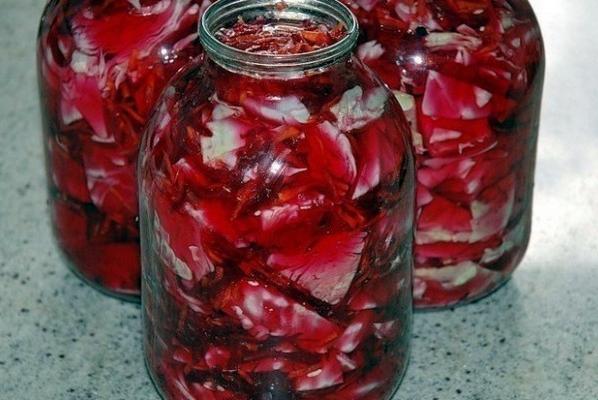
The leaves are separated from the head, chopped with a knife, and salted for at least 2 hours. They are then placed in jars along with the spices. The marinade is prepared with water, salt, vinegar, and sugar. The boiling liquid is poured over the prepared ingredients. The appetizer is sterilized for 30 minutes and sealed with lids.
Crispy
Vegetables pair well with fruits. Pickling red cabbage with apples in a 1:5 ratio makes for a delicious dish.
The sweet and sour fruits add their own notes and give a garden aroma.
Cut the onion into rings (you'll need 250 grams for 5 kilograms of vegetables). Core and seed the apples, then chop them finely. Remove the outer leaves and shred the cabbage. Place all ingredients in an enamel bowl, mix with a spoonful of salt and caraway seeds, cover, and apply a weight. Place the mixture in a dark place to ferment. The crisp cabbage is packaged in jars and stored in the cellar. It will be even more delicious with olive or sunflower oil, but it won't keep until spring.
Cabbage salad
In winter, vegetable preserves sell out quickly. Many families adore pickled tomatoes and salted cucumbers, enjoy zucchini or eggplant caviar, and serve salads made from red or purple cabbage and peppers. To prepare it, you'll need a kilogram of each of these vegetables and two onions.
The marinade is cooked using:
- water - 1 liter;
- sugar - 200 g;
- vinegar - 1/2 cup;
- salt - 2 or 3 spoons;
- dill seeds.
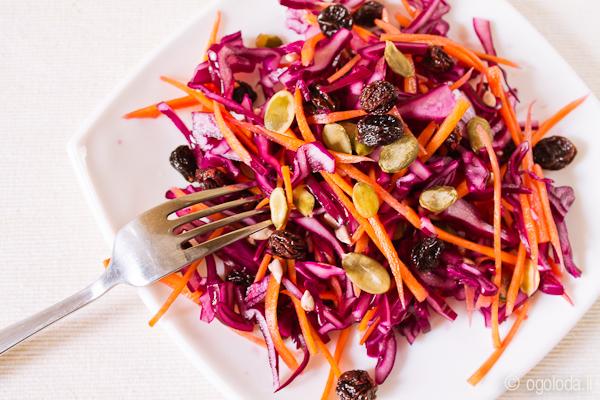
The cabbage should be shredded into strips. The peppers should be placed in boiling water for about 5 minutes, then dipped in cool water and cut into rings. Do the same with the onions. Place the chopped vegetables in a wide bowl and, after thoroughly mixing, transfer them to sterile jars, fill them with boiling marinade, and season with vinegar. The salad is sealed and covered with a warm blanket.
Take a look Also
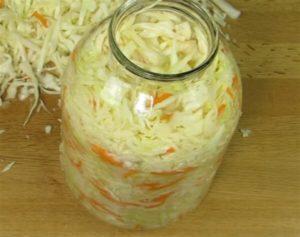
Pickled
Purple or crimson cabbage will delight you with its delicious flavor and attractive appearance when paired with the tart Antonovka apples. A kilogram of fruit is enough for 5 heads of cabbage.
Wash the fruit, remove the seeds and cut into slices, slice the onions into rings, and shred the cabbage. Place all ingredients in a wide bowl, add the dill seeds and mix thoroughly with a cup of fine salt. Then transfer to an enamel saucepan, alternating with the apples.
The container with the contents is placed under pressure in a warm room for three days. The sauerkraut is then packaged into jars and stored in the cellar. This preparation is eaten immediately.
Storage rules
Vegetables marinated with vinegar or citric acid, sealed and airtight, can be stored indoors, away from radiators and other heating devices. Store sterile jars of cabbage out of direct sunlight. Store in a ventilated basement or cellar where the temperature is just above freezing for a year or more.
Salted and pickled vegetables are much more difficult to store. Both white and red cabbage begin to ferment at temperatures as low as 10°C (50°F), so it's best to store them in the basement or refrigerate them. If this isn't possible, store the pickles in the pantry or kitchen, adding sugar regularly. When vinegar turns into vinegar, it acts as a preservative, preventing rotting and preserving vitamins and minerals.
Pickled vegetables do not spoil for a long time when sunflower oil is poured into the container; it prevents the growth of bacteria that cause fermentation.
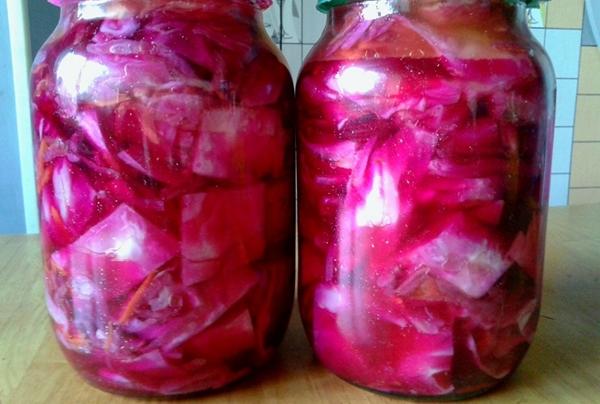
In a private home with a cellar, you can store cabbage in a wooden barrel. The preserved cabbage will retain its flavor and will not rot for at least six months.
You cannot drain the brine from pickled vegetables, as the ascorbic acid will quickly decompose.
Over time, mold will form on the surface of the snack. Mustard seeds and horseradish root help protect the product from this unpleasant phenomenon. Pickles will keep longer if you add lingonberries to the jar or barrel.
Related posts:
 Why cabbage leaves wilt in the garden and what to do
 Planting, growing, and caring for cauliflower in open ground and greenhouses
 Growing and caring for Chinese cabbage in open ground and greenhouses
 What is the best way to treat cabbage from pests? Folk, chemical and biological remedies.
 TOP 13 delicious recipes for quick pickled cabbage for the winter
 Why does cabbage grow tall in the garden and what can be done about it?
 Description of the best cabbage varieties for 2025 for different regions
 How to properly plant cabbage seedlings in open ground: spacing, timing, and temperature
I cut the cabbage into large pieces so it stays crisp. I marinate it according to the classic recipe, but I might add only hot pepper and a few cloves of garlic.