
Today, there are a large number of tomato-based appetizers. Each one has its own unique flavor. Just a few hours after preparation, you'll want to open the jar and taste the preserves. However, this is not recommended. So, how long before you can eat them? pickled tomatoesIt all depends on the cooking method, the size of the tomatoes, and other important factors.
How long does it take to marinate tomatoes in a jar?
Pickling tomatoes takes at least a week. However, even after this process is complete, it is not recommended to consume the product. It is acceptable to do so after at least 2-3 weeks.
For faster results, it's worth using special recipes. These usually involve using small tomatoes or diced vegetables.
To get a tasty and healthy snack that can be consumed in a short period of time, follow these recommendations:
- Follow the recipe and proportions depending on the type of tomatoes you plan to cook.
- Give preference only to high-quality and unspoiled vegetables.
- Follow hygiene recommendations when preparing the snack.
- Strictly follow the sterilization rules.
- Provide banks with a so-called quarantine before sending them to winter storage.
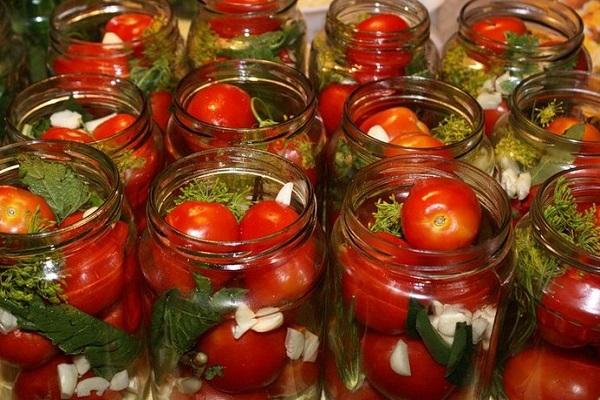
How long before you can eat tomato pickles?
Pickling tomatoes typically takes 14 days. However, experienced home cooks recommend removing the jar from the cellar only after one month. Opening the jar too early risks the risk of under-salted tomatoes. However, this product also has a pleasant taste and is perfectly edible.
If you're looking for lightly salted tomatoes, it's easier to cook them in a saucepan and let them steep for just a few days. For this, you can use this recipe:
- 3 kilograms of tomatoes;
- a bunch of celery;
- garlic;
- a bunch of dill.
For every 1 liter of water, we recommend using 2 tablespoons of salt and 2 tablespoons of sugar. To prepare the snack, trim the celery leaves and chop the stalks. Wash the tomatoes and pat them dry.

To ensure the vegetables are pickled after three days, remove the stem with a knife. This will create a cone-shaped indentation. Keep in mind that the opening should be small. Otherwise, the fruit will lose its shape when boiling water is added.
You can place a piece of garlic in each cavity. This will add more flavor to the vegetables. However, these fruits will take longer to cook.
After this, it's recommended to peel the remaining garlic. Pour water into a saucepan, add salt and sugar. Add the celery for a few seconds. Then place the dill, celery stalks, garlic, and tomatoes in the jars. It's best to place them with the openings facing up. This will prevent air stagnation.

Then add the boiling brine. The tomatoes will likely absorb most of the liquid, so it's best to reserve half a cup of the brine or make a fresh batch the next day.
Keep the jar in a warm place for 3 days. Cover it with a saucer. During this time, the brine will be cloudy, and bubbles will appear on the surface. This is due to fermentation. After this time, cover the jars with nylon lids and refrigerate. This appetizer is ready to eat.
It's recommended to store salted tomatoes at a temperature of 1-6 degrees Celsius. This should be done in a cellar or refrigerator.
If suitable conditions are not available, tomatoes should be preserved. To do this, drain the brine after 3-5 days and bring to a boil. Then, pour the resulting liquid over the washed tomatoes and seal.


When will the canned tomatoes be ready?
Canned tomatoes should be left in the jar for at least three weeks. Only then can they be eaten. However, it's best to extend this period to two months. This is how long it takes for all layers to soak evenly.
To get a tasty and healthy dish, it is worth considering the following features:
- Only high-quality tomatoes that are not damaged are suitable for canning;
- Before preparing a snack, vegetables and other ingredients should be washed thoroughly;
- It is recommended that all utensils used for canning be thoroughly sterilized;
- It is important to roll up the jars correctly – if air gets inside the jar, the lids may come off;
- It is essential to strictly follow the recipe – paying particular attention to the amount of salt and vinegar in the preparation.
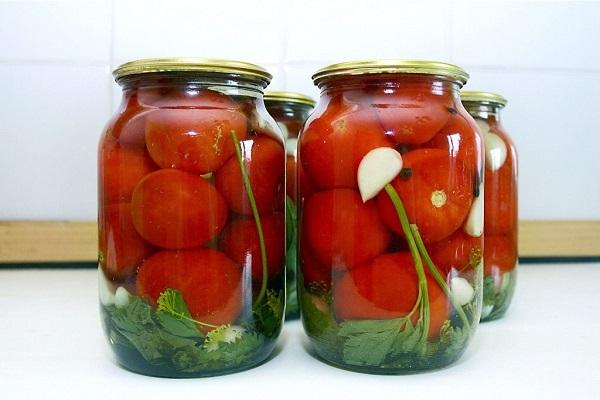
How to determine product readiness
Some types of pickled tomatoes can be eaten the following day. However, much depends on the variety, quality of the vegetables, and the brine recipe. You can tell if the pickled tomatoes are ready by their taste and appearance.
Taste
To assess the product's readiness, it's recommended to taste it. The tomatoes should be thoroughly soaked in the brine. Their flavor will directly depend on the marinade's composition, so it's important to strictly follow the recipe when canning.
If the tomatoes have a slightly sweet flavor, lack the characteristic tartness, or taste like fresh vegetables, the appetizer is not ready yet. It's recommended to leave these tomatoes to soak in the brine further.

Change in color and appearance
Determining the readiness of a snack by its appearance is quite difficult. Pickled vegetables retain their rich color. Even after several months, they have a firm texture and a tough skin.
The appearance of the fruit directly depends on the ingredients used. Therefore, it's impossible to establish clear criteria for determining whether a snack is ready.
You opened the can, but the tomatoes aren't ready! What should you do in such cases?
Sometimes, after opening, the prepared brine tastes like fresh vegetables. Don't despair, as this can be easily remedied. First, drain the brine and bring it to a boil. If the recipe lacks herbs or spices, you can add them.
 Then, return the hot brine to the container and seal it tightly. The finished product is ready for storage. It's recommended to maintain appropriate humidity and temperature parameters.
Pickled tomatoes are a delicious preserve that's very popular with many. To ensure successful preparation, it's important to follow the recipe precisely. Determining when the appetizer is ready isn't all that difficult. Experts recommend considering the cooking time, the variety and size of the vegetables, and the ingredients in the marinade.
Related posts:
 What is the best way to feed tomato seedlings to make them plump?
 Description of the best varieties of black tomatoes for open ground and greenhouses
 Methods for planting and propagating cherries at home
 15 simple recipes for pickling tomatoes in jars for the winter
 How to make marinated tomatoes in jars for the winter using a Bulgarian recipe
 Delicious recipes for canned tomatoes with honey for the winter, preparation steps
 Conditions for growing mandarin at home and rules for caring for the tree
 The best methods for growing grapes from seeds at home