
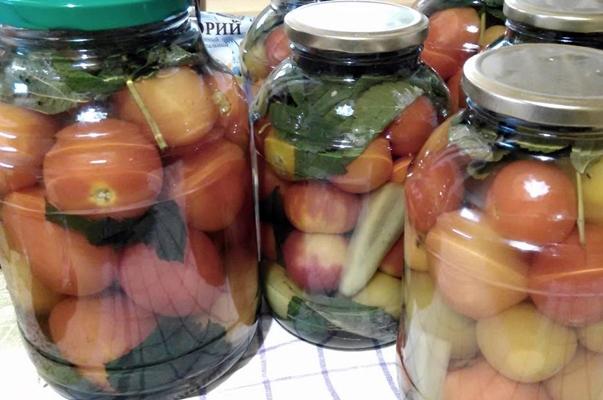
The cold season becomes tastier and brighter thanks to the preparation of preserves – tomatoes with raspberry leaves for the winter, which are considered one of the most common products for canning.
The inclusion of raspberry leaves in the recipe increases the vitamin content, adding a special flavor to the vegetables.
The advantage of this method
Experienced housewives highlight several advantages of using raspberry leaves when preserving:
- the ingredient gives a special flavor to the marinade;
- the leaves contain astringent and tanning components, ascorbic and organic acids, salicylates;
- the leaves act as preservatives, which are preferable to chemical analogues;
- thanks to the effect of raspberry leaves, the fermentation process of the preparation is excluded;
- Tomatoes in a jar retain their elasticity, firmness and beautiful appearance for a long time.
We calculate the amount of necessary ingredients
Ripe red or green tomatoes are most often used for winter preserves. Various spices are commonly added to the brine. The best tomato varieties for canning should have firm skins to prevent deformation. Commonly used varieties include:
- Lighthouse;
- Humbert;
- Torch;
- Ermak;
- Titanium;
- Buffalo;
- Volgograd.
Important! It is recommended to use a liter-sized jar for preservation to avoid crushing the fruit under its own weight, which can occur in larger containers.
Calculation of ingredients:
- When calculating the required amount of tomatoes for brine, keep in mind that half the container's volume after filling should be reserved for liquid. The optimal ratio for a liter jar is 500 grams of tomatoes and 500 milliliters of water.
- Thanks to the distinct flavor of tomatoes, canning does not require a large amount of spices, herbs, and raspberry leaves.
Important! Due to the slow absorption of vegetables, the jar can be opened at least 30-40 days after sealing.
Take a look Also
Step-by-step cooking recipe
There are several ways to prepare tomatoes for the winter, which are quick to prepare and delight family members and guests with their unique taste and vitamin content.
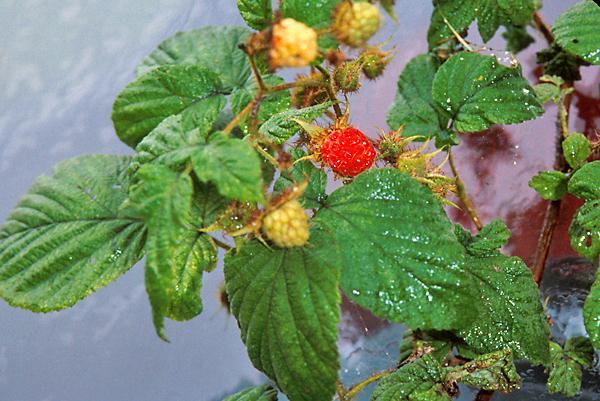
Raspberry leaves, harvested in August as full, five-fingered branches, are used for canning. This is when they reach their optimal juiciness and density.
Pickled method
The sweet and sour tomato variety and the mix of spices in the marinade will make the preparation unusually delicious.
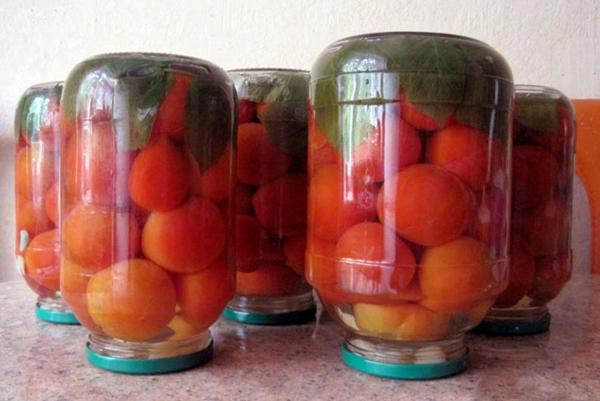
- Place 4 full raspberry leaves on the bottom of the jar, creating a dense layer.
- For 1 serving, use 1500 grams of large tomatoes. Place the tomatoes on top of the leaves, leaving small gaps.
- Fill the container to the top with boiling water.
- Leave to infuse for 20 minutes.
- Drain the marinade water. Add 2 tablespoons of salt, 5 tablespoons of sugar, and 2 teaspoons of 9% vinegar to the liquid.
- Add 5 cloves of garlic between the tomatoes.
- Pour the prepared marinade into the container.
- Roll up and sterilize.
- Infuse upside down in a cool, dark place for several days.
Delicious and original preserves will help you survive the cold, when the human immune system is weakened.
Preserving cucumbers with raspberry leaves
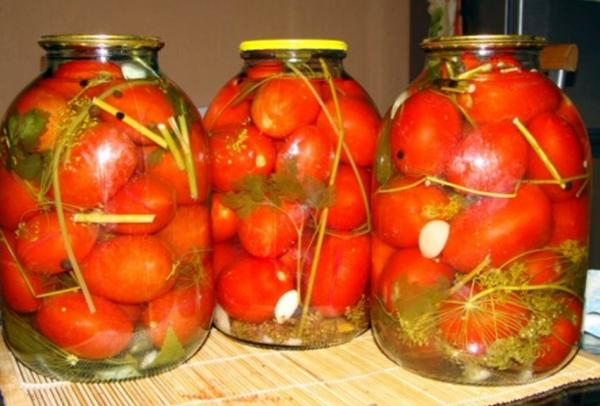
To prepare a three-liter jar of cucumbers for winter, you will need:
- Soak 2 kilograms of cucumbers in water for 2-3 hours.
- Sterilize the container.
- Trim the ends of the vegetables.
- Place 2 bay leaves, 5 black peppercorns, 2 currant, cherry and raspberry leaves, 1 rolled horseradish leaf, and 3 cloves of garlic on the bottom of the jar.
- Place the cucumbers tightly.
- Add 2 tablespoons of salt, 1 tablespoon of sugar, 3 umbrellas of dill.
- Fill the bottle with purified water up to the top rim of the neck.
- Leave for 24 hours.
- Drain the liquid from the jar into a saucepan, add boiled water, and bring to a boil.
- Pour the mixture back into the container to the top and roll it up.
How and how long are the blanks stored?
Properly prepared preparations and observance sterilization rules allow for the storage of canned goods at home for a long time. The optimal period is 1-2 years.
To maximize the shelf life of your preserves, ensure they are stored away from direct sunlight. A cellar is the best option. If you're storing preserves indoors, consider creating a niche on the balcony or in a pantry. Choose a jar with a light.
Related posts:
 Step-by-step instructions for planting and caring for raspberries in summer, tips from gardeners
 16 simple recipes for making raspberry compote for the winter
 Description and characteristics of the Hussar raspberry variety, care and cultivation
 Description of the remontant raspberry variety Atlant, planting technology and care
 How to treat raspberries against pests during fruiting and flowering
 40 of the best recipes for delicious homemade winter preserves
 Description of the Balsam raspberry variety, the intricacies of growing and caring for it
 How and when is it best to transplant raspberries to a new location in the summer?