
- Specifics of planting raspberries
- shoots
- Cuttings
- Seeds
- Optimal timing
- Depending on the variety
- Depending on the growing region
- Site preparation
- Bush placement scheme
- Planting individual bushes
- Trench planting
- Depth and dimensions of the planting hole
- Algorithm of landing operations
- What care do raspberries require for a good harvest?
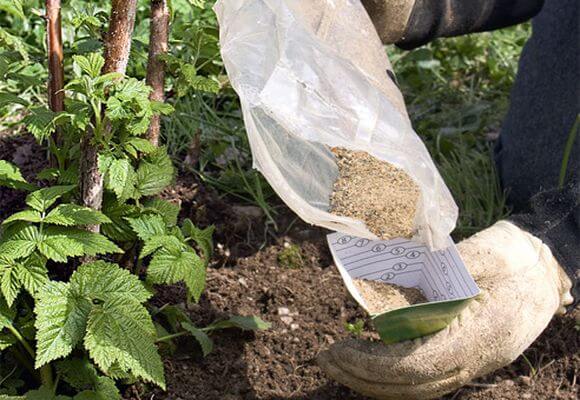
- Top dressing
- Watering
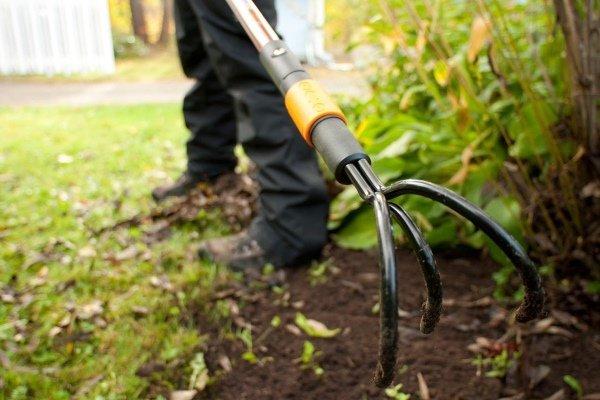
- Loosening the soil, removing weeds
- Garter
- Seasonal treatments against insects and diseases
- Bending down raspberry bushes for the winter
- Raspberry Growing Tips from Experienced Gardeners
Raspberries hold a special place among garden crops. These sweet, juicy berries are considered an exceptional delicacy, both raw and made into jam, a favorite since childhood. Timely planting of raspberries in the summer, taking into account the rules and specifics of agricultural technology, will ensure a first harvest the following season. The bush must be carefully placed in the garden, provided with proper care, and protected from external factors.
Specifics of planting raspberries
If you decide to plant garden raspberries on your own plot, you need to pay attention to a few features:
- The berry bush produces good yields in areas with high light levels, moderate humidity and light, fertile soil.
- It is recommended to grow raspberries next to suitable crops, such as apple and pear trees.
- You shouldn't plant bushes in places where tomatoes, root vegetables or strawberries previously grew.
- To propagate the crop, use shoots, cuttings or seeds of a variety suitable for the growing region.
Methods of raspberry propagation:
- developed shoots;
- green cuttings;
- root suckers;
- seeds.
shoots
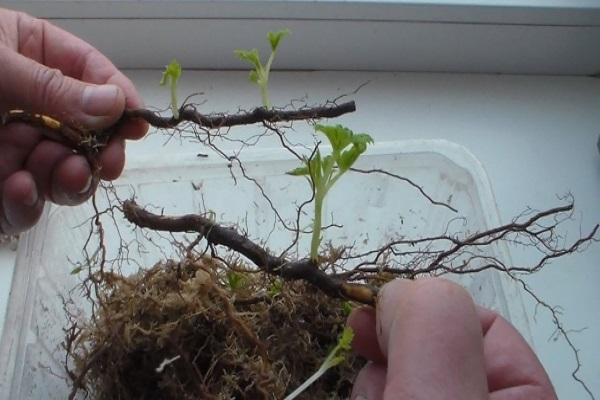
The easiest way to propagate raspberries is by using mature shoots. The planting material should be well-developed and have a well-branched root system, allowing the seedlings to establish quickly. This method of planting raspberries allows you to harvest your first crop quickly. It's best to choose one-year-old stems that are growing well and have already survived one winter of dormancy. Propagation by shoots requires trench planting, where the seedlings are placed in a single row with wide row spacing.
Cuttings
An equally popular method for growing raspberry seedlings is by taking cuttings. This procedure is not typically used for summer plantings and is more often performed in early fall.
Propagation by greens is ideal for rare varieties and is used for faster growth of plantings.
The stems used for planting should not be woody or excessively thick. Selected raspberry shoots should be cut into equal-sized cuttings up to 0.1 m long.
Seeds
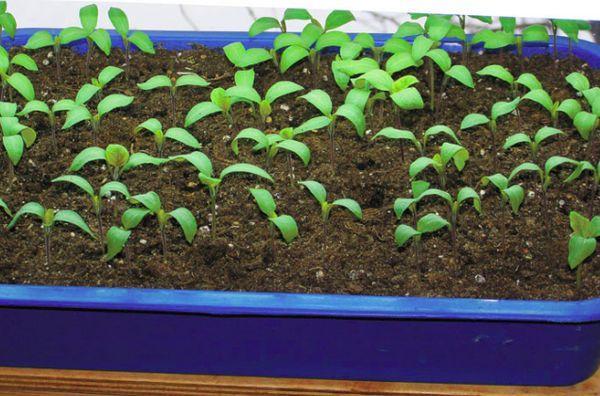
Raspberries can be successfully grown from seeds, but this method is more time-consuming and labor-intensive. Particular attention should be paid to the quality of the seeds, checking for germination and fullness. The seeds should first be planted as seedlings, which will eventually be ready for transplanting into open ground. This method is used to propagate garden raspberry varieties whose seedlings are difficult to obtain in nearby areas.
Optimal timing
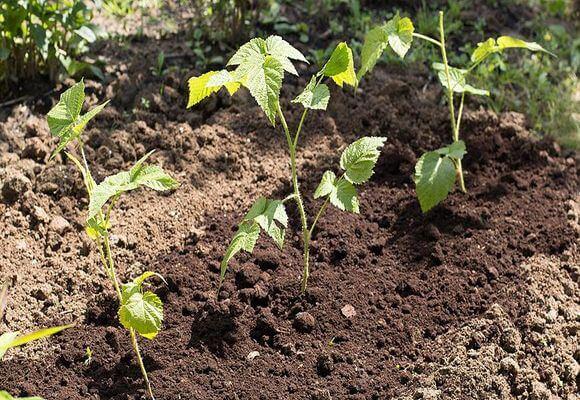
Raspberry seedlings thrive better if planted on time. The best time to plant depends on climate conditions and the variety. To ensure a large harvest, choose bushes that are suitable for your specific region and resistant to local diseases and pests.

Depending on the variety
Based on varietal characteristics raspberries need to be planted at the right time bushes. Varieties with low frost tolerance should be planted in the spring. Traditional garden raspberries, which ripen in the summer, are best planted in August or September. Everbearing varieties are characterized by early fruiting, so autumn planting is ideal.
Depending on the growing region
Raspberry planting times can vary significantly in different regions of Russia:
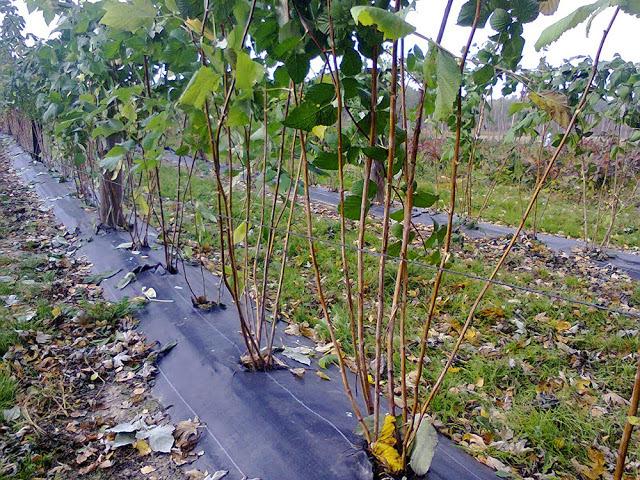
- Planting bushes in the central zone and the Moscow region can be carried out in the spring from May 1 to 31, or in the fall, starting in September and ending in mid-October.
- In the Urals, Siberia, and the Leningrad region, raspberries should be planted in the spring, but not before March 20. Planting in the fall will prevent the plants from establishing themselves, and frost will quickly kill them.
- In the south, spring is not recommended, as the root system does not have time to fully develop. The optimal planting time is the second half of August, September, or early October.
Site preparation
When choosing a site for planting raspberries, choose a well-lit spot or one with very light shade. Dense shade leads to waterlogged soil and promotes weed growth. Before planting, prepare the soil:
- Regardless of whether raspberries are grown in the shade or in the sun, the soil must be disinfected to destroy fungi and pest larvae.
- Raspberries grow in fertile, loose soil, so the area needs to be dug up and fertilized.
- When planting bushes in an open area, you should provide protection from the wind.
- The acidity of the soil in the garden should be brought to neutral or slightly acidic.
Bush placement scheme
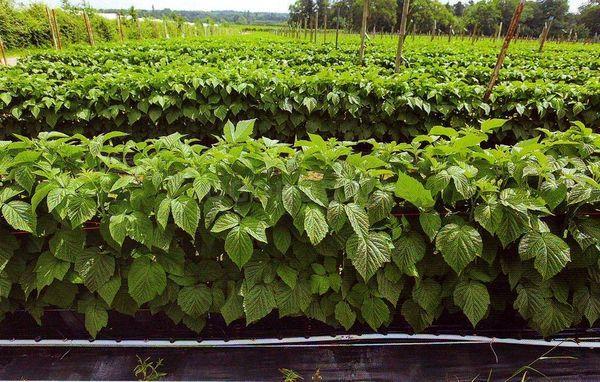
The optimal spacing between raspberry seedlings, which will ensure normal raspberry development without excessive crowding, depends on the chosen planting scheme. Bushes can be planted individually or in wide rows. Each planting method has its own specific agricultural requirements.
There are also several alternative options for planting raspberries:
- in separate containers;
- in car tires;
- under the film.
Planting individual bushes
The bush planting scheme for raspberries is as follows:
- The plot is divided into cells with sides of 100-150 cm.
- Planting holes are marked out in a checkerboard pattern.
- The holes should be about 40 cm deep and 60 cm in diameter.
In order to plant raspberries correctly, the dimensions of the planting holes must exceed the dimensions of the root system of the seedling.
Trench planting
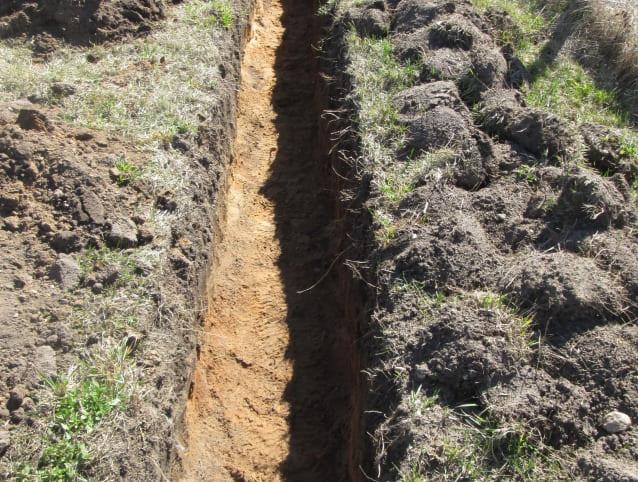
Raspberry bushes look more compact and attractive when planted in even rows. The trench method involves:
- Mark the rows in a north-south direction.
- Plants should be planted no closer than half a meter from each other.
- The trench is 45 cm deep and 60 cm wide.
- The distance between rows is 1-1.5 m.
- The gaps can be mulched or covered with dense material.
Depth and dimensions of the planting hole
The dimensions of the planting holes vary depending on the planting pattern and the size of the rhizome. Seedlings should be planted halfway deep, as the other half is filled with a mixture of soil, humus, and fertilizer.
The root collar should not go underground, but can be located 2-3 cm above the surface.
The diameter of the hole is chosen so that the raspberry roots do not need to be pressed down and deformed when lowered into the ground.
Algorithm of landing operations
After preparing the holes, you need to select the seedlings and treat the roots with growth enhancers or a homemade clay slurry. Further steps can be followed according to the step-by-step instructions:
- Place the seedlings one by one near the corresponding holes.
- Mix fertile soil with humus or compost.
- Fill the hole halfway with the mixture, forming a mound.
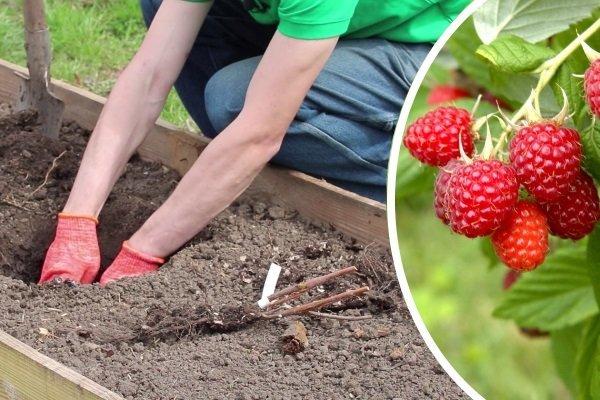
- Plant raspberries by holding the stem with one hand and spreading the roots along the ground with the other.
- Fill the holes with soil mixture, keeping the root collar above the surface.
- Easy to compact the soil.
- After planting, lift the bushes up a little.
- Water each bush with 6 liters of warm water.
- Mulch around the roots with straw, sawdust, peat soil.
What care do raspberries require for a good harvest?
To ensure the fastest possible flowering and fruiting season, a fresh raspberry patch requires intensive care. The first berry harvest can be obtained as early as the following season. The number of raspberries on the bushes will increase over time, so care should begin immediately after planting. To ensure rapid rooting and shoot growth, it is necessary to:
- apply fertilizers;
- maintain soil moisture;
- loosen the soil;
- remove weeds;
- tie the shoots to the support;
- treat against pests and diseases;
- prepare bushes for winter.
Top dressing
The rates and timing of fertilizer application for raspberries include:
- At the beginning of the growing season, which occurs in April or the first ten days of May, you can apply a water solution of manure. For every 12 liters of fertilizer, add a teaspoon of urea or ammonium nitrate.
- In the fall, the soil around each bush should be dug up and mixed with 20 liters of humus, compost or peat, adding 100 g of urea or saltpeter.
- Once every 3 years, the soil is enriched with minerals, adding potassium and phosphorus fertilizers in the fall, and nitrogen fertilizers in the spring.
Watering
Maintaining the required soil moisture requires adherence to the watering regime and norms:
- At the beginning of the growing season, it is enough to water the raspberries once every 2 weeks.
- The watering rate in a temperate climate is 25 liters per square meter.
- Low shoots from green cuttings can be watered every evening, adding about 2 liters of water under each bush.
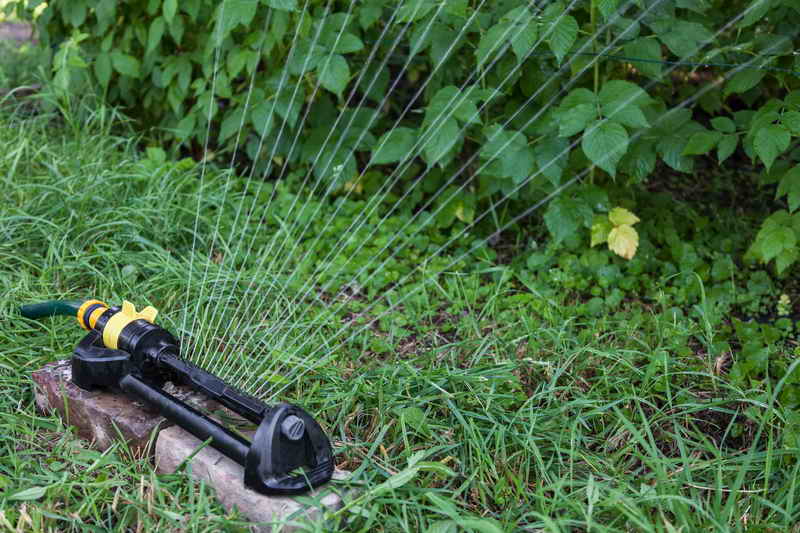
If there is heat or drought in August, the amount of watering should be increased and care should be taken to ensure that the soil remains moist at a depth of 40 cm.
In May or June, when raspberries begin to bloom, maintaining soil moisture is the most important factor for the normal formation of ovaries.
In July, the berries begin to fill with juice, so watering can be less abundant but more frequent. When preparing the raspberry patch for winter, another generous watering is needed to establish root buds.
Loosening the soil, removing weeds
Summer raspberry planting requires weeding as soon as weeds emerge. Weeds rob the bushes of nutrients, shade low shoots, and promote the spread of pests and fungal diseases. Dig the soil around the raspberries several times a week to stimulate shoot and root growth. Loose soil allows oxygen to pass through better and allows water to penetrate deeper.
Garter
Raspberry bushes grown outdoors are recommended to be secured to supports or trellises to prevent tangling and ensure sunlight reaches the berries. The structure should be stable and tall enough. Trellis are used for trench planting, while vertical stakes and fan-shaped tying can be used for individual bushes.
Seasonal treatments against insects and diseases
In early spring, raspberries are treated against possible fungal infections by spraying with a weak solution of ferrous sulfate.
Towards the end of May, plants are treated for insects. It is recommended to use biological insecticides for this procedure.
In the fall, to prevent infection, you need to remove weeds, plant debris, fallen leaves and replace the old layer of mulch.
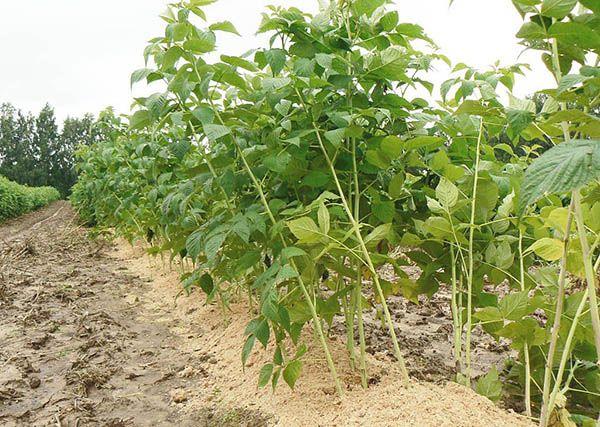
Bending down raspberry bushes for the winter
In the fall, the raspberry patch should be cleared of excess shoots, removing any deformed, damaged, or dry ones, as well as any small young shoots. All leaves should be removed from the bushes and the ground, after which the stems should be carefully tied together. The bundle should be bent to the ground and secured, and after the snow falls, a snowdrift should be formed. In the absence of snow cover, spruce branches provide suitable cover for the raspberries.
Raspberry Growing Tips from Experienced Gardeners
In addition to following basic agricultural practices, when planting raspberries, it's worth following these recommendations for beginning gardeners:
- Planting bushes in the shade leads to the elongation and thinning of shoots, resulting in brittleness and deformation, while the berries do not receive enough warmth to ripen in a timely manner.
- Planting on heavy clay soils leads to moisture stagnation, root rot, yellowing and wilting of the bushes in general.
- Poor quality planting material will not allow you to get beautiful, healthy raspberry bushes.
Related posts:
 How and when is it best to transplant raspberries to a new location in the summer?
 Description and characteristics of the Hussar raspberry variety, care and cultivation
 Planting and caring for Tibetan raspberries, variety description and propagation methods
 Description of the remontant raspberry variety Atlant, planting technology and care
 How to treat raspberries against pests during fruiting and flowering
 Description and characteristics of the 50 best raspberry varieties for Siberia
How to grow raspberries from seeds at home step by step
Description and characteristics of the 50 best raspberry varieties for Siberia
How to grow raspberries from seeds at home step by step
 Description of the Balsam raspberry variety, the intricacies of growing and caring for it