
- Botanical description of Tibetan raspberry
- Advantages of using in landscape design
- Fruiting of berry crops
- Methods of planting and propagation
- Cuttings
- Root shoots
- Dividing bushes
- Seed method
- Growing a variegated crop
- Preparing the site and planting hole
- Scheme and timing of planting seedlings
- Watering and fertilizing
- Pruning and shaping the bush
- Loosening and mulching the soil
- Protection and treatment from diseases and pests
- Preparing for the winter period
- Gardeners' reviews of Tibetan raspberries
If you're looking to grow a unique raspberry bush in your garden, resembling a strawberry with delicious fruit and beautiful decorative foliage, you can choose Tibetan raspberries. Planting and caring for them is effortless. Following generally accepted cultivation practices is key, and a full, high-quality harvest is guaranteed.
Botanical description of Tibetan raspberry
In scientific sources, this type of berry crop is referred to as rose-leaved raspberry. In various countries, it is known as strawberry raspberry, strawberry-raspberry, and black strawberry.
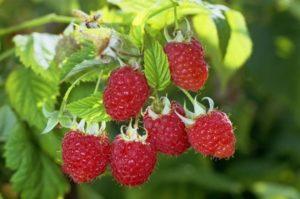
The Tibetan raspberry bush has a rounded crown and can reach a height of up to 1.5 meters. Its slender shoots are covered with large, sharp thorns. The plant is adorned with dark green foliage with yellow veins. The leaf blades have finely serrated edges.
The large flowers of the Tibetan raspberry, up to 5 cm in diameter, painted white, attract attention.
The crop is valued for its juicy, oblong, obovate fruits, which are red with a coral tint and have a sweet and sour taste with a subtle strawberry aroma.
Advantages of using in landscape design
This berry variety is popular among gardeners in the Moscow region and elsewhere, as it can serve as an ornamental plant. Tibetan raspberry grows quickly, making it often used as a hedge when dividing gardens and vegetable plots.
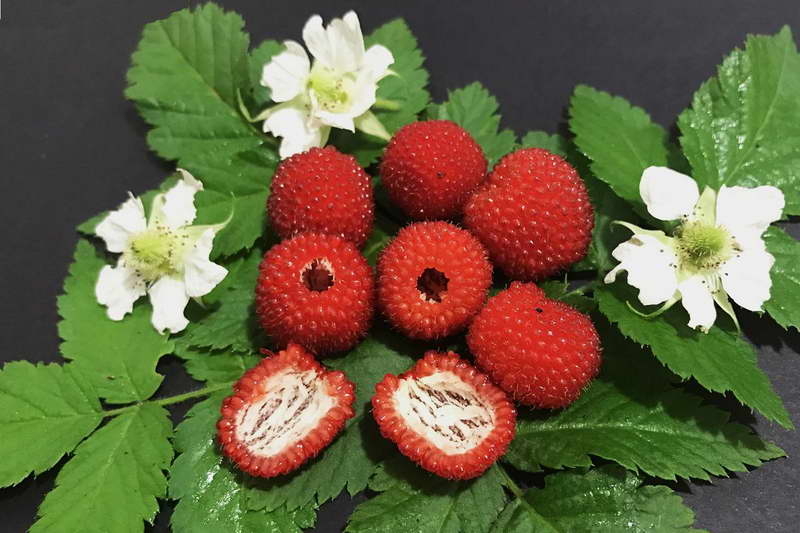
The rose-leaved raspberry looks beautiful when planted alongside ornamental shrubs and perennials, as its low growth allows for a mosaic of foliage and flowers with fragrant berries. It also pairs beautifully with conifers.
When designing flowerbeds and borders, it is important to take into account that the bushes have sharp thorns and plant them where no one in the household can get injured.
Only if these conditions are met will Tibetan raspberry delight you with its delicious berries and decorate any home area with its beautiful appearance, as well as transform even the most unsightly corner.
Fruiting of berry crops
The unique feature of this crop is that it flowers and bears fruit simultaneously. These processes begin with the formation of young shoots and continue until frost.
During its first year, Tibetan raspberries adapt, and from the second year onward, they begin to actively spread and bear fruit. The berries are harvested in July and August, after they are fully ripe, as at this stage the fruit acquires a slight pineapple and strawberry flavor.
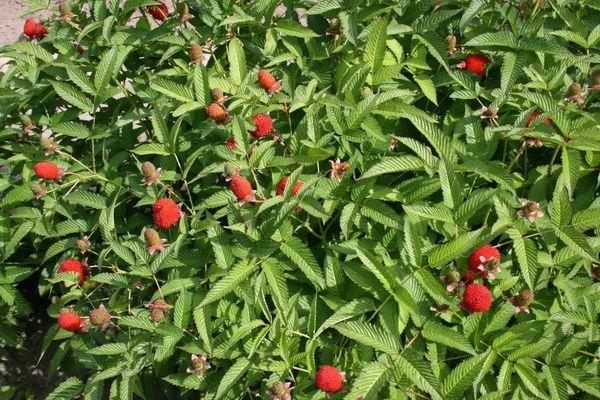
The yield of Chinese raspberries increases significantly each year, but the overall yield is still low: no more than 1 kg of fruit can be obtained from a single bush. Therefore, the plant is often cultivated as an ornamental rather than a fruit tree. Furthermore, the leaves and fruits have numerous beneficial properties and are popular among traditional healers.

Tip! When harvesting Tibetan raspberries, use shallow plastic containers, as the fruit is easily crushed and not suitable for long-distance transport.
Methods of planting and propagation
To grow a full-fledged raspberry patch on your plot, you need to buy a high-quality Tibetan raspberry seedling and then grow the crop yourself using the following propagation methods.
Cuttings
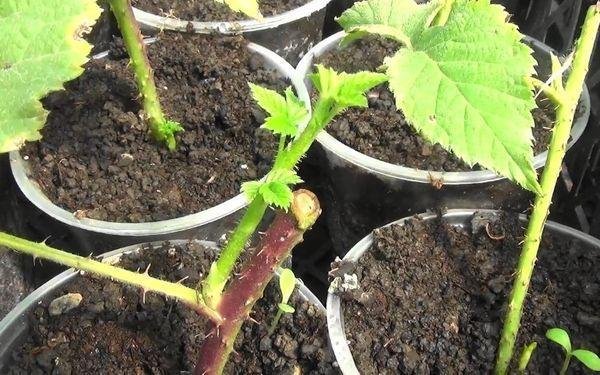
Tibetan raspberry should be propagated using cuttings in the fall, after harvesting. To do this, dig up the bush and divide it into several sections, ensuring each section has at least one bud. Plant the cuttings in holes larger than the rhizome. The stems should be trimmed back, leaving stumps up to 3 cm tall.
Root shoots
A mature Tibetan raspberry bush, over five years old and producing numerous young shoots, is suitable for this propagation method. Dig up the shoots with a sharp shovel and plant them in holes. The optimal time for collecting planting material is in the fall, after fruiting has completed, or in the spring, before the plant enters its intensive growth phase.
Dividing bushes
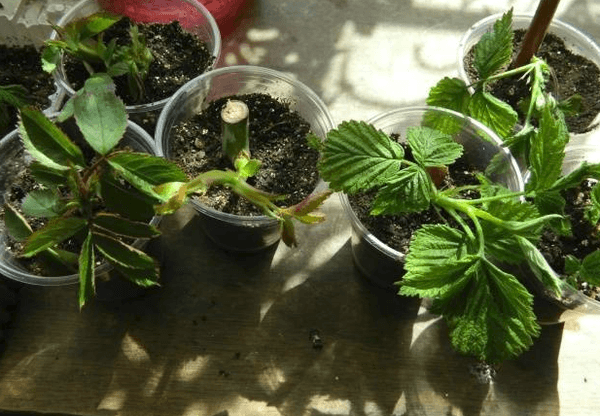
This method of growing berry crops is considered simple and effective. It involves digging up a mature bush and then dividing its rhizome. This is done only with pruning shears or a shovel. The main thing is not to damage the root buds. Afterwards, plant the seedlings in the holes and mulch the area around the young Tibetan raspberry bushes with peat and sawdust.
Seed method
The seed method is rarely used, as it requires a lot of effort and time, and there is also a high risk that the seeds may not germinate.
Stages of seed propagation technology of Tibetan raspberry:
- Seed collection and cleaning. Select the material from overripe fruits. To do this, crush the berries and leave them for 3 days. Then rinse the resulting mass using a sieve. Dry the extracted seeds.
- Preparing and sowing seeds. Place the seeds in a container filled with sand or a light soil mixture to a depth of 2-3 mm and refrigerate for 1 month. Stratification is necessary to improve seed germination. After the specified time, place the container with the seeds in a room at room temperature.
- Caring for seedlings and seedlings. If favorable conditions are created for seed germination, the first Tibetan raspberry shoots will appear in 3-4 weeks, ready to be planted outdoors.
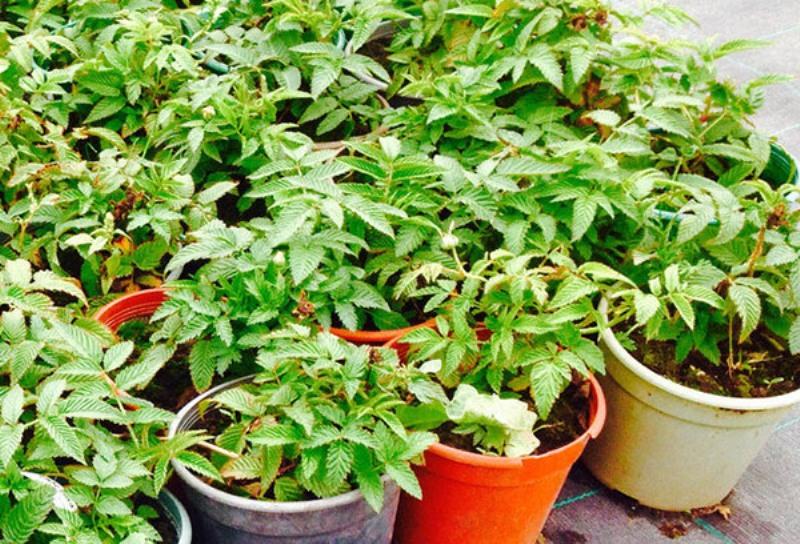
Direct sowing into open soil is also commonly used. This method requires less effort, but development is slower than the previous method.
Growing a variegated crop
Gardeners who deal with the Tibetan variety claim that it is easy to plant and care for.
Important! When working with shrubs, be sure to wear protective clothing and gloves to avoid injury to your skin from sharp thorns.
Preparing the site and planting hole
Tibetan raspberries thrive in light, nutritious soil with good drainage and neutral pH. Therefore, when planning your berry patch, check the pH and adjust it if necessary. Black soil and loamy soil are suitable for this plant.
If you plan to plant Tibetan raspberries in the spring, you should begin preparing the site in October. If you plan to plant in the fall, you should begin preparing the site a month before rooting.
To do this, dig the soil to a depth of 30 cm and add a fertilizer complex containing organic matter and minerals.
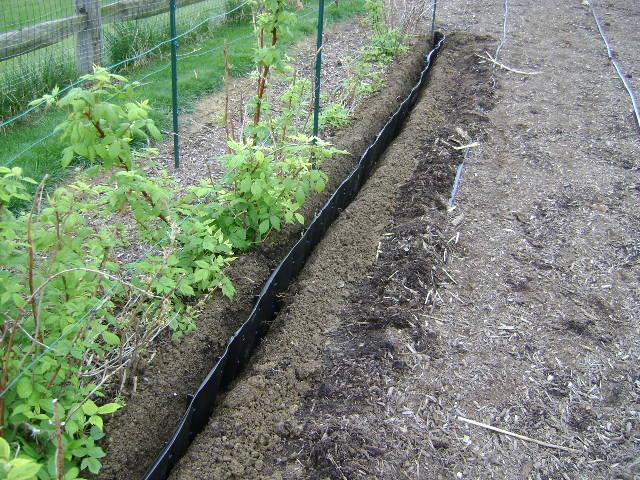
Before planting, limit the area allocated to Tibetan raspberries, as they grow vigorously and can take over large areas and crowd out other plants. To do this, dig in slate 40-50 cm deep.
Scheme and timing of planting seedlings
Tibetan raspberries should be planted in rows. This option will allow for easy harvesting of delicious berries and easy maintenance of the bushes. When planting, maintain a distance of 45-50 cm between seedlings within a row, and 60-70 cm between rows. After planting two rows, create a passage, and then continue in this manner.
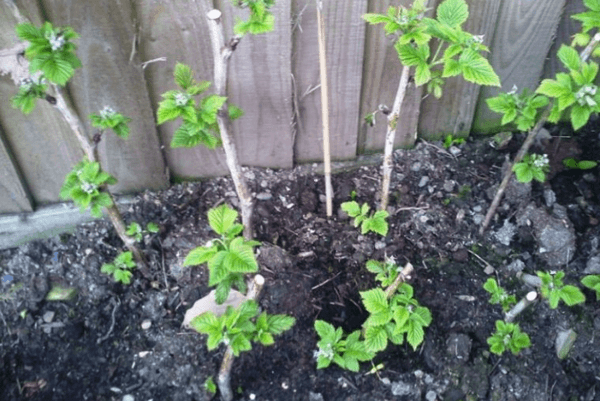 Advice! The best time to begin planting is autumn, from mid-September to late October. Spring planting is also possible.
Watering and fertilizing
Tibetan raspberries don't respond well to hot, dry weather, so it's recommended to water them daily, preventing the soil from drying out. Each bush should receive up to 10 liters of water. In addition to root watering, sprinkler spraying should also be provided, especially in the absence of precipitation.
Fertilizers should be applied twice per season:
- In the spring, as soon as the snow melts, scatter granules of ammonium sulfate in the tree trunk circle or pour a solution of mullein and water (1:10) under the roots.
- In autumn, enrich the soil around the Tibetan raspberry bushes with dry potassium sulphide.

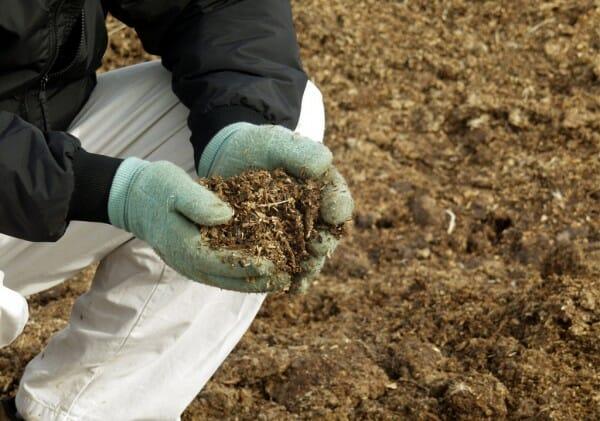
The effectiveness of the fertilizers used can be significantly increased by mulching after fertilizing with peat, humus or manure.
Pruning and shaping the bush
Like any raspberry variety, the Tibetan variety doesn't require regular pruning. Gardeners' main task is to completely remove the shoots after fruiting has finished.
To do this, use sharp pruning shears to remove the crown, leaving stumps up to 3 cm high. Also, when caring for your raspberry patch, visit the berry patch in the summer to trim dry, broken stems, and shoots that are not bearing fruit.
It's important to control planting density, otherwise it will be impossible to control this aggressive plant. Moreover, overcrowding will also lead to reduced yields.

Loosening and mulching the soil
When loosening the soil, it is important to remember that the roots of Tibetan raspberries are fragile and located close to the soil surface, so this procedure must be carried out manually and with extreme care.
To prevent the soil from drying out, it is necessary to mulch it using peat and compost.
Protection and treatment from diseases and pests
Although Tibetan raspberry demonstrates resistance to infections and pests, its bushes can be infested by harmful insects such as the raspberry beetle, weevil, and aphids. Diseases that can harm the crop include yellow mosaic, chlorosis, anthracnose, and root canker.
Prevention of plant infection by pathogenic organisms includes the following measures:
- timely application of fertilizers;
- constant checking of the soil for waterlogging;
- elimination of weeds;
- autumn cleaning of leaves and dry shoots, which are a haven for pests.
If Tibetan raspberry bushes are affected by disease or attacked by insects, certain protective measures should be taken:
- treat using Bordeaux mixture or copper sulfate when diagnosing diseases;
- use special chemicals to combat dangerous pests;
- remove and burn diseased parts of the plant in time.
If the infestation is severe, destroy the affected plants and disinfect the area. Dig up and replant any surviving Tibetan raspberry bushes.
Preparing for the winter period
Tibetan raspberries are winter-hardy, so they don't need to be covered for the winter. In the fall, as soon as the green part of the bushes dies back, they should be cut back, leaving shoots 4-5 cm tall. Then cover them with spruce branches and sprinkle with soil. This preparatory work will help the raspberry bush withstand severe cold.

Gardeners' reviews of Tibetan raspberries
Tibetan raspberries are met with mixed reviews. Some gardeners are disappointed with the crop because they don't achieve the desired results after planting them. However, true connoisseurs of exoticism and beauty are drawn to them and enjoy growing them.
Lyudmila, 45, Moscow region: "For five years now, I've been admiring the unique appearance of the Tibetan raspberry and enjoying its healthy, delicious fruits. A neighbor recommended it to me because it blooms early, produces fruit until frost, and doesn't require much care. But the most intriguing thing is that when cooked, the fruits not only have a raspberry aroma, but also strawberry and pineapple. Tibetan raspberries do have some drawbacks, including their many thorns and rapid growth. But with proper cultivation, these drawbacks can be forgotten."
Mikhail, 36, Voronezh: "I planted Tibetan raspberries three years ago. The bushes are beautiful and winter-hardy. The problem is that it's impossible to harvest for processing, as their ripening period is extended, and it's impossible to get a large quantity at once. To do this, you need many bushes. Although growing this crop isn't difficult, the roots of Tibetan raspberries spread out a lot, so it can be difficult to clear the plot of excess shoots. My advice: if you enjoy exotic plants and have a large plot, you can safely grow this variety of raspberry. It doesn't do well in a small garden."
Related posts:
 Step-by-step instructions for planting and caring for raspberries in summer, tips from gardeners
 Description of the remontant raspberry variety Orange Miracle, planting and care
 Description and characteristics of the Hussar raspberry variety, care and cultivation
 Description of the remontant raspberry variety Atlant, planting technology and care
 Description of the Maroseyka raspberry variety, propagation, planting and care
 Description of the Polka raspberry variety, yield, planting and care
 Description and characteristics of the Solnyshko raspberry variety, planting and care
 The best raspberry varieties for the Moscow region with descriptions and characteristics