
- History of selection
- Description and characteristics of the Polka raspberry
- Bush and berries
- Productivity and scope of application of fruits
- Immunity to diseases and pests
- Frost resistance
- Strengths and weaknesses of culture
- Planting and propagation
- Seeds
- Cuttings
- Dividing the bush
- Growing specifics
- Selecting a site
- Preparing the seedling and planting hole
- Planting plans and dates
- Watering
- Weeding and mulching the soil
- Fertilization
- Tying to supports
- Pruning and wintering
- Diseases and pests: treatment and prevention
- Gardeners' reviews of the variety
Every gardener, farmer, and vegetable grower faces the problem of not having enough tasty and flavorful berries, no matter how good the raspberry harvest. To extend the fruiting season, breeders have developed everbearing raspberry varieties capable of bearing fruit several times during the season. One such variety is Polka, a remontant raspberry variety that has gained great popularity due to its high yield and excellent flavor.
History of selection
Polish breeders developed a new fruit variety by crossing the Autumn Bliss raspberry with experimental specimens. The scientists conducted the main research in the early 1990s. The resulting experiments yielded a completely new raspberry variety, named Polka. This fruit variety not only boasts unique frost resistance and natural immunity to diseases and pests, but also the stunning appearance of its giant, beautiful, and delicious berries.
The remontant raspberry variety Polka was first presented only 10 years after the completion of the work, at the world exhibition.
Note: The Polka raspberry variety has gained immense popularity among farmers in European countries, where the berry is grown on an industrial scale.
Description and characteristics of the Polka raspberry
The Polka remontant raspberry variety tolerates both severe frosts and sustained heat poorly, making it recommended for cultivation in regions with a temperate climate.
Bush and berries
Mature raspberry bushes reach 1.5 m, and with additional soil fertilization, they can grow up to 1.8 m. The berry bush consists of 9-10 young shoots, which grow from a single seedling during the growing season. Small, soft thorns grow on the shoots, making them easy to care for and harvest. The bright, green leaves are large, elongated, with serrated edges and a corrugated texture.
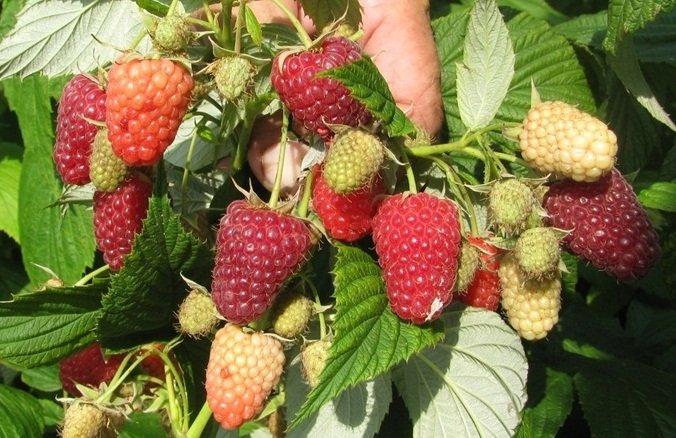
Everbearing raspberries begin bearing fruit in June. On year-old shoots, clusters of 8 to 10 berry ovaries form.
Raspberries bear fruit for the second time in August. The berries ripen on the current season's shoots.
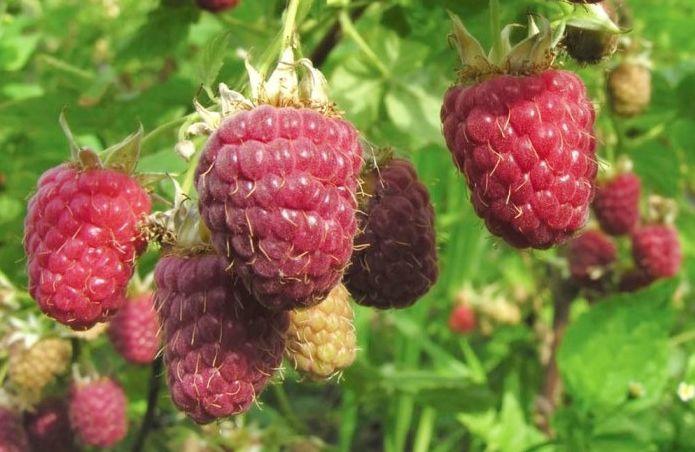
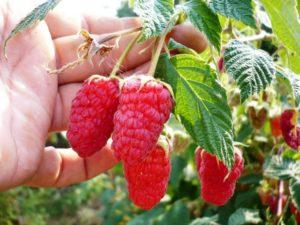
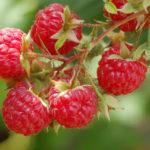
The berries ripen large, weighing up to 6 g and about 3 cm in length. Each cluster contains 10 bright purple berries with juicy yet firm flesh, allowing for long-term storage and long-distance transport of the harvested crop.
The berries taste sweet, with a distinct raspberry aroma and small seeds that are not noticeable when eating the fruit.
Productivity and scope of application of fruits
This everbearing berry variety bears fruit until late autumn. Even at temperatures as low as -2 degrees Celsius, the berries continue to ripen. During the growing season, a single bush can yield up to 4 kg of fruit.
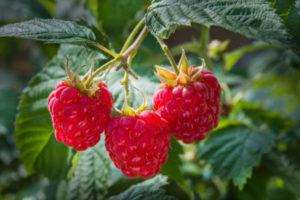
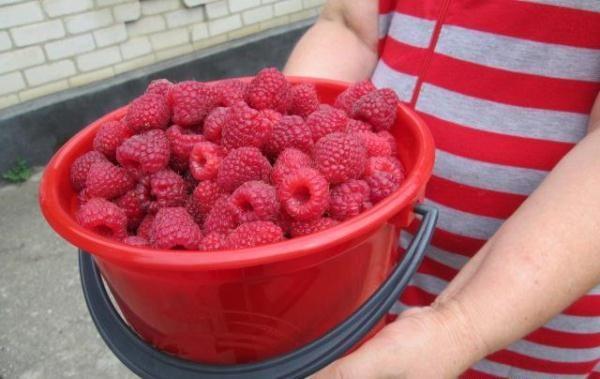
The Polka dessert raspberry variety is recommended for fresh consumption. The berries are also used to make preserves, juices, nectars, compotes, jams, and marmalades. These delicious fruits are added to desserts, baked goods, dairy products, and frozen.
Note: The Polka raspberry variety is recognized as the best dessert berry in European countries.
Immunity to diseases and pests
Thanks to its natural immunity, fruit crops are rarely susceptible to fungal and viral diseases, and pests rarely attack berry bushes. As a preventative measure, raspberries are treated with special preparations or solutions in early spring.
Frost resistance
This everbearing berry crop is recommended for cultivation in temperate climates. Polka raspberries are equally sensitive to cold winters and drought. Bushes freeze and die at temperatures of -15 degrees Celsius.
 Important! In southern, arid regions, fruit crops require additional moisture and shade.
Strengths and weaknesses of culture
Before growing Polka raspberries, you need to know all the pros and cons of this remontant berry variety.
Advantages:
- Natural immunity to most viral and fungal infections.
- Ripe berries do not fall off or rot.
- The fruits are large, with dense pulp.
- Long shelf life of berries and the possibility of long-distance transportation.
- The Polka variety has proven itself to be highly productive.
The Polka raspberry variety consistently produces fruit every year. The plant doesn't need a break to recuperate.
Flaws:
- Low drought tolerance.
- Intolerance to severe frosts, which limits the regions for cultivating berry crops.
- Polka is demanding when it comes to soil composition. If nutrients are insufficient, the plant will stop growing and bearing fruit.
- Large amount of root shoots.
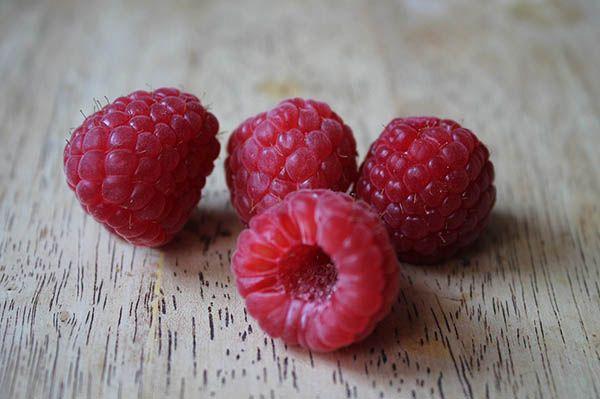 Important! With proper and timely care, this everbearing raspberry variety will yield abundant harvests twice a season.
Planting and propagation
To grow raspberries and increase the number of bushes on a plot, seed or vegetative methods of propagation of the fruit crop are used.
Seeds
Growing a hybrid raspberry variety from seed is a labor-intensive and complex process, requiring extensive knowledge and experience. Therefore, the seed method of propagating and growing the Polka raspberry variety is primarily used by scientists in breeding work.
Cuttings
Propagating berry bushes by cuttings has long been a proven, simple way to grow healthy, fruit-bearing plants.
At the beginning of summer, young shoots are cut and planted in separate pots, brought into a greenhouse or covered with film.
Once the cuttings have rooted, the plants are transplanted into open ground with fertile soil. At the end of summer, the seedlings are sent to their permanent location.
Dividing the bush
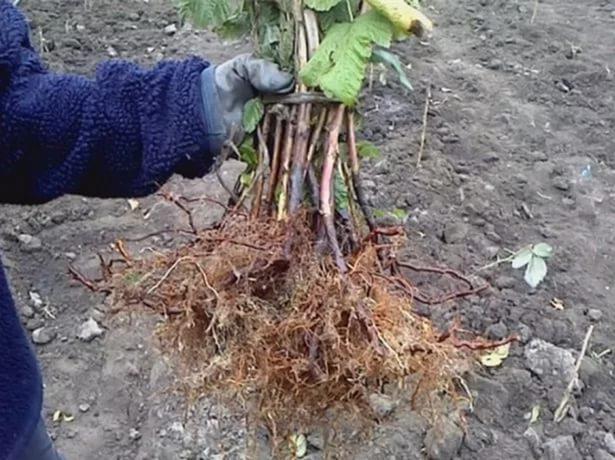
To divide the bush, select a mature, healthy plant. The raspberry bush is carefully dug up, the roots are cleared of soil, and divided into equal parts using a sharp knife. Dividing the mother bush produces 2 to 4 young seedlings with developed root systems. The plants are replanted in individual holes and thoroughly watered.
Growing specifics
The key to a large and high-quality harvest is the correct choice of planting location and timing of work.
Selecting a site
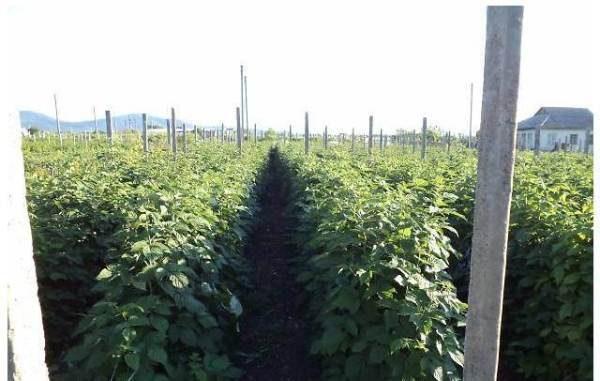
Raspberry bushes thrive in sunny, dry, level areas, well protected from northerly winds and drafts. This berry crop does not grow in soils with close groundwater tables, lowlands, or marshy areas. The Polka raspberry prefers fertile, loose soil with a neutral acidity.
Preparing the seedling and planting hole
When purchasing seedlings, pay attention to the appearance of the plant and the condition of the roots.
- The roots of the plant are at least 20 cm long.
- There are no growths, compactions or damage on the roots.
- The root system is well moistened.
- The main trunk of the bush is at least 5 cm in diameter.
- The plant must have at least 2-3 buds or leaves.
Before planting in open ground, seedlings are placed in a clay-water solution for 5-7 hours, and the rhizome is treated with antibacterial agents.
- The land is carefully dug up, weeded and loosened.
- Compost, organic and mineral fertilizers are added to the soil.
- 3-4 weeks before planting, planting holes are dug.
- The distance between holes is at least 40-50 cm, between rows from 1.5 to 2 m.
- A drainage layer of small stones or crushed stone is placed at the bottom of the hole, a layer of fertile soil is poured on top and the plant is watered.
 Advice! Heavy, clayey soil should be diluted with humus and river sand, while highly acidic soil should be limed.
Planting plans and dates
It's recommended to plant raspberries outdoors in early spring or fall. Spring work begins before the growing season begins, but the first fruiting will occur a year later.
In autumn, raspberries are planted 4-6 weeks before the onset of cold weather. This will give the plant roots time to establish and take root, and the first harvest of berries will appear the following summer.
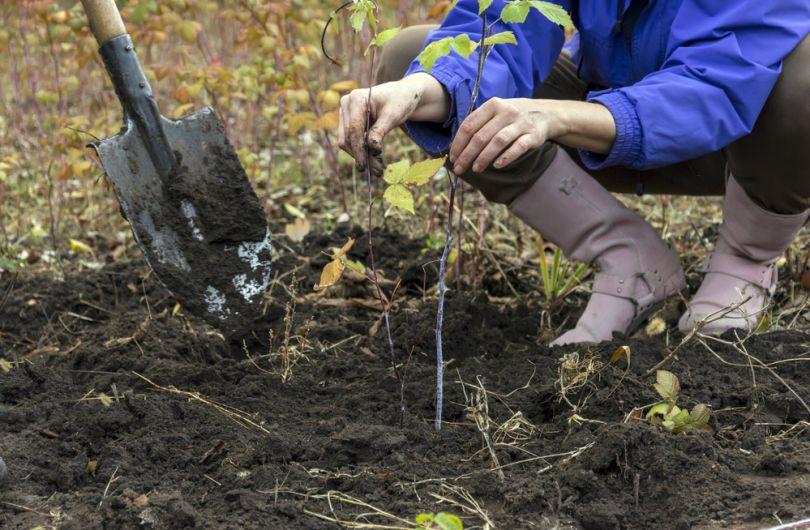
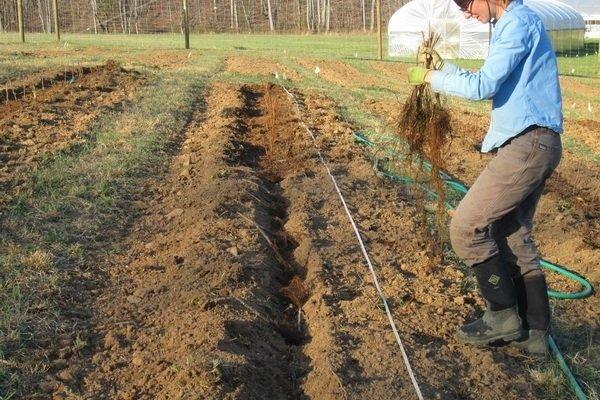
- A seedling is placed in a prepared planting hole.
- The roots are evenly distributed in the hole and covered with soil, leaving no voids.
- The soil under the planted bush is compacted and watered generously.
The soil under the planted bush is mulched with dry grass, humus or sawdust mixed with peat.
Watering
Raspberry bush care includes watering, fertilizing, and pruning. During the growing season, if there's no rainfall, water the raspberries weekly, pouring a bucket of warm, settled water under each plant. During the rest of the year, water the fruit bushes as needed. Before winter, water the berries generously, using 25-30 liters of water per bush.
Weeding and mulching the soil
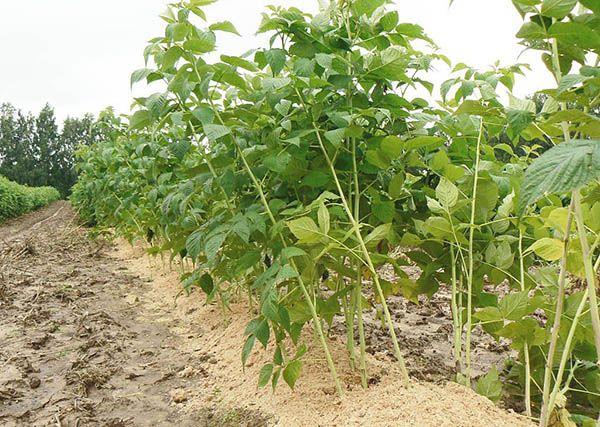
Weeds often spread fungi and harmful insects. Therefore, the tree trunk area must be weeded and loosened. It's best to combine these activities with watering. After weeding and loosening, mulch the soil with straw or sawdust.
Fertilization
With the onset of spring, the fruit bush requires additional nutrition and nutrients.
- Before the snow melts, raspberries are fertilized with urea.
- Before the flowering period begins, the bushes are fed with a balanced mineral complex.
- As soon as the plant enters the flowering and fruiting phase, the berry crop is fertilized with a solution of cow or bird manure.
In autumn, the soil under the bushes is mixed with humus and organic fertilizers.
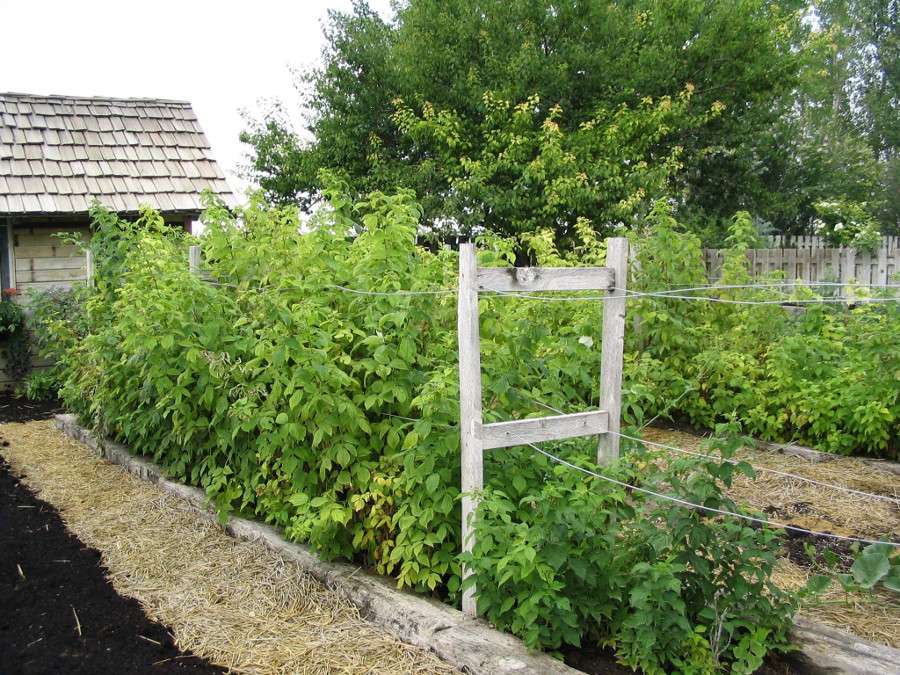
Tying to supports
When large berries ripen, the plant's branches bend under their weight. Therefore, raspberries are tied to special supports or netting.
Pruning and wintering
Before wintering, Polka raspberries are completely pruned, leaving a few annual shoots. The bush branches are cut back to ground level and covered with a thick layer of fertile mulch.
If a cold and low-snow winter is expected, the beds with trimmed bushes are covered with spruce branches and special fiber.
To obtain two harvests of a remontant crop, the central shoots are shortened to the fruiting bud.
Diseases and pests: treatment and prevention
With proper planting and subsequent care, the upper part of the plant is rarely susceptible to diseases and pests. However, raspberry rhizomes are vulnerable to root cancer.
If infected, the bushes are removed from the soil and destroyed, and the soil is disinfected with professional products. To prevent this dangerous disease, it is necessary to regularly feed the berry crop with mineral fertilizers.
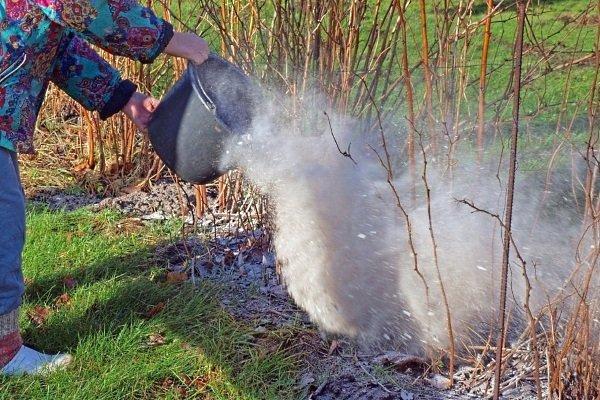
Pests rarely attack Polka raspberries, but as a preventative measure, the bushes are sprayed with special protective agents.
Gardeners' reviews of the variety
Igor Viktorovich, 48 years old, Kursk
The Polka raspberry is the only imported variety in my garden. The nursery recommended planting the bushes, and for four years now, the whole family has been enjoying large, delicious berries from June to late September. However, the second time around, the raspberries have been slightly smaller. Care is simple, requiring no special knowledge or effort.
Svetlana Nikolaevna 34 years old, Kazan
A neighbor at my dacha gave me a Polka raspberry. The seedlings quickly took root and within a year were already bearing fruit. I didn't know it was a remontant variety, so I was very surprised when the bushes began blooming and bearing fruit again. The berries are excellent quality; they stay dry and unbruised when picked from the branches. I thought I'd use them for jam and compotes, but my children and grandchildren eat them fresh.
Kirill Pavlovich, 56 years old, Solnechnogorsk
I've been growing various raspberry varieties for many years, but two years ago, my son brought me some Polka raspberry seedlings. I'd never seen such large and delicious berries, and the fact that the bushes bear fruit even in subzero temperatures was a real revelation. Polka raspberries are easy to care for, preferring timely watering and fertilizing, but don't tolerate heat well.
Related posts:
 Description and characteristics of the Hussar raspberry variety, care and cultivation
 Step-by-step instructions for planting and caring for raspberries in summer, tips from gardeners
 How to treat raspberries against pests during fruiting and flowering
 Description of the remontant raspberry variety Atlant, planting technology and care
 Description of the remontant raspberry variety Orange Miracle, planting and care
 Description and varieties of the everbearing raspberry variety Penguin, planting and care
 Description and characteristics of the Solnyshko raspberry variety, planting and care
 How and when is it best to transplant raspberries to a new location in the summer?