
- Variety selection
- Description and characteristics of the Atlant raspberry
- Bush
- Berries: yield and use
- Immunity to diseases and pests
- Resistance to low temperatures and drought
- Pros and cons of culture
- Planting and propagation
- Seeds
- Cuttings
- By dividing the bush
- Growing specifics
- Selecting a site
- Preparing the planting hole and seedling
- Timing and rules for planting a bush
- Further care
- Regularity of watering
- Fertilizing
- Loosening, weeding and mulching
- Pruning and shaping the bush
- Preparing the plant for winter
- Methods of growing raspberries Atlant
- Gardeners' reviews of the variety
Everbearing raspberry varieties have emerged relatively recently, but have already gained recognition and popularity among gardeners and farmers. The unique feature of this fruit crop is that, when the garden berries have already been harvested and their flavor has almost been forgotten, everbearing varieties are just beginning to bear fruit. One of the most prominent representatives of this species is Atlant, a remontant raspberry, described in the variety description as an undemanding and high-yielding berry crop.
Variety selection
A group of Bryansk scientists led by renowned breeder Kazakov developed the new raspberry variety. Breeding work on the Atlant raspberry began in 2010, and it wasn't until 2015 that the variety was added to the state register of fruit crops.
The new Atlant raspberry has been recommended for cultivation in regions with various climatic conditions, which speaks to its resistance to frost, drought, and high natural immunity.
The variety has shown excellent results when grown in European countries, Belarus and Ukraine.
Description and characteristics of the Atlant raspberry
The Atlant raspberry, although considered a new berry crop, has already been recognized by experts as the best everbearing variety developed in Russia.
Bush
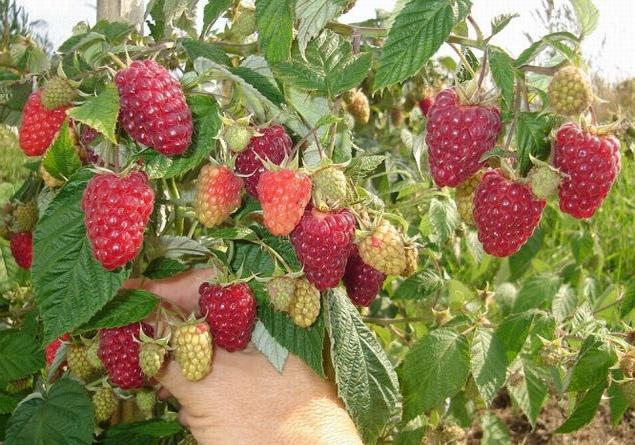
The plant's appearance gives the impression of a solid, upright tree, but in reality, it's simply a raspberry bush, growing up to 1.7 m tall, with a strong stem and thick shoots. During the growing season, the plant produces 5 to 7 shoots, which annually replace older stems and branches. Annual shoots are bright green, while perennial shoots are light brown, with soft spines at the base.
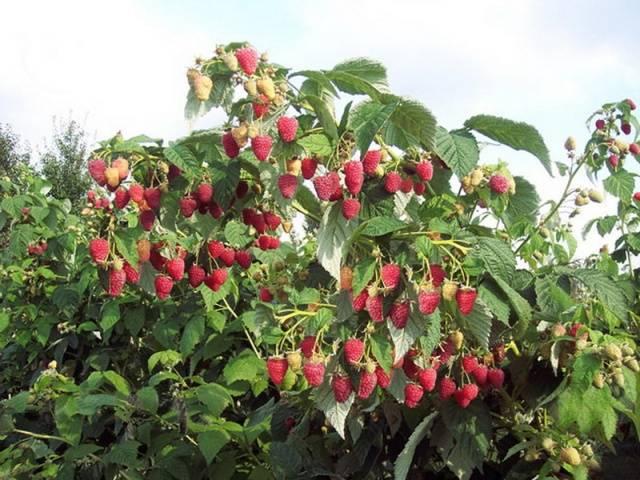
The leaf blades are large, slightly corrugated, and slightly fuzzy, dark green. During flowering, racemose inflorescences appear, opening to reveal white flowers. Each inflorescence produces 8 to 10 ovaries with berries.
Note: By pruning vigorous, upright bushes from below, gardeners can obtain compact, standard raspberry trees.
Berries: yield and use
The first berries of this everbearing raspberry variety are harvested in late July. Fruiting continues for a long time, ending with the onset of autumn cold weather. The fruit ripens gradually, and the harvest is completed within 2-3 days. Up to 3 kg of ripe berries can be harvested from a single fruit tree per season, with commercial yields reaching 17-18 tons per hectare.
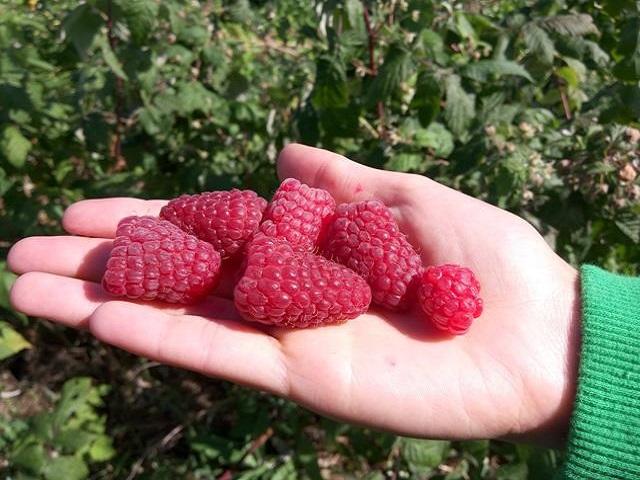
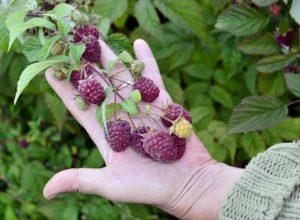
Raspberry variety Atlant is not only high-yielding, but also a large-fruited crop. The berries are bright red, with dense, juicy flesh and a sweet flavor, as well as a distinct raspberry aroma. Each berry weighs up to 8 g.
The dense pulp of the fruit allows ripe berries to be stored for a long time and transported over long distances.
Experts have recognized the Atlant raspberry variety as a dessert fruit with universal uses. The berries are recommended for eating fresh, freezing, drying, cooking, and adding to baked goods, desserts, and dairy products. Raspberry leaves and berries are also often used to treat colds and viral illnesses, and to make masks and nourishing mixtures for skin and hair.
Take a look Also
 Important! Ripe berries do not fall from the bushes, do not rot, and remain suitable for picking for a long time.
Immunity to diseases and pests
The everbearing Atlant raspberry has developed a natural immunity to fungal and viral diseases. The berry bushes are rarely attacked by pests. However, these characteristics of the fruit crop are preserved only with proper and timely care.
Resistance to low temperatures and drought
The everbearing Atlant raspberry easily tolerates harsh winters. When fully pruned, the plant requires no additional winter protection; a thick layer of mulch is sufficient. However, partially pruned plants in northern climates require special covering materials.
The berry crop easily survives short-term drought thanks to its well-developed, branched root system, but a prolonged lack of watering and precipitation negatively affects the yield and taste of the fruit.
Pros and cons of culture
To properly grow a high-yielding remontant raspberry variety, you need to know all the strengths and weaknesses of the fruit crop.
Advantages:
- Powerful bushes do not need additional support.
- Fruiting in the first year of growth.
- The variety is unpretentious in care.
- Increased frost resistance characteristics allow this raspberry variety to be grown in regions with cold climates.
- Long fruiting period, fresh berries are harvested from mid-summer until the first frost.
- High yield rates.
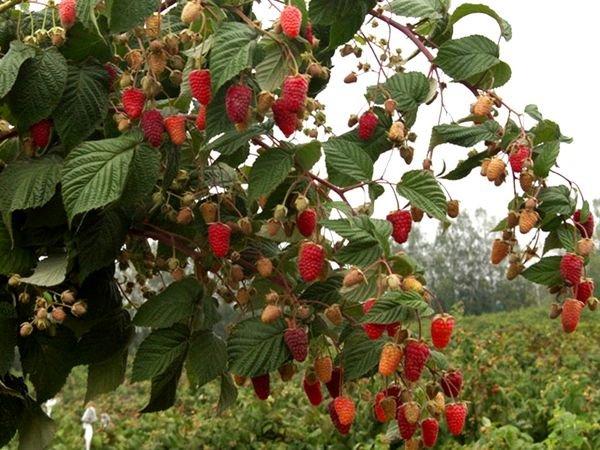
Dense berries retain their marketable appearance for a long time and easily withstand long-distance transportation.The main disadvantage of the Atlant raspberry is considered to be the insufficiently pronounced raspberry aroma and taste of the berries.
Planting and propagation
Before planting raspberries in open ground, it's important to determine the correct timing and select a suitable location for the fruit crop. To increase the number of berry bushes in your garden, several methods of propagating hybrid raspberries are used.
Seeds
Propagating everbearing plants by seed is a lengthy process and is used only by experienced gardeners or breeders. In late autumn, seeds are planted in a container with fertile soil and covered with plastic wrap. As soon as the first shoots appear, the plastic wrap is removed, and the seedlings are properly cared for until autumn, after which they are transplanted into the open ground.
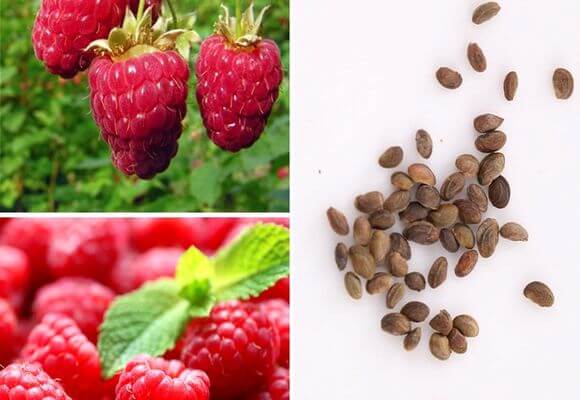 Note: When propagating hybrid fruit crops by seed, the varietal characteristics of the parent plant are lost.
Cuttings
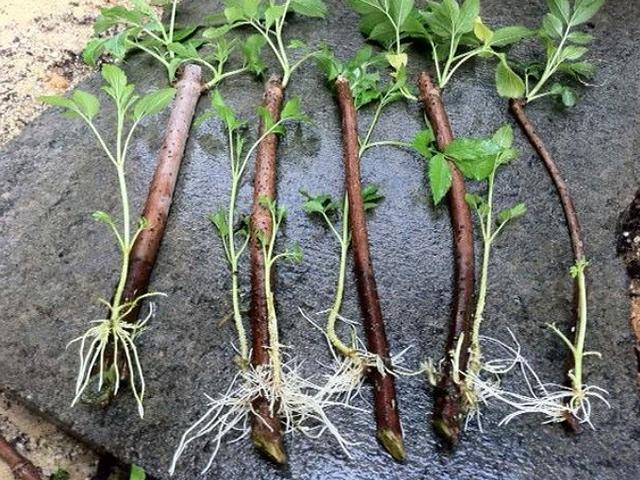
Cuttings are used to obtain healthy, viable seedlings. The strong upper shoots of a mature bush are pruned, divided into several sections, and planted under plastic in containers with fertile soil. Once the cuttings have established themselves, rooted, and begun to actively grow, the plants are transplanted into the open ground.
By dividing the bush
The easiest and fastest way to obtain new raspberry seedlings is by dividing an adult bush. During the growing season, the berry bush produces several shoots, which are carefully separated from the main plant along with the rhizome and planted in separate holes. Everbearing raspberries are also propagated by layering.
Growing specifics
The everbearing crop prefers fertile, loose soils with low acidity.
Selecting a site
Raspberry variety Atlant is planted in sunny, dry areas, well protected from gusts of north wind and drafts.
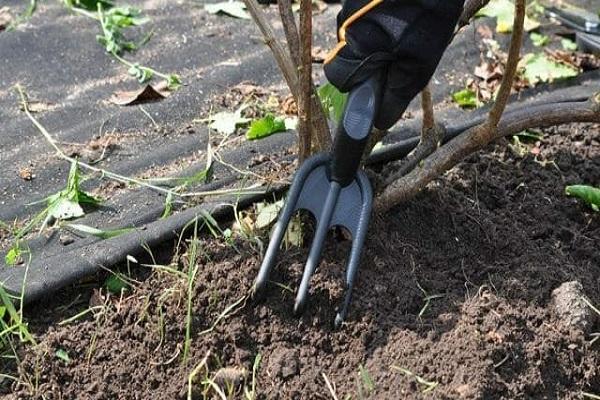
- The soil in the selected location is carefully dug up, cleared of weeds and loosened.
- The soil is mixed with humus, organic matter and mineral substances.
- Ash or lime is added to soil with a high acid content, and heavy soil is mixed with sand and compost.
Important! It is not recommended to plant berries in low-lying areas, marshy areas, or near groundwater. The plant's roots will quickly rot, and the bushes will die.
Preparing the planting hole and seedling
When selecting planting material, seedlings are carefully examined for damage and diseases.
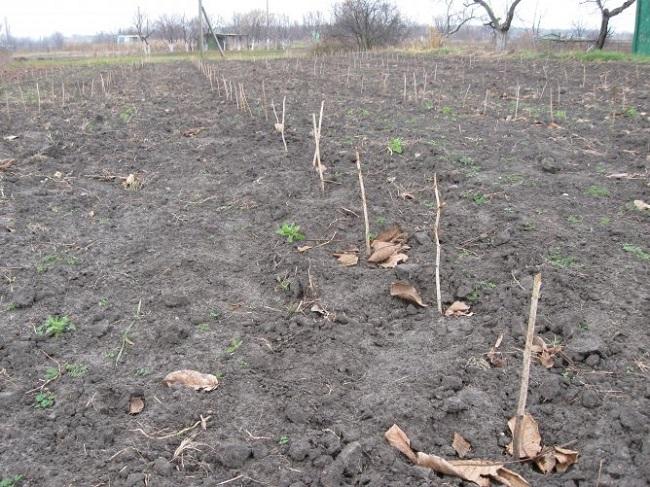
- 3-4 weeks before the planned planting of seedlings, planting holes 50 cm deep and 50 cm wide are dug in the prepared area.
- The distance between holes is left at least 70-90 cm, between rows from 1.5 to 2 m.
- A drainage layer of sand, crushed stone or broken rock is placed at the bottom of the holes.
- Fertile soil is poured into the hole and watered generously.
 Tip! A day before planting outdoors, place raspberry seedlings in a container of water and treat with antibacterial agents.
Timing and rules for planting a bush
The timing of planting Atlant raspberries in open ground depends on the region's climate. In warm winters in southern and temperate latitudes, planting is done in the fall, 1-1.5 months before the first frost.
In northern regions, it is recommended to plant berries in the spring to ensure the plant has time to take root and thrive.
There are several schemes for planting the Atlant raspberry.
- The trench planting method involves even rows of seedlings, at a distance of 80-90 cm from each other.
- With a triangular layout, plants are distributed in the corners, with a distance of 50 cm between plantings.
- When planting in nests, place 2 to 4 seedlings in each hole. This will result in a vigorous, productive fruit bush.
- The plants are placed in a hole with fertile soil in a vertical position.
- The roots of the seedling are evenly distributed and covered with soil.
- The soil under the plant is compacted and watered generously.
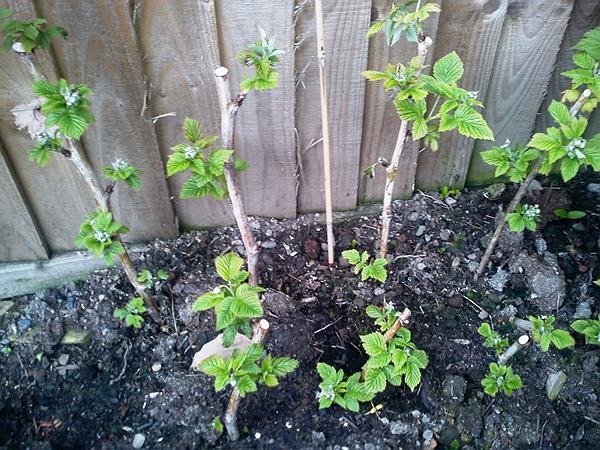
After planting the raspberry bush, the trunk circle is mulched with humus or peat diluted with sawdust.
Further care
Proper and timely care for everbearing raspberries, allows you to get a large harvest of delicious berries and increases the plant's immunity to diseases and pests.
Regularity of watering
Watering berry bushes is determined based on the climate of the growing region. In arid, southern latitudes, raspberries are watered once every two weeks, with up to three buckets of settled water poured under each bush.

In temperate climates, the plant is watered 4-5 times throughout the season.
Important! Excessive moisture causes root rot, while insufficient watering negatively impacts the quantity and quality of berries.
Fertilizing
The everbearing Atlant raspberry variety bears fruit actively throughout the growing season. Therefore, this berry crop requires additional feeding and fertilizer.
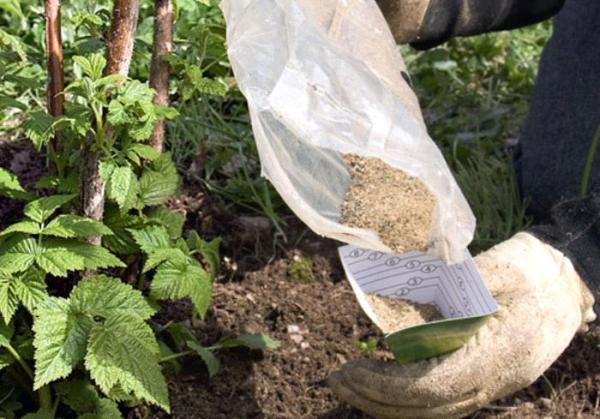
- With the onset of spring, before the growing season begins, the bushes are fertilized with ammonium nitrate or cow manure.
- As soon as the first leaves appear on the plant, nitrogen fertilizers are applied.
- During the summer, raspberries are alternately fertilized with organic and, if necessary, mineral fertilizers.
- In late autumn, the berry bush is fed with a balanced mineral complex.
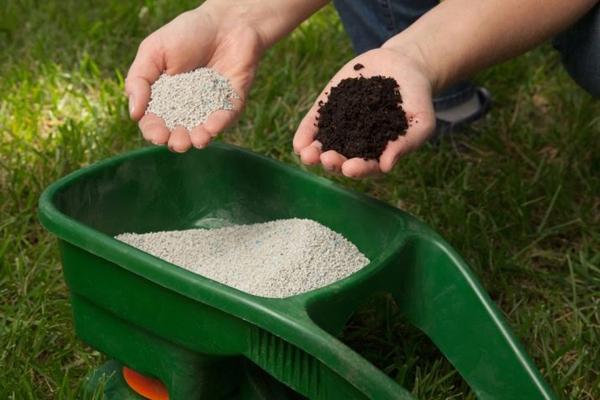 Advice! Nitrogen fertilizers are used only at the beginning of the growing season.
Loosening, weeding and mulching
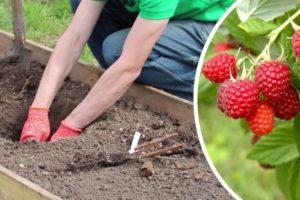
Weeding and loosening the soil in raspberry patches are done in conjunction with watering. This way, moisture and nutrients reach the plant's roots more quickly, helping them absorb vitamins and oxygen.
Mulching the tree trunk area is done several times per season, with the mulch either refreshed or completely replaced. This prevents weed growth and maintains the necessary soil moisture for a long period.
Pruning and shaping the bush
Fruit bushes are pruned in spring and fall. In spring, dry, frost-damaged, deformed, and broken shoots and stems are removed.
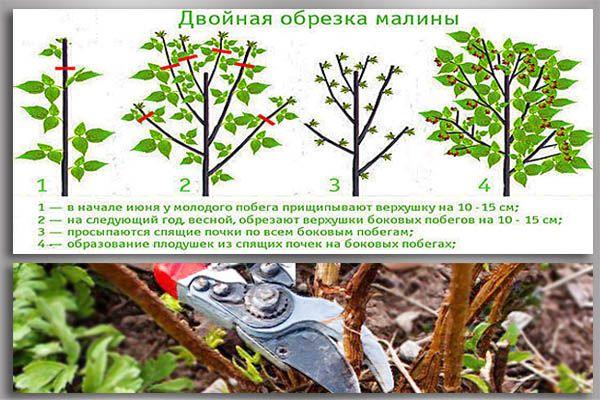
In the fall, depending on the growing region and cultivation method, either all shoots and stems are pruned to the roots, or only those branches that have borne fruit during the season. The remaining stems and shoots are trimmed. After pruning, the cut areas are treated with garden pitch or special preparations.
Important! Proper and timely pruning stimulates the growth and development of the shrub.
Preparing the plant for winter
In cold climates, raspberry bushes are completely pruned in late autumn, and the cut areas are covered with compost and spruce branches. As soon as the first snow falls, high snowdrifts are built in the beds.
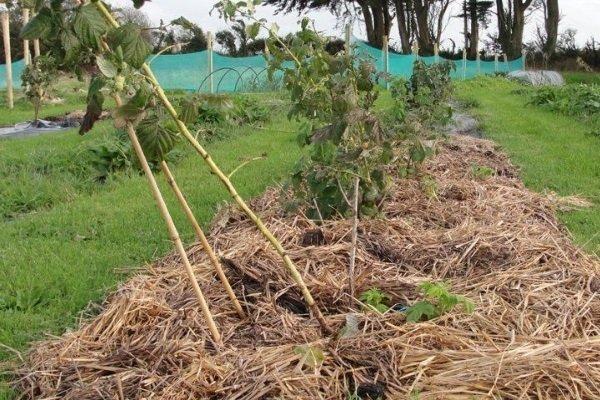
If shoots are left for the winter, the plant is bent down to the ground and covered with soil. In southern regions, there is little snow, so I cover the bushes with straw or spruce branches.
Methods of growing raspberries Atlant
When propagating the Atlant raspberry in a garden, vegetative methods are used to produce new plants. Even a novice gardener can handle propagation by cuttings, layering, or division.
But the seed method will require additional knowledge and will take a lot of time.
Gardeners' reviews of the variety
Pavel Sergeevich, 55 years old, Novosibirsk
Even in our climate, the Atlant raspberry variety grows and bears fruit well, provided additional measures are taken before wintering. The plant is easy to care for and is resistant to diseases and pests. The berries ripen very large and sweet, perfect for both eating and making jam.
Victor Semenovich, 65 years old, Sevastopol.
After retiring, I started growing raspberries for sale. During the peak season, there are a lot of vacationers, so the berries sell out quickly. Three years ago, I planted the everbearing Atlant raspberry and haven't regretted it. Now I get a supplement to my small pension until mid-autumn, while the berries ripen. Raspberries are a rare commodity in September, and especially in October, but not for me!
Yulia Pavlovna, 39 years old, Kaluga
I'd never grown everbearing raspberries before, but two years ago my matchmaker gave me a few Atlant seedlings. I never imagined the berries could be so huge, and the last harvest was in late fall. The plant is completely easy to care for: we water and prune it, fertilize it infrequently, and our soil is good. Now I'm thinking of growing this raspberry variety in large quantities, so I'll have enough berries for both eating and preserving for the winter.
Related posts:
 Description and characteristics of the 50 best raspberry varieties for Siberia
 Description and varieties of the everbearing raspberry variety Penguin, planting and care
 Step-by-step instructions for planting and caring for raspberries in summer, tips from gardeners
 Description and characteristics of the Hussar raspberry variety, care and cultivation
 Description of the Balsam raspberry variety, the intricacies of growing and caring for it
 Description of the Maroseyka raspberry variety, propagation, planting and care
 The best raspberry varieties for the Moscow region with descriptions and characteristics
 Description of the Polka raspberry variety, yield, planting and care