
- The history of Maroseyka raspberry breeding
- Description and characteristics
- Bush and shoots
- Berries
- Scope of application of fruits
- Advantages and disadvantages of the variety
- Necessary conditions for growing
- Planting and caring for Maroseyka raspberries
- Preparing the site and seedlings
- Timing and technology of planting operations
- Watering and fertilizing
- Pruning and shaping the bush
- Loosening and mulching the soil
- Preparing for winter
- Garter
- Preventive treatment
- Methods of reproduction
The main requirements for raspberries from gardeners and farmers are high yields, low maintenance, and excellent flavor. Add frost resistance, disease resistance, large fruit, and the absence of sharp thorns to these characteristics, and the result is a truly unique berry variety. The Maroseyka raspberry variety meets all of these requirements, making it so popular and beloved among gardeners.
The history of Maroseyka raspberry breeding
Work on a new hybrid raspberry variety began in the mid-1970s at a nursery affiliated with the Moscow Research Institute of Horticulture. The team of scientists was led by the initiator of the new variety's development, professor and breeder V.V. Kichina. Several raspberry varieties, the seeds of which were brought from Scotland, were used in the work.
The results were immediate, and the Maroseyka raspberry variety acquired the best properties and characteristics of a fruit crop. In addition to large berries with excellent flavor, the scientists achieved a completely thornless plant.
This event marked a major breakthrough in the history of breeding research in Russia. In the early 1980s, the variety began to be cultivated in various climatic zones of Russia and neighboring countries.
Description and characteristics
The Maroseyka raspberry variety is mid-season, with the first berries ripening in mid-July. Fruiting is prolonged, with the final raspberry harvest arriving by the end of August.
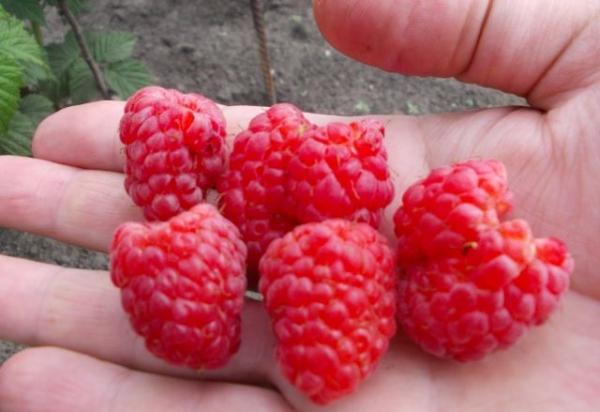
Many people wonder whether the Maroseyka raspberry is everbearing. The answer is ambiguous. During the development of this variety, scientists developed a unique gene that manifests itself with proper and timely care. At this point, the Maroseyka raspberry can produce two harvests per season. However, experience shows that such fruiting is the exception to the rule and occurs rarely.
Bush and shoots
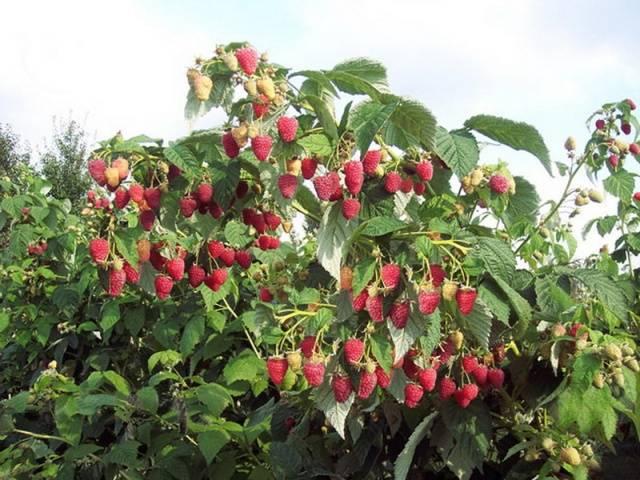
This hybrid raspberry variety is compact; with good care, the bushes grow to no more than 1.8 m. Root suckers produce 5 to 10 shoots per season. The shoots are strong, elastic, and waxy, providing protection against fungal and viral infections. They do not bend or break under the weight of the large berries, and are thornless.
The leaf blades are large, corrugated, dark green in color, with serrated edges.
During flowering, large inflorescences emerge from the branches, blossoming into white flowers. Each branch produces 20 to 25 berry ovaries. A single raspberry bush yields up to 6 kg of ripe fruit.
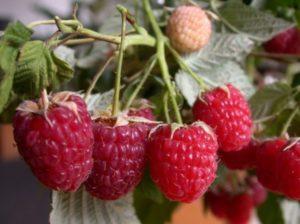
Important! Hybrid raspberries begin to bear fruit in the second season after being planted outdoors.
Berries
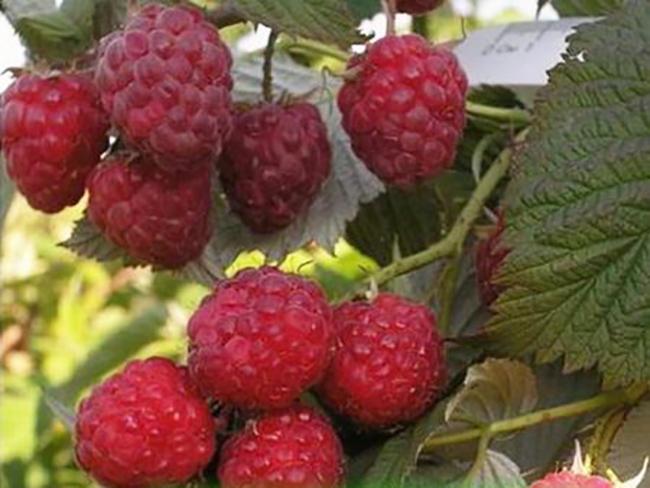
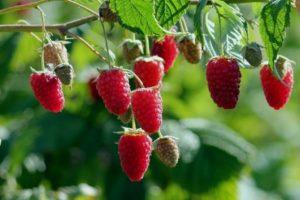
The berries of the Maroseyka raspberry variety are called gigantic, and that's not far from the truth. Some specimens grow up to 12 grams. The fruits are bright red, with juicy, firm flesh, and are easy to remove from the stem. These aromatic berries, with a rich, dessert-like, sweet-and-tart flavor, store well and are transported over long distances.
Note: Ripe fruits do not fall from the bushes, allowing for leisurely harvesting.
Scope of application of fruits
The Maroseyka raspberry is recognized by experts as a dessert variety with versatile uses. Its berries and leaves contain a wealth of vitamins and nutrients that have healing and restorative properties. In addition to being eaten fresh, the fruit is dried, cooked, frozen, and added to confectionery and desserts.
The berries make delicious juices, fruit drinks, nectars, jellies, and marmalades. Experienced gardeners make delicious homemade wine and liqueurs from raspberries. When you have a cold, the fruits and leaves of this berry help reduce fever, boost immunity, and restore strength.

Advantages and disadvantages of the variety
Before planting a hybrid raspberry variety, it is necessary to understand all the strengths and weaknesses of the berry crop.
Advantages:
- High yield indicators.
- Large berries with excellent taste characteristics.
- Easy to care for.
- Complete absence of sharp spines.
- Annual fruiting.
- Natural immunity to diseases and pests.
- Thanks to the dense pulp, the berries can be transported over long distances.
- Universal use of fruits.

The Maroseyka raspberry variety is suitable for growing in temperate climates.
Flaws:
- The older the plant, the smaller the berries become.
- In northern latitudes, the variety requires careful preparation for winter and additional insulation.
- The bushes produce many root shoots, which on the one hand facilitates the propagation of raspberries, but on the other hand makes caring for the plant more difficult.
- Bushes with large berries need additional support.
Important! The Maroseyka raspberry does not tolerate drought well, so growing this variety in arid southern regions requires additional care.
Necessary conditions for growing
It is recommended to grow fruit crops in level, well-lit areas protected from drafts. Seedlings will not thrive in lowlands, marshy soils, or areas with high groundwater levels.
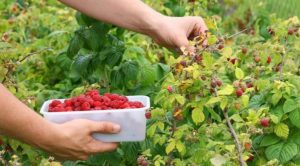
In this case, the plant's roots will begin to rot, leading to the death of the seedling. For growing hybrid raspberries, prepare loose, fertile soil with low acidity.
Tip! To reduce soil acidity, use lime or ash.
Planting and caring for Maroseyka raspberries
The main rules for growing fruit-bearing crops are timely planting, proper care, and healthy, strong seedlings.
Preparing the site and seedlings
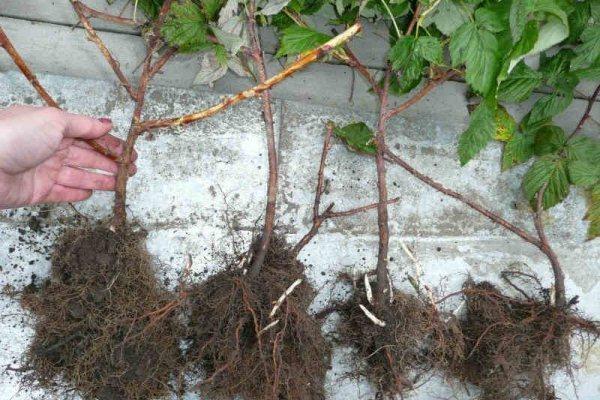
When purchasing seedlings, carefully inspect the roots and the plant's appearance. The rhizome should be free of obvious damage, growths, or knots. The raspberry stem should be straight, with buds or leaves present. The plant should be well-watered.
- The selected plot of land is carefully dug up, weeds are removed, and the soil is loosened.
- The soil is mixed with compost, organic matter and mineral fertilizers.
- 3-4 weeks before the planned planting of seedlings, planting holes are prepared.
- The dimensions of the planting hole are 40-50 cm in depth and width.
- The distance between plantings is 1.5 m, between rows from 2 m.
- A layer of sand and small stones is placed at the bottom of the hole, and fertile soil is poured on top.
At the end of the preparatory work, the holes are watered generously.
Timing and technology of planting operations
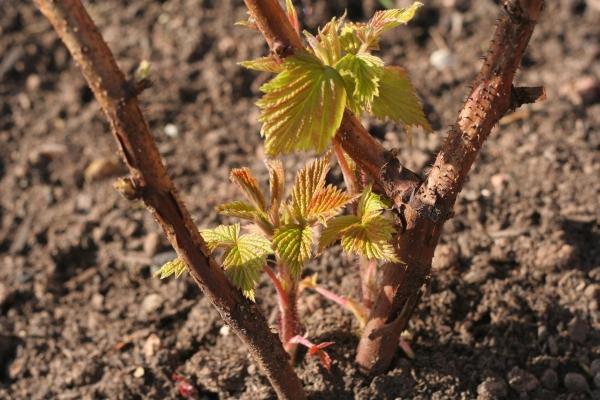
Planting seedlings in open ground is recommended depending on climate conditions. In regions with cold winters, hybrid raspberries are planted in the spring, as soon as the soil warms to 12-15 degrees Celsius. In temperate and warm climates, seedlings are planted in the fall, one month before the onset of cold weather.
Important! 10-12 hours before planting outdoors, soak the plants in a clay-water slurry. After the plants are thoroughly moistened, treat the roots with a weak solution of potassium permanganate.
- Seedlings are placed in prepared planting beds with fertile soil.
- The plant roots are evenly distributed in the hole and covered with soil.
- The soil under the plant is compacted and watered generously.
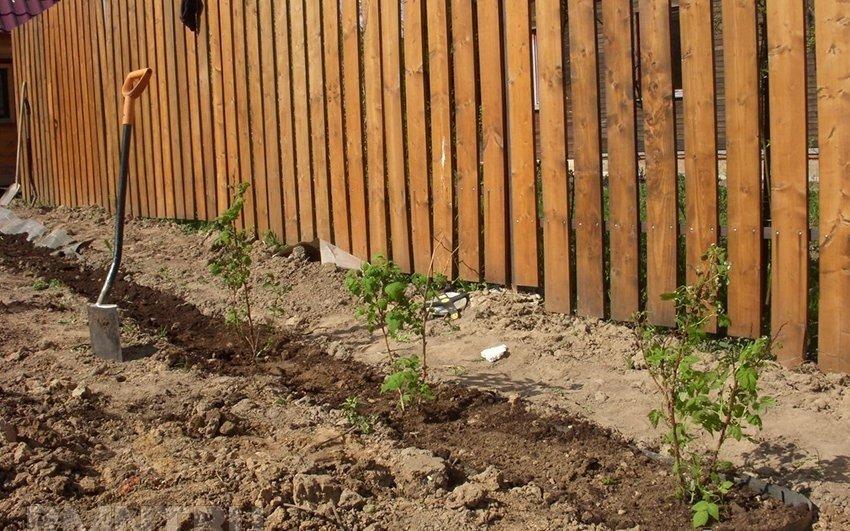
After completing the work, the tree trunk circle is mulched with peat mixed with sawdust or humus.
Watering and fertilizing
Raspberries are watered based on rainfall. In arid regions, irrigation is carried out more frequently, as soon as the topsoil dries. Watering is especially important during the period of fruit formation and ripening.
Before winter dormancy, berry bushes are also watered generously.
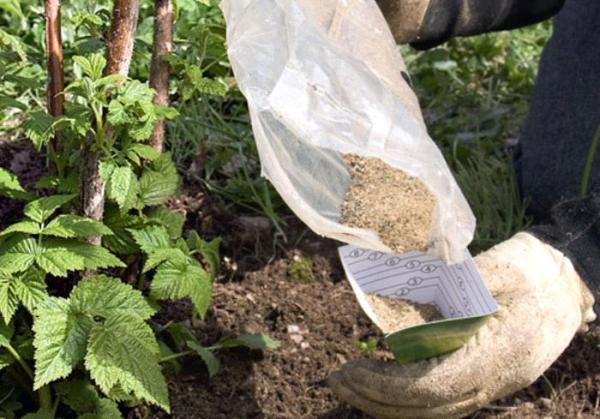
In early spring and fall, berry bushes are fed with mineral fertilizers. During the active growing season, berries require organic matter.
Warning! Using nitrogen fertilizers will cause the bush to overgrow and inhibit fruiting.
Pruning and shaping the bush
In early spring and late autumn, the bushes undergo sanitary pruning, removing broken, damaged, dry, and pest- and disease-infected stems and shoots.
The hybrid raspberry variety Maroseyka produces a large number of shoots, which negatively affects the plant's fruiting.
During the growing season, numerous shoots are pruned, leaving 5 to 8 of the strongest and healthiest. After pruning, the cut areas are treated with garden pitch.
Loosening and mulching the soil
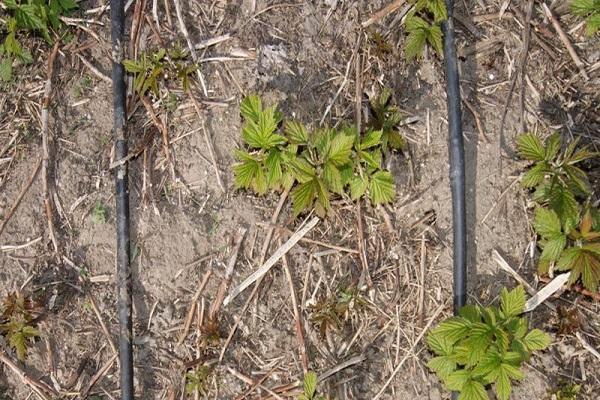
To enrich the soil with oxygen and nutrients, loosen and weed the tree trunk area. To prevent the spread of diseases and pests, this work is repeated several times per season. Mulching the tree trunk area will reduce the need for watering and help eliminate weeds. Dry grass, sawdust, or compost are suitable mulch.
Preparing for winter
With the onset of autumn, the bushes are fed with a mineral complex, the trunk circle is mulched with a thick layer of humus and spruce branches.
The pruned bushes are carefully bent to the ground, secured, and tied. As soon as the first snow falls, a large snowdrift is raked over the plants. In regions with lower temperatures, the raspberries are additionally covered with a special material.
Garter
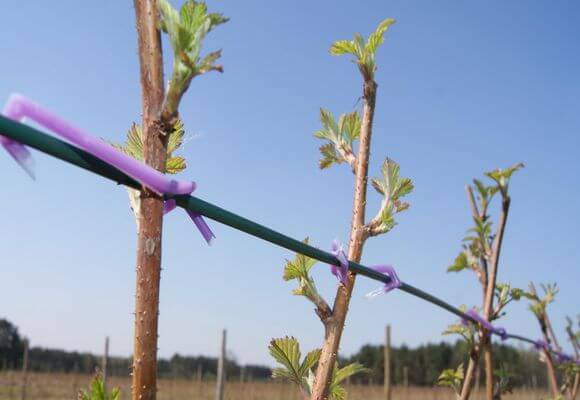
Although the stems of the Maroseyka raspberry are strong, they bend and break under the weight of the giant berries. Therefore, the berry plant is secured with special stakes or tied up.
Preventive treatment
This hybrid raspberry variety is claimed to be resistant to fungal diseases and pests. However, as a preventative measure, plants are sprayed with professional products or special infusions and decoctions in early spring.
Tip! To prevent fungal infections and pest attacks, plant garlic, mint, or calendula near raspberry bushes. Garlic cleanses the soil of fungal spores, while mint and calendula repel pests.
Methods of reproduction
The Maroseyka raspberry variety is the result of long and complex breeding efforts by scientific scientists. This fruit crop is not propagated by seed.
To increase the number of raspberries in a garden plot, the method of dividing the bush and propagating by root shoots is used.
Related posts:
 Step-by-step instructions for planting and caring for raspberries in summer, tips from gardeners
 Description and characteristics of the Hussar raspberry variety, care and cultivation
 Description of the remontant raspberry variety Atlant, planting technology and care
 Description of the Balsam raspberry variety, the intricacies of growing and caring for it
 Description and characteristics of the Solnyshko raspberry variety, planting and care
 Description and varieties of the everbearing raspberry variety Penguin, planting and care
 Description and characteristics of the 50 best raspberry varieties for Siberia
 Description of the Polka raspberry variety, yield, planting and care