
- History of breeding the everbearing raspberry Zhuravlik (Rubus Zhuravlik)
- Cultivation regions
- Advantages and disadvantages of the variety
- Characteristics and varietal characteristics of Zhuravushka
- Appearance and size of the bush
- Flowering, pollination
- Ripening time and yield
- Taste qualities and scope of application of berries
- Immunity to diseases and pests
- Frost and drought resistance
- How to plant raspberries in a garden
- Optimal timing
- Preparing a site for planting raspberries
- Placement schemes and planting technology
- Further care
- Watering
- Top dressing
- Pruning bushes
- Tying to trellises
- Mulching
- Preventive seasonal treatments
- Preparing for winter
- Methods of raspberry cultivation
- Gardeners' reviews
Raspberries are one of the most popular berry crops, bearing fruit in summer. The berries are not only delicious but also contain a wealth of nutrients. Gardeners especially value varieties that bear fruit twice a year. The Zhuravlik raspberry variety is everbearing, harvesting first in summer and then in autumn, right up until frost. Below is information on planting and caring for this crop in your garden, propagation methods, and gardener reviews.
History of breeding the everbearing raspberry Zhuravlik (Rubus Zhuravlik)
The variety was developed by domestic breeders at the Kokinsky Research Center of the All-Russian Scientific Research Institute of Raspberry and Horticulture, located in the Bryansk Region. The specialists crossed the Rubin Bolgarskiy and Kostinbrodskaya raspberries. This everbearing variety inherited all the best qualities from its parents.
Additional information: The first raspberry bushes were brought to Europe in the 16th century, and to Russia in the 17th century.
Cultivation regions
The Zhuravlik variety was included in the Russian State Register in 2001. It is recommended for cultivation in the Middle Volga and North Caucasus regions, as well as in southern areas. Additionally, raspberries can be grown in the central regions of Ukraine and Belarus.
Advantages and disadvantages of the variety
Raspberry Zhuravlik has the following positive qualities:
- high yield;
- long fruiting;
- versatility of fruit use;
- good transportability;
- ease of care;
- good immunity.
The variety's negative qualities include the small weight of its berries, as well as the fact that the raspberries do not always have time to ripen before frost during the second fruiting season.
Characteristics and varietal characteristics of Zhuravushka
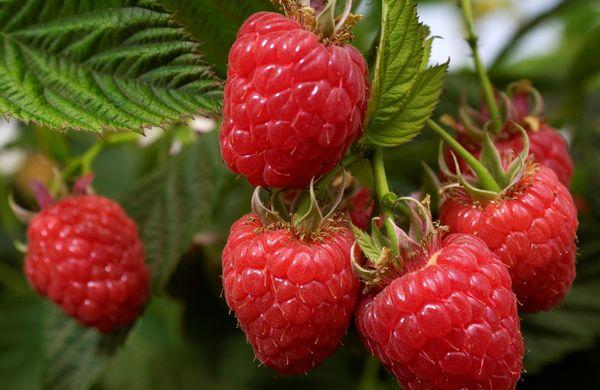
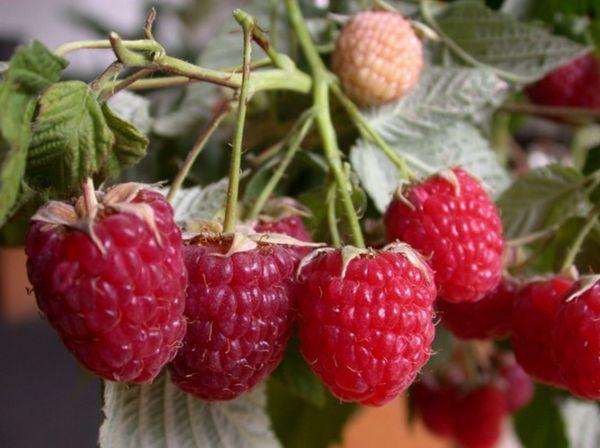
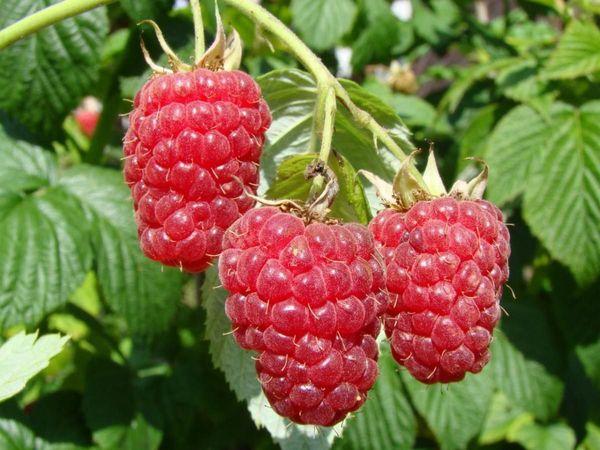
The bushes produce average shoots, producing 6-7 stems per season. The raspberry fruits are conical, slightly pubescent, and red or ruby-colored. The average berry weight is 4 grams. They can be eaten fresh or preserved for the winter.
Appearance and size of the bush
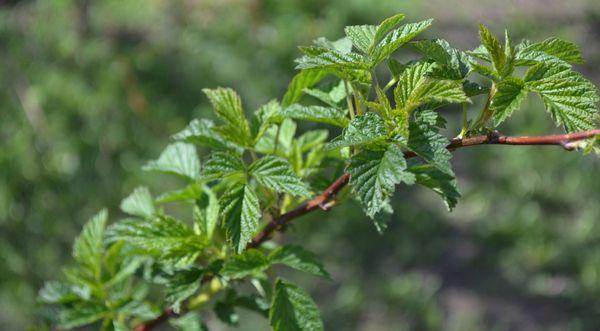
The Zhuravlik raspberry grows vigorous bushes up to 1.7 meters tall. The shoots are erect or slightly spreading. They have no thorns, only small prickly structures at the base. The leaves are green, slightly wrinkled, with finely serrated edges.
Flowering, pollination
The Zhuravlik raspberry blooms in May. This variety is self-pollinating, so no pollinator plants are needed nearby. Wild or domestic bees will facilitate pollination. One hive is sufficient for a quarter-hectare of bushes.
Ripening time and yield
The berries ripen in late June or July. With proper care and favorable climate conditions, a bush can yield up to 2 kilograms of sweet berries. The second fruiting season begins in early autumn and lasts until frost.
Taste qualities and scope of application of berries
The red or ruby-colored fruits have a sweet, slightly tart flavor. Tasters rated the taste at 4.7 points.
The berries have a universal use: they are eaten fresh, dried, frozen, and used to make juices, compotes, and jams.
Immunity to diseases and pests
The variety has good immunity and is rarely affected by diseases. Zhuravlik is also resistant to the main pest of the crop, the raspberry mite. Adverse weather conditions and improper care can weaken the plant's immunity.
Frost and drought resistance
The Zhuravlik raspberry has moderate frost resistance. During prolonged drought, the fruit will develop small and dry out quickly. Watering should be generous but infrequent. If there is sufficient rainfall throughout the season, supplemental irrigation may not be necessary.
How to plant raspberries in a garden
A sunny planting site should be selected. Fruit quality declines in shade. Therefore, bushes should be planted away from buildings and other trees. Groundwater at the planting site should not be too close to the soil surface.
Optimal timing
Raspberry bushes are planted in the spring, after the weather warms up. The soil should be at least 30 centimeters deep. Planting is most often done in April. Raspberries can also be planted in the fall, a month before the frost sets in.
Preparing a site for planting raspberries
To improve the soil before planting a raspberry patch, green manure crops such as peas, lupine, and white mustard should be planted first. Once the crops begin to bloom, they are mowed and incorporated into the soil. Before planting the raspberries, the area is cleared of weeds and dug over.
The soil should be loose and fertile. Heavy clay soil is loosened with sand. Too loose and sandy soil should be amended with clay, garden soil, and humus. Acidic soil should be amended with lime or dolomite flour.
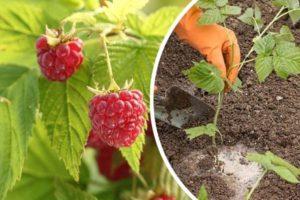
 Important! Do not plant raspberries in low-lying areas or in areas with high groundwater levels.
Placement schemes and planting technology
Zhuravlik raspberry bushes are planted 50 centimeters apart. The distance between rows is 2 meters. Planting is as follows:
- dig a hole 60 centimeters deep;
- fill halfway with fertile substrate;
- place a seedling in the middle of the hole and fill it with the remaining soil;
- compact the soil and water it.
To retain moisture in the soil for a long time, the tree trunk circle is mulched with straw and peat.
Further care
Raspberry bushes require watering, fertilizing, mulching, and pruning. To prevent diseases and pests, the bushes are sprayed with various approved pesticides. In colder regions, raspberries are covered with various materials for the winter.
Watering
The soil around the bushes is irrigated during bud growth, flowering, and fruit set, as well as after the first wave of fruiting. In the fall, after the second harvest, a moisture-replenishing irrigation is performed.
If rain falls during these periods, additional watering is not performed.
Top dressing
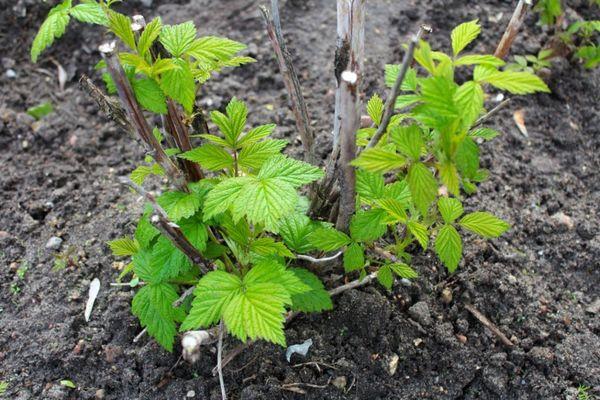
The bushes are fertilized several times per season. In the spring, when the buds begin to open, nitrogen-containing fertilizers are applied. Before the onset of inflorescence, during flowering, and at the beginning of fruiting, a complex mineral fertilizer is applied, primarily containing phosphorus and potassium.
Pruning bushes
The Zhuravlik raspberry bears fruit twice a year. Everbearing varieties require root pruning in late autumn. This prevents diseases and pests. Diseased, broken, and dried shoots are also removed throughout the summer.
Tying to trellises
To prevent the branches from drooping under the weight of the harvest, they are tied to a trellis. This involves digging two posts or pipes into the ground, stretching wire between them, and tying the shoots to the wire. This also promotes uniform ripening of the fruit and facilitates easy harvesting.
Mulching
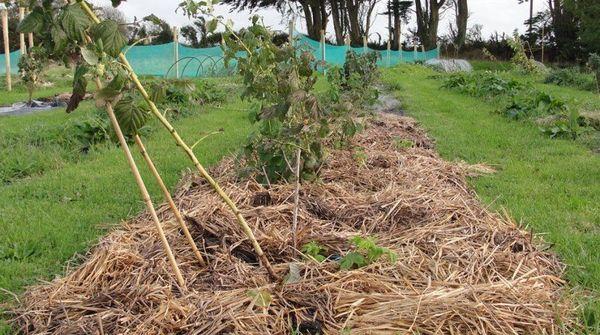
After watering, the soil is loosened and mulched. Straw, sawdust, and peat are used as covering material. Soil under mulch retains moisture better and reduces temperature. Furthermore, a crust that impedes air flow into the soil is prevented from forming under the cover.
Preventive seasonal treatments
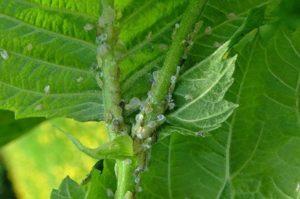
To protect against fungal diseases, raspberry bushes are sprayed with fungicides in spring and fall. To prevent pests from appearing before flowering, plants are sprayed with insecticides. Folk remedies for prevention and treatment can be used, such as garlic or onion infusions.
Preparing for winter
In the fall, the above-ground portion of raspberries is pruned back to the roots, making it easier to cover them for the winter. The area around the trunks of the bushes is mulched with straw, peat, or sawdust to a depth of at least 5 centimeters. Spruce branches or boards can be placed on top to hold the mulch in place during wind gusts.
Please note: Pruning must be done with clean, disinfected pruning shears.
Methods of raspberry cultivation
Gardeners can propagate the Zhuravlik raspberry in several ways. The most common is division: over the course of a season, the bush produces 6-7 shoots, which are dug up, divided, and planted in separate holes if necessary.
Raspberries can also be propagated by root suckers, green or woody cuttings. When rooting, ensure the soil underneath does not dry out. Seed propagation is generally not used because it is labor-intensive, and fruiting takes several years.
Gardeners' reviews
Experienced farmers describe the Zhuravlik variety as an easy-to-grow plant that doesn't require any special growing conditions. If the plot is covered with mulch and branches during the winter, the root system won't freeze. The berries, although small, are tasty, sweet, and versatile.
Igor Ivanovich, Ukraine.
"I bought three Zhuravlik raspberry bushes from a nursery. The plants quickly sprouted and took up a decent amount of space on my property. The raspberries are bearing fruit well, and the berries are sweet and delicious."
Natalia, Moscow region.
"We've had Zhuravlik growing at our dacha for several years now. The plants are easy to care for and don't get sick, even though we don't spray them with anything. For the winter, we cover the soil with sawdust and spruce branches. The berries are growing, though small, but they're still good for making jam."
Related posts:
 Step-by-step instructions for planting and caring for raspberries in summer, tips from gardeners
 The best raspberry varieties for the Moscow region with descriptions and characteristics
 Description of the remontant raspberry variety Atlant, planting technology and care
 Description and characteristics of the Hussar raspberry variety, care and cultivation
 Description of the remontant raspberry variety Orange Miracle, planting and care
 Description of the Maroseyka raspberry variety, propagation, planting and care
 Planting and caring for Tibetan raspberries, variety description and propagation methods
 Description of the Balsam raspberry variety, the intricacies of growing and caring for it