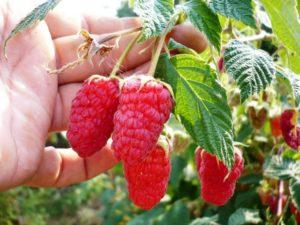
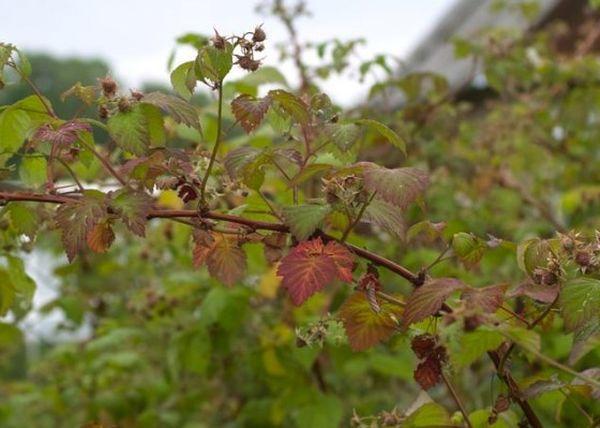
Why do raspberry leaves turn red and dry in June?? This most often indicates a problem. It could be a nutrient deficiency or a fungal infection. If this symptom appears, immediate action is necessary to prevent the raspberry from dying.
Common causes of leaf redness
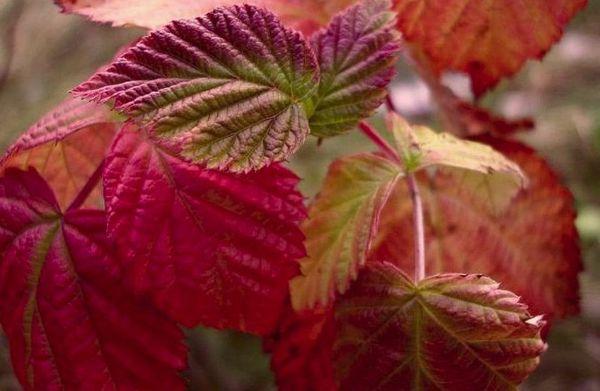
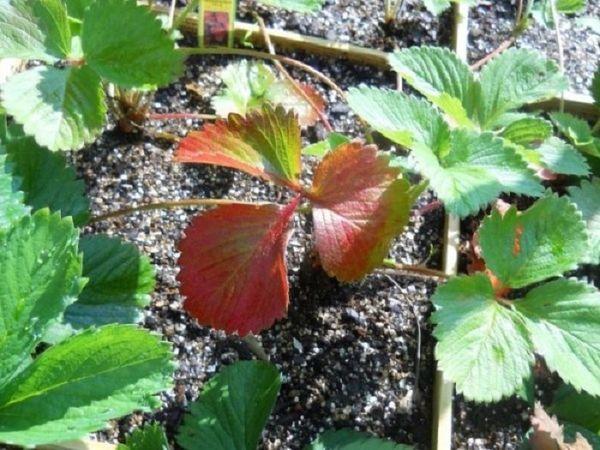
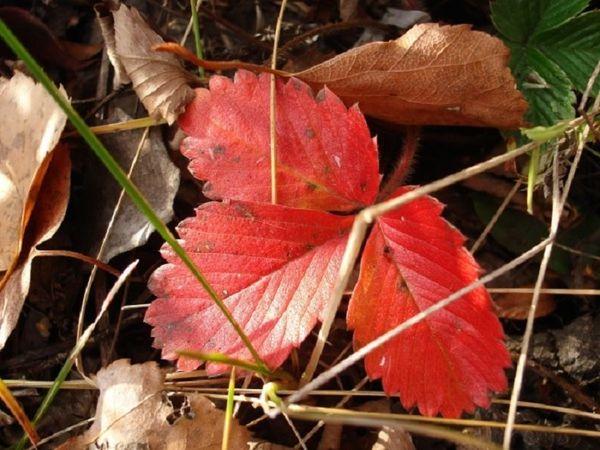
Most often, reddening of raspberry leaves is caused by phosphorus deficiency, damage from harmful insects, or fungal diseases.
Phosphorus deficiency
Phosphorus is one of the key elements for foliage and bud formation in raspberries. Deficiencies of this micronutrient result in delayed bud formation, flower drop, and bud shedding. The most obvious sign is the appearance of red spots on the upper leaves. Gradually, the shoots dry out and fall off. Phosphorus deficiency affects not only the health of the bush but also its yield.
Pest damage
The following insects can cause reddening of raspberry leaves:
- Gall midge. A beetle-like insect with a mosquito-like snout, through which it obtains nourishment in the form of leaf sap. Red spots appear at the site of the gall midge's bite. If the problem is not addressed promptly, over 80% of the foliage may be affected.
- Aphids. These are small insects that feed on the sap and tissue of raspberries. Infestations occur during periods of high humidity. A black, beetle-like coating is visible on the underside of the leaf. In advanced stages, the shoots develop holes from the aphids' feeding, after which the leaves dry out and fall off.
- Nut wasps. These beetles feed on foliage. Red swellings form on the surface and then burst. The leaves then crack and fall off.
Fungal diseases
If the foliage turns red and dries, the bush is most likely affected by fungal diseases:
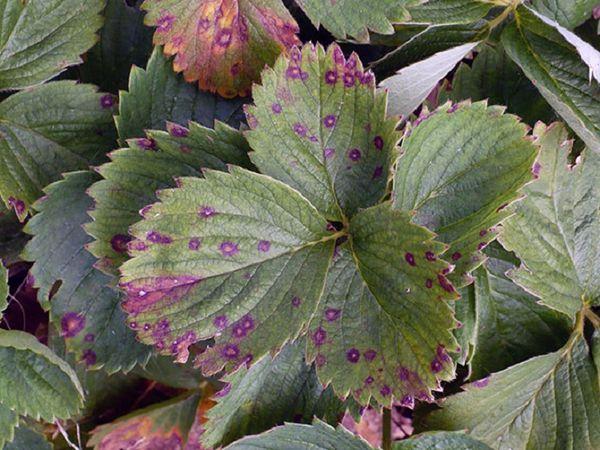
- Anthracnose. One of the most common diseases, it affects almost all fruit bushes. The fungus spreads not only to leaves, but also to flowers, buds, fruits, and branches. Red spots appear on the plant's body, gradually increasing in size.
- Septoria leaf spot. Most often affects raspberry bushes. This microscopic fungus penetrates through the root system. Lower shoots are affected. Red spots appear, then the leaves dry up and fall off.
- Verticillium wilt. This fungal infection spreads rapidly, infecting stems and roots and appearing as red spots. It can reduce yields by up to three times.
Take a look Also
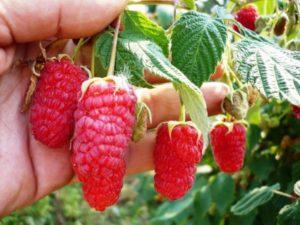
Important! Before beginning treatment, remove all damaged areas of the plant.
What to do?
Reddening of shoots should not be ignored. Once the cause is determined, treatment measures should be taken. Also, learn preventative measures to prevent the disease from recurring.
Treatment
If phosphorus is deficient, add a phosphorus-containing fertilizer. A single-component fertilizer is preferable. The results will be visible immediately after the shrub absorbs the element.
When raspberries are infested by insects, use broad-spectrum insecticides. These help eliminate the problem quickly. After spraying, the pests die within 24 to 48 hours.
If a fungal infection occurs, the shrub is sprayed with an antifungal fungicide. Results are seen within a few days. Follow the instructions carefully.
Prevention
Preventive measures include:
- Regular and sufficient watering.
- Timely fertilization.
- Removing weeds and loosening the tree trunk circle.
- Mulching raspberry bushes.
- Carrying out preventive spraying with insecticides and fungicides before the sap starts to flow.
Tips and advice from experienced gardeners
Experienced gardeners know several tricks that can help prevent the problem from occurring:
- Planting mustard next to raspberries repels pests.
- Mulching the bush prevents the raspberries from drying out.
- Changing the growing location every 5 years strengthens the immune system.
- Be sure to feed the bush after harvesting.
- At the beginning of the season, preventive treatments are carried out.
Related posts:
 Step-by-step instructions for planting and caring for raspberries in summer, tips from gardeners
 Description and characteristics of the Hussar raspberry variety, care and cultivation
 Description of the remontant raspberry variety Atlant, planting technology and care
 Description and characteristics of the Solnyshko raspberry variety, planting and care
 Description of the Balsam raspberry variety, the intricacies of growing and caring for it
 Description and varieties of the everbearing raspberry variety Penguin, planting and care
 How and when is it best to transplant raspberries to a new location in the summer?
 Description of the Maroseyka raspberry variety, propagation, planting and care