
- History of selection and characteristics of the Hussar raspberry
- Habitat
- All the pros and cons of culture
- Preparatory work for planting berry crops
- Preparing seedlings
- Organizing a territory for raspberry bushes
- Fertilization and soil preparation
- Timing and scheme of planting bushes
- Care instructions
- Irrigation
- Installation of supports
- Loosening and weed removal
- Fertilizing
- Pruning and crown shaping
- Preparing raspberries for winter
- Diseases and insects affecting raspberries
- Methods of reproduction
- Reviews of the Hussar raspberry variety
Professional and amateur gardeners alike value the Hussar raspberry variety for its high productivity without the need for complex cultivation techniques. It is resistant to drought, disease, and pests. In summer and late fall, it produces large, aromatic berries with a dessert-like flavor.
History of selection and characteristics of the Hussar raspberry
In 1995, Academician I. V. Kazakov of the Russian Academy of Agricultural Sciences developed the everbearing raspberry variety Gusar, which, after four years of variety testing, was registered in the State Register of Breeding Achievements of the Russian Federation under number 9902171. The creation of the new variety involved the common raspberry Kembi and the everbearing varieties of Kazakov's selection, Beglyanka and Skromnitsa.
The raspberry bush is tall (2.0–2.7 m), upright, and compact, consisting of 5–9 strong, hairless shoots. Annual shoots are green, while biennial shoots are brown. The dark green leaf blades are wrinkled, slightly curled, and have serrated edges. Thorns grow exclusively on the lower portions of the shoots, making them easy to care for.
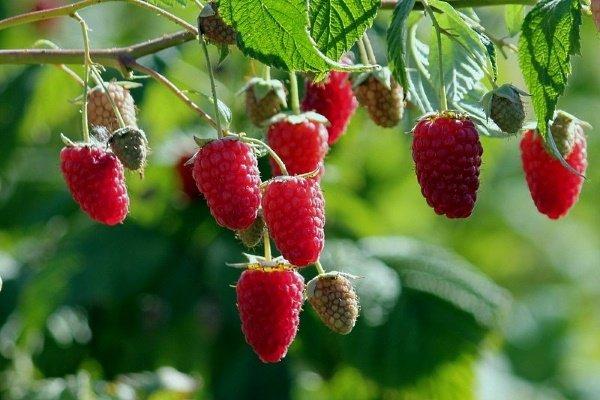
The obtuse-conical fruits weigh 3–5 g, with some specimens weighing up to 10 g. The seeds are large, and the flesh is juicy and tender. The tasting score is 4.2 points; the fruit contains 11% sugars and 2% organic acids.
Husar is an early-ripening, everbearing raspberry variety, producing two harvests per year on one- and two-year-old shoots. This large-fruited variety inherits the best traits of its parents, most notably its resistance to adverse growing conditions.
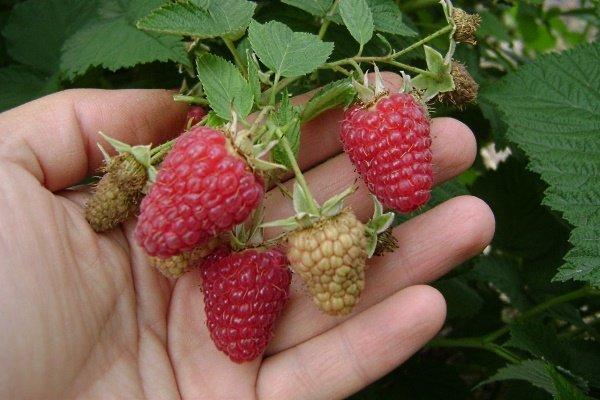 Due to the low branching of the roots, the plant devotes all its energy to the formation of fruits, and not to the formation of root shoots, which reduces the labor intensity of plant care.
The yield of the Gusar variety is 3–6 kg per bush or 84 centners per 1 ha.
Habitat
The Gusar raspberry is approved for cultivation in the Northwestern, Central, Volga-Vyatka, North Caucasus, and Middle Volga regions. This extensive growing area is due to its frost and drought tolerance.
All the pros and cons of culture
Gardeners consider the Gusar raspberry to be a "golden" variety of the "Kazakovskaya" selection due to its numerous vital positive characteristics:
- the ability to withstand snowless winters with frosts down to -30°C without losses, and when covered with snow – down to -35°C;
- drought resistance;
- large-fruited;
- dessert sweet and sour taste with a predominance of sugar content;
- genetically built-in immunity that protects raspberries from viral diseases, some types of fungi, and pests;
- commercial appearance of berries, universal use;
- a small number of thorns located in the lower part of the shoots;
- remontancy;
- limited amount of root shoots.
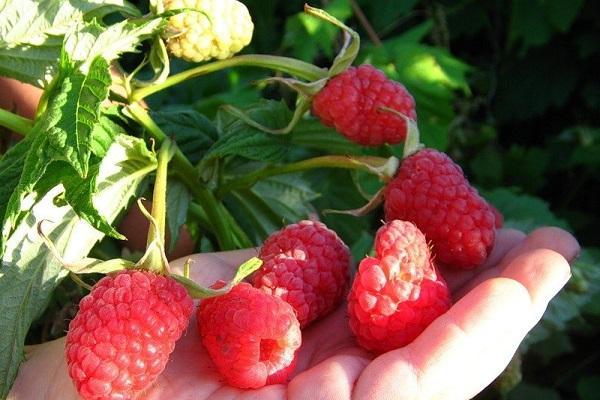
Large fruits and high productivity make this crop suitable for cultivation not only in summer cottages and private farmsteads, but also in large agricultural enterprises.
Among the disadvantages of the Gusar raspberry, gardeners note the icing of the roots when the thaw turns into frost, and the need for support and tying.
Preparatory work for planting berry crops
Before planting raspberries, choose a location for the raspberry patch, prepare the soil and planting holes, purchase seedlings, and decide on the timing.
Preparing seedlings
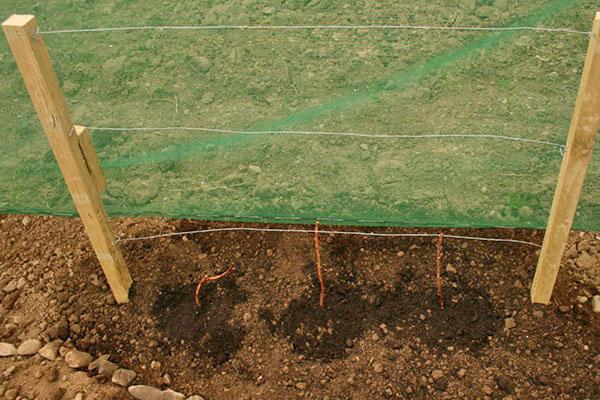
It's safer to purchase planting stock with a closed root system from nurseries or garden centers. A suitable raspberry seedling consists of a single shoot 30–40 cm tall, 1 cm in diameter, with green buds, and a 15-centimeter fibrous root system with replacement buds or rudimentary shoots. If the seedling has developed leaves or shows any discolored areas, growths, or spots on the stem, the bush should be discarded.
Before planting, dried roots are cut off, soaked in a stimulant such as Kornevin, Heteroauxin or Zircon, and dipped in a clay slurry.
Organizing a territory for raspberry bushes
Choose a level, well-lit location for raspberries, away from cold winds. Planting along a fence on the south side saves valuable space; the fence protects the plant from drafts and traps snow in winter, preventing the bushes from freezing. The Husar raspberry does not produce fruit in marshy, clayey, or low-lying areas. Unfavorable neighbors include currants and strawberries, which are susceptible to common pests and diseases.
Fertilization and soil preparation
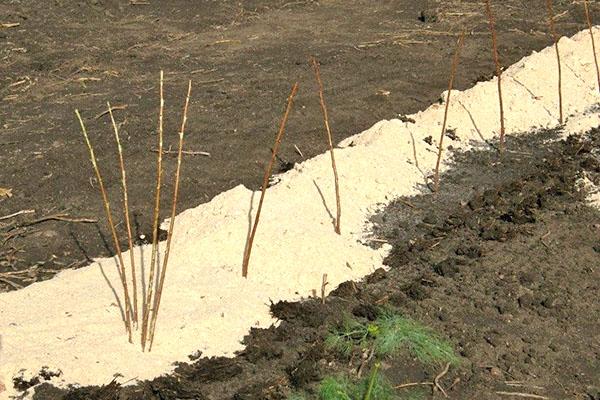
Hussar prefers fertile, neutral or slightly acidic loams and sandy loams, and produces consistently in a soil mixture containing equal parts turf, sand, and peat. To improve soil fertility, add 20 kg of rotted manure and 500 g of wood ash per square meter during tillage.
Timing and scheme of planting bushes
Gardeners living in northern regions, where frosts begin in September and October, are recommended to plant the Gusar raspberry in spring at temperatures of 10–15°C. Late August to mid-October is a suitable time for planting in areas with moderate and warm climates.
Maintain a distance of 80–100 cm between bushes in a row and 1.5 m between rows. Dig 50 x 50 cm planting holes 3 weeks before planting.
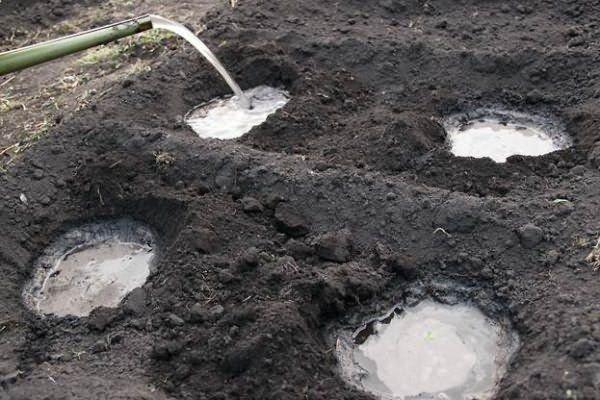
If the bed hasn't been fertilized beforehand, add a bucket of humus or compost to the bottom of the hole, then top it with a 5-centimeter layer of garden soil. Another option is to prepare a soil mixture consisting of soil dug from the hole mixed with 30 grams of potassium sulfate, the same amount of superphosphate, and 5 kg of humus.
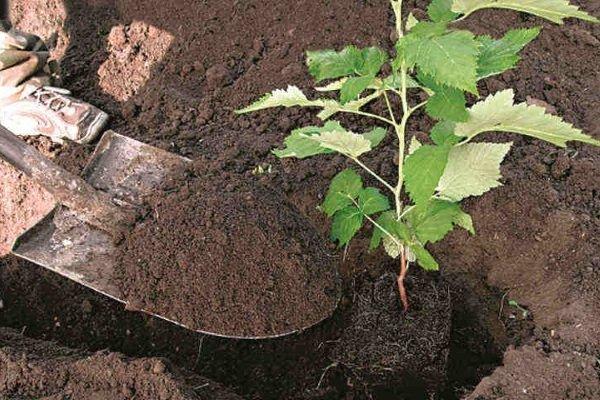
The seedling is lowered vertically into the hole, the roots are kinked, and the soil is filled. After the soil has compacted, the plant is watered generously, mulched, and a support structure is installed.
The root collar of the Gusar raspberry seedling should be located at the same level as the soil surface.
Care instructions
Following proper agricultural practices after planting ensures consistent fruiting, a dessert-like flavor, and the aroma of raspberries. Fertilizing, regular watering, pruning, and protecting the bushes from diseases, pests, and frost are particularly effective in increasing yields.
Irrigation
Water Gusar raspberry seedlings regularly for the first 2-3 weeks after planting. Once the plants are established, follow the weather conditions and water the bushes as needed. Be sure to moisten the soil around mature bushes to a depth of 40 cm (2-3 buckets) during flowering, fruit set, and fruit ripening.
If water is scarce during these periods, the berries will develop into small, sour berries. To reduce moisture evaporation, it is recommended to water the bushes in the evening and mulch the soil with sawdust and straw.
Installation of supports
The Gusar raspberry requires support, especially during fruiting, when the stems droop under the weight of the harvest. The fan-shaped staking method involves using 2-meter stakes to tie half of the nearest shoots from the bushes on the right and left.

The most common method for shoring up Gusar raspberries is a trellis. Two wooden posts are planted at the edges of the bed, and steel wire is stretched between them. If the raspberry patch is wider than 4 meters, intermediate supports will be needed.
The first row of wire, to which the shoots of the bushes are tied with nylon twine, is placed at a distance of 60–70 cm from the ground, the second – 1.5 m above the surface.
Loosening and weed removal
Weeds under raspberry bushes and between rows are removed every two weeks during the emergence phase to prevent soil depletion. Loosening, which increases moisture and oxygen permeability, is carried out in the surface soil layers (5–7 cm) during weeding, after irrigation, and after rain.
Fertilizing
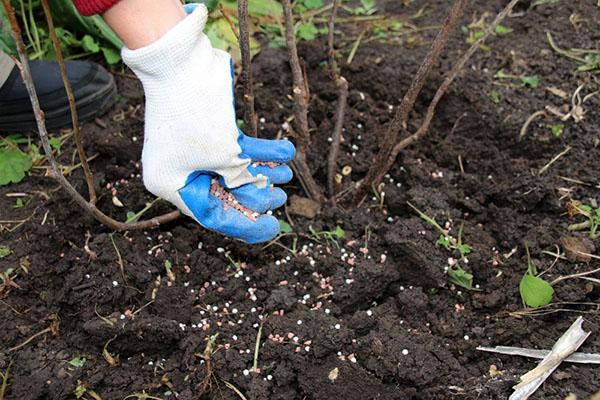
Add a teaspoon of urea to a bucket of mullein infusion. Water the Gusar raspberry bushes with this mixture in early spring. After the leaves emerge, apply an aqueous solution of Ecofoska or Kemira, or sprinkle 15 grams of ammonium sulfate under the bushes.
During the ripening period, raspberries are fertilized with Ideal, potassium magnesium sulfate or liquid manure.
In the fall, when fruit buds are forming, a spoonful of superphosphate and potassium, a mixture of humus and manure are poured under the bush.
Pruning and crown shaping
The popular pruning method according to Sobolev is suitable for the Gusar raspberry variety, which forms a sufficient number of lateral shoots.
Methods of pruning bushes:
- when the stems reach a height of 1 m, shorten the tops by 10 cm;
- Immediately after harvesting, the fruiting shoots are cut off at the root;
- The lateral branches that grow on one-year-old stems in the fall are not removed; they are shortened by 10 cm in the spring.
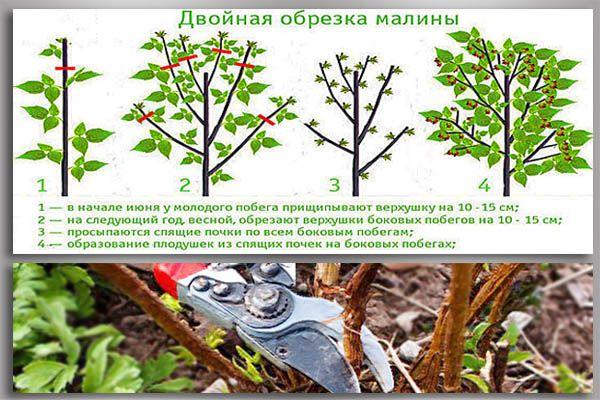
In summer, when the current year’s shoots grow back, the pruning pattern is repeated.
Preparing raspberries for winter
In the fall, the Gusar raspberry canes are removed from their supports. Before frost, the shoots are bent to the ground and secured with metal pins. The base of the bushes is insulated with straw or spruce branches, and the stems are covered with agrofibre. After snowfall, snowdrifts are created over the bushes.
Diseases and insects affecting raspberries
The Husar raspberry is resistant to viruses and fungal diseases. However, if agricultural practices are not followed and undesirable neighbors are present, the crop is susceptible to the following diseases and pests:
- Late blight of roots. Favorable conditions for the development of rot are low temperatures and high humidity. When flowers open, the petals remain white, but the pistil turns black, and the cores of the deformed fruits are also black. The plant wilts, and the leaves at the bottom of the shoots fall off. Protective measures include following agricultural practices and treating with fungicides (copper sulfate, Arcerid). If more than a quarter of the bushes are affected, the raspberry bush is uprooted.
- Chlorosis is a non-viral disease. The disease begins with yellowing of raspberry leaves. Later, vegetation slows, and stems become thinner. Chlorosis develops due to micronutrient deficiencies (iron, boron, manganese), compounded by unfavorable growing conditions (irrigating bushes with cold water, high humidity). The bushes' ability to photosynthesize normally is restored by adding the necessary chemicals, regulating watering, and fertilizing the plants.
- Stem gall midge. The activity of this 2-4 mm midge manifests itself as growths on raspberry shoots, where the insect larvae are concentrated. The stems eventually become soft and rotten. Affected shoots are cut out and burned. The pests are controlled by Iskra, Actellic, and Karbofos, applied before flowering and after harvest.
- Raspberry and strawberry weevil. These gray-black, 3-mm-long beetles chew holes in raspberry leaf blades and lay eggs in flower buds. The insect larvae feed on plant sap and eat away the flower from the inside, causing petals to fall off and fruit set. To protect against pests, raspberries are treated three times with Iskra, Karbofos, and Kemifos. Folk remedies include spraying the bushes with decoctions of wormwood, garlic, and hot pepper, and setting traps with sweet bait made from water, sugar, and yeast.
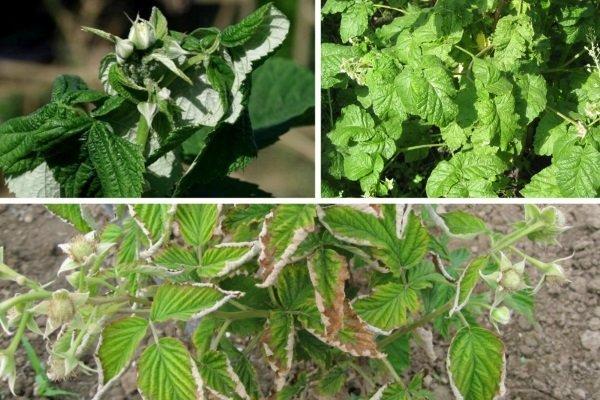 To prevent attacks by insects that parasitize the Hussar raspberry variety, it is recommended to regularly remove weeds, loosen the soil around the bushes and between the rows, and not plant garden strawberries or currants nearby.
Methods of reproduction
The Hussar raspberry variety can be propagated in two popular ways: by green cuttings and root suckers. The most popular method is root suckers. In late summer, the grown root sucker is separated from the mother plant along with its root ball and replanted in a prepared hole.
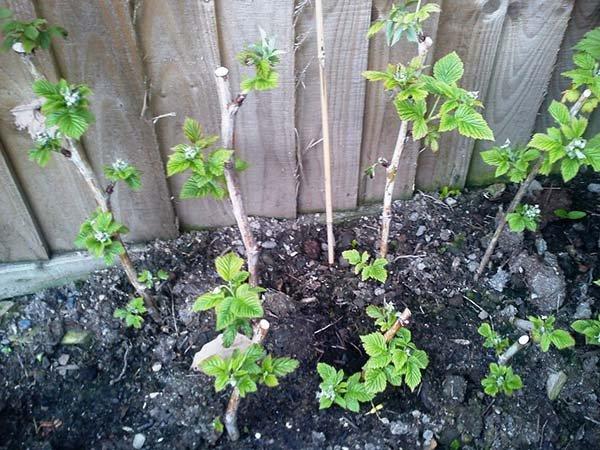
If there is a lack of root shoots, cuttings are used. Technology propagation of raspberries by green cuttings:
- root shoots with leaves are cut off at the base, and pieces 8–10 cm long are cut;
- the cuttings are collected in a bunch, the ends are dipped in a solution of root formation stimulator for 12 hours;
- half of the leaf blades are torn off;
- The cuttings are planted in a greenhouse at a 45° angle in a soil mixture consisting of equal parts of turf soil, peat, and sand;
- the distance between plants is 10 cm, between rows - 5-7 cm;
- plantings are watered regularly, not allowing the substrate to dry out;
- After a month, the seedlings are transplanted into the raspberry patch.
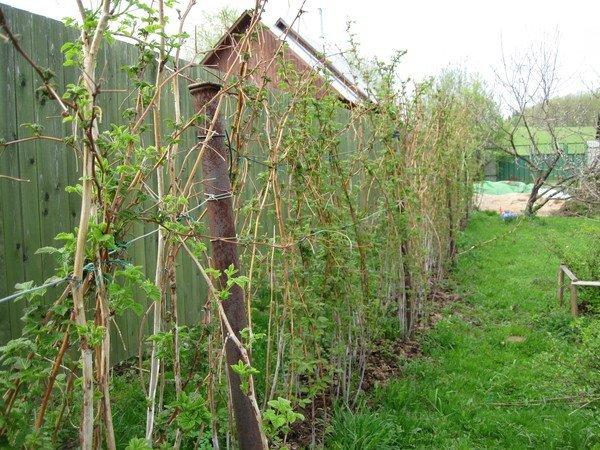 In the fall, shoots from the current year are selected for cuttings, which are not left over the winter.
Reviews of the Hussar raspberry variety
Gardeners praise the Hussar raspberry for its large fruit, ease of care, and vigor. Disadvantages include a neutral flavor and low sugar content.
Petr Alexandrovich, 60 years old, Moscow
The Hussar raspberry variety is easy to care for. It survives winters without loss and is drought-resistant. Fruit ripens in early July, initially at the tips of the shoots, with full fruiting occurring a little later. This tall-growing raspberry requires trellis support.
Tamara Vasilievna, 45 years old, Nizhny Novgorod
Five years ago, I planted a raspberry patch with 20 Husar raspberry bushes. The berries are large, but not sweet enough for my taste. I sell half of my harvest at the market. Buyers are attracted by the fruit's marketable appearance.
Margarita Lvovna, 67 years old, Sumy
I harvested my first 2-3 kg crop from the Gusar bush two years later. I planted the raspberries in a trench, first creating a "cushion" of manure at the bottom. I fertilize them annually with a mullein infusion and ash, and water them generously during fruit set and ripening. In the fall, I prune back the old shoots and cover the raspberry patch with spruce branches for the winter. That's all the care I need. I don't use any chemicals. The raspberries are disease-free.
Related posts:
 Step-by-step instructions for planting and caring for raspberries in summer, tips from gardeners
 Description of the remontant raspberry variety Atlant, planting technology and care
 Description and characteristics of the Solnyshko raspberry variety, planting and care
 How to treat raspberries against pests during fruiting and flowering
 Description of the Polka raspberry variety, yield, planting and care
 Description and varieties of the everbearing raspberry variety Penguin, planting and care
 How and when is it best to transplant raspberries to a new location in the summer?
 Description of the remontant raspberry variety Orange Miracle, planting and care