
- Selection of everbearing raspberries Orange Miracle
- Cultivation regions
- The main pros and cons of the variety
- Characteristics and varietal characteristics
- Appearance and size of the bush
- Flowering, pollination
- Ripening time and yield
- Taste qualities and scope of application of berries
- Immunity to diseases and pests
- Bushy dwarfism
- Chlorosis
- Gray rot
- Aphid
- Raspberry beetle
- Raspberry weevil
- Raspberry stem fly
- Frost and drought resistance
- How to plant Orange Miracle raspberries in your garden
- Optimal timing
- Peculiarities of choosing seedlings
- The difference between open and closed root systems
- Preparing a site for planting raspberries
- Placement schemes and planting technology
- Further care
- Watering
- Top dressing
- Pruning bushes
- Tying to trellises
- Mulching, loosening and weed removal
- Preventive seasonal treatments
- Preparing for winter
- Methods of raspberry cultivation
- Gardeners' reviews of the variety
The everbearing raspberry "Orange Miracle" is considered a popular crop. It produces large fruits and produces excellent yields. To achieve successful cultivation, proper planting practices are recommended. Proper selection of the site and soil composition are crucial. Adherence to proper agricultural practices and protection from diseases and pests are also crucial.
Selection of everbearing raspberries Orange Miracle
This everbearing variety is considered relatively new. It was developed by breeder I.V. Kazakov, who worked at the Kokinsky support center of the All-Russian Scientific Research Institute of Raspberry and Horticulture. This raspberry is characterized by delicious, rich yellow fruits.
Cultivation regions
This variety is recommended for cultivation in the central regions of Russia. It can also be grown in the southern regions of the country.
The main pros and cons of the variety
This type of raspberry has many advantages:
- High yield. Over the course of the summer, one plant can produce up to 3 kilograms of fruit.
- Excellent transportability. Even with long-term storage, the fruit retains its firmness and juiciness. At room temperature, it can be stored for 4-5 days. Under ideal conditions, this period can be extended to 2-3 weeks.
- No berry drop. Even when fully ripe, the fruits remain on the bushes.
- Frost resistance. When covered, the plant can withstand temperatures down to -25 degrees Celsius.
- Long-lasting fruiting. With proper agronomic practices, raspberries produce fruit for 15 years.
- Hypoallergenic properties. Red fruits are usually the cause of allergies. The Orange Miracle variety does not cause adverse reactions.
However, the variety also has several disadvantages:
- Sharp thorns. They are often found even on one-year-old branches.
- Staking is necessary. Otherwise, the berries may be damaged by thorns.
- Risk of gray mold.
- Poor drought tolerance.
Characteristics and varietal characteristics
Before planting a plant, it is worth familiarizing yourself with its key characteristics and varietal features.
Appearance and size of the bush
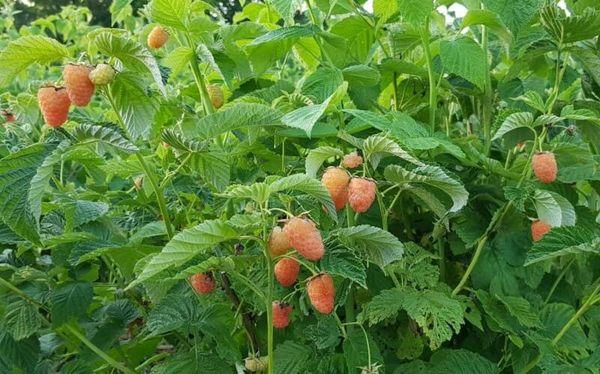
The plant is characterized by fairly strong and tall bushes with spreading branches. Each plant produces 6-7 replacement shoots and the same number of basal suckers. The stems develop numerous thorns, which complicates harvesting. The plant produces medium-sized, bright green leaves.
Flowering, pollination
The crop is considered remontant, so it typically blooms repeatedly. To increase yield, it's worth planting several raspberry bushes in a plot. This improves pollination.
Ripening time and yield
The first fruits ripen in late July. However, the maximum harvest is achieved in late August. Raspberries continue to bear fruit until frost sets in.
From 1 bush you can get 2.5-3 kilograms of fruit.
Taste qualities and scope of application of berries
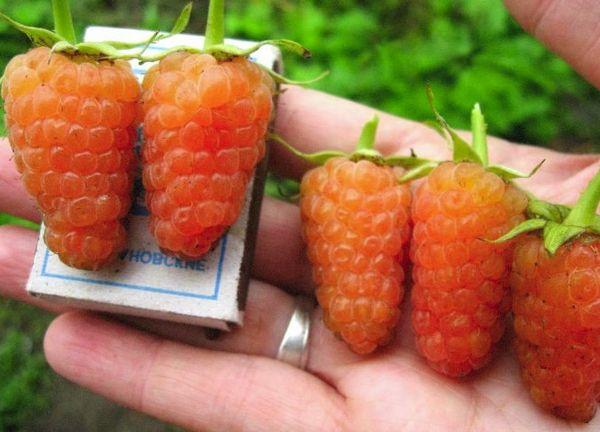
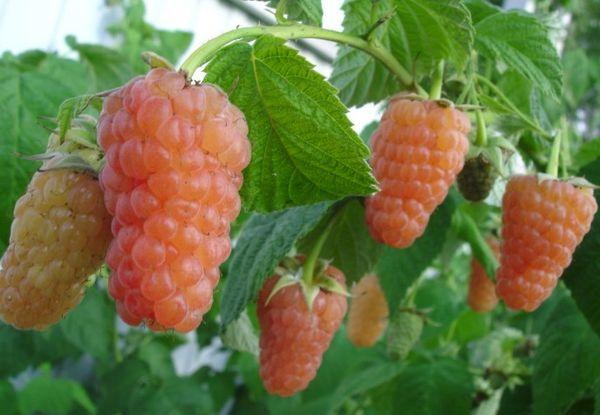
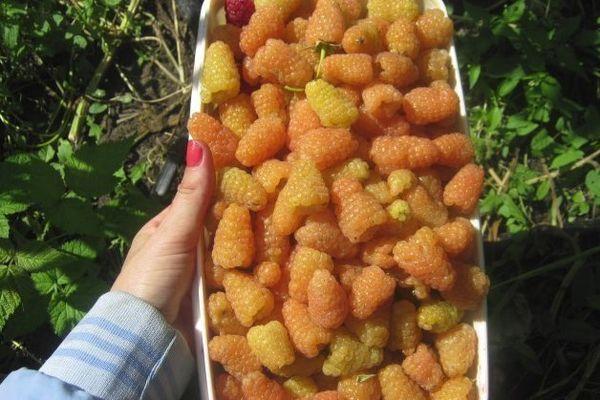
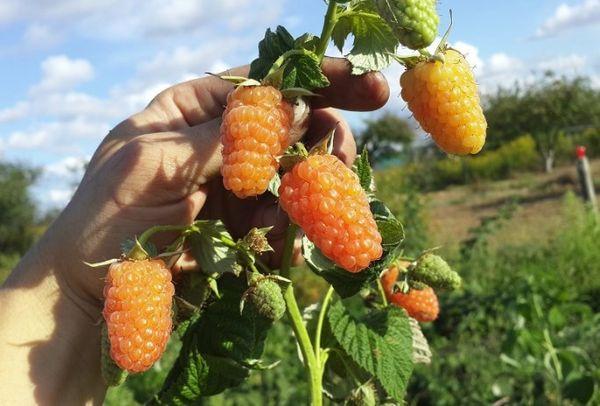
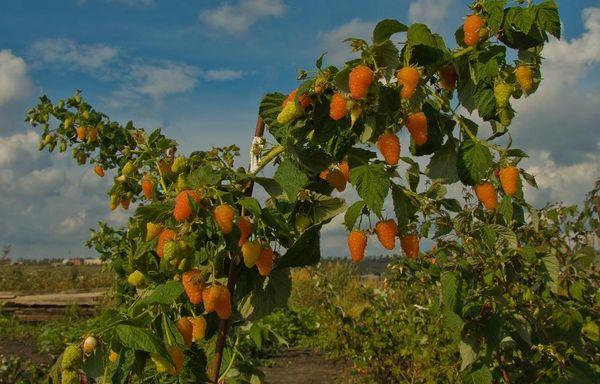
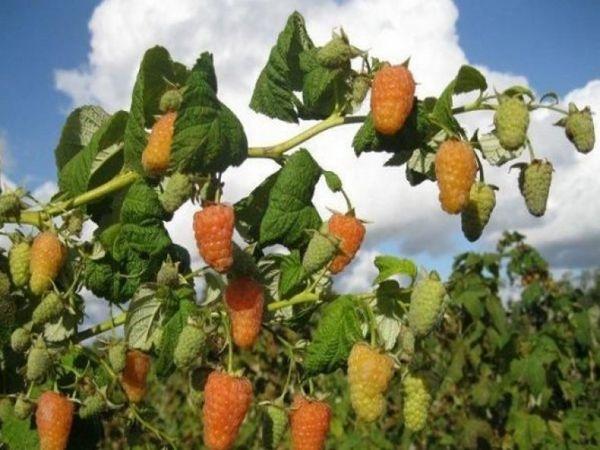
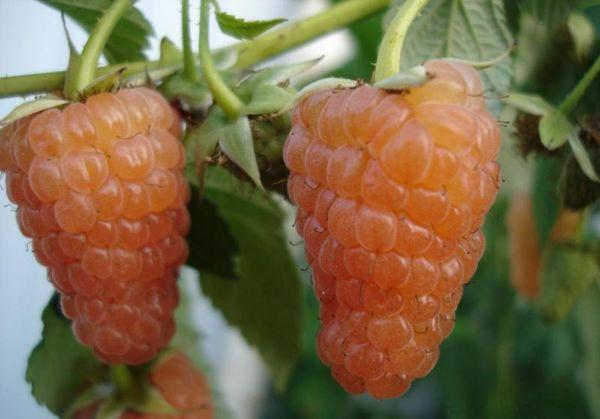
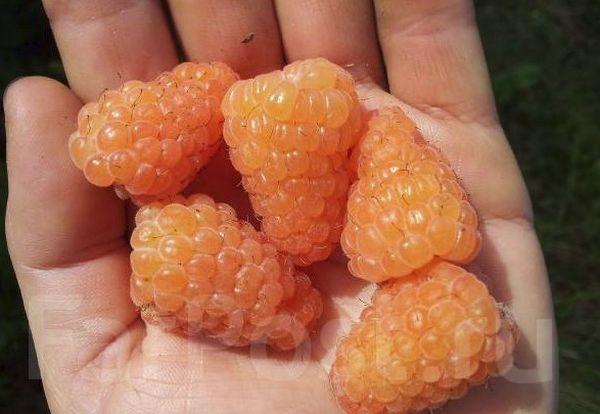
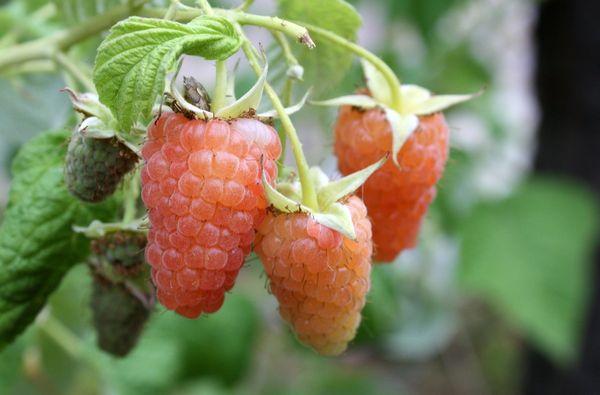
This raspberry variety is characterized by large berries weighing 6 grams. They have dense flesh and a conical shape. The fruits of this variety are characterized by a rich orange color.
Take a look Also
Raspberries have excellent flavor, so they are eaten fresh. They are also used to make jams, compotes, desserts, and many other dishes.
Immunity to diseases and pests
Everbearing raspberry varieties are resistant to various diseases. However, if care guidelines are not followed and timely preventative measures are not taken, various problems can arise.
Bushy dwarfism
This disease is characterized by the formation of yellow spots on branches and leaves. Affected bushes produce berries with few drupes.
Chlorosis
This disease is characterized by yellowing and death of shoots, leaves, and other plant parts. Fruits also become deformed, and ripening is halted.
Gray rot
An unpleasant coating indicates the presence of gray mold. Damaged fruits should be collected and disposed of.
Aphid
These pests are localized on the undersides of leaves or at the ends of shoots. As a result, raspberry growth is stunted.
To deal with parasites, use Karbofos or Confidor during the budding period.
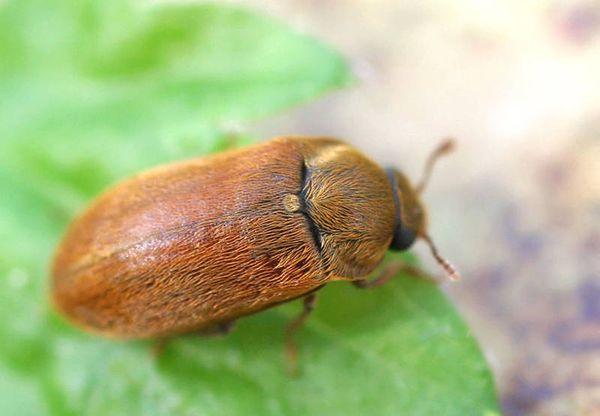
Raspberry beetle
These pests attack buds and significantly reduce yields. To combat this problem, the bushes are treated with a solution of malathion before flowering.
Raspberry weevil
These dark bugs consume green leaves and fruit buds. To combat them, spray the bushes and soil with a solution of Malathion in the spring. Garlic or mustard infusions are also effective folk remedies.
Raspberry stem fly
Plants are threatened by larvae that chew holes in the stems. During bud formation, it's worth treating the bushes with Karbofos. Confidor or Decis can also be used.
Frost and drought resistance
With proper care, this raspberry variety is characterized by excellent frost resistance. In regions with harsh winters, the bushes require protection.
How to plant Orange Miracle raspberries in your garden
To achieve a bountiful harvest and collect large fruits, it is important to carry out planting work correctly.
Optimal timing
Raspberries should be planted in spring or fall. In the former case, planting should be done in April; in the latter case, in September or October.
Peculiarities of choosing seedlings
To grow healthy plants, it's important to purchase high-quality seedlings. They should meet the following requirements:
- It is worth buying raspberries in nurseries or specialized stores.
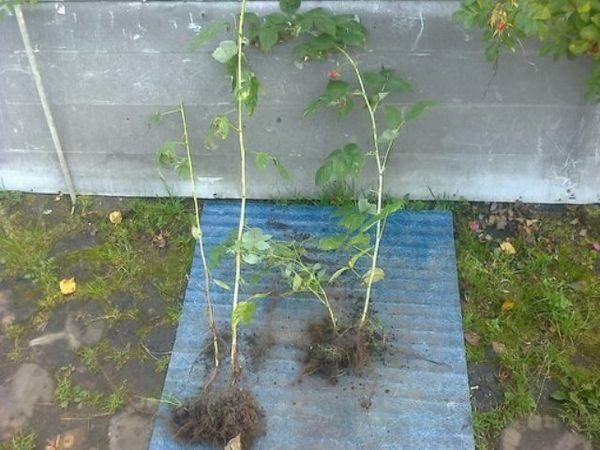
- Bushes should have 2-4 small branches. Larger plants may not survive transplantation.
- It's best to buy seedlings in the fall. During this period, sap flow is at its lowest, making replanting the bush most productive.
The difference between open and closed root systems
The root system can have 2 types:
- Open root system – typical for seedlings grown in the ground. They were temporarily dug in and wrapped in cellophane. It's important to check that the bush has white roots. This indicates the plant's freshness. Bushes with open roots are affordable, but don't have a particularly good survival rate.
- Closed root ball – typical for container-grown plants. They are sold with a root ball. High-quality planting material should have a root ball that doesn't crumble. These plants are more expensive but take root better.
Preparing a site for planting raspberries
This raspberry variety requires a well-lit location. Growing it in the shade will not yield tasty berries. Furthermore, there's a risk of reduced yield. When choosing a location, it's important to ensure the bushes are protected from northerly winds.
This type of raspberry does not grow well in acidic soil. It is recommended to plant it after tomatoes, eggplants, and cucumbers. It is not recommended to plant it after other raspberry varieties. This increases the risk of soil depletion and the presence of disease spores and harmful insects.
One month before planting, prepare the bed. It's recommended to add the following fertilizers to the soil:
- 45 grams of potassium sulfate;
- 12 kilograms of humus;
- 15 grams of superphosphate.
Placement schemes and planting technology
To ensure successful landing, it is recommended to perform the following steps:
- When planting a crop with open roots, they should first be trimmed, and then the shoot should be shortened by a third.
- Place the seedling in the hole and stand it upright. Carefully spread the roots. The buds near the root should be covered with soil during the winter. The root collar should remain exposed.
- Pour 2-3 buckets of water under each plant.
- Cover the tree's trunk area with compost or humus. When planting in the fall, you can use dry leaves or sawdust.
Further care
To achieve good results in growing a crop, it is necessary to provide it with proper care.
Watering
The plant requires adequate soil moisture. However, it does not tolerate stagnant water. Raspberries should be watered once a week. During dry weather, increase watering frequency to twice a week.
Top dressing
This variety requires standard fertilizing. Organic fertilizers, such as cow manure or manure, are especially recommended. This increases yield and improves the development of berry bushes.
When using bird droppings, mix them with water in a ratio of 1:20. If using mullein, dilute it in a ratio of 1:10.
Fertilizing is best done immediately after rain. This method is especially effective in warm weather. It's important to note that nitrogen-containing fertilizers are prohibited in the fall. They promote the growth of green mass and stimulate the development of young shoots. Otherwise, the plant simply won't survive the winter.
Pruning bushes
Orange Miracle raspberry pruning is performed after the second harvest. This procedure is carried out until the end of fruiting. One-year-old shoots are cut as close to the ground as possible. The remaining branches should be no more than 3 centimeters tall.
Repeat pruning is performed in the spring. At this time, broken and frozen shoots are removed. It's also worth trimming branches back by 15 centimeters. This will ensure abundant fruiting.
Tying to trellises
The plant requires staking, as a heavy harvest can cause branches to bend toward the ground. This also ensures ventilation of the raspberry patch, helps prevent waterlogging, and prevents fungal infections.
It is recommended to tie up raspberries with plastic wire. Two-meter-high reinforcement posts are used for support.
The crop should be tied at a height of 50 centimeters and 1.5 meters.
Mulching, loosening and weed removal
When growing this raspberry variety, it's important to loosen the soil regularly. This helps prevent disease and pest attacks. Keep in mind, however, that the roots of this plant are located near the soil surface. Therefore, this process must be carried out very carefully.
Mulching the soil is also important. This helps retain moisture and strengthen roots. Using humus-rich fertilizers for mulching will stimulate the vigorous growth of young shoots.
For mulch, you can use a combination of methods. First, cover the soil with humus, then add a layer of straw.
Advice! Avoid using pine needles as mulch. This material increases soil acidity, which negatively impacts raspberry growth.
Preventive seasonal treatments
To prevent raspberry pests, use Bordeaux mixture. Nitrafen is also a good option. The first treatment is done at the beginning of the growing season. Repeat treatments if necessary.
To prevent raspberry foliage and shoots from drying out due to fungal infections, use Bordeaux mixture. Its concentration should be 1%.
Preparing for winter
To protect raspberries from freezing, bend their branches toward the ground. It's recommended to tie the bent branches together in an arched fashion. This procedure should be performed before frost sets in. Otherwise, the branches may break.
If a snowy winter is expected in the region, raspberries may not require cover. However, it's important to ensure that the snowdrifts cover the shoots. If they don't, add more.
If there's little snow, it's recommended to cover the raspberries with leaves. The covering layer should be at least 30 centimeters thick.
Methods of raspberry cultivation
The plant can be propagated using root cuttings. If the plant survives the winter, its roots are strong and healthy. In this case, they are perfectly acceptable for propagation.
To stimulate root growth and obtain sufficient planting material, it's recommended to remove part of the bush. For this purpose, it's recommended to select the central shoot of a 2-3-year-old plant and prune it back by 10-15 centimeters. This procedure will produce 20 new bushes.
Gardeners' reviews of the variety
This variety of raspberry is considered very popular, so you can find many positive reviews about it:
- Inna: "I really like the Orange Miracle raspberry. It's been bearing fruit in my garden for four years now. I get a very good harvest every year. It's also a low-maintenance plant. I come to the dacha once a week and perform all the necessary care."
- Elena: "I planted this raspberry variety along the fence. I chose a spot with plenty of sunlight. I can say the plants took root quickly, and last year I harvested my first crop. I got about 2 kilograms of berries from one bush."
Orange Miracle raspberry is a popular crop that produces a bountiful harvest. To achieve successful cultivation, proper planting and important agricultural practices are essential.
Related posts:
 Step-by-step instructions for planting and caring for raspberries in summer, tips from gardeners
 Methods for planting and propagating cherries at home
 Description of the remontant raspberry variety Atlant, planting technology and care
 Growing and caring for hazelnuts in open ground, rules for planting hazelnuts
 Description and characteristics of the Hussar raspberry variety, care and cultivation
 Rules for planting and caring for pears in open ground, how to grow them correctly
 Description and rules for growing Solaris grapes
 Conditions for growing mandarin at home and rules for caring for the tree