
- The goals and purposes of transplantation
- Compliance with crop rotation rules
- At what age can raspberries be transplanted?
- Regularity of changing place
- When is it worth replanting?
- Spring terms
- In summer
- In the fall
- Preparation
- Selecting a site
- Forming a planting hole
- What to add to the hole before planting
- Preparing the bushes: pruning and digging
- Step-by-step instructions for replanting raspberries
- Nuances
- Transplanting root shoots or suckers
- Transplanting an old mature bush and dividing it
- Fruiting raspberries
- Transplanting flowering raspberries
- We are replanting a remontant variety
- How to care after
- Tips and advice from experienced gardeners
Garden shrubs like raspberries grow quite quickly. Plantings can be thinned and pruned to ensure adequate light and airflow. However, replanting raspberries to a new location in the summer or at another time of year can help preserve healthy mature plants. If done correctly, taking all the necessary precautions into account, the bush will thrive and continue to bear fruit normally.
The goals and purposes of transplantation
Transplanting raspberries to a new location is done for certain reasons:
- The soil becomes depleted and loses its supply of nutrients, which cannot be restored by applying fertilizers.
- The quality and quantity of the harvest is declining.
- Dense plantings encourage the spread of infections and pests.
- Bushes that grow in one place for a long time stop producing new young shoots.
It is considered normal to transplant raspberries 5 years after planting, but the period depends on the condition of the bush.
Compliance with crop rotation rules
When choosing a site for replanting raspberries, it's important to maintain the same growing sequence and crop proximity. Avoid planting these berries in a plot where the following grew last season:
- eggplants;
- pepper;
- roots.
The best predecessors include:
- onions and garlic;
- cabbage;
- cucumbers;
- parsley;
- calendula;
- legumes.

The shrub's health is greatly improved by proximity to lupines and marigolds, which repel pests from the berries. And here's transplanting raspberries closer to black currants or gooseberries, on the contrary, provoke the interest of insects.
At what age can raspberries be transplanted?
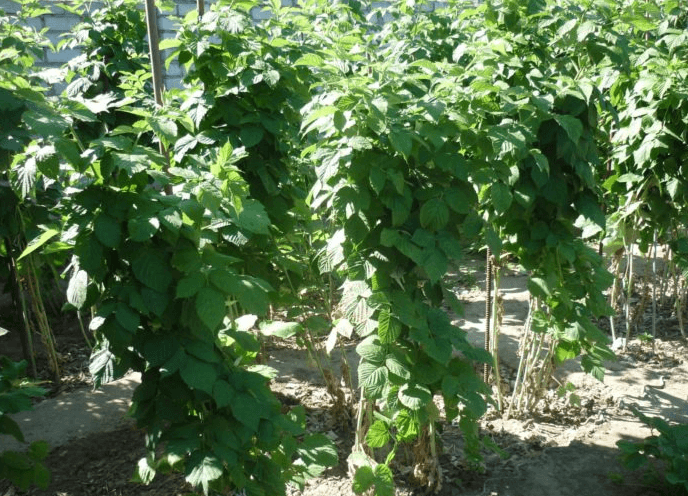
For the first four years after planting, the plant grows and produces a consistently rich harvest. In the fifth year, the bush begins to age, the shoots become woody, and the leaves and berries become small and sparse.
At this age, the plant needs to be transplanted to a new location, which will help the raspberry rejuvenate.
A year after the procedure, fruiting will be fully restored. To avoid fruit shortages, the bushes can be transplanted in sections.
Regularity of changing place
Subsequent raspberry replantings are carried out similarly, with a five-year interval. The growing season in one location can be extended by 1-2 years, but should not be extended beyond that. Even under ideal conditions, with fertilizing and careful care, the bush should be replanted after 9-10 years.

When is it worth replanting?
The time of year suitable for transplanting raspberries is recommended to be chosen based on the growing region:
- In the middle zone, the procedure is best carried out in April or August-September.
- In the northern regions, raspberries should be replanted in May or at the end of August.
- In the south, it is preferable to move plants to a new site in March or between mid-September and mid-October.
Spring terms
To properly transplant raspberry bushes in the spring, you need to wait for the right time. The procedure can begin after:
- the soil will warm up;
- night frosts will stop;
- The buds have begun to grow, but the leaves have not yet begun to grow.
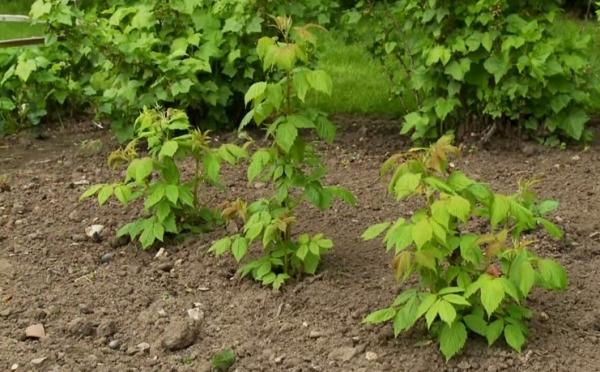
If you transplant a pre-prepared bush with a developed root system, you can get a harvest in the same year.
In summer
Raspberry transplants can be done not only at the beginning and end of the growing season, but also during the summer months. It's recommended to transplant in June on a cloudy day when the air temperature doesn't exceed 22°C. Ideally, this should be done early in the morning or late in the evening, when the cool night air allows the plants to adapt to the new conditions.
Transplanting bushes in August is suitable for northern latitudes, as the air temperature begins to drop and the weather becomes less aggressive and does not threaten to damage the plants.
Relocating raspberry bushes in July is the least ideal option, as the bright sun can quickly dry out the roots of the seedlings, and water will quickly evaporate from the soil. If transplanting during this period is necessary, the raspberries must be shaded for at least 7-10 days.
In the fall
The gentlest period for replanting raspberries begins in the first month of autumn, when the berries have already been harvested and the plants are preparing for dormancy. The shoots are pruned and secured to a trellis after planting. When planting in September, the area around the trunk should be mulched with straw, sawdust, or peat. This will help protect the roots from drying out and freezing during the adaptation period.
Preparation
The procedure for transplanting raspberry bushes begins with preparatory work:
- identification of a new growing site;
- digging planting holes;
- application of fertilizers;
- selection of planting material.
Selecting a site
When choosing a site for planting raspberries, it is necessary to consider the following criteria:
- good lighting, light partial shade;
- protection from blowing wind;
- no drafts;
- groundwater no higher than 1.5 m to the surface.
Forming a planting hole
There are two ways to plant raspberries: in trenches or in holes. For the first method, strip trenches are dug parallel to each other. The width of such a hole is 0.4 m, and the depth is quite shallow – about 0.3 m. Seedlings are placed in the trench at a distance of 0.5-0.6 m from each other. The row spacing should be kept at 0.6 m to allow the shoots to grow without crowding the bushes.

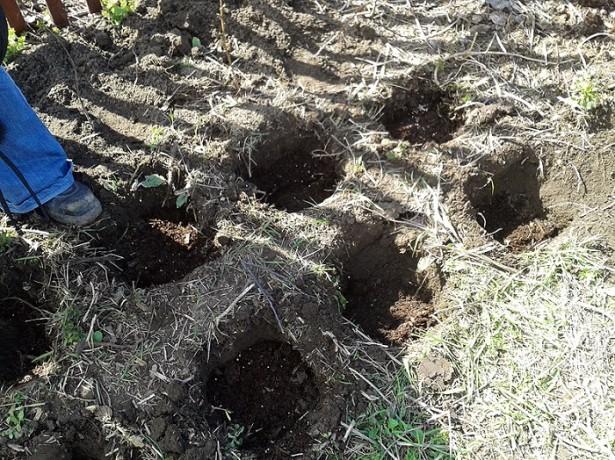
The pit method involves planting bushes in individual holes 0.3 m in diameter and depth. Plants are spaced no closer than 1.5-2 m apart.
What to add to the hole before planting
After digging planting holes of any type, the following are placed on the bottom:
- sawdust or crushed tree bark;
- humus or compost;
- ash, superphosphate or potassium sulfate;
- some soil mixture.
In spring, nitrogen compounds can be added to the holes, and in autumn, potassium-phosphorus compounds.
Preparing the bushes: pruning and digging
Before transplanting, raspberries should be pruned to a height of 0.4-0.6 m, removing damaged, dry, and crooked shoots. The central stem should be at least 1 cm in diameter, indicating a well-developed root system. When replanting in the fall, you can completely remove the leaves from the shoots.
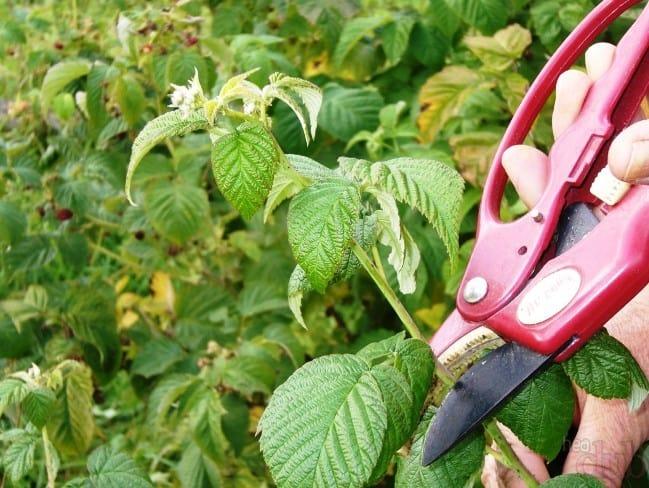
Raspberry bushes are dug out in a circle at a distance of approximately 0.3 m from the main shoot. The root ball should be preserved so that it can be moved along with the root ball to the new location.
Step-by-step instructions for replanting raspberries
To transplant a crop correctly, you need to follow the procedure precisely:
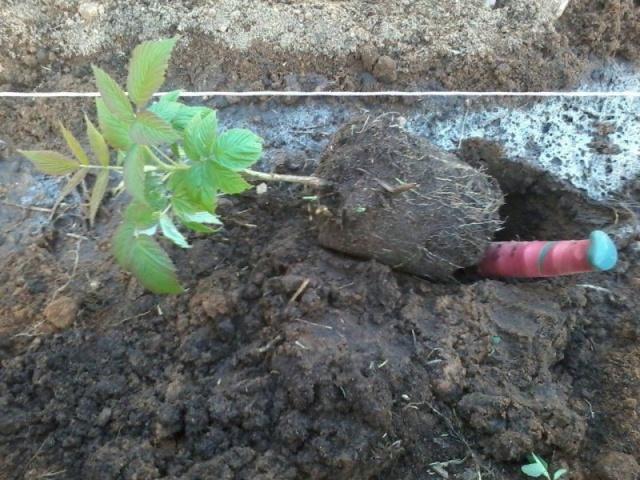
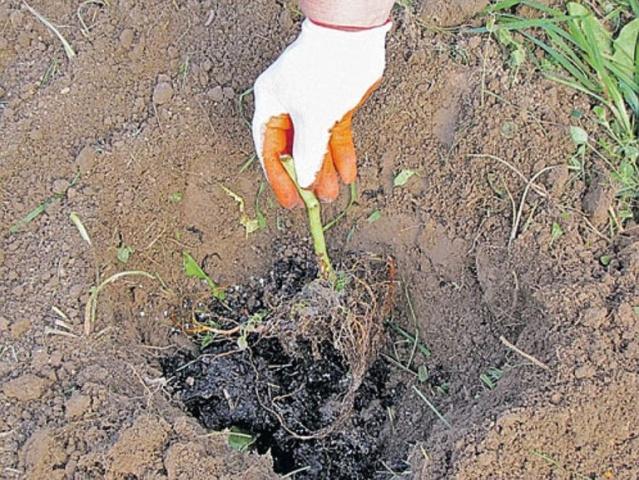
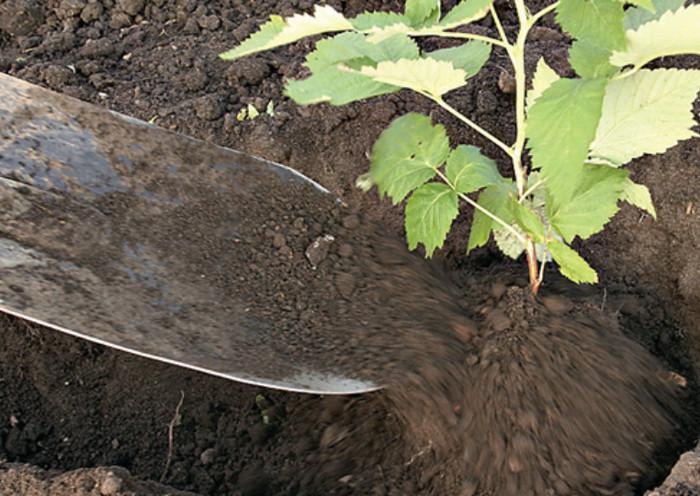
- Place the bush in the planting hole, straightening the roots if necessary.
- Cover with soil, deepening the root collar by no more than 2-3 cm.
- Lightly compact the soil.
- Water the raspberries with warm water at a rate of 5 liters per plant.
- After the soil has settled, repeat watering.
- Mulch the root circle.
Nuances
There are some peculiarities when transplanting raspberries regarding:
- root shoots;
- old plants;
- fruit-bearing bushes;
- flowering shoots;
- remontant varieties.
Transplanting root shoots or suckers
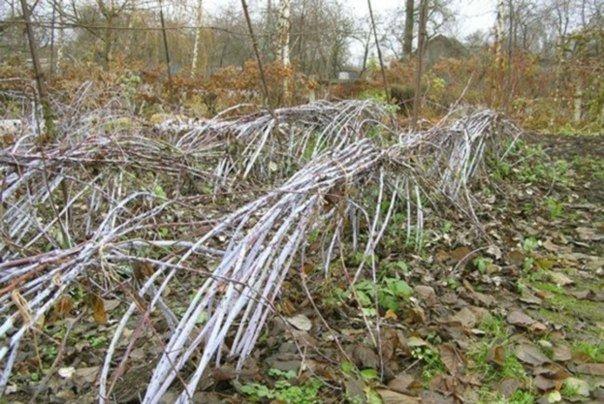
As raspberry bushes grow, they produce shoots called side shoots, which emerge from horizontal branches of the root system. These side shoots are transplanted in the spring as is or in the fall, after being pruned to 0.2 m. Transplanting of shoots is carried out according to the same rules, but after the procedure the shoots need to be shaded for 7-8 days with a cloth that should not be black..
Transplanting an old mature bush and dividing it
A large perennial raspberry bush can be replanted by dividing it into several sections. The old bush should be completely removed from the soil for replanting, digging around the circumference. The plant is divided into seedlings using sharp pruning shears, preserving two or three shoots and a portion of the rhizome.
Take a look Also

Fruiting raspberries
If there are serious problems with the soil, diseases, or pests, it may be necessary to replant the raspberries along with the berries. To do this, select strong, one-year-old shoots that have completed their fruiting period. There are no other special considerations for replanting; the procedure is standard.
Transplanting flowering raspberries
Raspberry bushes should not be replanted during flowering. The shoots do not have time to gain strength for growth, and the survival rate of the seedlings is significantly reduced. Replanting should be completed before bud break or postponed until autumn.
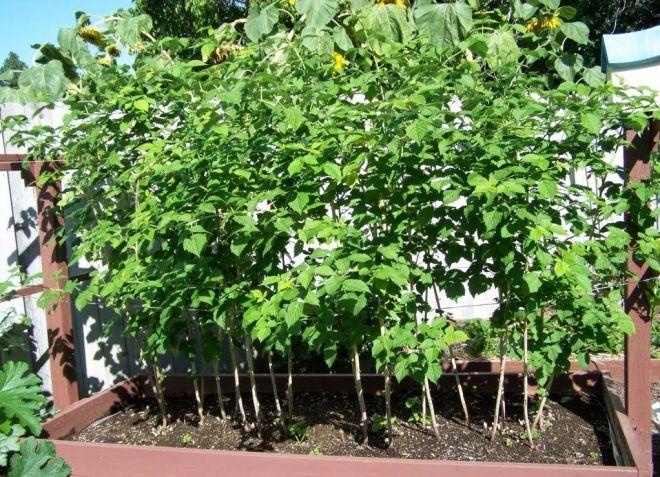
We are replanting a remontant variety
For replanting everbearing raspberries, either the pit or bush method is used. Planting scheme options:
- 0.8 m between plants, 1.5 m between rows;
- at the corners of squares with sides of 1-1.5 m;
- an isosceles triangle with a side of 0.45 m;
- in groups of 2-3 bushes at a distance of about 0.65 m from each other.
How to care after
After replanting garden raspberries, the bushes need to be provided with proper care:
- Moisten the tree trunk circle as it dries out.
- After 3 weeks, you can add fertilizer, for example, a solution of "Kornevin".
- If necessary, secure the shoots to the support.
- In the fall, prepare the bushes for winter.
- In spring, prune, fertilize and treat against infections and pests.
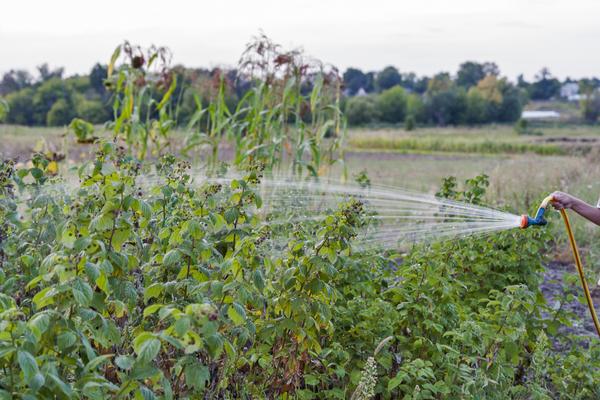
In the first week after transplanting, raspberries can be protected from the sun by constructing a cover made of light fabric.
Tips and advice from experienced gardeners
From the experience of gardeners with many years of experience, several useful tips can be drawn:
- In the Moscow region, it is best to transplant raspberries in early autumn, and in the south - at the end of October.
- It is recommended to replace abundant and rare watering of berry bushes with more frequent and moderate watering.
- In lowlands and marshy lands, raspberry bushes rot and do not bear fruit.
- It is best to plant in rows from north to south.
- Climbing varieties with creeping shoots need to be secured to trellises.
By learning the specifics of raspberry replanting technology and its secrets, even a novice gardener can properly rejuvenate their bushes and reap a bountiful harvest of berries for decades to come.
Related posts:
 Step-by-step instructions for planting and caring for raspberries in summer, tips from gardeners
 How to treat raspberries against pests during fruiting and flowering
 Description and characteristics of the Hussar raspberry variety, care and cultivation
 Description of the remontant raspberry variety Atlant, planting technology and care
 Description of the Polka raspberry variety, yield, planting and care
 Description and characteristics of the Solnyshko raspberry variety, planting and care
 Description and varieties of the everbearing raspberry variety Penguin, planting and care
 Description of the remontant raspberry variety Orange Miracle, planting and care