
Everbearing raspberry varieties are popular because they yield multiple crops, but propagation can sometimes be challenging. The basic principles are the same as for regular raspberries, but there are a few nuances that, if understood, can make success easier. If you follow the proper technique, everbearing raspberries will reward you with a bountiful harvest of delicious berries the year they are replanted.
Timing of preparation of planting material
Planting material is harvested at different times. This is because root buds form and awaken, and shoots emerge at different times. Green cuttings should be taken in late spring or early summer. The first shoots formed from the earliest large buds will yield the best results.
In early spring or autumn, the central part of a two-year-old bush, 10 centimeters in diameter, is removed. This promotes the development of root suckers, which usually form in small quantities in remontant raspberries.
Stem cuttings are harvested in the fall. This process can be combined with pruning the bushes for the winter. Root cuttings from the mother bush can also be obtained after fruiting has finished.
Methods of growing remontant raspberries
Everbearing raspberries are propagated in a variety of ways: by seeds, layering, stem cuttings, root cuttings from the mother plant, division, rooting of hardwood cuttings, green cuttings, and nettles. Each method has its own advantages.
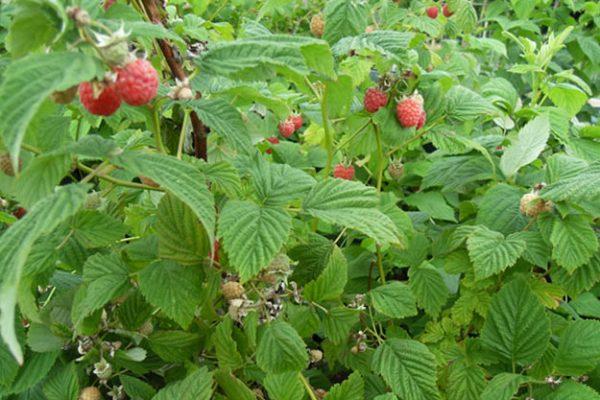
Seeds
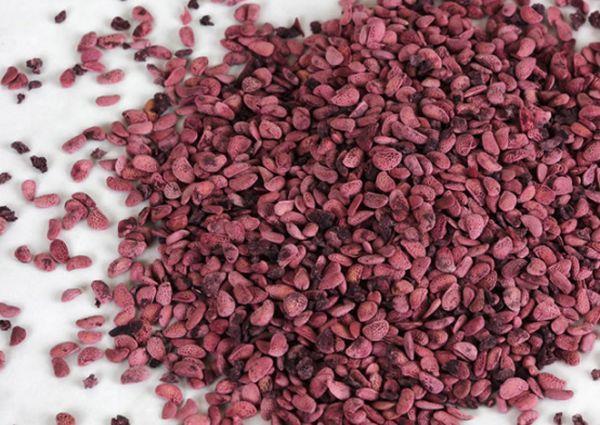
Propagating by seed is a rather laborious method. If all stages of seed collection, preparation, and processing are performed correctly, 100% germination can be achieved. First, the seed must be properly prepared. For this, select plantings of the most valuable varieties. Seeds are taken from large berries that ripen early.
The fruits are placed in fabric bags made of nylon, in which the berries are crushed, after which the pulp is washed under running water.
The resulting seeds are dried in the same bags and stored in the refrigerator. If kept at a temperature of 1 to 3 degrees above zero, they will remain viable for several years.
Before planting, the seeds are prepared: first, they are soaked in room-temperature water for 5 days, changing the water daily. Then, they are placed in damp sawdust and refrigerated for 2 months. During this time, the seedlings remain in nylon bags.

This process of holding seeds at a specific temperature is called stratification and promotes accelerated germination. The next stage of pre-sowing preparation is called scarification and involves breaking down the hard outer seed coat, facilitating germination. Scarification is performed mechanically or chemically.
For mechanical scarification, pre-washed and dried seeds are rubbed with fine sandpaper for 10 minutes. For chemical scarification, seeds are soaked for 4 days in a 1% bleach solution and 0.5% calcium hydroxide solution, then rinsed in clean water and sown.
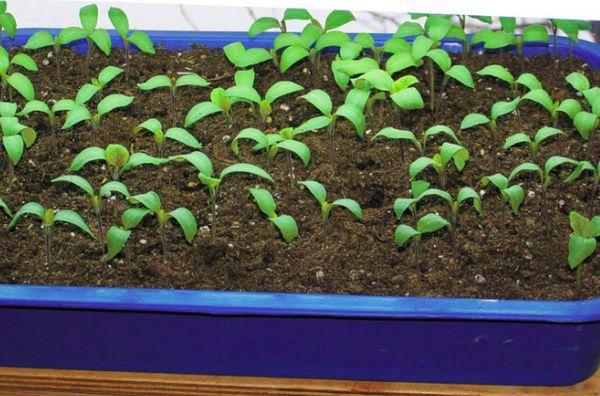
The seeds are sown at a depth of half a centimeter and the soil is regularly moistened. The seedlings are transplanted to a larger area after the third leaf appears, and after a year, to a permanent location.
Horizontal layering
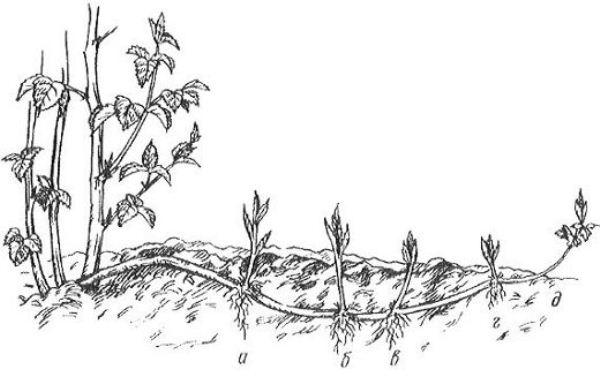
The essence of the horizontal layering method for raspberry propagation is that one-year-old shoots are bent horizontally, dug in, and rooted. If this procedure is performed in the spring, the fall yields ready-made seedlings with a formed above-ground part and a developed root system.
For propagation, select overwintered, strong, one-year-old shoots that are flexible enough to withstand the slope toward the soil. It's best to layer from the shady, north-facing side of the bush, as the soil on the south side will dry out in the sun, which will negatively impact root formation.
The shoot is placed in a pre-dug trench up to 15 cm deep, pinned with wire, and covered with mulch. The top, approximately 20 cm long, should remain above the soil surface; it's best to keep the top upright by tying it to a stake. The soil above the buried shoot should remain moist throughout the rooting process.
Stem cuttings
Stem cuttings are sections of woody stem 30-40 cm long. They are harvested in the fall, trimming the cuttings so that at least three well-developed buds remain.
Throughout the winter, the planting material is stored in a box with wet sawdust, after removing all the leaves, and is rooted in the spring.
There are several ways to root the cuttings: by placing them in a jar of water or by planting them directly in the garden. It's important to note that, statistically, only a quarter of raspberry plants grown this way survive, so it's best to prepare an excess of cuttings.
Root cuttings from the mother plant
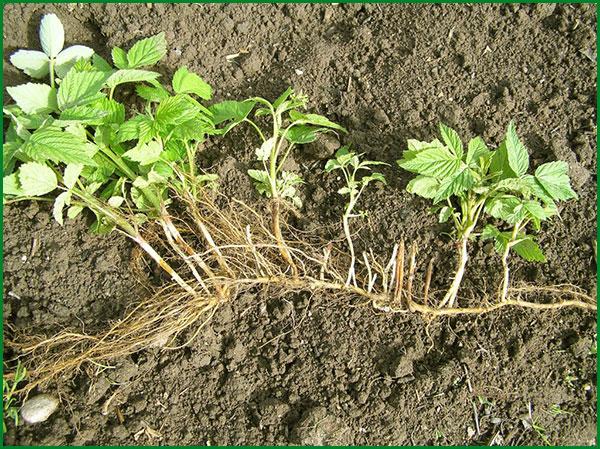
To propagate everbearing raspberries using root cuttings, carefully dig up the fruiting bush in the fall and remove sections of the rhizome at least 3 mm thick. The cuttings are then overwintered buried in plastic containers, which are then placed in a cellar.
In the spring, the pots are brought into a warm place. After sprouts appear, the root cuttings are planted in a permanent location, weather permitting. The seedlings will be ready by fall.
Dividing the bush
Dividing the bush is not often used for everbearing raspberries, as there is a risk of losing the entire mother plant. To propagate this way, dig up the bush in the spring and carefully separate it into several pieces by hand, separating the root system with a sharp knife.
Each resulting seedling should have several stems and strong, healthy roots. Immediately after division, the bushes are planted in pre-prepared, fertilized holes.
Rooting by woody cuttings
This method is called the fall-spring method because the cuttings are harvested in the fall and planted in the spring. To propagate everbearing raspberries using woody cuttings, after the first autumn frosts, separate one-year-old shoots as follows:
- the length should be approximately 30 cm;
- the top cut is straight;
- The lower cut is made at an angle of 45 degrees.
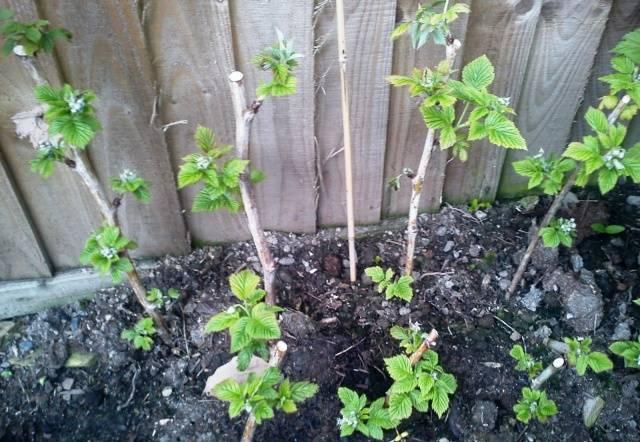
In winter, planting material is stored in damp sand at a temperature of 1-2 degrees above zero, either in a cellar or on the bottom shelf of a refrigerator. In the spring, the cuttings are placed in water to root, after renewing the cut surface and treating them with Kornevin. The cuttings will develop roots in about a month, after which they can be planted in the ground.
Green cuttings
Green shoots with a white underground part, also known as the etiolated zone, are suitable for propagation by cuttings. Suitable cuttings are trimmed with a sharp knife or carefully broken off, and the cut surface is sprinkled with charcoal to prevent rot. Avoid placing the cuttings in water, as the liquid will wash away the nutrients. It's best to perform the operation in the morning, so the shoots retain the maximum amount of moisture.
Prepared cuttings should be rooted in a hotbed or greenhouse, planted in loose soil at the same depth from which they were removed. Space the cuttings 5 cm apart, and the rows 10 cm apart. No fertilizer is needed before planting.
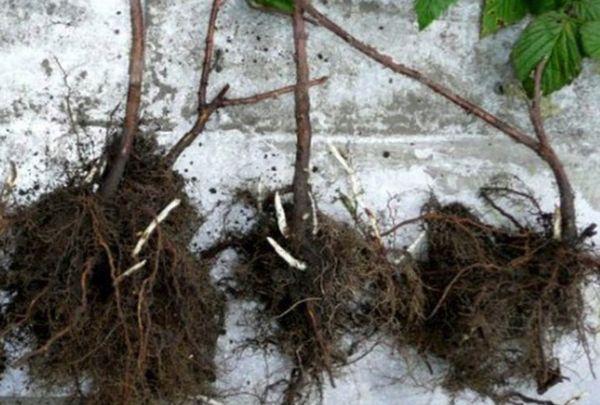
In three weeks, under favorable conditions, the cuttings will root. After this, they are planted 10 cm apart, with a 30 cm gap between rows.
The "nettle" method of propagation
"Nettle" refers to shoots that have not yet begun to grow, but have only just formed a rosette of leaves no more than 5 centimeters high. The color of the above-ground part may not yet be green, but rather reddish or brownish.
The advantage of such young shoots is that they have a sufficient supply of nutrients, grow well, and quickly form a developed root system.
Like tall green cuttings, "nettle" is carefully separated along with the white, etiolated underground portion, the cut is sprinkled with charcoal, and planted in loose soil. The seedlings are covered with plastic to retain moisture and shaded from the bright sun. Seedlings planted this way in the spring will produce a harvest as early as the fall.
Tips and advice from experienced gardeners
When propagating everbearing raspberries, it's important to consider the experience of gardeners who have been cultivating these varieties for years. A good harvest from newly planted bushes can be achieved by following these guidelines for selecting a site for planting young plants and other cultivation considerations:
- Everbearing raspberries prefer light soils.
- Groundwater in a raspberry patch should not come close to the surface; it is best when its depth is at least a meter.
- The beds with bushes must be provided with sufficient sunlight.
- When planting, the root collar is placed at soil level.
- In raspberry patches, the distance between rows is from one and a half to two meters, the distance between bushes is from 70 to 90 cm.
- If cuttings of different varieties are stored in the cellar for the winter, it is convenient to attach a tag with the name to each one.
- If it is necessary to store planting material in wet sand during the winter, the substance should be periodically sprayed with water to prevent it from drying out.
Everbearing raspberries are an excellent choice for a garden plot, as they are relatively easy to maintain, resistant to many pests and diseases, and produce a delicious, abundant harvest several times a season. New varieties can be purchased from a nursery, but if your existing planting is satisfied with its flavor and yield, it's quite easy to renovate and expand your raspberry patch yourself.
Related posts:
 Step-by-step instructions for planting and caring for raspberries in summer, tips from gardeners
 Description and characteristics of the Hussar raspberry variety, care and cultivation
 Description of the remontant raspberry variety Atlant, planting technology and care
 How to treat raspberries against pests during fruiting and flowering
 How to propagate grapes in summer using green cuttings at home
 How and when is it best to transplant raspberries to a new location in the summer?
 Description and characteristics of the Solnyshko raspberry variety, planting and care
 TOP 9 ways to quickly propagate raspberries at home