
- History of the Solnyshko raspberry breeding
- Description and characteristics
- Bush
- Berries: tasting evaluation and scope of application
- Resistance to sub-zero temperatures
- Immunity to diseases
- All the advantages and disadvantages of the variety
- Specifics of planting work
- Optimal timing
- Selecting and preparing a landing site
- Schemes and rules for planting seedlings
- Planting in holes
- Trench method
- Further care
- Watering
- Fertilizers and feeding
- Garter
- Diseases and pests: protection and prevention
- Methods of reproduction
- Gardeners' reviews of Solnyshko
The tried-and-true Solnyshko raspberry variety has earned recognition from professional gardeners and summer residents for its early ripening, large fruit, and winter hardiness. Its limited number of shoots makes it easy to care for while also preventing shortages of planting material.
History of the Solnyshko raspberry breeding
The Solnyshko raspberry was developed by I.V. Kazakov, an academician of the Russian Academy of Agricultural Sciences, through scientific experiments. The new variety was obtained by crossing the high-yielding Bulgarian Kostinbrodskaya variety with the domestically bred Novost Kuzmina variety, which is characterized by low shoot formation and a fruit tasting score of 5.
The Solnyshko raspberry was included in the State Register of Breeding Achievements in 1992. The plant is approved for cultivation in the Central and Volga-Vyatka regions, and in the North Caucasus.
Description and characteristics
When choosing a raspberry seedling, gardeners are interested in the bush's parameters, the taste and weight of the fruit, the yield, and the crop's resistance to adverse external factors.
Bush
The Solnyshko raspberry's canes, strong at the base and tapering toward the top, grow to 2–2.2 m, necessitating staking and support. Young shoots are green, developing shades of red in the fall. The canes have a moderate number of thorns, reducing the risk of injury during harvest. After fruiting, the canes dry out. The following year, new canes emerge—10–15 per square meter.
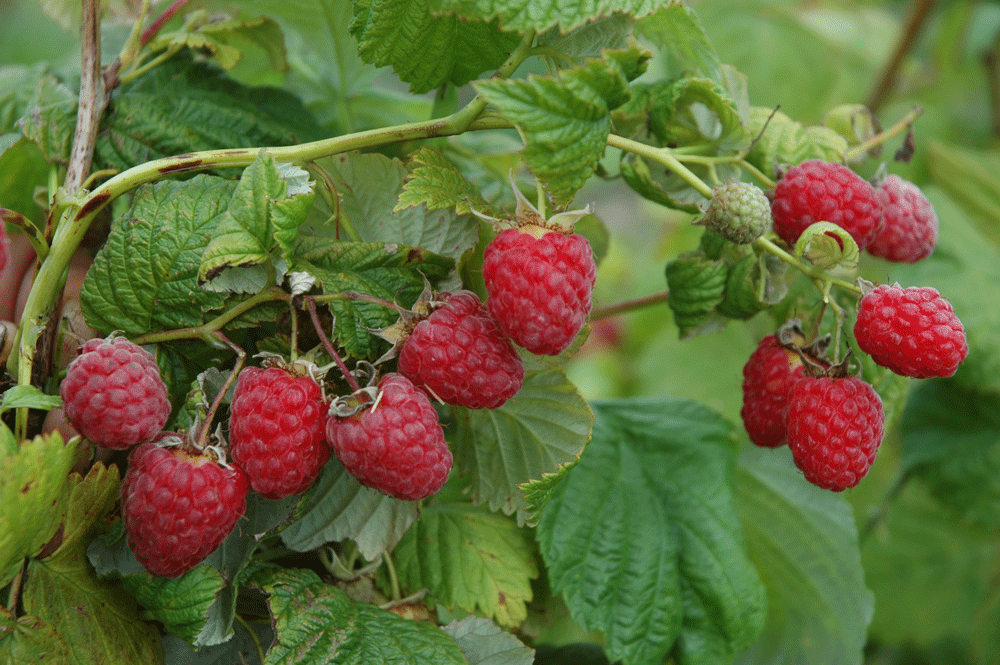
Compound leaves, consisting of five ovate leaflets, are green and matte on top and pubescent on the underside. White flowers bloom at the drooping tips of the shoots and in the axils of the leaf blades.
Solnyshko is not a remontant variety; it bears fruit once a year on two-year-old shoots in late June – early July.
It takes 5 years for the soil to recover after moving the raspberry patch to a new location after 10–15 years of continuous fruiting.
Berries: tasting evaluation and scope of application
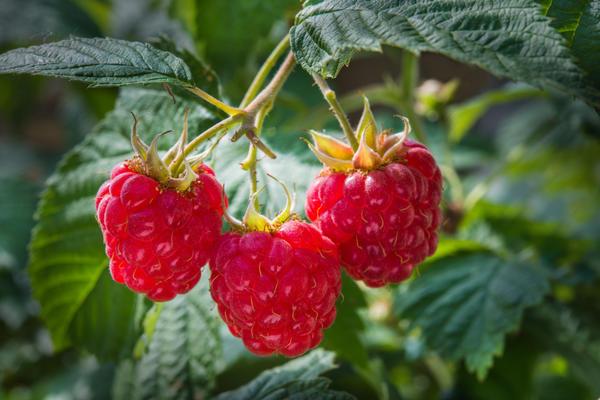
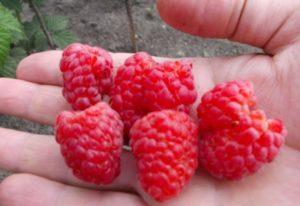
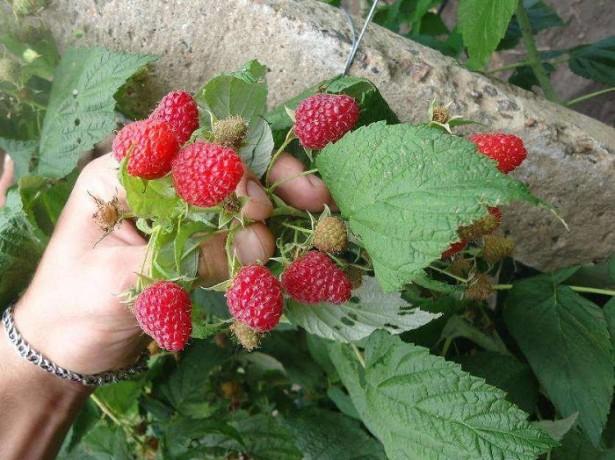
The average length of the Solnyshko raspberry is 1.7 cm, with a diameter of 1.8 cm. The raspberry-colored, obtuse-conical berries weigh 3–5 g. Despite the delicate flesh, the fruits tolerate short-distance transportation in small containers without leaking juice. The tasting panel rated the Solnyshko raspberry berries at 4.3 points for their flesh density, sugar (8%), and organic acid (1.5%) ratio.
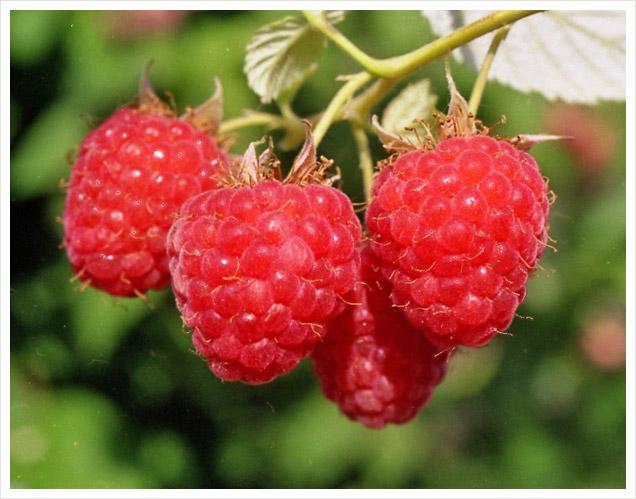
The fruits are eaten fresh, dried, frozen, and mashed with sugar. The berries are used to make juice, fruit drinks, compotes, and jams, and they are used to decorate baked goods and desserts. The fruits, leaves, and flowers of raspberries are used in folk medicine for their medicinal properties, salicylic acid content, and a wide range of vitamins and minerals.
Resistance to sub-zero temperatures
The Solnyshko raspberry variety can withstand temperatures down to -25°C without cover, even with at least 20 cm of snow cover. In harsher conditions, the crop requires winterization and insulation.
Immunity to diseases
The Solnyshko raspberry is resistant to anthracnose and rot. Raspberry mites pose no pest threat. Annual preventative treatments and adherence to agricultural practices reduce the risk of purple spot, shoot midge, and microplasma rot.
All the advantages and disadvantages of the variety
The Solnyshko raspberry inherited the best characteristics from its parents. The advantages of this variety include:
- yield 1.5 kg per bush or 85–100 c per 1 ha;
- resistance to fungal diseases, raspberry mite;
- few thorns on shoots;
- versatility of use;
- dessert taste, distinct fruit aroma;
- frost resistance;
- large-fruited;
- standard, easy care.
There are significantly fewer disadvantages. Gardeners note the following downsides:
- drought instability, dependence of crop yield on irrigation;
- weak immunity to purple spot, plasma rot, shoot gall midge;
- poor development in open areas not protected from winds.
The Solnyshko raspberry variety is easy to grow and is suitable for both experienced and novice gardeners.
Specifics of planting work
Planting involves selecting a suitable location, timing, and following a planting pattern. Proper planting is essential for the proper development of the crop, as well as the quantity and quality of the future harvest.
Optimal timing
In warm climates, it's preferable to plant Solnyshko raspberries in the fall (September–October), as an early spring will cause the bush to leaf out before it has time to properly establish roots. In temperate regions, it's recommended to plant in the spring before bud break.
Selecting and preparing a landing site
Raspberries should be planted in a level, wind-protected area with consistent daylight. The Solnyshko variety is not suited to lowlands where cold air accumulates, or to steep slopes that are free of protective snow cover in winter.
It is not recommended to plant raspberries after nightshades, strawberries, or in the aisles of the garden.
Site preparation begins with weeding. Next, a month before planting or in the fall, the soil is dug over, adding 10-30 kg of manure, compost, 50 g of potassium sulfate, and 80 g of superphosphate per square meter.
Schemes and rules for planting seedlings
Choosing a planting pattern and following the rules for Solnyshko raspberry reduces the risk of plant diseases and increases yield. The choice of method depends on the type of planting material. If planting cuttings or layering, the trench method is suitable.
When planting cuttings and grown seedlings, a pit is used. In both cases, the hole is prepared in advance.
Planting in holes
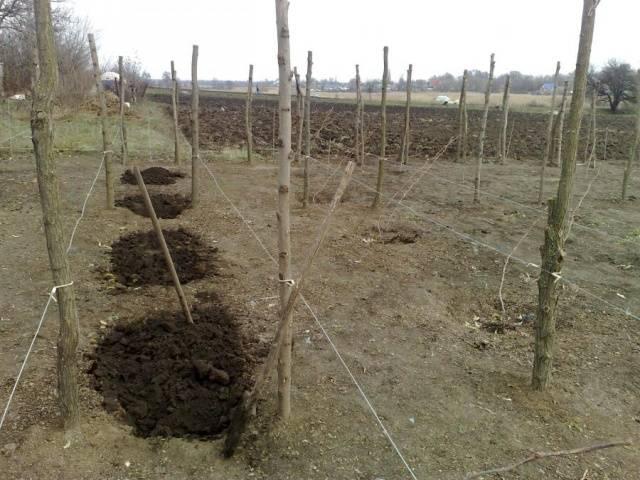
Dig holes 0.4 m deep and 0.3 m wide. Leave 80–100 cm between seedlings and 1.5–2 m between rows. If the bed was not fertilized during digging, combine the topsoil removed during hole preparation with manure and ash.
Algorithm Planting Solnyshko raspberries using the pit method;
- some of the prepared substrate is poured into the bottom of the hole;
- lower the seedling into the hole and straighten the roots horizontally;
- sprinkle with earth, water generously;
- add the remaining soil mixture and compact;
- mulch with organic matter.
 The root collar of the raspberry seedling should be level with the soil surface.

Trench method
The labor intensity of the trench method is compensated by the achieved results:
- makes pruning, mulching, and weeding between rows easier;
- uniform supply of nutrients to each raspberry bush, less dependence on fertilizers;
- guaranteed harvest.
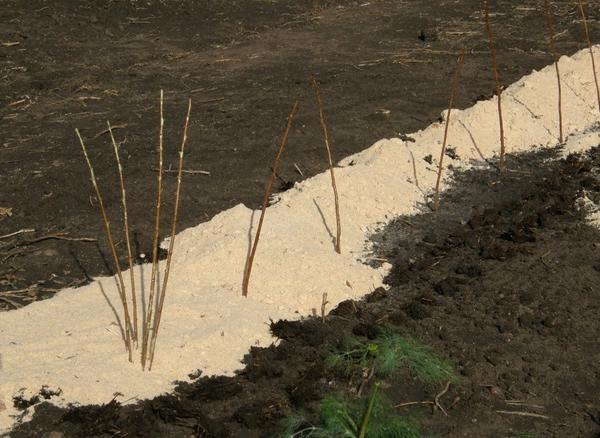
A trench is dug 0.5 m wide and 0.4 m deep, with the fertile soil layer on one side and the infertile soil on the other. To prevent any distortion, two stakes are driven into the ground on opposite sides of the future raspberry patch and a string is taut.
A nutrient-rich layer is laid in the trench. First, apply a 100g of azophoska (nitrogen fertilizer) per linear meter, followed by a 10cm layer of manure. Top this with a fertile layer of soil and leave for 2–3 weeks to settle.
Next, place the cuttings and layers at a distance of 1 m from each other, cover with garden soil, water, and mulch.
Further care
Caring for the Solnyshko raspberry variety after planting involves watering, fertilizing, and staking the bushes. Timely preventative and curative treatments against parasitic insects and diseases increase yield.
Watering
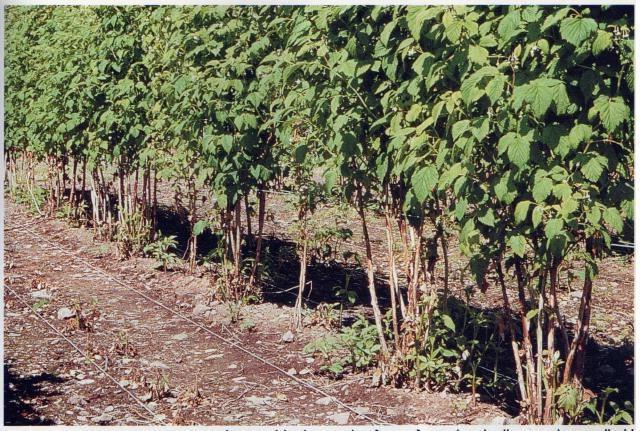
The best method for watering Solnyshko raspberries is drip irrigation. If a drip irrigation system isn't available, use furrow irrigation. The crop is particularly demanding when fruit set and ripening. Watering is determined by weather conditions and soil moisture levels. A bucket of water is poured under each bush at a time.
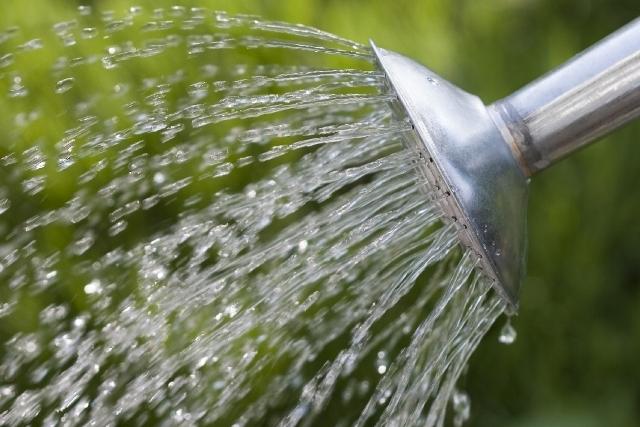
Overwatering raspberries can lead to root rot, waterlogging, and fruit falling off before they are fully ripe.
Fertilizers and feeding
The Solnyshko raspberry variety is fertilized at least three times annually. In the first half of April, the bushes are watered with a mullein infusion, ash water, or 15 grams of urea per square meter.
During the formation of ovaries, a bucket of chicken manure infusion or a solution including 10 liters of water, 1 tbsp. of potassium salt, 2 tbsp. of superphosphate is poured under each bush.
After harvesting, foliar feeding is carried out with the Kristalon mineral complex.
Garter
A popular and effective method for shoring up the Solnyshko raspberry is using a trellis. After planting, 2.5-meter-high stakes are dug in along the trenches every 3–4 meters. The first wire is stretched over the stakes parallel to the bed surface, 70–100 cm above the ground. The shoots are tied to this wire. As the berries grow, additional rows of wire are added.
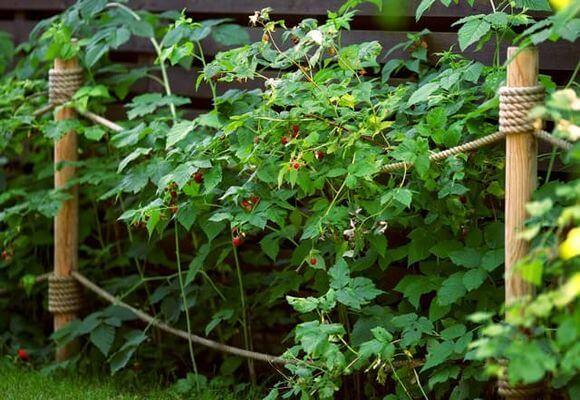
Trellis shoring prevents pests and diseases. Stems are prevented from breaking in the wind or under the weight of the harvest, and each shoot receives improved light.
Diseases and pests: protection and prevention
Diseases and pests affecting the Solnyshko raspberry variety:
- Mycoplasma (witch's broom). This disease manifests itself as thin fruit shoots with deformed flowers and a lack of ovaries. The disease persists throughout the plant's life, periodically subsiding and reappearing. The plant must be disposed of, as it can infect neighboring raspberry bushes. There is no cure for this disease.
- Purple spot. The fungus Didymella applanata attacks only weakened plants. Purple spots appear on raspberry stems where leaves attach. Bush growth is stunted, and shoots die. Disease prevention involves following proper agricultural practices, avoiding dense plantings, and overwatering. In early spring and during bud break, treat bushes with Gamair and Fitosporin.
- Shoot gall midge. The insect's larvae suck the sap, causing raspberry shoots to become brittle and eventually turn to dust. Growths appear at the base of the stems. Removing lower buds and affected shoots and opening up the growths prevents the spread of the larvae. The soil between the rows is dug twice a year and treated with malathion.
 Parsley, onions, garlic, and dill planted nearby repel insects.
Methods of reproduction
Raspberry Solnyshko is propagated by the following vegetative methods:
- By dividing the bush. In early spring, the bush is dug up and the rootstock is divided so that each division contains 2-3 shoots, which are then pruned to 20 cm. The seedlings begin to bear fruit the following year.
- Root cuttings. In the fall, dig around the bush, trim off several adventitious roots the thickness of a pencil, and divide them into 10-centimeter sections. Store the planting material in a cellar, covered with sand, until spring. In early April, plant the cuttings in their permanent location, creating greenhouse conditions by stretching plastic over the arches.
- Root layering. In late August, select a one-year-old raspberry shoot, 10 mm in diameter, growing from the root. The lower part of the shoot is pinned to the ground, after removing the leaves. The top of the shoot is tied to a support. The resulting shoots, with independent root systems, are separated from the shoot the following spring or fall.
 It is recommended to propagate raspberries by seeds for the purpose of developing new varieties, since the process of growing the crop is complex and takes 3 years.
Gardeners' reviews of Solnyshko
Most gardeners speak positively about the Solnyshko variety, noting its dessert taste, weak shoot formation, and winter hardiness.
Galina Alekseevna, 51 years old, Moscow
I like the Solnyshko raspberry because it's easy to care for. Two treatments with Bordeaux mixture are enough to protect the bushes from diseases. I prune it in the spring, removing old shoots, and in the fall, I add compost. Even with this minimal care, the plant bears fruit every year.
Timofey Petrovich, 68 years old, Kyiv
Since late June, my grandchildren have been enjoying fresh Solnyshko raspberries. The fruits are sweet, aromatic, and easy to remove from the stem. They hold their shape well and don't run, surviving the distance from the dacha to the house. The yield is good, and some is left over for jam.
Gleb Matveevich, 72 years old, Kursk
The Solnyshko raspberry is a delight in every way. The bush grows up to 2 meters tall and spreads almost completely. It has few thorns, making harvesting easy. It tolerates winters very well. The only drawback is the need for frequent watering. Drought immediately affects the yield.
Related posts:
 Description and characteristics of the Hussar raspberry variety, care and cultivation
 Description of the Solnyshko apple tree variety, planting and care instructions
 Step-by-step instructions for planting and caring for raspberries in summer, tips from gardeners
 Description of the Polka raspberry variety, yield, planting and care
 Description of the remontant raspberry variety Atlant, planting technology and care
 How to treat raspberries against pests during fruiting and flowering
 Description and varieties of the everbearing raspberry variety Penguin, planting and care
 Description of the remontant raspberry variety Orange Miracle, planting and care