
- History of selection
- Varieties of the variety: description and comparative characteristics
- King Penguin
- Yellow Penguin
- Description
- Productivity and fruiting
- Application of fruits
- Resistance to low temperatures and drought
- Immunity to diseases and pests
- Pros and cons
- Growing specifics
- Preparing the site and seedlings
- Planting dates and scheme
- Favorable and unfavorable neighbors
- Watering and fertilizing bushes
- Loosening and mulching the soil
- Pruning and shaping the plant
- Shelter for the winter
- Seasonal treatment against insects and pests
- Methods of reproduction
- Reviews of the variety
The Penguin everbearing raspberry variety is unique not only for its flavor and long fruiting period, but also for its standard bush type, which is unusual for a berry crop. This fruit crop has gained great popularity among gardeners and farmers due to its low maintenance, immunity to most fungal and viral diseases, and the ease of harvesting from standard bushes. This hybrid berry variety is recommended for cultivation in both private gardens and industrial scale production.
History of selection
The new raspberry variety was developed by renowned Russian scientist and breeder Ivan Vasilyevich Kazakov, a pioneer in the development of everbearing berry crops. A team of scientists led by Kazakov began working on the Penguin variety in 2006, and three years later, the new fruit crop was included in the state register. The new raspberry received its name due to its standard-type bush.
Varieties of the variety: description and comparative characteristics
The standard remontant raspberry variety Penguin has the following characteristics:
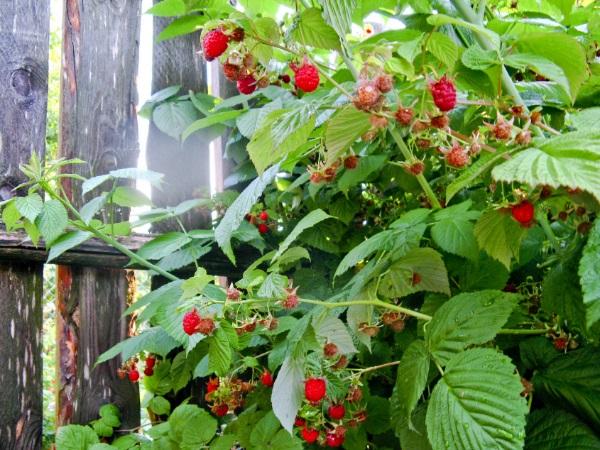
- The bush is compact, depending on the variety, it grows from 1.3 to 1.8 m.
- One-year-old shoots are bright green in color with a waxy sheen and coating.
- Perennial branches are brown, with green or reddish thorns.
- The leaf blades are large, slightly corrugated, hairy, and green in color.
- On each shoot, inflorescences are formed in the form of a brush, blooming with white flowers.
- After flowering, berries appear, with 8 to 10 ovaries forming in each cluster.
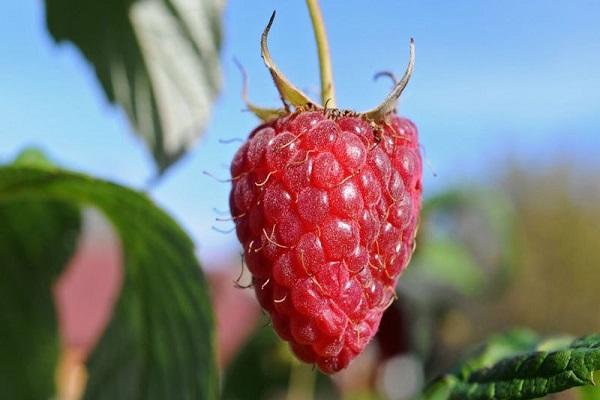
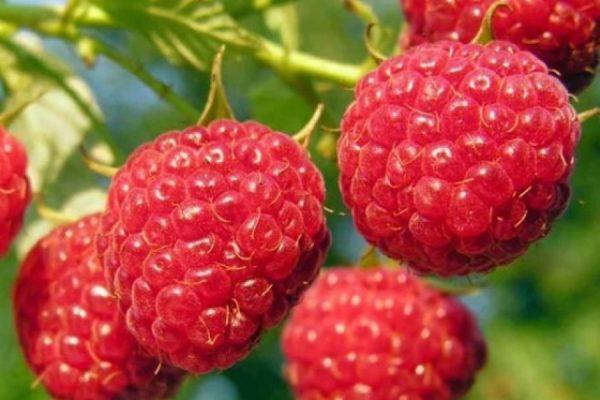
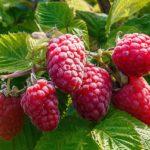
- Ripe fruits are large, up to 7 g, with dense, juicy pulp and a sweet and sour dessert taste.
Note: The standard bush grows with thick, strong stems that don't bend under the weight of ripe berries; the Penguin raspberry variety doesn't require any support structures.
The developers of the remontant standard raspberry variety did not abandon their work and created several varieties of the berry crop.
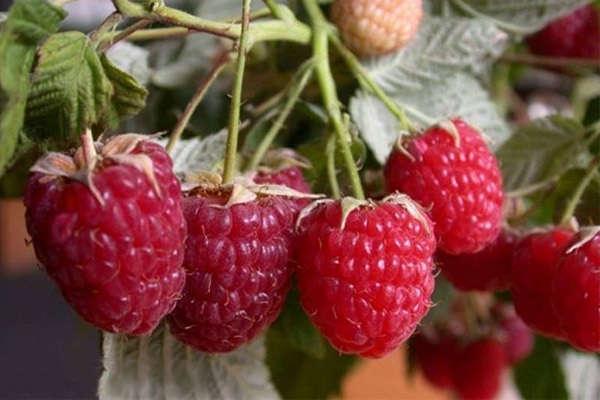
King Penguin
King Penguin bushes are standard, growing up to 1.8 m. Strong, sturdy stems don't bend under the large berries, so the plant requires no additional support. This variety produces few shoots during the growing season, making propagation difficult but easy to care for. The berries are large, up to 10 g, bright red, with juicy, firm flesh, a rich raspberry aroma, and a sweet and sour flavor. A single bush yields 5 to 8 kg of ripe berries.
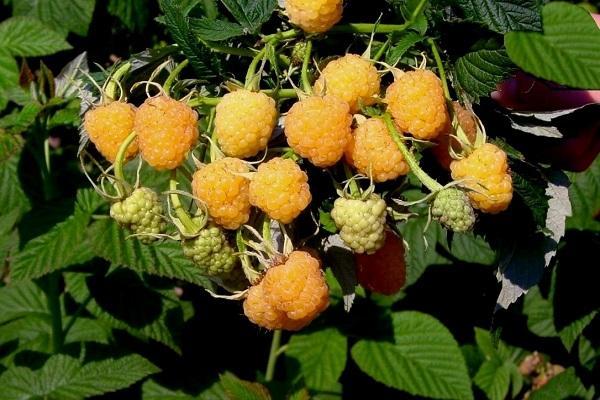
Yellow Penguin
Standard bushes of the Yellow Penguin variety grow up to 1.5 meters tall, with thick, sturdy stems. During the growing season, 3 to 5 shoots are formed. The berries are large, up to 8 grams each, bright yellow, with dense, juicy flesh and a sweet and sour taste. With proper and timely care, a single raspberry bush can yield 4 to 6 kg of fruit.
Description
The main characteristics of berry crops that interest gardeners and farmers are yield, resistance to climatic conditions, and susceptibility of raspberries to diseases and pests.
Productivity and fruiting
To grow the everbearing Penguin raspberry, I use several methods for cultivating the berry bush.
If all stems and shoots are cut back to the roots in the fall, the berries ripen from mid-July to October.
When overwintering unpruned raspberries, the first flush of harvest is collected in late spring, and the second in early fall. In this case, the flavor and size of the berries are significantly reduced during the fall fruiting period.
The Penguin raspberry is considered a high-yielding variety. Under favorable weather conditions and with proper care, a single bush can yield up to 4 kg of juicy, ripe fruit.
Important! Everbearing raspberries produce fruit over a long period, with berries harvested every 2-3 days.
Application of fruits
According to experts, the Penguin raspberry is considered a versatile dessert variety. The berries are recommended for fresh consumption. They can also be frozen, dried, and used to make compotes, jams, preserves, juices, and nectars. In cooking, the fruits are used in baked goods, desserts, dairy products, and marmalade.
Raspberry berries and leaves contain many useful substances and vitamins and are used in traditional and official medicine and cosmetology.
Resistance to low temperatures and drought
Penguin raspberry varieties easily cope with short-term drought. A prolonged lack of watering negatively impacts the yield and flavor of the berries.
But the plant shows increased resistance to frost.
Yellow Penguin and Penguin can easily survive winter temperatures down to -25 degrees Celsius, while the Royal raspberry variety can withstand temperatures down to -35 degrees Celsius.
Tip! When growing everbearing plants in northern climates, prune the bushes back to the ground in the fall.
Immunity to diseases and pests
A plant's immunity depends on its cultivation method. If all stems and shoots are pruned in the fall, the fruit crop is protected from fungal and viral diseases and pests.
If shoots and stems remain on the plant, the bushes require spring preventative treatment.
Pros and cons
Before planting the Penguin remontant raspberry variety, it is necessary to determine all the possible advantages and disadvantages of the berry crop.
Advantages:
- Stable immunity to diseases and pests.
- Berry bushes easily tolerate frost and temperature changes.
- Ripe berries have a long shelf life, which allows the fruit to be transported over long distances.
- Standard bushes have excellent decorative properties and decorate the garden plot.
- The variety has proven itself to be high-yielding.
- Large, universally usable berries.
Standard bushes produce little shoots and do not require additional support.
The variety's disadvantages include thorny spines on the stems and its demanding soil composition and fertilizing requirements.
Growing specifics
Growing everbearing raspberries doesn't require any special knowledge; the main thing is to purchase healthy seedlings, choose a sunny spot, and prepare fertile soil.
Preparing the site and seedlings
When purchasing planting material, carefully inspect the rhizome and the appearance of the plant for damage and disease.
Raspberry bushes should be planted in dry, well-lit, and draft-free areas at slightly elevated elevations. In low-lying areas or waterlogged soil, the plants fail to thrive and become diseased, eventually dying.
- The selected area is dug up, cleared of weeds, and the soil is loosened.
- The soil is mixed with humus, organic matter and mineral substances.
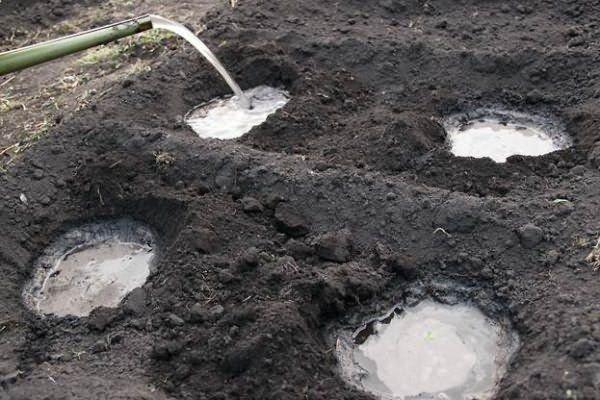
- 2-3 weeks before planting, holes are dug in the prepared area.
- The depth and width of the holes are 50 cm, the distance between plantings is 80 cm, between rows from 1 to 1.5 m.
- I put a drainage layer at the bottom of the hole, add fertile soil on top and water it.
- Before planting in open ground, seedlings are placed in a container with water for 5-8 hours and treated with antibacterial agents and a growth stimulant.
Important! If groundwater levels are close to the site, create additional mounds or relocate the berry planting site.
Planting dates and scheme
The timing of planting raspberries in open ground depends on the climatic characteristics of the region.
In southern latitudes and regions with a temperate climate, bushes are planted in the fall, 4-6 weeks before the first frost.
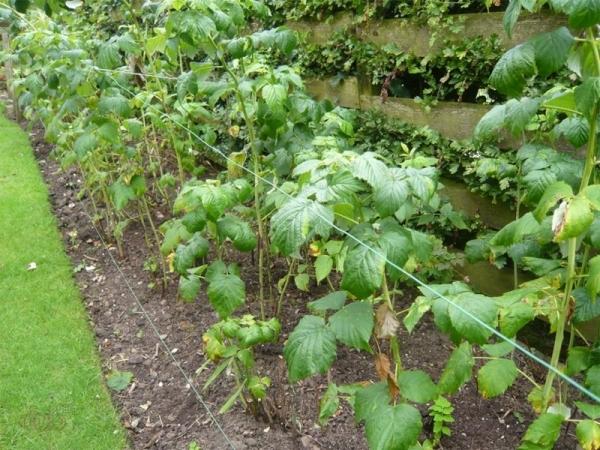
In cold climates, planting work is planned for spring.
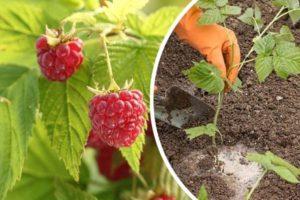
- The seedling is placed into the prepared holes at a slight angle.
- The roots are evenly distributed throughout the hole and covered with fertile soil, trying not to leave voids between the roots and the soil.
- The soil under the seedling is compacted and watered with settled water.
- Plants are cut to the 7 cm mark.
Tip! After planting raspberries, mulch the area around the trunk with humus or dry grass.
Favorable and unfavorable neighbors
To grow healthy and productive raspberries, it is necessary to follow crop rotation rules.
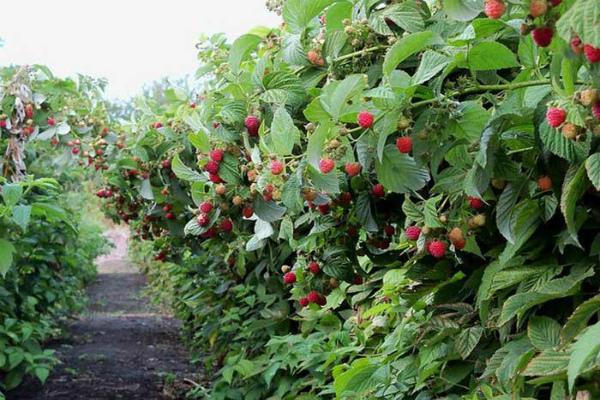
It's not recommended to plant berry bushes after potatoes, eggplants, nightshade plants, and tomatoes. Vegetable crops are often susceptible to the same diseases as raspberries, and the soil may become contaminated after planting.
Onions, garlic, bulbous flowers, garden strawberries, and any legumes are planted near raspberries. The soil, enriched with vitamins and nutrients, remains after planting cereals, beans, and peas.
Watering and fertilizing bushes
Water the Penguin everbearing raspberry whenever the soil dries out. Severe waterlogging causes the plant's roots to rot, while prolonged drought affects the yield and flavor of the berries. The period of fruit set and ripening is crucial. During this time, the berry bushes require additional moisture.
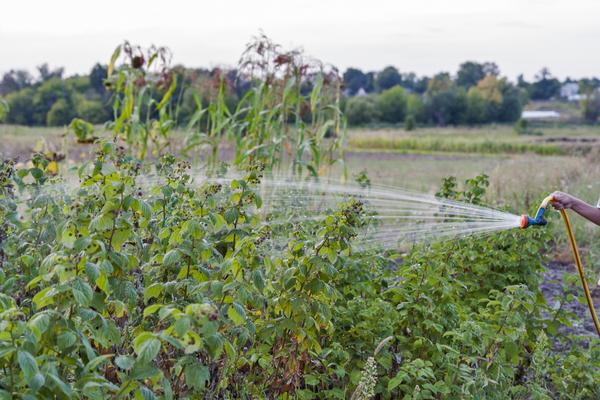
Due to their abundant fruiting, raspberries require additional fertilizer and supplemental feeding. In early spring and before flowering, the bushes are fed with mineral fertilizers. In late fall, humus and cow or poultry manure diluted with water are added to the soil.
Loosening and mulching the soil
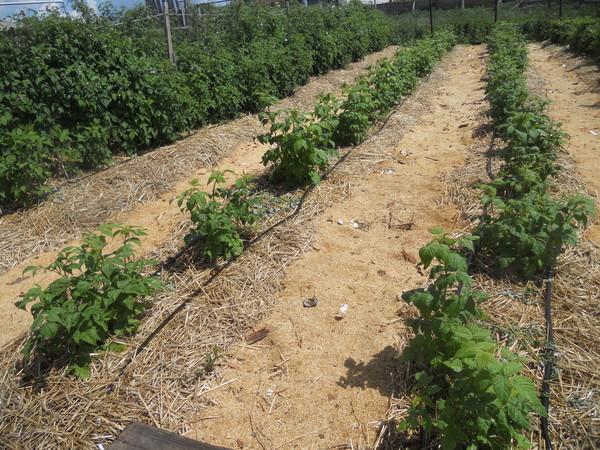
Weeding and loosening the soil are timed to coincide with watering. Loosening the soil helps oxygenate the soil and plant roots, while removing weeds reduces the risk of spreading diseases and pests. Mulching the soil reduces the frequency of watering. Mulch helps retain soil moisture for a long time and prevents weed growth.
Pruning and shaping the plant
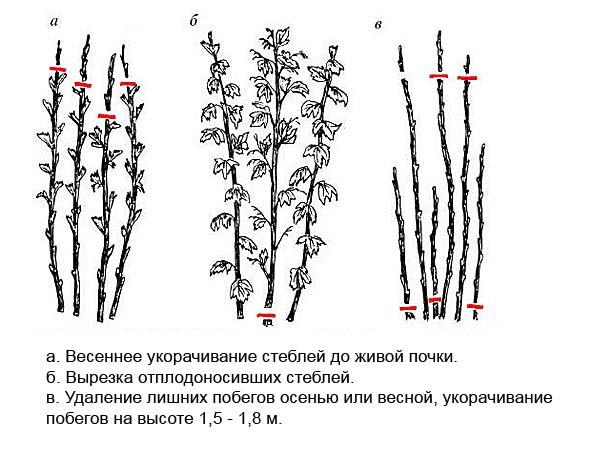
In early spring, sanitary pruning of the bushes is carried out, removing all broken, frozen, dried and damaged stems and shoots.
Autumn pruning of raspberries is carried out after the harvest.
Depending on the chosen method of growing the berry crop and the growing region, fruiting branches are removed from the bushes, leaving only 10-12 cm of young shoots. In cold winters, all stems and shoots are removed at the root.
Shelter for the winter
With the onset of autumn, the raspberry patch is watered generously, and the trunk circle is mulched with a thick layer of humus or peat mixed with sawdust.
Berry bushes trimmed to the roots are covered with mulch or spruce branches, and after the first snowfall, snowdrifts are created. If shoots are left over the winter, they are bent to the ground, carefully secured, and covered with spruce branches, burlap, or special materials. When snow appears, high snowdrifts are raked over the bushes.
Seasonal treatment against insects and pests
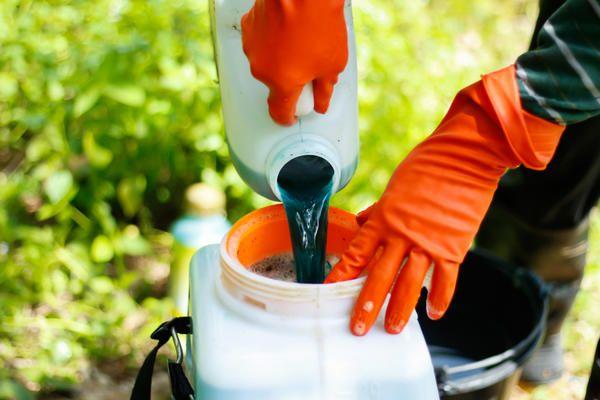
The Penguin raspberry has strong resistance to diseases and pests. However, if unpruned shoots overwinter, the plant can be attacked by fungi and pests. As a preventative measure, I treat the fruit with specially formulated solutions or professional products in early spring before the growing season begins.
Methods of reproduction
The everbearing Penguin raspberry is propagated by cuttings. To do this, cut a strong, healthy shoot from a mature plant and divide it into several equal sections, 15 to 20 cm long. Each cutting should have leaves or buds. The cuttings are placed in water for 1-2 days, then planted in containers with fertile soil and covered with plastic wrap. Once the seedling has rooted, it is transplanted into open ground.
Reviews of the variety
Svetlana Sergeeva, 45 years old, Pskov
I'd always dreamed of growing yellow raspberries, and then I had the chance to buy Yellow Penguin seedlings. The bush took root quickly and was planted in the fall. It overwintered without incident. In the spring, the raspberries came back to life and began growing and developing. The first harvest delighted the whole family; the berries were large and delicious, not at all cloying, but refreshing. The growth was minimal; only three shoots emerged throughout the summer. Care is simple and requires no special skills.
Alexander Ivanovich, 63 years old, Ryazan region.
My son brought and planted a raspberry bush with the amusing name "Pingvin." The bushes seemed a little odd to me, but I was told they were a standard variety. The berries ripen in early summer and again in late August. The fruits are large, moderately sweet, and perfect for jam and compote. Besides bearing fruit, the bushes also add a unique touch to the garden.
Victoria Alekseevna, 38 years old, Taganrog
We planted the Royal Penguin raspberry three years ago and have been growing it in an annual cycle. We tried another method, but the bushes started getting sick the following year. So we settled on the first option. The plants are disease-free, pest-free, and the yield is simply amazing. When the berries ripen, there's no empty space on the bush. Care is very simple: just water and fertilize occasionally. I recommend it to everyone!
Related posts:
 Description of the remontant raspberry variety Atlant, planting technology and care
 Step-by-step instructions for planting and caring for raspberries in summer, tips from gardeners
 Description and characteristics of the Hussar raspberry variety, care and cultivation
 Description and characteristics of the 50 best raspberry varieties for Siberia
 Description of the Maroseyka raspberry variety, propagation, planting and care
 Description of the Polka raspberry variety, yield, planting and care
 Description and characteristics of the Solnyshko raspberry variety, planting and care
 40 of the best varieties and cultivars of red raspberries with descriptions