
- Reasons why raspberry branches and berries dry out
- Unsuitable climatic conditions
- High soil acidity
- Lack of light
- Moisture deficiency
- Violation of agricultural technology rules
- Root damage
- Diseases as a factor in raspberry drying out
- Chlorosis
- Anthracnose
- Root cancer
- Rust
- Mosaic
- Pest infestation
- What to do: rescue operations plan
- If the leaves turn yellow
- If the leaves dry out and curl during fruiting
- If the stems wither
- Dries up along with the berries
- If the branches dry out
- Preventive measures
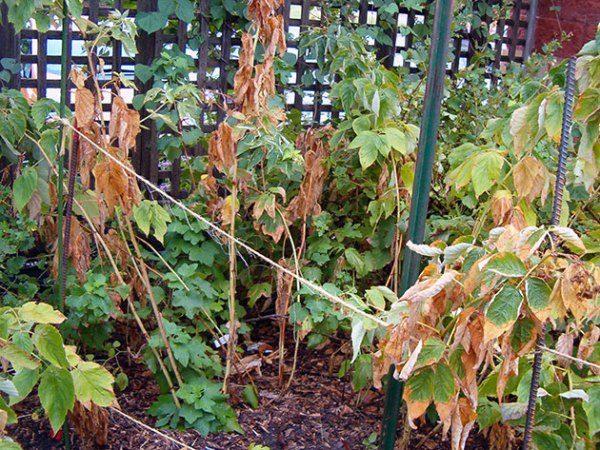
The widespread use of raspberries in garden plots is due to the plant's undemanding nature regarding climate, soil, and growing conditions. However, gardeners often encounter wilting, with a decline in growth and fruiting. There are many reasons why raspberry leaves, and sometimes even stems and berries, dry out.
Reasons why raspberry branches and berries dry out
Drying leaves, young shoots, and berries indicate improper cultivation practices or the onset of disease. Let's look at the main causes of this phenomenon.
Unsuitable climatic conditions
Planting non-zoned raspberry varieties in a summer cottage may adversely affect plant growth and development. Even during the first winter, severe frosts can cause root system freezeout and plant death.
High soil acidity
Raspberries are very sensitive to any changes in soil acidity. At pH levels below 6.5, plants flower and bear fruit poorly, the berries become small, and their flavor changes. High acidity affects the permeability of the root system, impairing moisture and nutrient absorption.
Lack of light
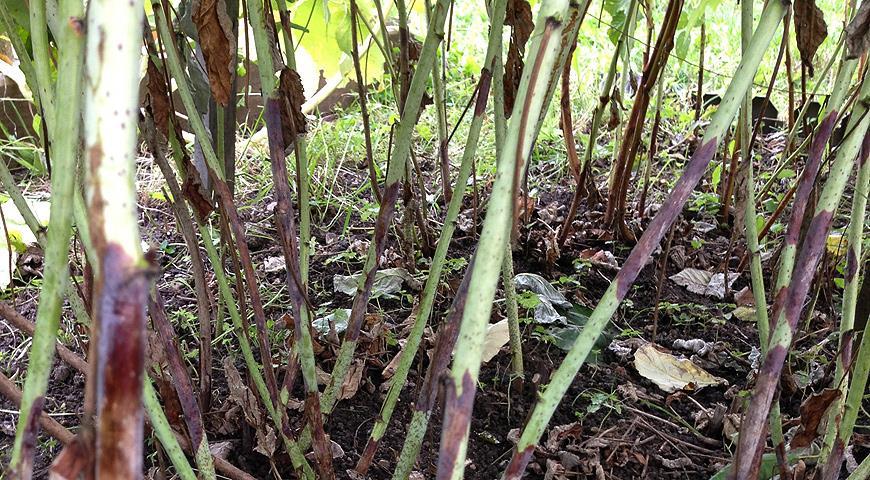
Are your young raspberries starting to turn yellow? Incorrect planting location is often the main cause: insufficient light disrupts photosynthesis, causing leaves to turn yellow and fall prematurely. Weak plants and densely populated areas are particularly vulnerable to lack of light.
Moisture deficiency
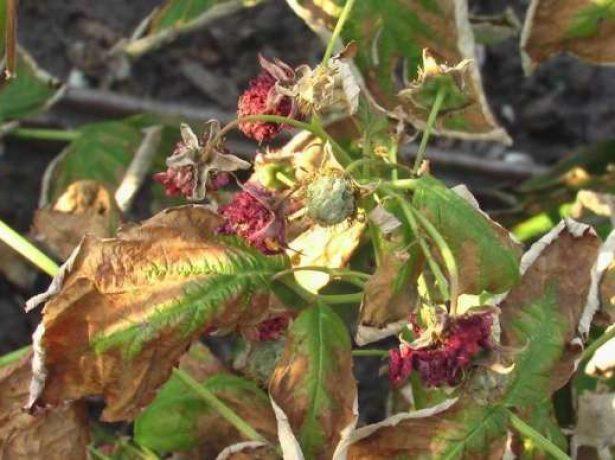
During hot and dry summers, raspberries experience severe discomfort without ample watering. Watering is especially important from June until fruiting begins. A prolonged lack of moisture immediately affects the plants: leaves turn yellow and dry out, berries become smaller, and yields decline.
Violation of agricultural technology rules
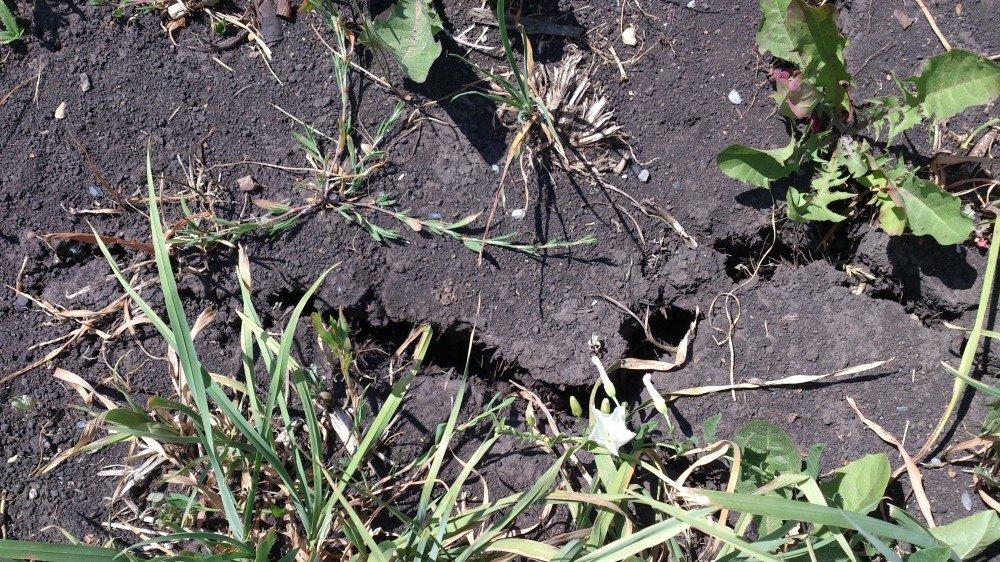
Untimely application of fertilizers, dense raspberry thickets, numerous weeds, compacted soil, and a deficiency of essential microelements cause the drying out of raspberry leaves, berries, and branches.
Root damage
Digging or loosening the root zone often damages the root system. Rodents also like to damage roots. Open wounds become a breeding ground for various viruses and pests, causing irreparable damage to raspberries. This damage results in yellowing foliage, slow growth of young shoots, and reduced yield.
Diseases as a factor in raspberry drying out
Violation of agricultural cultivation techniques contributes to the infection of raspberries with various diseases.
Inaction by gardeners in such cases leads to a decrease in yield and sometimes to the complete death of plants.
Let's look at the most common raspberry diseases.
Chlorosis
Aphids and many other insects transmit a viral disease called chlorosis. The virus overwinters in the soil and last year's foliage. With the arrival of the first warm days, it penetrates the plant through open wounds and other damage to the bark and roots.
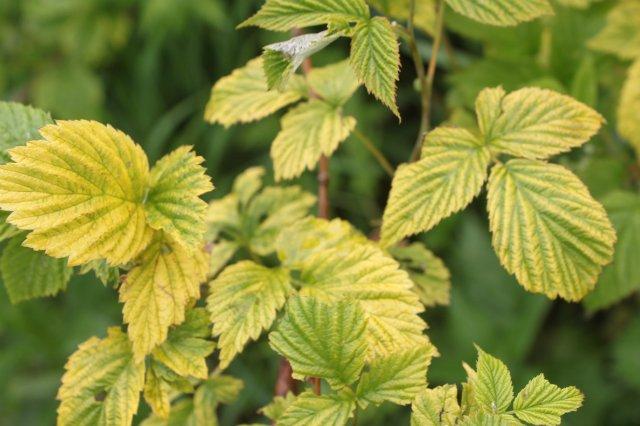
In early summer, yellowed veins can be seen on affected raspberries. Gradually, the entire leaf is damaged and dries out. Young shoots become thin and elongated. The berries dry out and fall off. The affected plant will no longer bear fruit the following season. The disease is incurable and requires complete destruction of the bushes.
Anthracnose
Another common raspberry disease is anthracnose. It appears on leaves as brown spots with a dark border. Over time, characteristic holes appear in the affected areas. Leaves fall prematurely, flowers and stems dry out. The berries are also damaged and become unfit for consumption.
To protect raspberries from anthracnose, gardeners use a variety of folk remedies. One treatment option is spraying the raspberries with a solution of 10 liters of water and 20 grams of mustard. This is a completely safe method, so you can treat the bushes at any time.
Root cancer
Bumpy growths with orange veins on the roots and root collar indicate the onset of root canker. This year, lower shoots begin to stunt and become significantly thinner. Premature yellowing of the foliage is observed, and the berries become smaller and dry out.
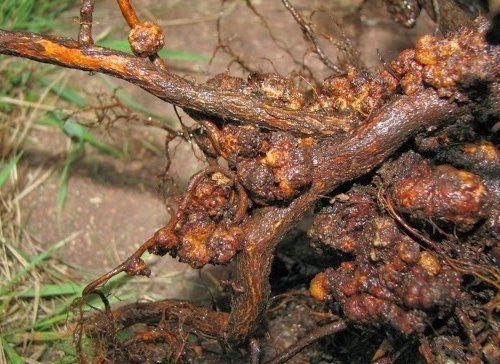
It's impossible to detect and effectively combat root canker in a timely manner, as the disease can only be clearly seen by digging up the plant. Unfavorable weather conditions, soil depleted in micronutrients, and growing raspberries in the same location for many years all contribute to the development of root canker.
Rust
With the arrival of warm spring days, have yellow-orange bumps gradually turning red appeared on your raspberry leaves? This is rust, a fungal disease that attacks young shoots and foliage. Within a few weeks, clusters of light-orange spores will appear, gradually turning red. Over time, grayish ulcers with an orange border can be seen on the shoots. The affected areas of the leaf gradually turn brown, and a dark coating can be found on the underside. Gradually, the leaves dry out and fall off, significantly reducing yield. Rust is most common in regions with high humidity.

Mosaic
Aphids in gardens often transmit a number of diseases known as mosaic. The disease is most active in cool weather and prolonged rainfall.
It is easily recognized by its characteristic spots that stand out against the background of healthy dark green foliage.
Young shoots are gradually affected as well: they become thinner and stunted. The berries' flavor changes, and yields decrease.
Pest infestation
In May, nature begins to transform. Various insects appear in the garden. The most common raspberry pests are:
- leafhopper;
- stem gall midge;
- glass case;
- leaf roller;
- raspberry mite;
- raspberry bud moth;
- stem fly.

They feed on raspberry sap, damaging foliage and young shoots. The full extent of the damage caused by the pests can be assessed as early as early July, when the raspberries are in fruiting stage: yields are significantly reduced and the flavor of the berries is altered. If no action is taken in time and the raspberry patch is not treated, weakened immunity and cold winters will lead to the death of the plants.
What to do: rescue operations plan
Correct diagnosis and timely treatment with appropriate preparations in most cases help cure raspberries and maintain high yields.
If the leaves turn yellow
There are several reasons why raspberry leaves turn yellow prematurely:
- To treat viral infections, bushes are treated with fungicides or folk remedies are used.
- In case of non-infectious chlorosis, raspberries are fed with missing microelements: iron, zinc or sulfur.
- Spraying with Bordeaux mixture, copper oxychloride or copper sulfate helps to cope with a number of fungal diseases.
- Pests can be controlled with insecticidal preparations.
If the leaves dry out and curl during fruiting
Wilting and curling of foliage during the period of active fruiting can be explained by several diseases:
- yellow mosaic;
- viral chlorosis;
- curliness.
They are not treatable and require root uprooting.
If the stems wither
Wilted stems indicate raspberry didymella. If affected, treat the bushes with Bordeaux mixture or Topaz. Wilting stems can also be caused by drought. Resuming regular watering will help restore health and maintain high yields.
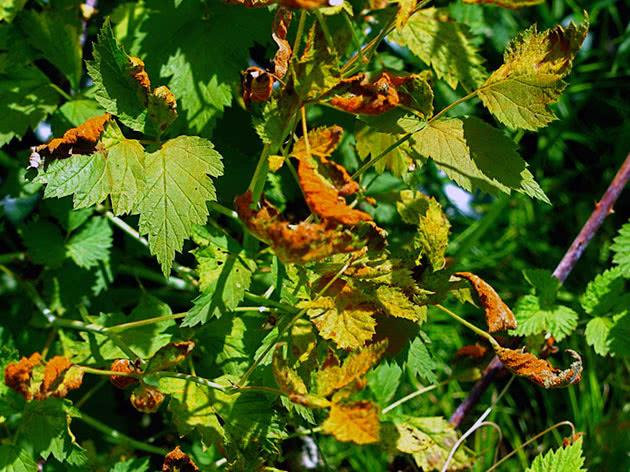
Dries up along with the berries
There may be several reasons for yellowing leaves and drying out of shoots along with the berries during the ripening period:
- lack of moisture;
- dense plantings;
- nitrogen deficiency;
- plant damage by gall midge;
- fungal diseases.
Spraying raspberries with Intavir and other insecticides will help get rid of pests. Treating bushes with Bordeaux mixture will combat some fungal diseases.
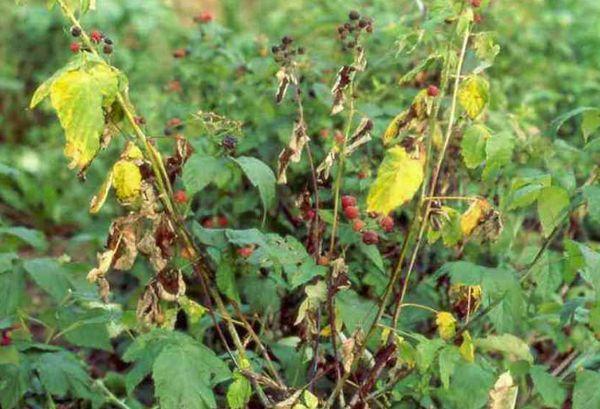
If the branches dry out
The main reasons for the wilting of young shoots are:
- gall midge larvae;
- phytopathogenic fungi.
Plants infected with phytopathogenic fungi die in early spring, before flowering. Stem gall midges colonize young shoots and feed on their sap. They can be controlled with folk remedies, such as spraying with infusions of wormwood or tobacco leaves.
Preventive measures
Preventing the spread of most diseases in the garden can be achieved by following proper cultivation techniques and taking a number of preventative measures:
- In the fall, the area is cleared of last year's leaves, the soil under the raspberries is loosened, fertilizer is applied, and Bordeaux mixture is applied. If acidity increases, gypsum is added to the soil to bring it up to standard.
- In spring, plants are pruned, the soil is loosened, fertilizer is applied, and the bushes are sprayed with Bordeaux mixture.
- During the period of budding, budding and before flowering, raspberries can be treated with bioinsecticides and biofungicides.
- Everbearing raspberries are sprayed in early May with Topaz or Ridomil. At the end of May, they are treated for pests with Actofit or Lepidocid.
Selecting disease-resistant varieties and following proper agronomic practices when caring for raspberries will help ensure healthy plants and the production of large quantities of delicious berries.
Related posts:
 Step-by-step instructions for planting and caring for raspberries in summer, tips from gardeners
 Description and characteristics of the Hussar raspberry variety, care and cultivation
 Description of the remontant raspberry variety Atlant, planting technology and care
 How to treat raspberries against pests during fruiting and flowering
 How and when is it best to transplant raspberries to a new location in the summer?
 Description and characteristics of the 50 best raspberry varieties for Siberia
 Description and characteristics of the Solnyshko raspberry variety, planting and care
 Planting and caring for Tibetan raspberries, variety description and propagation methods