
- Specifics of planting raspberries
- Selecting a site
- Suitable soil composition
- How to make your own potting soil
- Dimensions and depth of the planting hole
- Favorable and unfavorable neighbors
- What time should landing robots be carried out?
- In the spring
- In summer
- Autumn
- Dependence of timing on the growing area
- Northern regions
- Central Russia and the Moscow region
- Southern regions
- Urals and Siberia
- How to plant raspberries in different ways
- Seminal
- Cuttings
- Root and lateral shoots
- Raspberry planting diagrams and technology
- Planting in a container or tires
- Bush or pit
- Trench or beds
- On the trellis
- Under the film
- Planting nettles
- Ribbon
- Caring for the bush after planting
- Conclusion
Raspberries are a favorite berry among many gardeners, renowned not only for their excellent taste but also for their medicinal properties. Before planting this plant in your garden, it's recommended to determine when to plant raspberries—fall or spring.
Specifics of planting raspberries
There are several recommendations that will help you plant raspberry seedlings correctly in your garden.
Selecting a site
First, you should select the most suitable site at your dacha for growing the berries. Gardeners who have been growing raspberries for many years recommend planting them in sunny, sunlit areas. The chosen location should also be protected from cold northern winds, which can negatively impact the yield.
Suitable soil composition
Those planning to plant raspberry bushes outdoors should understand the most suitable soil composition. Raspberry bushes grow well in light loamy, fertile soils that contain nutrients. Seedlings can also be planted in sandy soil, but in this case, more frequent application of organic fertilizer will be necessary.
 Heavy soil is not suitable for berries, as the root system does not receive enough moisture.
How to make your own potting soil
To ensure better fruiting of planted raspberry bushes, prepare the soil mixture in advance. The berries grow best in soils with a high humus content, so add composted manure to the soil. Mineral fertilizers should also be added, as they promote fruiting. Experts recommend adding superphosphate and nitrogen-containing fertilizers to the soil.
Dimensions and depth of the planting hole
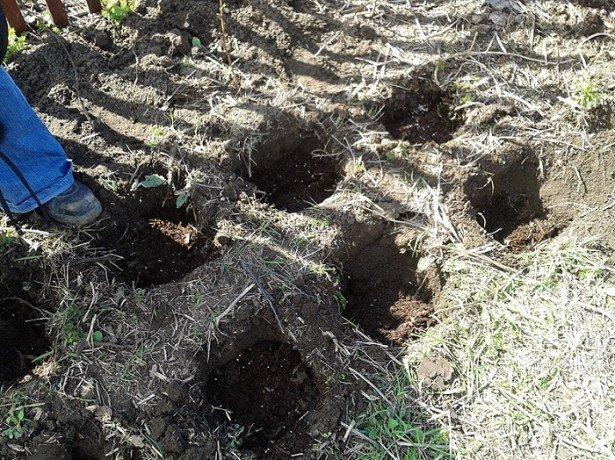
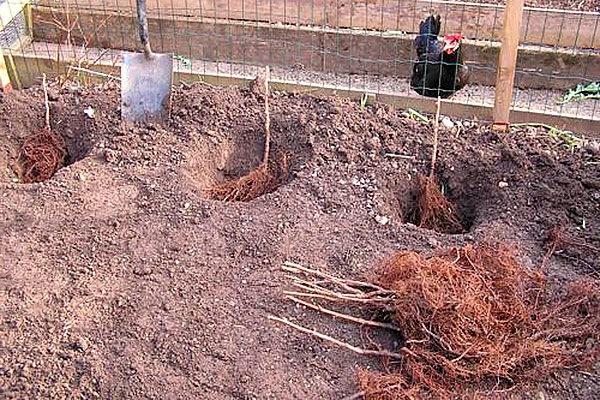
It's no secret that raspberry seedlings are planted in pre-prepared holes. Therefore, it's important to learn how to properly dig holes for planting berries.
The dimensions of the dug hole must be sufficient to accommodate the root system of the plant.
The hole should be at least sixty centimeters wide and 15-20 centimeters deep. However, if the seedling is large, the hole should be made deeper.

Favorable and unfavorable neighbors
It's important to determine in advance which plants can be planted near raspberry seedlings. The following plants have a positive effect on fruiting and seedling growth:
- foxgloves;
- barberry;
- some vegetable crops: tomatoes, potatoes, onions, carrots;
- currant;
- strawberry.
Plants that are contraindicated for growing near raspberries include:
- radish;
- parsley;
- garlic;
- iris;
- elder;
- sea buckthorn.
What time should landing robots be carried out?
It's recommended to determine the timing of planting seedlings in advance. The timing directly depends on weather conditions and air temperature.
In the spring
Those who want to harvest early should plant in the spring, in April. During this time, the weather remains humid, which has a positive effect on the survival rate of the planted raspberry seedlings.
To more accurately determine the planting time, pay attention to temperature indicators.
It shouldn't be too cold outside, as low temperatures slow down the growth of the shrub.
In summer
Some gardeners plant green cuttings in their gardens. This is recommended mid-year—August. However, it's important to choose cloudy days when the temperature is below 30 degrees Celsius. If the cuttings are planted in sunny, dry weather, they may not take root.
Autumn
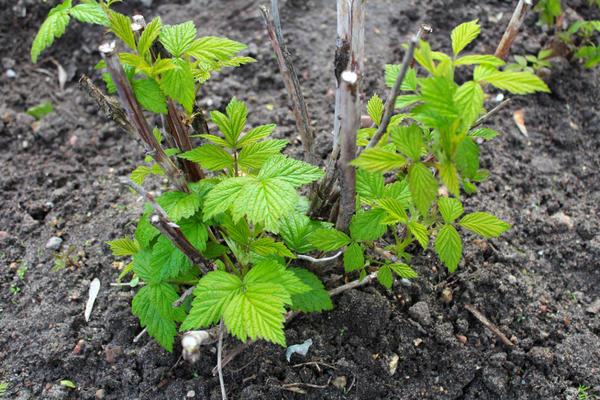
Gardeners who want strong seedlings can plant berries in the fall. To ensure the bushes have time to harden before the first frost, they are planted in late September or early October. Planting raspberries in November is not recommended, as they will fail to establish and will die due to low temperatures. During planting, the air temperature should be between 10 and 15 degrees Celsius.
Dependence of timing on the growing area
When choosing the optimal time for planting, it is necessary to take into account the climatic characteristics of the region in which it will grow.
Northern regions
The northern regions don't have the ideal climate for planting raspberry seedlings outdoors. Therefore, experts recommend planting the berries in greenhouses. Raspberries can be planted in greenhouses in both spring and fall. However, they should be grown in greenhouses equipped with a heating system.

Central Russia and the Moscow region
Residents of the Leningrad Region, Moscow Region, and other temperate regions can plant berries in the fall. Planting should be done from mid-September to early September. If necessary, planting can be postponed until spring, when temperatures rise to 10 degrees Celsius. However, it's important to keep in mind that seedlings planted in the spring will be weaker.

Southern regions
Planting berries is easiest in the southern regions, as the climate there is suitable for growing raspberries. Seedlings can be transplanted in the spring and fall. However, if the summer was too dry, it's best to skip the fall planting and postpone it until mid-spring, after the risk of frost has passed. Planting should be completed by the end of April.
Urals and Siberia
Gardeners living in Siberia and the Urals should plant their berries before early fall. When determining the time to plant seedlings, pay attention to weather conditions. If late summer temperatures are too low and there's a lot of rain, planting will have to be postponed until the following spring. Planting should be done in summer only if the weather is warm and sunny.
How to plant raspberries in different ways
There are three main methods for planting raspberries that you should be familiar with in advance.
Seminal
Some gardeners prefer to use seed method of propagating raspberriesIn this case, the seeds will have to be planted in small pots to grow seedlings, which will then need to be transplanted into the garden. The main disadvantage of this method is the time required to grow the seedlings.
Cuttings
The fastest method for propagating raspberry seedlings is using cuttings. The seed is carefully cut near the root with pruning shears and then placed in a container of water. Once the cutting has rooted, it is planted in the garden. Rooting takes no longer than a day and a half, or even less if the plant is soaked in a growth stimulant.
Root and lateral shoots
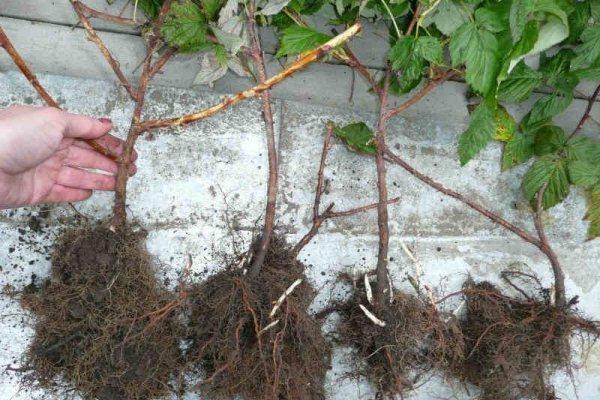
Mature raspberry bushes develop side shoots and root shoots that can be pruned. The pruned shoots are separated from the mother plant in late July or August. It is recommended to do this in the evening or on cloudy days. Before planting, the separated shoots are soaked in water for 15-20 hours.
Raspberry planting diagrams and technology
Before planting raspberries, you should familiarize yourself with popular planting patterns.
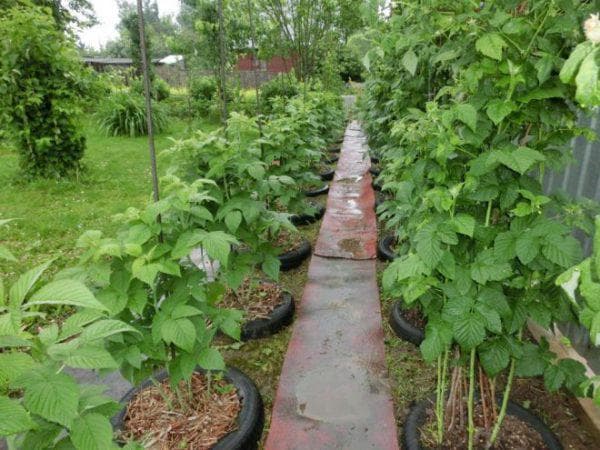
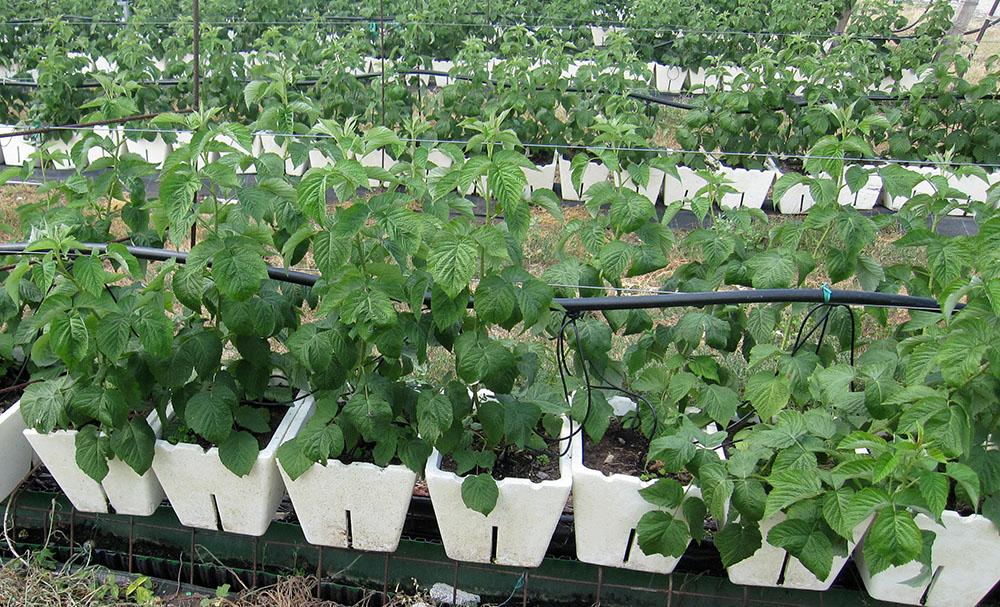
Planting in a container or tires
Sometimes people plant seedlings not just in soil, but in containers made from tires. To do this correctly, follow these steps:
- trim the sidewalls of the tires;
- dig a hole and place the wheel in it;
- fill the tire with soil mixed with fertilizer;
- make a landing hole inside the wheel;
- plant a seedling.
Bush or pit
Some people plant raspberries using the bush method, planting the berries in a special hole. This method is recommended for autumn planting. A hole 40 centimeters deep is dug in the plot, and the seedling is then planted in it. The distance between each planting hole is 80-90 centimeters.

Trench or beds
Those who choose to plant raspberries using the trench method will need to dig a trench in advance. It should be 65 centimeters wide and 40-45 centimeters deep. The length of the trench depends directly on the number of raspberry bushes being planted. The distance between each seedling should be at least 60 centimeters.
On the trellis
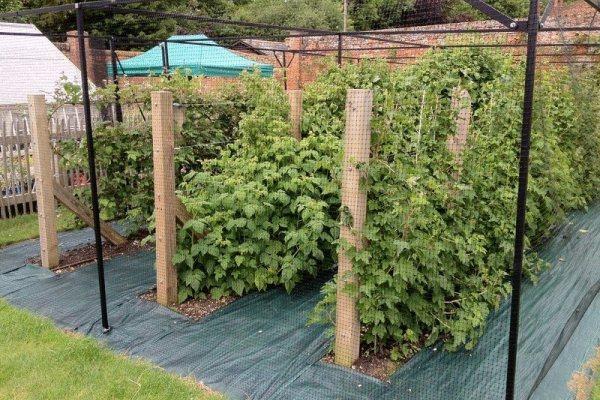
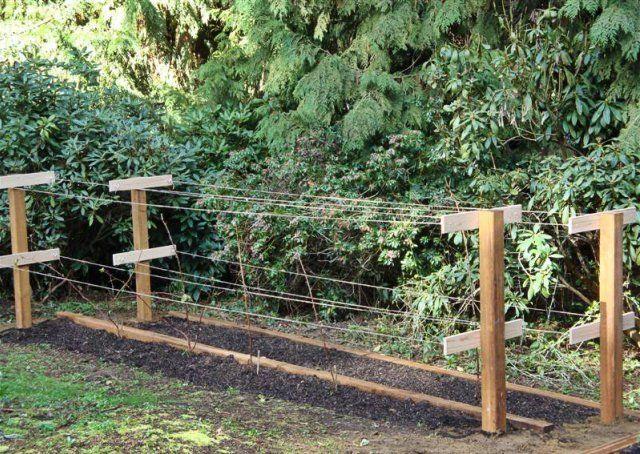
Sometimes gardeners decide to plant raspberry seedlings on a trellis. This is done to prevent the plants from breaking due to gusts of wind or the weight of ripe fruit. To achieve this, supports are installed at the edges of the beds, to which wire is attached. The branches of the bushes are tied to these wires with rope.
Under the film
Residents of northern regions can plant raspberries under plastic film, which will protect the bushes from temperature fluctuations and frost. First, dig holes in the ground and place the raspberry cuttings in them. Then, cover them with mulch film, which should be removed after the frost has passed.
Planting nettles
This is a common method for spring planting of raspberries. In this case, young raspberry shoots are planted in the area. They are cut from the mother bush when they reach twenty centimeters in length. First, they are soaked in water for 2-3 days, after which they are transplanted to a new location.
Ribbon
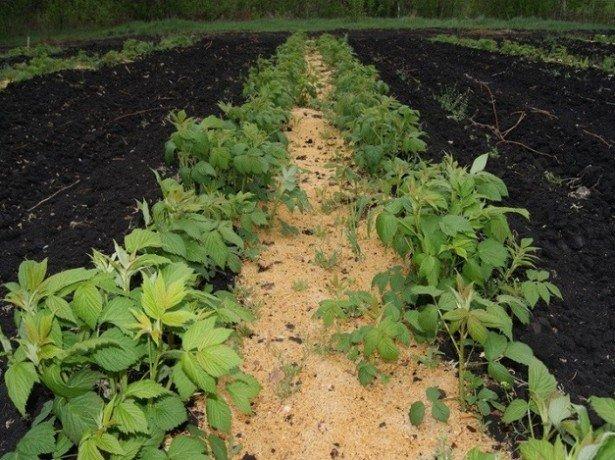
When using the strip method, trenches 90-100 centimeters wide are dug in the area. Saplings are planted in these trenches in several rows, spaced 20-25 centimeters apart.
Caring for the bush after planting
Everbearing raspberries need to be grown properly to ensure they produce good fruit. Here are a few recommendations for caring for the bushes:
- seedlings are watered every other day, in the evening;
- mineral and organic fertilizers are added 3-4 times per season;
- the bushes are tied to supports so that they do not break;
- In summer, bushes are pruned 1-2 times.
Conclusion
Many gardeners decide to plant raspberry seedlings in their plots. Before doing so, it's important to understand all the specifics of planting and caring for the berries.
Related posts:
 Step-by-step instructions for planting and caring for raspberries in summer, tips from gardeners
 Description and characteristics of the Hussar raspberry variety, care and cultivation
 Description of the remontant raspberry variety Atlant, planting technology and care
 How to treat raspberries against pests during fruiting and flowering
 How and when is it best to transplant raspberries to a new location in the summer?
 Planting and caring for Tibetan raspberries, variety description and propagation methods
 Description and characteristics of the 50 best raspberry varieties for Siberia
 Description of the Balsam raspberry variety, the intricacies of growing and caring for it