
- History of the selection of the Ispolin raspberry
- Characteristics and description
- Bush
- Taste and uses of berries
- Advantages and disadvantages: is it worth planting in your plot?
- Planting technology
- Selection and preparation of seedlings
- Layout and planting of bushes
- How to care for the crop
- Watering
- Top dressing
- Crown pruning
- Tying to supports
- Preparing for the winter period
- Pests and diseases: protection and treatment
- Methods of reproduction
- Reviews of the variety
Everyone knows about the delicious and healthy properties of raspberries. That's why both amateur gardeners and professional farmers enjoy growing this berry crop. However, choosing a raspberry variety that meets all the necessary requirements can be challenging and far from simple. Plants vary not only in size and yield, but also in ripening time, berry size, and flavor. The Ispolin raspberry variety, according to descriptions and reviews, is suitable for growing in any climate, and the size of the ripe berries is clear from its name.
History of the selection of the Ispolin raspberry
The Pride of Russia, or Ispolin raspberry, was developed at the Moscow Research Institute of Horticulture by leading breeder Kichin in the early 1990s. The large-fruited Stolichnaya raspberry and the low-growing Shtambovaya-20 berry bush were used in the development of this new variety.
After years of research, scientists developed a raspberry variety with enormous berries, resilient to various climate conditions, and productive. For gardeners worldwide, the Pride of Russia raspberry has become a benchmark for fruit cultivation.
Characteristics and description
Breeders incorporated the best characteristics of the parent varieties into the Ispolin raspberry. The large, juicy berries were inherited from the Stolichnaya raspberry, and the high yield was due to the fruit variety known as Shtambovaya-20.
Important! The Ispolin raspberry is a remontant berry variety, meaning it bears fruit twice during the growing season.
Bush
Everbearing raspberry bushes grow from 1.5 to 1.8 meters tall, with thick, sturdy, thornless branches and the waxy sheen typical of this berry crop. The absence of thorns on the bush stems significantly simplifies care and harvesting of the ripened crop.
The bush appears massive in form, but the branches grow upright and do not spread. During the spring and summer seasons, the bushes produce 8 to 10 stems and 5 to 7 shoots, each bearing up to 30 fruit ovaries.
The leaves are large, rich dark green, and have a pleasant aroma. During flowering, the shrub produces clusters of small, white flowers.
Note: During the growing season, berries are harvested up to six times.
Taste and uses of berries
The Ispolin variety is recognized as a high-yielding dessert berry for universal use.
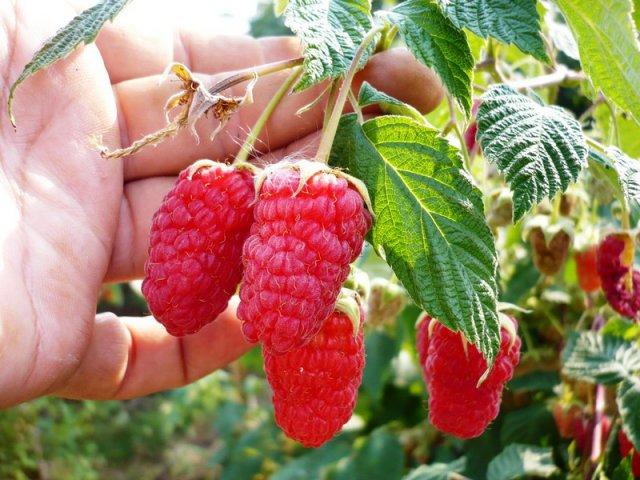
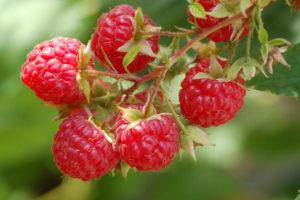
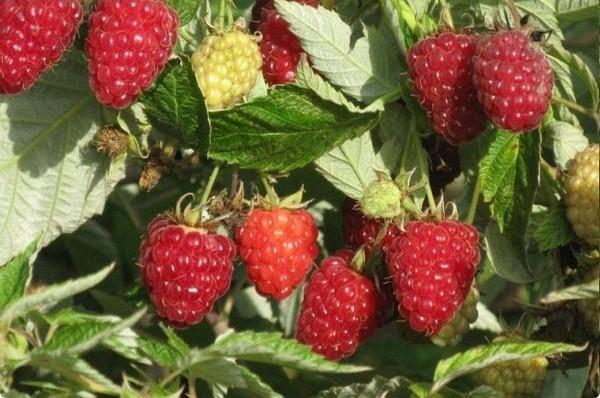
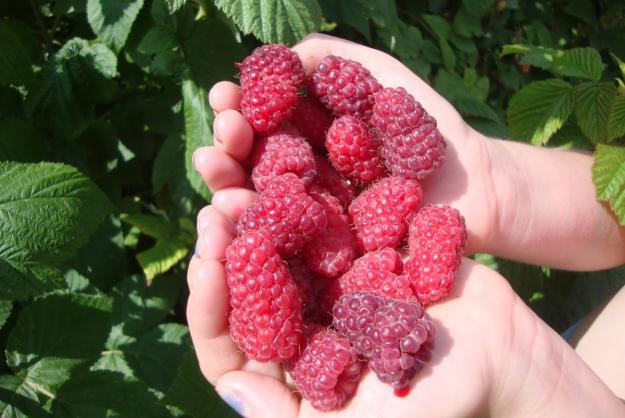
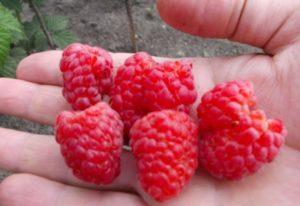
A single bush yields 5 to 7 kg of fruit. With proper and timely care for large-fruited raspberries, the yield increases to 9 kg per plant. The berries are large, weighing 7 to 15 g, with vibrant red hues and a glossy surface, and juicy, dense flesh with a sweet and sour taste. The fruits do not fall off when ripe, extending the harvest time by a week. Ripe raspberries are best eaten fresh. They are also used to make jams, preserves, marmalades, juices, and nectars.
Raspberry fruits and leaves have proven themselves in folk and traditional medicine, as well as cosmetology. Berry teas and fruit drinks are recommended for boosting immunity during colds and viral illnesses, while masks made from berries and juice rejuvenate and improve skin elasticity.
Important! Ispolin raspberries are high in ascorbic acid and low in sugar, making them recommended even for diabetics.
Advantages and disadvantages: is it worth planting in your plot?
To decide whether to plant the Ispolin raspberry variety in your garden, you need to understand all the advantages and possible disadvantages of this fruit crop.
Advantages:
- The variety is characterized by stable, high yields.
- Large fruits with excellent taste.
- Berry bushes tolerate low temperatures well, which makes it possible to grow raspberries even in northern regions.
- When creating the hybrid variety, the developers incorporated high immunity to most fungal and viral diseases.
- Duration of storage of berries and the possibility of long-distance transportation.
- A large number of shoots makes it possible to propagate the berry crop without any problems.
The advantages of the variety also include the drought resistance of the fruit crop.
Flaws:
- Berries lose sweetness under unstable climatic conditions.
- The variety is demanding regarding soil composition and additional fertilizing.
Also, the disadvantages include the fusion of berries, a characteristic feature of large-fruited crops.
Planting technology
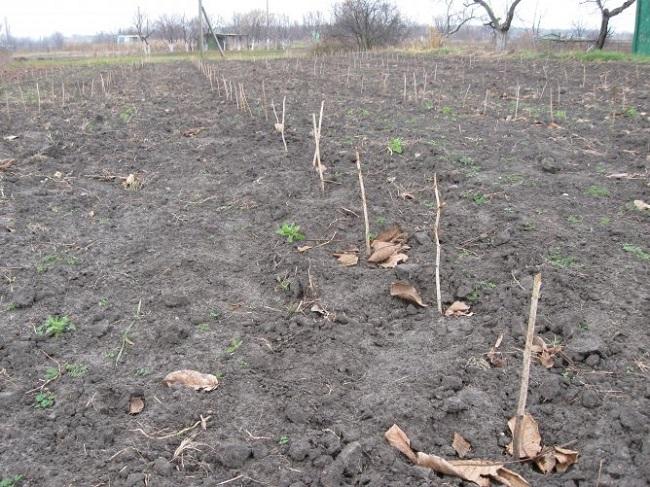
The yield of everbearing raspberries depends on the correct selection of seedlings, the timing of planting the berry bush in open ground, and adherence to the proper planting guidelines. It is recommended to plan planting for early spring or fall.
Spring planting of berry bushes is carried out before the growing season begins. Over the summer, the plants will establish themselves and take root, and fruiting will begin the following season.
Autumn raspberry planting is carried out 4-6 weeks before the first frost. This way, the first harvest of berries will ripen in the summer.
The site for growing raspberries should be chosen with good light and free from drafts. The plant will not thrive in lowlands, marshy soils, or areas with a high groundwater table. This berry crop is demanding of soil composition. Raspberries are planted in fertile, loose soil.
Selection and preparation of seedlings
The development and productivity of fruit bushes depend on the quality and health of seedlings.
- The height of the planting material should be at least 30-35 cm.
- The stems at the base of the plant are at least 5 cm in diameter.
- The shoots must have 3-4 buds or leaves.
- The roots are well moistened, without obvious damage, growths, or fungal or mold damage.
Important! Before planting outdoors, soak the plant's roots in a mixture of water and clay for 50-8 hours, then treat with antibacterial agents and a growth stimulant.
Layout and planting of bushes
To ensure active growth and development of berry bushes, the following measures are taken:
- The area selected for planting is carefully dug up, cleared of weeds and loosened.
- Complex mineral and organic fertilizers are added to the soil.
- 3-4 weeks before planting raspberries, I dig planting holes.
- The depth and width of the holes are 40 cm, the distance between plantings is 50 cm, between rows from 1.5 to 2 m.
- A drainage layer of small stones is placed at the bottom of the planting holes, and fertile soil is poured on top.
- The seedlings are placed in holes, the roots are evenly distributed and covered with fertile soil.
- The soil is compacted and watered generously.
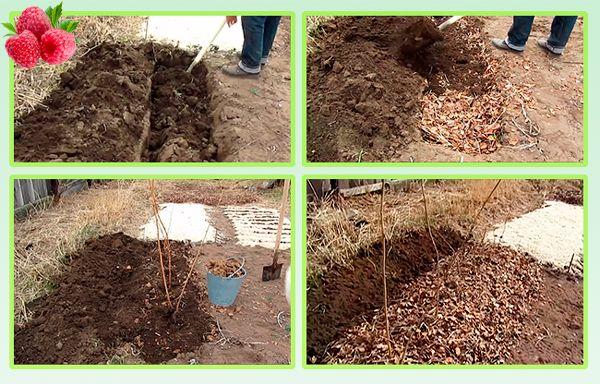 Tip! After planting, mulch the tree trunk area with a thick layer of humus or straw.
How to care for the crop
To obtain a high-quality and abundant harvest, the Pride of Russia raspberry variety requires timely and proper care.
Watering
In temperate climates, raspberries are watered as needed, once the soil has completely dried out. However, when fruit set and ripening occur, watering is increased. During drought, raspberry bushes are watered more frequently. Without sufficient moisture, berry bushes experience reduced yields and significantly reduced fruit flavor.

Top dressing
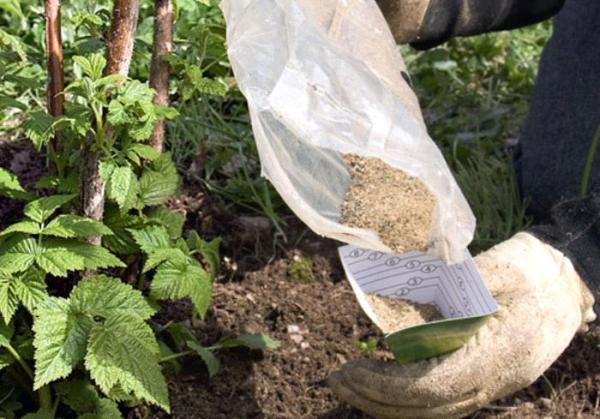
The everbearing Ispolin raspberry variety expends considerable energy to ripen its berries. Therefore, this fruit crop requires timely and high-quality feeding and fertilizer.
- In early spring, the bush is fed with nitrogen fertilizers, and the soil is mixed with humus.
- During the growing season, the berry crop is fed with mineral and organic fertilizers, alternating them every 2-3 weeks.
- In late autumn, potassium and phosphorus fertilizers are added to the soil.
This hybrid berry variety responds well to feeding and fertilizing, ensuring a high-quality and abundant harvest of tasty and healthy fruits.
Crown pruning
The berry bush's tendency to grow quickly requires timely and proper pruning.
At the very beginning of spring, remove dried, broken, damaged, and deformed branches. As soon as the first buds open, shorten the shoots by 10-15 cm. In the fall, prune the shrub's old and weak shoots and stems.
Important! After pruning, to prevent fungal and viral infections, treat the cut areas with garden pitch or special preparations.
Tying to supports
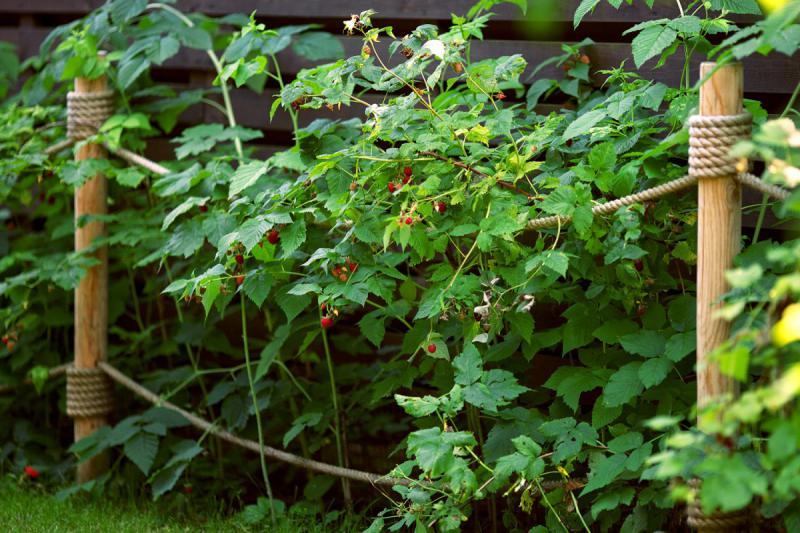
The Ispolin raspberry is considered a high-yielding, large-fruited berry variety. Therefore, when the berries ripen, the branches of the bushes bend significantly and can break. To prevent breakage, special supports or trellises are used to attach the raspberry bushes.

Preparing for the winter period
Before wintering, the soil under the bush is loosened and mulched with a thick layer of humus or peat mixed with sawdust, and covered with spruce branches on top.
The Ispolin variety easily tolerates snowy winters with temperatures down to -30 degrees.
If even colder weather is expected, or the raspberry bushes are grown in northern regions, the bushes are bent to the ground, covered with burlap or special fiber, and covered with a large snowdrift.
Pests and diseases: protection and treatment
The Giant raspberry has a strong natural immunity, so it's rarely affected by fungi, viruses, or pests. However, if not properly cared for, the plant can sometimes become ill. To prevent such problems, treat the berry bush with special preparations in early spring.

Methods of reproduction
To increase the number of berry bushes, the Ispolin raspberry is propagated vegetatively. The fastest and easiest method for obtaining new seedlings is root suckers. It's also easy to propagate this berry crop using cuttings or by dividing the bush.
Reviews of the variety
Oksana Petrovna, 50 years old, Vyborg
The garden center staff recommended the Ispolin raspberry variety. They raved about it so much that my husband and I couldn't resist trying this everbearing crop. We planted it in the fall, and the seedlings overwintered beautifully, even without additional cover. By summer, we were harvesting huge, juicy, and sweet berries. I was planning on making jam and compotes, but we ate them all fresh. It's a superb variety; we harvested our last crop in September.
Victor Danilovich, 49 years old, Perm
I bought the "Pride of Russia" raspberry bush four years ago, and I haven't regretted it a single day. Our winters are harsh, but the bushes don't freeze under a small cover of burlap and plastic. The care is simple: watering and fertilizing, and I spray the bushes for pests in the spring. The berries are sweet and large, and I pick them all summer long, even in early fall.
Elena Sergeevna, 57 years old, Moscow region
Two years ago, my daughter planted the Ispolin raspberry at our dacha. The seedlings she brought were weak, and we thought they wouldn't survive, but we were wrong. The bushes quickly took root and began bearing fruit last year. The berries are very large, juicy, with a delicate raspberry aroma and sweet flavor. So far, they're only good for eating, but I'm thinking of propagating them.
Related posts:
 Step-by-step instructions for planting and caring for raspberries in summer, tips from gardeners
 Description and characteristics of the Hussar raspberry variety, care and cultivation
 How to treat raspberries against pests during fruiting and flowering
 Description of the Polka raspberry variety, yield, planting and care
 Description of the remontant raspberry variety Atlant, planting technology and care
 How and when is it best to transplant raspberries to a new location in the summer?
 Description and varieties of the everbearing raspberry variety Penguin, planting and care
 Description and characteristics of the Solnyshko raspberry variety, planting and care