
- The history of the Red Guard raspberry breeding
- Description and characteristics of the Red Guard variety
- Advantages and disadvantages of the Red Guard variety: is it worth planting?
- Rules for planting and propagating the Red Guard raspberry
- Seeds
- By dividing the bush
- Cuttings
- Growing and caring for the Red Guard variety
- Selecting a site
- Preparing a planting hole for the Red Guard raspberry
- What to add to the hole
- Timing and plan of planting operations
- Watering and fertilizing raspberries
- Trimming
- Loosening the soil, removing weeds
- Tying to supports
- Mulching and covering raspberries for the winter
- Diseases and harmful bugs
- Reviews of the Red Guard variety
The Red Guard raspberry variety is a remontant variety. This variety boasts a rich flavor and color. The bushes produce a bountiful harvest and are suitable for growing for sale or personal consumption. With proper care, the best fruiting is observed in temperate and southern latitudes. The berries are large and ripen evenly. To successfully plant seedlings and ensure proper care, it's worth following the tips below.
The history of the Red Guard raspberry breeding
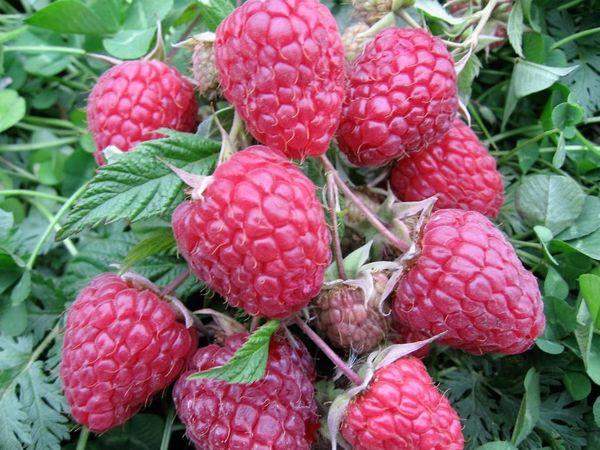
The Red Guard raspberry was developed by breeder V. Kazakov in 2005. The name comes from the completely uniform fruit. Their coloring resembles squads of elite soldiers in purple uniforms.
Description and characteristics of the Red Guard variety
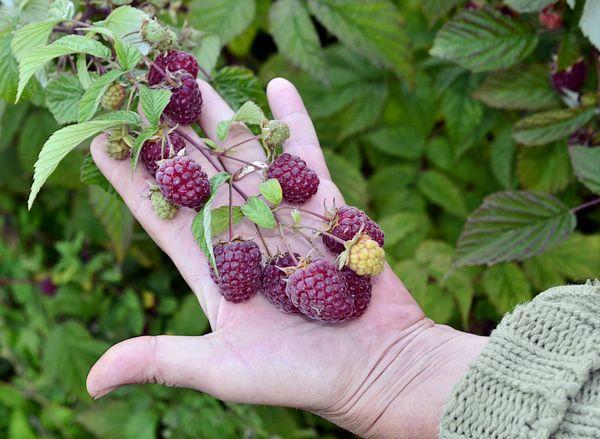
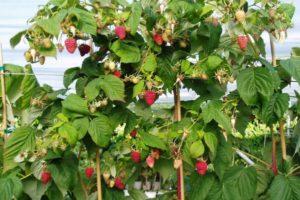
The everbearing raspberry "Krasnaya Gvardiya" is a vigorous, upright bush reaching 1.5 meters in height. The shoots are closely spaced, making it easy to care for and harvest. Flowering occurs in the second half of June, and the harvest ripens two weeks later.
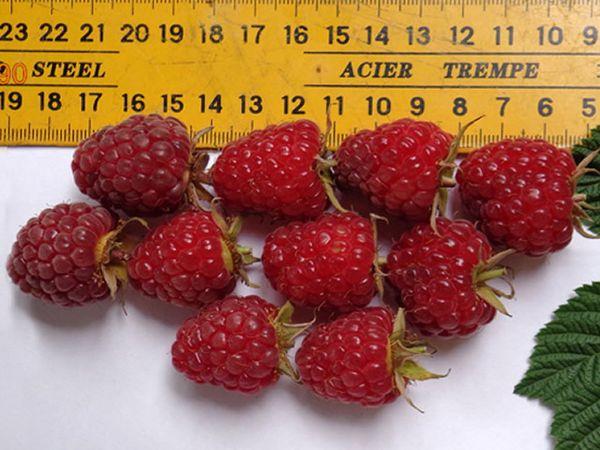
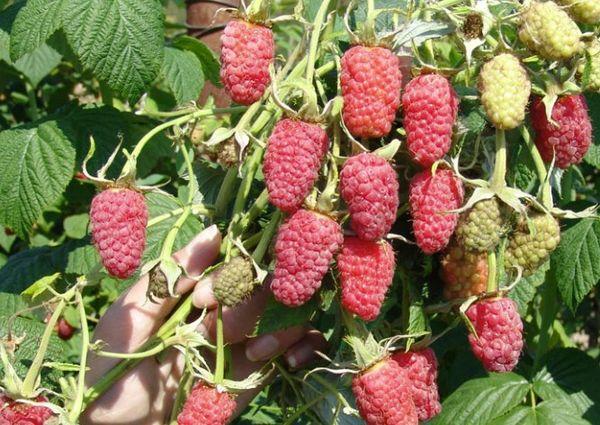
Fruiting peaks in late July or early August. The harvest ripens until frost. Each berry weighs 12-18 grams and grows up to 5 cm in length. Up to 10 kg of fruit can be harvested from a linear meter of raspberry patch. Taste experts rated the raspberries 4.8 stars for their flavor. The taste is sweet and aromatic, and they are versatile.
The fruits can be eaten fresh, made into preserves, jellies, compotes, and added to baked goods. The bushes can withstand temperatures down to -35°C (-35°F) and short-term droughts.
With proper care, the immune system is able to resist diseases and beetle attacks.
Advantages and disadvantages of the Red Guard variety: is it worth planting?
The Red Guard raspberry variety is considered the most ideal for growing, boasting numerous positive qualities. Some gardeners have found a number of drawbacks to this variety. These should be considered before planting seedlings.
| Pros | Cons |
| The bushes begin to bear fruit earlier than other varieties. | The plantings are thickening quickly |
| The berries have an excellent aroma and taste. | There is a susceptibility to fungal infections |
| The fruits are large in size, comparable to the diameter of a matchbox. | Root suckers need to be removed regularly. |
| Raspberries don't fall off the bushes after ripening. | |
| Resistance to diseases and bugs is high | |
| High frost resistance | |
| High reproduction rate |
Rules for planting and propagating the Red Guard raspberry
Raspberries should be planted in a suitable place, observing the timing and rules of agricultural technology. If you plant one plant, during the growing season, it will produce 20 root shoots.
If you plan to leave some of them for transplanting, you should prune out weak specimens and space the future seedlings at least 15 cm apart for further growth. Then, tame the seedlings and plant them at the same depth they were previously planted. To ensure successful acclimatization, after watering, mulch the beds with compost and fallen leaves.
Seeds
Red Guard raspberries are rarely propagated by seed, as the process is labor-intensive, time-consuming, and not very productive. This method is typically used by breeders to create new varieties. Raspberry seeds can be obtained by selecting large berries and squeezing their juice. Pour the nectar into a container with water and strain through a sieve.
Repeat this process 2-3 times until the liquid runs clear and no seeds remain at the bottom. Dry the seeds, place them in a paper envelope, and refrigerate. Stratify the seeds before sowing. Cover the seeds with water and place them in the refrigerator along with the container. Then, mix them with sand, pour them into nylon socks, and store them in the basement.
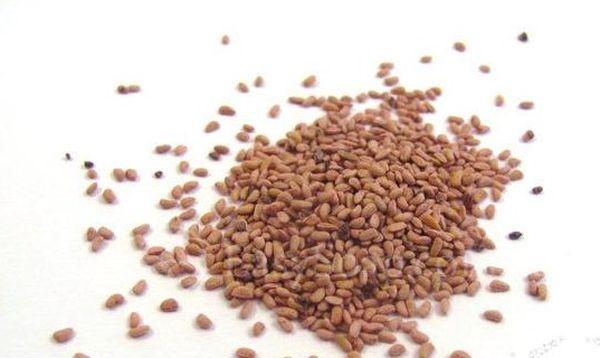
The bags are lined with sawdust. The seeds can be stored in the cellar for up to three months. The seeds are planted once the room temperature has risen to 20 degrees Celsius. The seeds are sown in containers with nutritious soil. To create a greenhouse effect, the containers are covered with plastic wrap and placed near south-facing windows.
By dividing the bush
When shoots grow close together, it's impossible to isolate a specimen for propagation. In the spring, when the branches reach 20 cm in length, the entire bush is buried and the soil is shaken off.
Dismantle the root tangles by hand; you can spray them with water. Use pruning shears to divide the bush into 2-3 sections, leaving 2-3 stems and roots in each section. Plant the finished seedlings directly into the holes.
Cuttings
In the fall, dig up the raspberry roots and cut them into lengths of up to 15 cm. The thickness should be 2 mm or more. These can be planted directly in the garden. Plant horizontally, 7-8 cm deep. Afterward, water the bushes and cover them with agronomic fiber for the winter. After the snow melts, cut root cuttings from these shoots. It's best to plant them in the spring.
Growing and caring for the Red Guard variety
Provided planting is done correctly and timing is observed, the beds will yield a bountiful harvest at the end of the season. Growing the Red Guard raspberry requires no special considerations. Timely watering, fertilizing, staking, and mulching are all necessary. The bushes also require preventative spraying with insecticides and fungicides.
Selecting a site
The Red Guard raspberry prefers loose, humus-rich soil. Choose a sunny, draft-free location. Avoid planting raspberries in areas previously occupied by tomatoes, zucchini, or other berry bushes. Two weeks before planting, till the soil to the depth of a bayonet, remove weeds, and add compost and humus.
Preparing a planting hole for the Red Guard raspberry
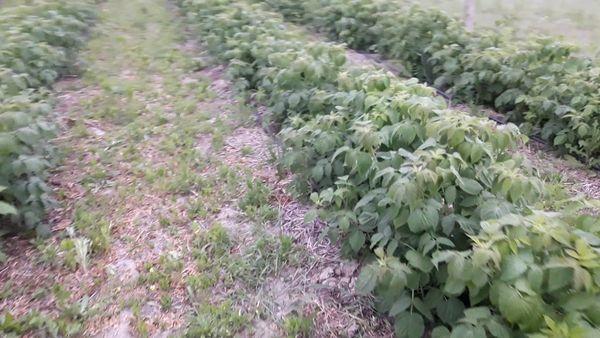
Once the planting site has been determined, mark out the area. Leave at least 1.5 meters between beds and half a meter between bushes. Raspberries are best planted in continuous trenches, 45 cm deep.
What to add to the hole
Add 0.5 buckets of humus, peat, or, if the soil is heavy, lime to each hole. You can treat the soil with chemicals to prevent beetle attacks and diseases.
Timing and plan of planting operations
It is advisable to plant the Red Guard raspberry from the end of March, when the buds begin to actively swell and the first snowdrops appear.
Landing pattern:
- water the hole and compact the soil with your hands;
- Place the seedlings carefully into the soil and sprinkle with the removed soil mixture;
- add moisture again;
- add soil to the area where the settled soil has been;
- mulch the plantings with sawdust, compost, manure.
By compacting the soil in the hole, soil capillaries are recreated to supply moisture to the rhizomes.
Watering and fertilizing raspberries
Planted under mulch, the Red Guard raspberry requires almost no irrigation. The stored meltwater is used sparingly and does not evaporate. Watering is necessary during dry periods, when the berries are setting and beginning to ripen.
It's best to irrigate shrubs using sprinklers. Drip irrigation is ideal; it can be replaced with an old hose with small holes or notches. A gentle stream of water should be applied along the beds for 1-2 hours. This will saturate the soil to the desired depth of 30-40 cm.
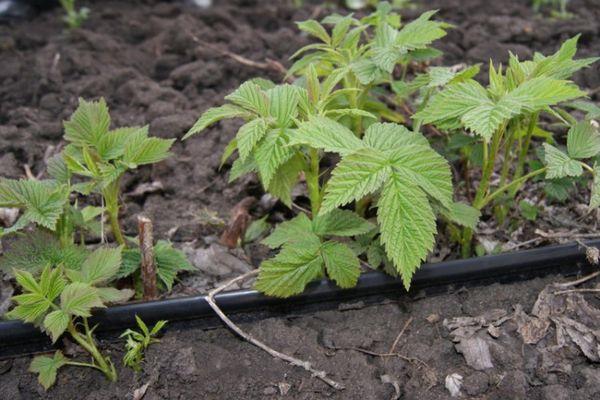
Root nutrition is achieved by adding beneficial components to the prepared soil at planting. In May, a nutrient solution should be added:
- 2 tbsp urea;
- ½ cup ash;
- 10 liters of water.
You'll need 5 liters of the solution per linear meter. After fertilizing, water the roots, but avoid getting water on the leaves to avoid burning.
Trimming
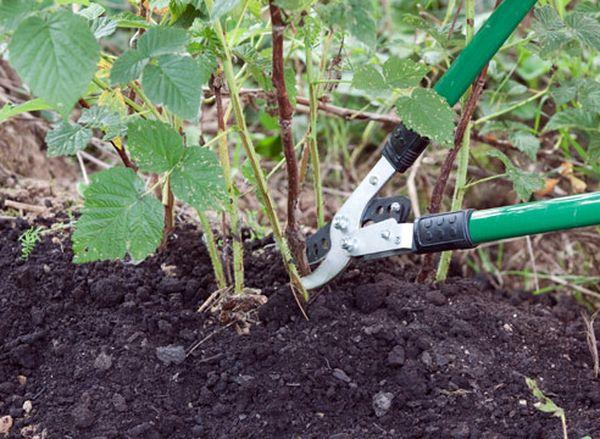
The everbearing Red Guard raspberry requires complete pruning of stems that have already borne fruit. This procedure is performed in the fall, after all the leaves have fallen. During the growing season, remove young shoots if they are not to be used as planting material.
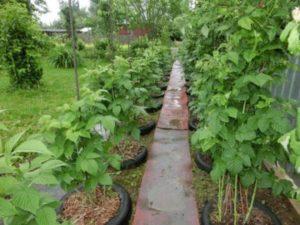
To form beds, maintain optimal density, leaving 15-20 shoots per linear meter, depending on the row spacing. Sanitary pruning of the raspberry patch is performed to remove weak, damaged, or diseased branches that cause the bushes to become crowded.
Loosening the soil, removing weeds
Red Guard raspberries should be weeded every time after watering, unless the bushes are mulched. Loosen the soil carefully to avoid disturbing the root system. This procedure stimulates soil aeration and removes couch grass.
Tying to supports
To ensure proper growth, Red Guard raspberries require support. Because the bushes are vigorous and tall, the support structure must be sturdy. Trench-planted raspberries require trellis support. This support is stretched over poles located at the edges of the row.
Mulching and covering raspberries for the winter
The Red Guard raspberry is frost-resistant and does not require any special preparation for winter. Tall shoots are tied into bundles to prevent damage to the plantings under snow. Although branches are pruned flush with the ground in spring, deformed shrubs reduce yield and plant vigor.
Diseases and harmful bugs
Red Guard raspberries are susceptible to attacks by raspberry beetles, stem flies, and spider mites. To prevent these, deep tillage is performed in the fall, plant debris is removed, and the bushes are covered with agronomic fiber in the spring. To prevent and control fungal infections, spray the plants with solutions of Bordeaux mixture and Nitrofen.
Reviews of the Red Guard variety
Gardeners' feedback on the Krasnaya Gvardiya raspberry is generally positive. This feedback will help you learn more about this variety.
Rostislav Biryukov, 56 years old, Dolgoprudny
Hello! I've been growing raspberries at my dacha for a long time; I planted the Red Guard variety in the spring of 2010. The bushes bear fruit abundantly, and I use them to make jams, compotes, and add them to baked goods. Once, the plantings were attacked by spider mites, but I treated them with insecticides.
Pavel Linnik, 37 years old, Pushkino
Greetings everyone! I have only positive experiences with the Red Guard raspberry variety. It produces a plentiful harvest of high-quality, large berries. The plant is easy to care for and has a strong immune system.
Vitalina Ivanenko, 51 years old, Kuibyshev
Hello! The Red Guard raspberry variety is my favorite; I grow it for sale. The berries sell out quickly, and I use them to make jams and pies, eat them fresh, and freeze them.
Related posts:
 Description of the Red Guard tomato variety, growing and care recommendations
 The best raspberry varieties for the Moscow region with descriptions and characteristics
 Description of the remontant raspberry variety Orange Miracle, planting and care
 40 of the best varieties and cultivars of red raspberries with descriptions
 Characteristics and descriptions of the 40 best red currant varieties
 Red currant health benefits, properties, and contraindications
 Simple recipes for raspberry jelly with and without cooking for the winter, with seeds and "Five-Minute"
 Description of the red currant variety Nenaglyadnaya, planting and care