
- The history of red currant breeding
- Cultivation regions
- Main advantages and disadvantages
- Botanical description and characteristics of the variety
- Bush and root system
- Sheets
- Flowering and pollination
- Fruit ripening time
- Taste and yield
- Scope of application of berries
- Resistance to subzero temperatures and drought
- Immunity to diseases and pests
- How to plant the Beloved on a plot
- Optimal timing
- Selecting and preparing a site
- Seedling preparation and work procedure
- Further care of currants
- Watering mode
- Loosening and mulching the soil
- Fertilization
- Pruning: formative, sanitary, rejuvenating
- Pouring and hardening of bushes
- Preventive seasonal treatments
- How to cover plantings for the winter
- Methods of reproduction
- By dividing the bush
- Cuttings and layering
- Tips and advice from experienced gardeners
- Reviews of the variety
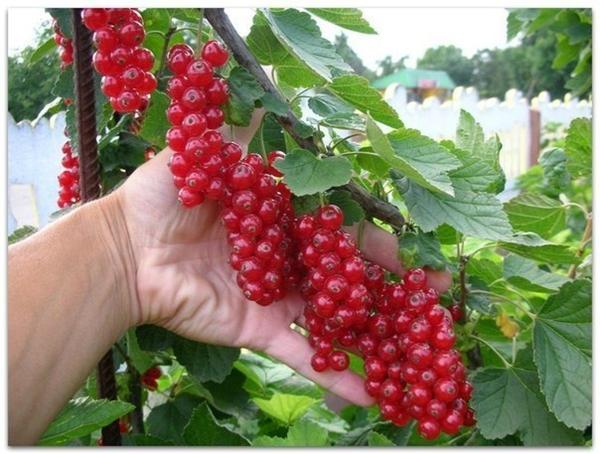
The relatively recently developed red currant variety "Nenaglyadnaya" has already gained popularity among Russian and Belarusian gardeners. The plant is noted for its easy-to-grow and high yield, producing mild berries suitable for a variety of culinary purposes. The berry clusters are large and richly red, making the bush a vibrant and attractive addition to the garden.
The history of red currant breeding
The Nenaglyadnaya variety was created in the late 20th century by staff at the Institute of Fruit Growing of the National Academy of Sciences of Belarus. To create the variety, they crossed the Cherry, Dutch Red, and Chudesnaya currants. The project was led by A. G. Voluznev, Doctor of Biological Sciences.
In 1991, the variety was included in the State Register of Belarus, and in 2006 it began to be grown in Russia.

Cultivation regions
The Nenaglyadnaya variety is frost-resistant and suitable for cultivation in almost all regions of the country.
Main advantages and disadvantages
The Nenaglyadnaya currant is unpretentious and hardy. This variety boasts the following advantages:
- early fruit bearing;
- abundance of harvest;
- long lifespan of the bush;
- resistance to adverse climatic conditions;
- good taste of berries;
- diverse culinary uses;
- long-term storage of fresh berries;
- transportation without loss of product quality;
- self-fertility;
- high immunity;
- many options for bush formation;
- high decorative qualities, the possibility of using the plant in garden design.
The following disadvantages should be noted:
- poor heat tolerance;
- low yield in shaded areas;
- high probability of damage to flowers during recurrent frosts in the spring.
Botanical description and characteristics of the variety
The Nenaglyadnaya currant is a low bush with diverging shoots, abundantly covered with red berry clusters. Shoot formation is slow, fruiting begins in the 3rd or 4th year, with peak productivity observed between the 8th and 10th years. The most fruitful branches are the ring shoots and bouquet branches, especially those 2-4 years old. The plant lives for about 20 years.
Bush and root system
The bush is rounded and branches sparingly. The shoots are straight and thick: new shoots are covered with reddish-purple skin, while older shoots have gray bark. The buds are elongated. The root system is extensive, extending up to a meter deep and twice the diameter of the bush itself.
Sheets
The leaves are five-lobed, similar in shape to maple leaves but smaller. The leaf blade surface is rough and scabrous, with a serrated edge.

Flowering and pollination
Flowering occurs in early May and continues until mid-May. Small, cup-shaped, greenish-yellow flowers are borne in racemes. The plant is self-fertile, requiring no cross-pollination.
Fruit ripening time
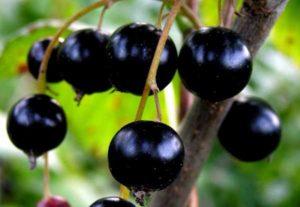
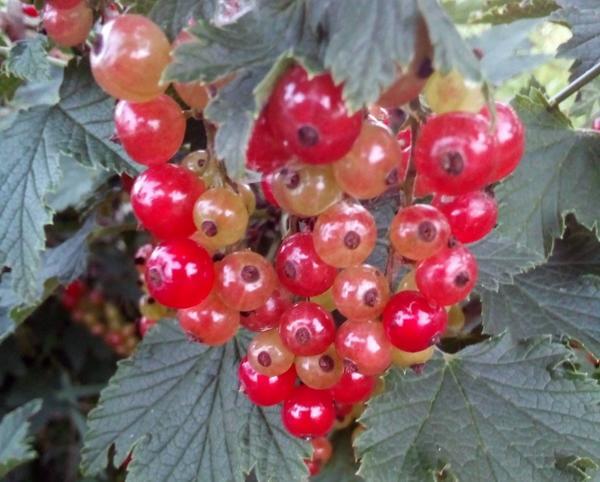
The berries of the Nenaglyadnaya variety ripen in late June and early July. The berry clusters are quite large, cylindrical, and contain numerous fruits.
Taste and yield
The fruits are soft, sweet, slightly tart, and produce a rich juice. Each berry is uniform in diameter, weighing 0.6-0.8 grams. The skin is thin, and the pulp contains a few seeds. This variety is considered one of the sweetest and most delicious, with a tasting score of 4.8 out of 5.
The Nenaglyadnaya variety has a high yield. A young plant produces over 3 kg of fruit, while a mature plant yields up to 12 kg.
Scope of application of berries
The Nenaglyadnaya variety of berries has a wide range of culinary uses. They are delicious both fresh and cooked. The soft and sweet berries are ideal for making jam, especially when paired with apples. Moreover, they don't require much sugar for cooking.
Currant juice is used to make a healing juice. It's consumed for colds, to boost the immune system, and as a diaphoretic. The drink cleanses the digestive tract of harmful deposits, improves bowel function, and reduces salt levels in the urine.
Resistance to subzero temperatures and drought
The Nenaglyadnaya currant can withstand temperatures as low as -25°C. In the central part of the country, the plant overwinters without cover. However, in northern regions, where winter temperatures drop to -30°C and even -50°C, cover is required.
Currants require plenty of moisture to thrive. However, the bush can easily tolerate short dry spells.

Immunity to diseases and pests
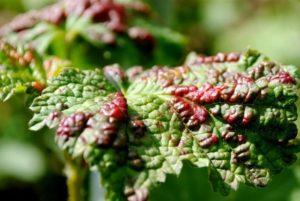
Breeders have worked hard to make the Nenaglyadnaya variety resistant to most common fungal infections. Occasionally, the plant is susceptible to septoria leaf spot, terry leaf spot, and cup rust.
Bud mite on currants The darling does not attack, but other insect pests can cause serious damage.
How to plant the Beloved on a plot
When planting the Nenaglyadnaya currant, take into account the following nuances.
Optimal timing
The Nenaglyadnaya currant is planted at the beginning of autumn.
Selecting and preparing a site
Currant Nenaglyadnaya prefers to grow in a sunny area in slightly acidic loam.
In the selected area, dig holes measuring 50x50 cm and up to 60 cm deep. Since the plant is light-loving and has a widespread root system, the distance between seedlings in a row should be at least 1.5 m.
Seedling preparation and work procedure
For planting, it's best to buy two-year-old seedlings with a well-developed root system, at least three main roots. A couple of hours before planting, soak the seedling in a Kornevin solution to accelerate root formation.
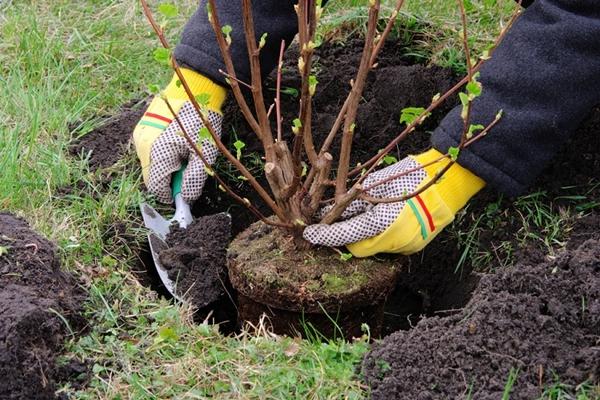
Planting algorithm for the Nenaglyadnaya currant variety:
- Two weeks before digging the holes, the soil in the area is enriched with fertilizer (organic and mineral complex). If the soil is salty or acidic, it is neutralized with dolomite flour (500 g per 1 m).2). The soil is dug to a depth of 30-40 cm and watered generously.
- A mound of fertile soil is formed in the dug hole. The seedling is placed on it, and the roots are carefully spread out.
- The hole is filled with soil so that the first three root buds are covered.
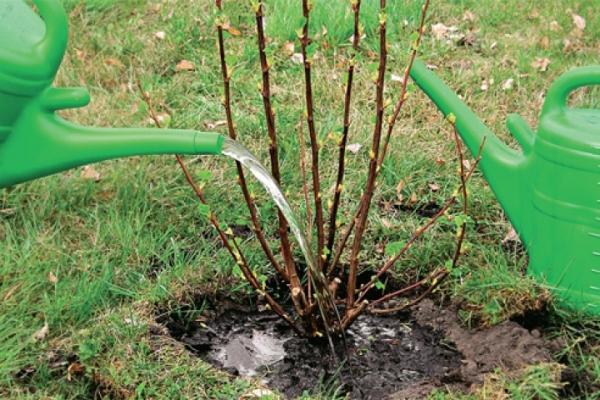
- Water the seedling generously. Once the surface soil dries, the upper roots may become exposed. Cover them with soil, but do not press down.
- The upper parts of the shoots are cut off in a sector immediately after planting.
Further care of currants
The Nenaglyadnaya currant is unfussy. Care consists of watering, fertilizing, and pruning.
Watering mode
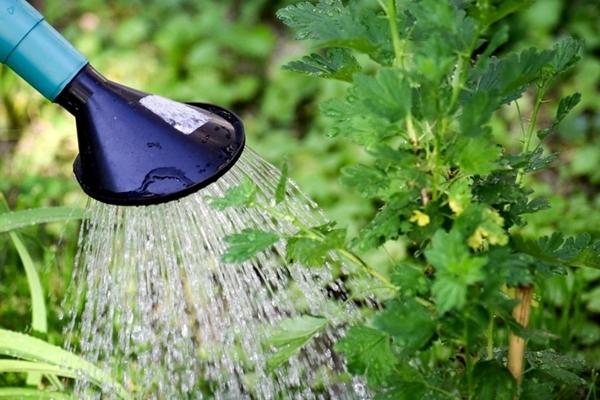
Currants generally thrive on rain and groundwater. However, if the weather is hot during the ripening period, watering the bush is recommended. Additional soil moisture during a dry autumn is also helpful.
3-5 buckets of water are poured under one plant at a time.
Pour slowly, in small portions, so that the moisture reaches the deep roots. Watering is done in the evening.
Loosening and mulching the soil
Loosening the soil is necessary to aerate it. Loosen it carefully so as not to damage the surface roots.
Mulching helps retain soil moisture and provides roots with additional nutrients. Peat, compost, straw, pine needles, sawdust, and bark are all suitable materials. The layer should be 10 cm thick.
Fertilization
Fertilizing is essential to increase yield. Fertilizer applied to the soil at planting lasts for 2-3 seasons, then the bush is fertilized annually according to the following schedule:
- beginning of April – urea (20 g per plant);
- May – mullein solution (100 g per liter of water), spraying with boric acid solution (2 g of acid per large bucket of water);
- Autumn – mineral complex according to the instructions (potassium and phosphorus).

Pruning: formative, sanitary, rejuvenating
In the spring following planting, the basal shoots are cut back by a third. This pruning should be done before the sap begins to flow, otherwise the cuts will take a long time to heal.
Pruning is done to increase yield. In the second year, 3-4 strong shoots are selected from the bush, and the rest are cut off. In subsequent seasons, pruning is done so that 2-3 shoots of different ages remain.
After winter, cut off diseased, frozen, and injured branches.
Pouring and hardening of bushes
To prevent infection and pests in the spring, before the buds open, pour boiling water from a watering can over the "Nenaglyadnaya" currant bushes. It's best to make a weak solution of potassium permanganate or copper sulfate; this will kill insects that have overwintered in the soil during the pouring process. The boiling water should be cooled to 70°C.
Preventive seasonal treatments
To prevent the spread of infection and pests, the soil under the bushes is cleared of fallen leaves and weeds.
For preventative purposes, the Nenaglyadnaya currant is treated with the following preparations:
- in spring and autumn, use the drug Zircon to strengthen the immune system;
- Bordeaux mixture against cup rust and septoria 3 times per season (during the period of leaf opening, when flowers appear, after flowering);
- soda solution against aphids.
If the currant is attacked by pests, then Karbofos, Fitoverm, Agravertin are used.
If the infection hasn't progressed to its advanced stages, use an iodine solution or Fitosporin. If the bush is severely damaged, copper sulfate or the fungicide Hom should be used.
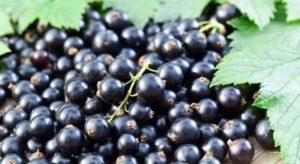
Terry leaf spot and other viral diseases are incurable. The plant is dug up and destroyed. Infected soil should not be used for five years.
How to cover plantings for the winter
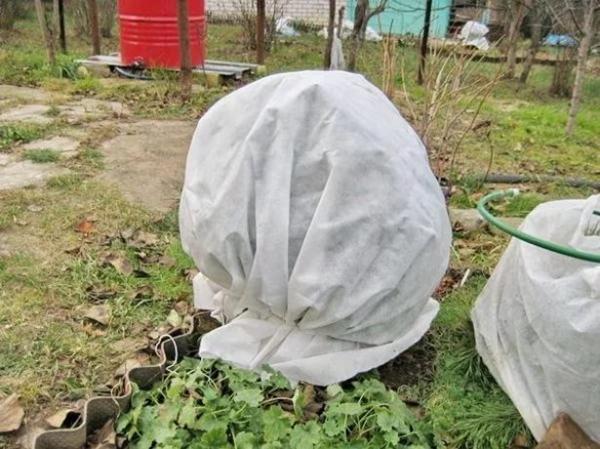
Currants should be covered if frosts below -30°C are expected. Any covering material can be used.
Methods of reproduction
Currant Nenaglyadnaya is propagated by cuttings, layering, and division of the bush.
By dividing the bush
This method is rarely used for currants. In the fall, the plant is dug up. Old shoots are cut off, and young shoots are trimmed back by 20 cm. The bush is divided so that each section has developed basal buds and several healthy roots.
Cuttings and layering
Cuttings 20 cm long are harvested in late summer, taken from two-year-old shoots. The lower cut should be at an angle, and the upper cut should be positioned a centimeter above the bud. The cuttings are kept in a growth stimulator for 24 hours and planted in a greenhouse in fertile soil at a 45° angle. After 1.5 months, the rooted seedlings are transplanted to their permanent location.

Propagation of the currant variety Nenaglyadnaya by layering This is done in the spring. Strong, one-year-old branches are selected, pruned, bent to the ground, and buried. The resulting shoots are hilled up to half their length twice a season. In mid-autumn, the young plants are separated from the mother plant and transplanted to the chosen location.
Tips and advice from experienced gardeners
To successfully grow the Nenaglyadnaya currant variety, follow the recommendations of experienced gardeners:
- If the groundwater level in the area is higher than 50 cm, then it is better to plant currants on a hill.
- Before planting, dried and damaged roots should be removed.
- Currants do not like chlorine-containing fertilizers.
- For winter protection against rodents, use spruce branches and install a fine-mesh net.
- Red currants don't get along with fruit trees or their black relatives. A suitable neighbor is gooseberries.
Reviews of the variety
The Nenaglyadnaya currant is one of the most popular varieties. Reviews are numerous and mostly positive. Gardeners note:
- soft taste with a pleasant sourness, no sourness;
- various uses of berries, preparation of jam, drinks, desserts, marinades, liqueurs;
- high productivity;
- undemanding in care;
- weak shedding of ripe berries;
- long-lasting taste preservation;
- self-fertility.
The Nenaglyadnaya red currant is not only a high-yielding, healthy, and beautiful crop. A single bush produces enough berries to keep a family supplied with vitamins all winter long.
Related posts:
 Characteristics and descriptions of the 40 best red currant varieties
 Description of the 50 best blackcurrant varieties for different regions
 The best and new varieties of black currant for growing in the Urals, planting and care
 Description and characteristics of the 25 best blackcurrant varieties for Siberia
 The health benefits and contraindications of black currants
 Description of the red currant variety Rovada, planting and care
 Red currant health benefits, properties, and contraindications
 Description of the red currant variety Sakharnaya, features of planting and care