
- Description of the pest
- Appearance
- Life cycle
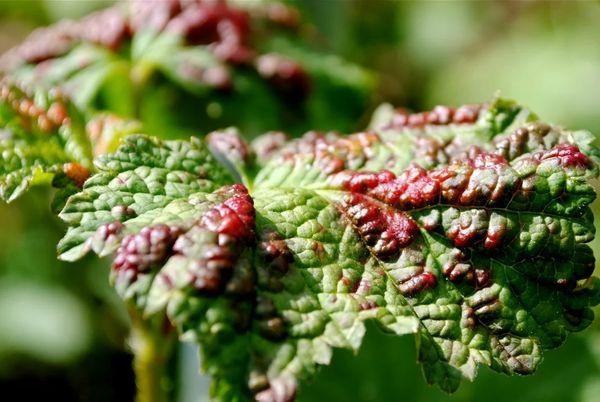
- How do scale insects reproduce and where do they overwinter?
- Parasite classification
- Why do scale insects appear on currants?
- Signs of parasitism and damage caused by insects
- Methods of control
- Mechanical techniques
- We use chemicals
- Folk remedies
- How to protect currants from parasites
- We give preference to varieties that are resistant to scale insects.
- We carry out seasonal treatments
- Natural enemies
Many people wonder how to combat scale insects on currants. These pests cause serious damage to plants and can even lead to their death. To achieve successful pest control, a comprehensive approach is recommended. Mechanical methods, chemicals, and folk remedies are commonly used to eliminate pests.
Description of the pest
To effectively combat pests, they must be identified promptly. To do this, it's important to familiarize yourself with the basic characteristics of pests.
Appearance
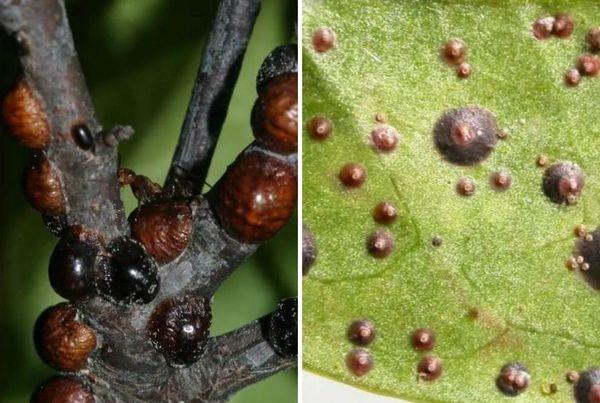
The scale insect is an insect belonging to the Hemiptera family. It is microscopic in size, measuring a maximum of 3-4 millimeters. Therefore, identifying the parasite on bushes is very difficult. The parasite gets its name from the shell, or shield, that covers its body.
Life cycle
Parasite larvae go through several stages of development:
- Wandering insects. These pests are born with elongated, gray bodies.
- Nymphs. These insects represent an intermediate stage. These insects are characterized by a dark-colored, oval body.
The lifespan of a fertilized female is three months. After laying eggs, she dries up. However, the eggs are able to withstand any conditions.
How do scale insects reproduce and where do they overwinter?
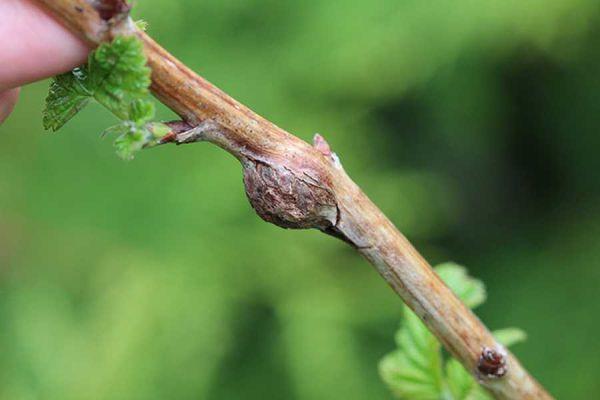
The larvae overwinter under the bark of branches and at the base of bushes. The adult female has a dark brown body, resembling a convex shield. At the end of June, an egg sac, twice the length of the insect, forms within her body. Females lay several hundred eggs at a time. The larvae emerge in July or August and attach themselves to branches.
Parasite classification
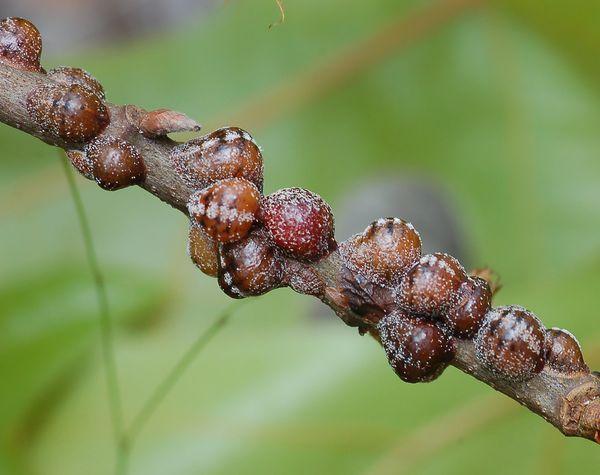
There are several species of these pests. The willow scale, in addition to currants, attacks gooseberries, poplars, and willows. The female's body is covered with a white-gray shield. The male's shield is elongated.
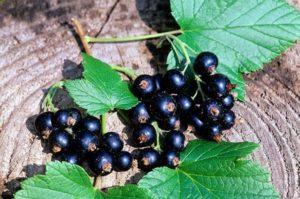
The pincushion pest causes damage to red and black currants. It also affects bird cherry, rowan, and gooseberry. The pest has an oval, yellow-green body and is no more than 5 millimeters long.
Why do scale insects appear on currants?
Currant damage may be caused by the following factors:
- purchasing infected bushes;
- soil infection;
- spread of insects by rain, wind, and animals.
Signs of parasitism and damage caused by insects
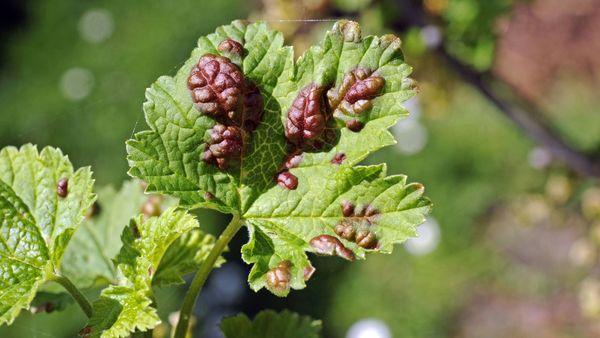
When red or black currants are infected, the following symptoms appear:
- brown spots;
- sticky surface of leaves;
- disruption of photosynthesis;
- falling of dry leaves;
- cracks in the bark.
Scale insects absorb the juices of currant bushes. As a result, there are no nutrients left for the crop to thrive, and photosynthesis ceases.
Methods of control
If scale insects are detected on bushes, it is necessary to take timely measures.
Mechanical techniques
Adults should be collected by hand. You can use a cotton swab or a toothbrush. Dip the swab in soapy water and wipe all branches and leaves.
We use chemicals
The choice of product depends on the treatment period. Systemic agents are used in the spring, while ovicidal formulations are used in the spring and fall. The procedure is performed at a temperature of at least 4°C (4°F).
Systemic agents include Aktara, Colorado, and Tanrek. Ovicidal agents destroy insect eggs. Actellic is used for this purpose.
Folk remedies
To treat currants against scale insects, you can use folk remedies:
- garlic infusion;
- infusion of laundry soap;
- tobacco dust;
- green soap;
- wood ash.
How to protect currants from parasites
To avoid damage to currants by pests, it is worth taking preventative measures.
We give preference to varieties that are resistant to scale insects.
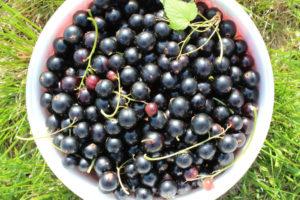
To prevent problems, choose varieties that are resistant to scale insects. The following are considered resistant blackcurrant varieties:
- Summer resident;
- Temptation;
- Raisin;
- Charm;
- Selechenskaya.
Take a look Also
Among the varieties of red currant you can choose the following:
- Scarlet Dawn;
- Vetch;
- Ural beauty;
- Gift of summer;
- Dutch red.
We carry out seasonal treatments
To prevent scale insect infestation, spray your bushes with Karbofos. This product helps control eggs and mature pests. The insecticide lasts for two weeks. Bushes can also be treated with pine or citrus infusions.
Natural enemies
The scale insect's natural enemies are the prospaltella and the ladybug. The former can also cause damage to fruit trees. Ladybugs cause 75% of scale insect infestations. Birds, such as the great tit and blue tit, also help control the insects.
Scale insects are considered a dangerous pest that seriously damages currants. To control them, prompt treatment with chemicals or natural remedies is necessary.
Related posts:
 20 Best Blackcurrant Winter Preserves Recipes
 Description and rules for growing black currant variety Veloy
 The health benefits and contraindications of white currants
 When is the best time to plant currants to get a good harvest?
 Characteristics and descriptions of the 40 best red currant varieties
 The health benefits and contraindications of black currants
 TOP 10 recipes for red, black, and white currant sauce and ketchup for the winter, and how to store your preparations
 Why and what to do if blackcurrant leaves turn yellow