
- History of the Patricia variety
- Characteristics and description
- Bush
- Berries: tasting evaluation and scope of application
- Immunity to diseases
- Resistance to low temperatures and drought
- Advantages and disadvantages of the variety
- Planting and propagation of raspberries
- Seeds
- Cuttings
- By dividing the bush
- Growing a crop
- Selecting a site and planting plan
- The technological process of planting
- How to care for the variety
- Regularity of watering
- Fertilization
- Loosening and mulching the soil
- Protection from diseases and insects
- Covering bushes for winter
- Reproduction of culture
- Reviews of Patricia raspberries
Raspberry bushes grow in almost every garden. Breeders have developed numerous varieties, and gardeners only need to choose the right one. One of the most popular raspberry varieties is Patricia. It produces abundant fruit, delicious, aromatic berries, and versatile uses. Below is a description of the Patricia raspberry, its advantages and disadvantages, and cultivation in garden plots.
History of the Patricia variety
The Patricia currant was bred at the Moscow Institute of Horticulture and Nursery. The breeding work was carried out by specialist V. V. Kichina. In 1986, she crossed Maroseyka variety and raspberries under the number M102. The resulting variety was initially assigned the number K55, then in 1992 given the name Patricia.
Characteristics and description
The variety begins bearing fruit in mid-June. Harvesting continues until mid-August, making it considered a remontant raspberry. However, experts maintain that the variety produces single-ripening berries.
Bush
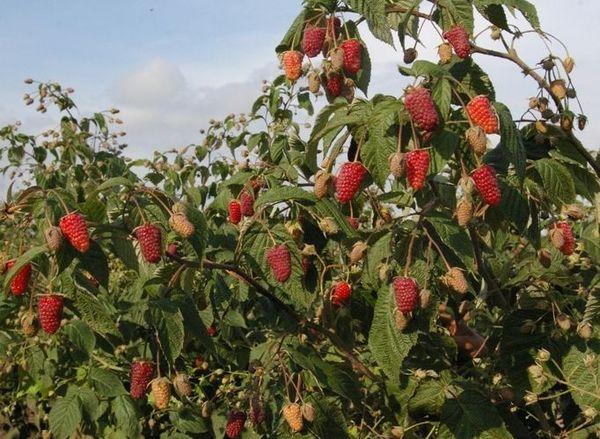
The Patricia raspberry's canes reach up to 2 meters. They are thornless, vigorous, and upright, but due to the height of the cane tips, they spread out slightly. The canes are initially green, turning light brown the following year. This variety produces up to 10 new canes per season.
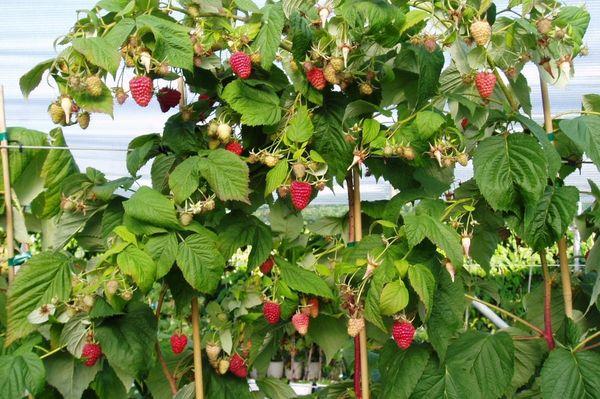
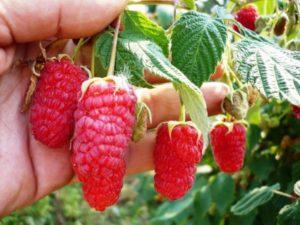
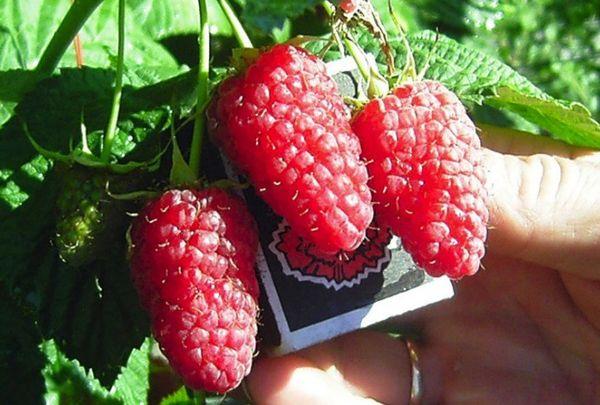
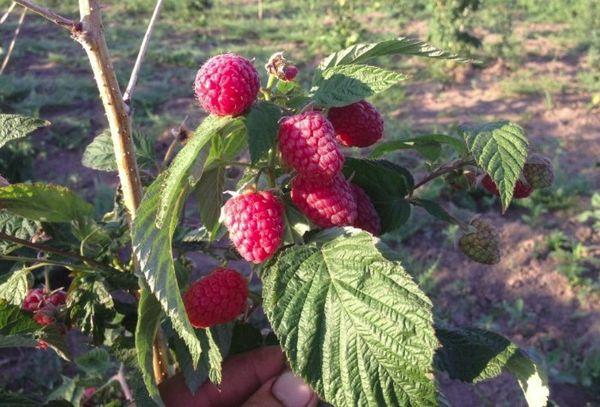
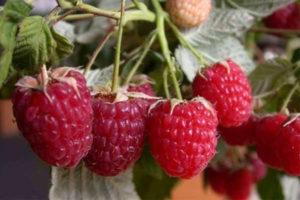
Fruiting occurs on second-year branches. Each shoot produces 18-20 berries. They are cone-shaped, red, and have a velvety surface. Fruit weight ranges from 4 to 13 grams.
Berries: tasting evaluation and scope of application
This variety produces a high yield: 4-7 kilograms of fruit can be harvested from a single bush. The berries have tender, juicy flesh and a sweet, distinctive raspberry aroma.
The fruits must be used within 24 hours, otherwise they will become bruised and release juice. Raspberries in this state quickly become moldy and are no longer suitable for consumption.
Berries can be used to make juice, compote, jam, wine, used as a filling for baked goods, and also frozen.
Immunity to diseases
The variety is resistant to anthracnose, moderately resistant to gray mold, and weakly resistant to late blight. Therefore, it's important to monitor the plantings to prevent disease outbreaks. To prevent disease, spray the bushes with antifungal agents in the spring.
Take a look Also
Resistance to low temperatures and drought
The variety tolerates temperatures down to -30°C. If a colder winter is expected, the branches bend to the ground and are covered. Prolonged drought reduces the quality of the harvest: the berries become smaller and dry out. Therefore, if there is no rain, the bushes are watered periodically.
Advantages and disadvantages of the variety
The positive qualities of the variety include the following characteristics:
- rapid growth;
- abundant fruiting;
- excellent taste and aroma of berries;
- frost resistance;
- absence of thorns;
- resistance to many diseases
The disadvantages of the Patricia raspberry include poor transportability, the need to tie up the shoots in case of a bountiful harvest, and fruit rotting in high humidity.
Planting and propagation of raspberries
Raspberry Patricia is propagated by seeds, cuttings, and division of the bush.
Seeds
Before sowing, soak the seeds in a glass of water for 24 hours. This is necessary to identify and discard any non-viable ones. The seed propagation procedure is as follows:
- loose, fertile soil is poured into the box;
- grooves are made 0.5 centimeters deep;
- The seeds wake up in them and are covered with substrate.
Place the container on a bright windowsill, monitoring the soil moisture. Once the seeds sprout and develop a pair of true leaves, transplant the seedlings into individual pots. The grown raspberries are planted outdoors.
Cuttings
Woody or green shoots are used. In the former case, two-year-old cuttings 10-12 centimeters long are taken in the fall and treated with an antifungal agent. They are then buried 5-7 centimeters deep in the soil in an unheated greenhouse. In the spring, each cutting is potted; once they have rooted and developed above-ground growth, they are planted outdoors.
Propagation by green cuttings is done in late spring or early summer. To do this, cut off 15-20 centimeters of the top of the current year's shoot. Then, trim off the top, remove the lower leaves, dust the bottom cut with a growth enhancer, plant in a container, and cover with plastic wrap. After about three weeks, the cutting will begin to grow roots.
By dividing the bush
This method is used to propagate mature raspberry bushes. They are dug up and divided into sections. Each section should have 2-3 shoots with well-branched roots. A gardener can obtain 4-5 new plants from a single old Patricia bush.
Growing a crop
The quality and quantity of the harvest largely depends on the planting material. The root system of the seedlings must be healthy and resilient. It's best to purchase Patricia raspberry seedlings from trusted sellers.
Selecting a site and planting plan
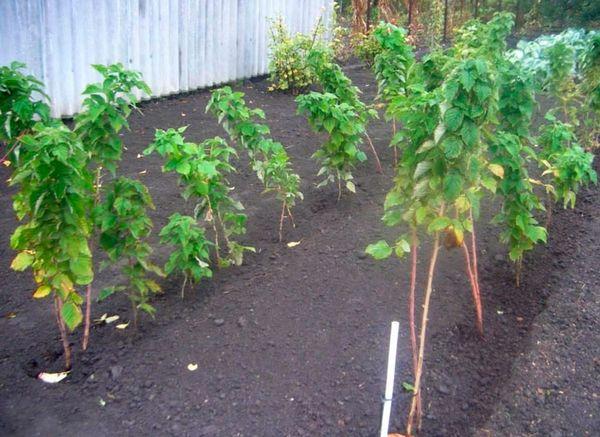
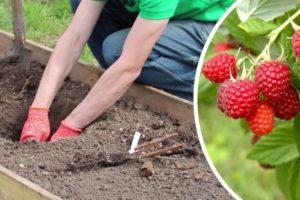
Choose a sunny location for planting Patricia raspberries; otherwise, the berries won't be as sweet. The most favorable soil is sandy loam or loamy soil with added nutrients. The soil should be neutral in pH.
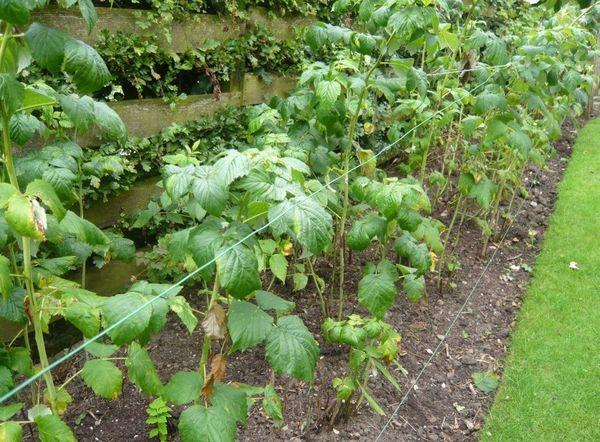
The planting hole is dug 40 centimeters deep and wide. Given that the bushes grow rapidly, the distance between them is at least 70 centimeters. The distance between rows is 2 meters.
The technological process of planting
A month before planting, sprinkle 5 kilograms of manure, 50 grams of superphosphate, and 20 grams of potassium per square meter of soil, then dig the soil in. Then, plant the raspberry bushes as follows:
- fertile soil is placed into the planting hole;
- the root system of the seedling is straightened out and covered with substrate;
- The soil around the plant is lightly compacted and watered.
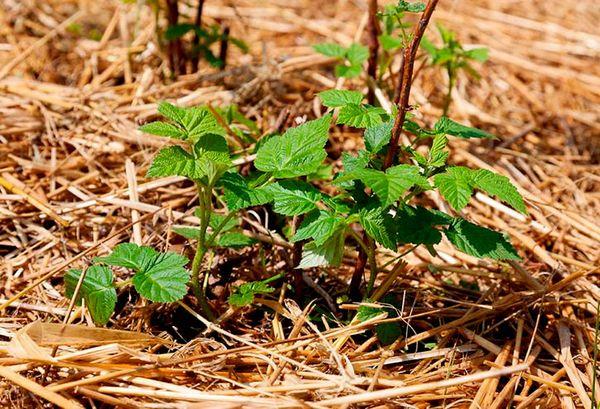
To conserve moisture, mulch the soil with straw or mown grass. The buds located at the base of the seedling should be buried 2-3 centimeters deep.
How to care for the variety
Raspberries require care throughout the spring and fall season. If rainfall is low, water, loosen the soil, mulch, and fertilize. In colder regions, the bushes require winter protection.
Regularity of watering
Without watering, berries will grow small, tasteless, and dry. However, raspberry bushes also do not tolerate stagnant water, as this can promote the growth of pathogenic microorganisms. Raspberries especially need watering during the period of foliage growth, during flowering, before the berries begin to ripen, and after harvest. Raspberry bushes should also be watered generously before the onset of frost.
Fertilization
As soon as the sun warms and the ground thaws, add organic matter to the raspberry bushes. For example, water them with a 1:20 dilution of bird droppings. Before flowering, fertilize the bushes with a complex mineral fertilizer containing primarily potassium and phosphorus. In the fall, spread compost or rotted manure around the roots.
Loosening and mulching the soil
To prevent crusting, loosen the soil after each watering. The root system is located close to the soil surface, so this process must be carried out carefully. To retain soil moisture, the root area is mulched with straw or grass clippings.
Protection from diseases and insects
To prevent diseases and pests, weeds and fallen leaves should be removed promptly. Fruit-bearing and diseased shoots should be pruned. As a preventative measure, raspberry bushes are sprayed with insecticides and fungicides in the spring.
Covering bushes for winter
The Patricia raspberry can withstand temperatures down to -30°C. If a colder winter is expected, especially with little snow, the root area should be mulched with sawdust. Additionally, the raspberry branches should be bent to the ground and covered with spruce branches.
Reproduction of culture
Patricia raspberries can be propagated in a garden using root cuttings, green cuttings, and woody cuttings. They can also be propagated by division. Overgrown plants are dug up, divided, and each division is planted separately. Gardeners do not use seed propagation in their gardens because it is labor-intensive and requires a long wait for a harvest.
Reviews of Patricia raspberries
According to gardeners, this variety is easy to care for and highly productive. The berries are tasty and aromatic, but they must be used within 24 hours, otherwise they begin to rot.
Elena Ivanovna, 40 years old, Uman
I've been growing Patricia berries for many years. Every year I reap a bountiful harvest. The berries are sweet and aromatic. I make delicious jam from them, which I use to heal myself in the winter without any pills.
Vera Petrovna, 55 years old, Biysk
I like this variety. It produces large, sweet fruits. The berries are always in great demand at the market. The only problem is that the bushes grow quickly and need constant thinning.
Marina Ivanovna, 30 years old, Kursk
We have several raspberry bushes growing at our dacha, including Patricia. This variety is tall, requiring constant tying of the stems to a trellis. We pick the berries and process them the same day: we make compotes, jams, and freeze them.
Related posts:
 The best raspberry varieties for the Moscow region with descriptions and characteristics
 Description and characteristics of the 50 best raspberry varieties for Siberia
 Step-by-step instructions for planting and caring for raspberries in summer, tips from gardeners
 Description of the remontant raspberry variety Atlant, planting technology and care
 Description and characteristics of the Hussar raspberry variety, care and cultivation
 Description and varieties of the everbearing raspberry variety Penguin, planting and care
 Description of the Polka raspberry variety, yield, planting and care
 40 of the best varieties and cultivars of red raspberries with descriptions