
- Features of preparing cauliflower for the winter
- How to select and prepare cabbage before starting the process
- Methods for preparing cauliflower at home
- Classic canning recipe
- Korean-style cauliflower
- Pickling with tomatoes
- Preservation without sterilization
- Recipe in tomato sauce
- Pickling with apples
- With carrots and garlic
- With bell peppers and onions
- With beets
- Store in the freezer
Cauliflower is considered a delicacy in Europe. It boasts a rich and varied nutritional profile, has a delicate texture, and is easily digested and absorbed. Preserving cauliflower at home for winter storage is possible by preparing various preserves. This makes it suitable for everyday use, dietary use, and baby food.
Features of preparing cauliflower for the winter
When canning cauliflower, keep in mind that the heads have fleshy, juicy flesh; prolonged cooking can cause them to become soft and lose their flavor. The canning, sterilization, and packaging procedures must be completed quickly.
For cooking, use a minimal amount of water to reduce the loss of vitamins and minerals washed out of the vegetable pulp by water.
How to select and prepare cabbage before starting the process
Cauliflower is a perishable product; it quickly loses its nutritional value when stored. It is harvested when the head is forming, with the outer leaves green, and before it flowers.
The heads of cabbage are prepared before canning by soaking them in a salt solution (70 grams of salt per 1 liter of water) to remove soil particles and insects, followed by rinsing and cutting off the heads from the common stalk.
Methods for preparing cauliflower at home
You can preserve your harvest using household appliances, tools, and culinary technologies:
- freezing in freezers;
- packaging in vacuum bags;
- pickling;
- canning with and without pasteurization, with hermetically sealed closures.
Classic canning recipe
This classic recipe is the simplest way to prepare homemade preserves. It will help home cooks prepare preserves quickly and efficiently. This versatile marinade contains readily available ingredients and is suitable for any vegetable marinade.
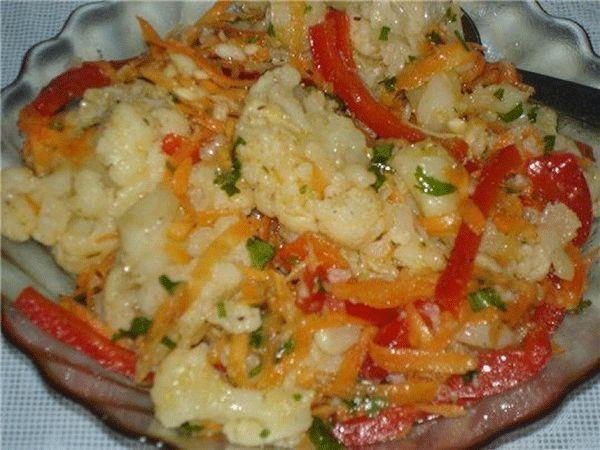
Vegetables (chopped to your liking) and spices are placed in sterilized jars (using a dry air or steam sterilizer). To eliminate germs, the vegetables are scalded with boiling water for 1 minute, and the marinade is drained. The marinade is prepared according to the recipe and poured over the vegetable mixture. The jars are hermetically sealed and sterilized for 20 minutes at 90°C. C. Cool in air.
Recipe:
- for 1 kilogram of inflorescences - 600 grams of filling;
- hot bell pepper, carrots - 1 each;
- garlic, bay leaf, black pepper, allspice, cloves – to taste.
Marinade:
- water – 1 liter;
- salt – 30 grams;
- sugar – 50 grams;
- vinegar 9% – ½ cup.
Korean-style cauliflower
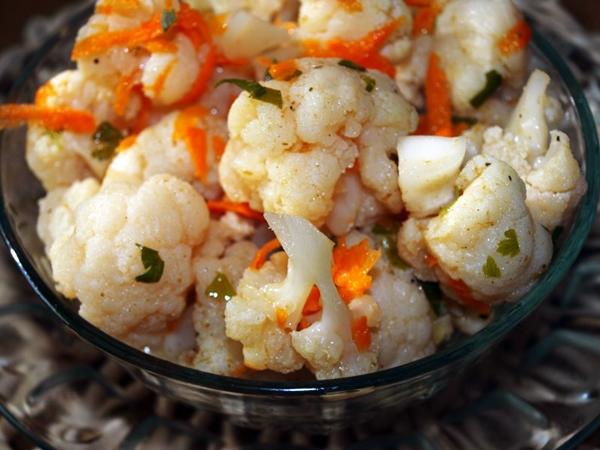
For those who love spicy appetizers, the best way to enjoy them is to make them Korean-style. Marinated cauliflower with coriander, hot pepper, and garlic has a piquant flavor. The appetizer is very spicy and delicious.
Place all the vegetables in a sterile container (small) in layers. Cut the hot pepper into thin rings and place them between the vegetable layers. You can sprinkle the layers with ground red pepper. Pour the coriander seeds into the boiling marinade. Pour the marinade over the salad twice:
- 1 time with water, leave for 10 minutes;
- 2 times with marinade, pour hot oil on top.
Seal the finished salad with airtight lids. Store in a cool place.
Recipe: the amount of cabbage, carrots, garlic, hot pepper, and coriander is at the discretion of the hostess.
For filling:
- water – 1 liter;
- salt – 2 tablespoons;
- sugar – ½ cup;
- vinegar 9% – ½ cup;
- vegetable oil – 3 tablespoons.
Pickling with tomatoes
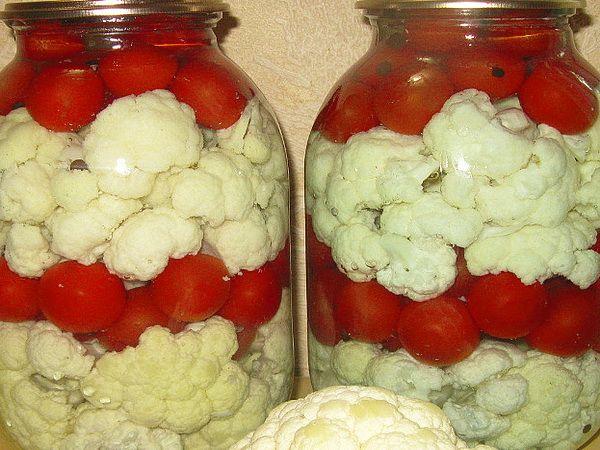
Marinated tomatoes, layered with florets, will not only be a table decoration, but also a wonderful appetizer.
Place the spices in sterile jars, layering the tomatoes, florets, and herbs. Make a double filling: first with boiling water, heated for 10 minutes, and then with the boiling marinade. Seal tightly, wrap, and let cool.
Recipe:
- vegetables - in equal quantities;
- herbs, spices – to taste.
Marinade – according to the classic recipe.
Preservation without sterilization
The salad can be prepared without sterilization, with basil and hot pepper.
Place the inflorescences, purple basil greens, and a whole hot pepper pod (pierce in several places with a fork) into sterile jars.
The first time we pour boiling water, let it sit for 15 minutes and then pour it out. The second time we pour boiling marinade, seal it with airtight lids and wrap it up.

Recipe:
- heads - as needed;
- hot pepper – 1 pod per jar;
- purple basil.
The marinade is universal.
Recipe in tomato sauce
The colored heads can be preserved by pouring tomato juice over them.
Warm the tomato heads in boiling water for 5 minutes. Juice the tomatoes by hand or with a juicer. Boil the tomato juice until the foam disappears. Add salt and sugar to the finished juice.
Fill sterile jars (half full) with hot florets, pour boiling juice over them, and seal with lids. Check the jars for leaks and wrap them tightly to further pasteurize the preserves.
Recipe: Take tomatoes, cauliflower heads. For 1 liter of tomato juice, add 30 grams of salt and sugar.
Pickling with apples
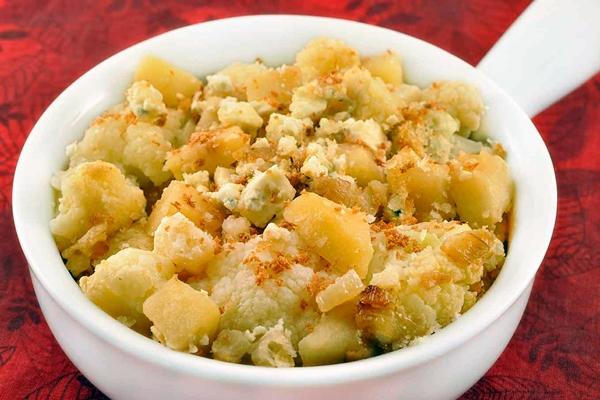
Cabbage preserved with apples acquires an apple aroma and wonderful flavor. Those who prefer spicy foods can use Antonovka apples and cut them into large wedges; those with a sweet tooth can use whole Yantar apples.
Layer the apples and cabbages in jars, pour the pre-prepared marinade over them, and heat for 15 minutes, covered with a towel. Drain the marinade, bring to a boil, pour over the mixture, and seal tightly.
Recipe:
- apples and heads - in equal quantities;
- water – 1 liter;
- salt – 2 tablespoons;
- sugar – 4 tablespoons;
- vinegar 9% – 2 tablespoons.
With carrots and garlic
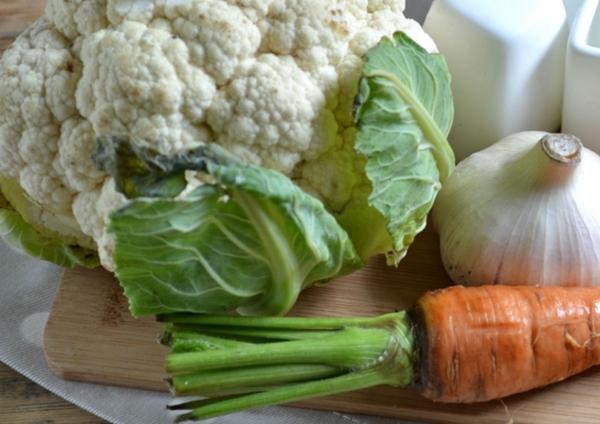
The colored heads can be salted with the addition of carrots and garlic.
Chop the carrots into thin circles or slices, cut the large garlic cloves in half.
Layer the chopped vegetables in a sterile container, press them together with a masher, pour in the boiling brine, seal with plastic lids, and store in a cellar or refrigerator. During storage (due to fermentation), the brine may leak out; if this happens, top up the brine.
Recipe:
- head of cabbage, carrots – 1 piece each;
- garlic – 1 head;
- water – 1 liter;
- salt – 2 tablespoons;
- sugar – 4 tablespoons;
- vinegar 9% – 50 grams.
With bell peppers and onions
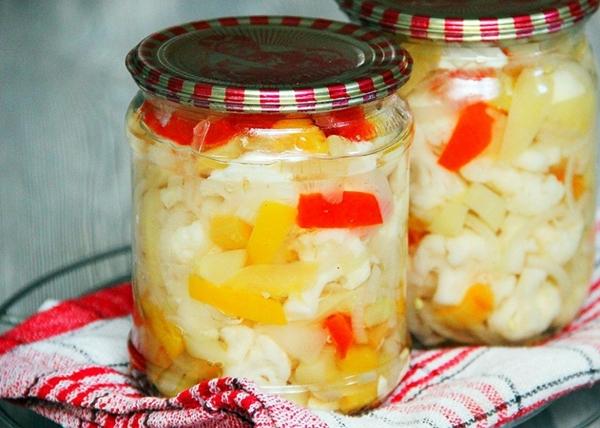
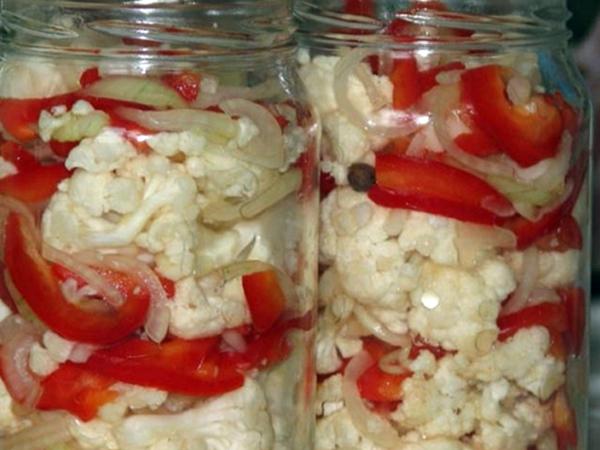
This delicious cauliflower salad with bell peppers and onions can be served as a cold appetizer or a side dish for fried or stewed meat.
Layer the vegetables and herbs in sterile jars, compact the mixture, add boiling water, and drain after 15 minutes. Pour the boiling marinade over the salad, then carefully pour in the hot oil from a frying pan. Seal the jars with metal lids using a hand-held sealer, wrap them tightly, and let them cool.
Take a look Also
Recipe:
- head – 1 piece;
- pepper – 4 pieces;
- onion – 1 piece;
- a set of spices and herbs - to taste;
- sunflower oil – ½ cup;
- water – 1 liter;
- salt – 2 tablespoons;
- sugar – 4 tablespoons;
- vinegar 9% – ½ cup.
With beets
The colored heads can be pickled with beets, which gives the preserves a bright color and a piquant taste.
Peel, shred, grate or chop the beets by hand or in a food processor.
Place spices, cabbage and beets in sterile jars, pour boiling water over them, and drain the first filling.
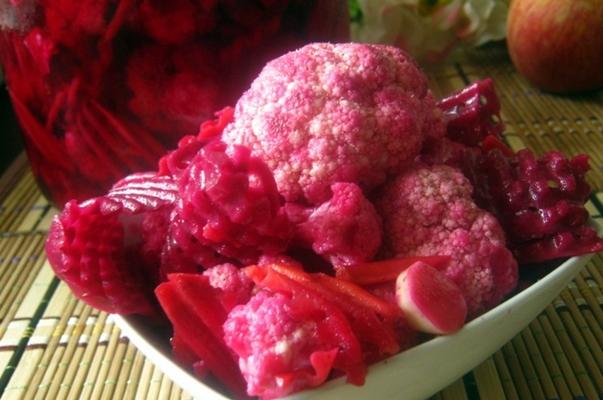
Pour the hot marinade over the vegetable mass and pasteurize at 90 C (0.5 liter jars – 20 minutes, 0.75 liter jars – 30 minutes).
Recipe:
- head – 1 piece;
- table beetroot – 1 piece;
- a set of spices – to taste;
- classic marinade.
Store in the freezer
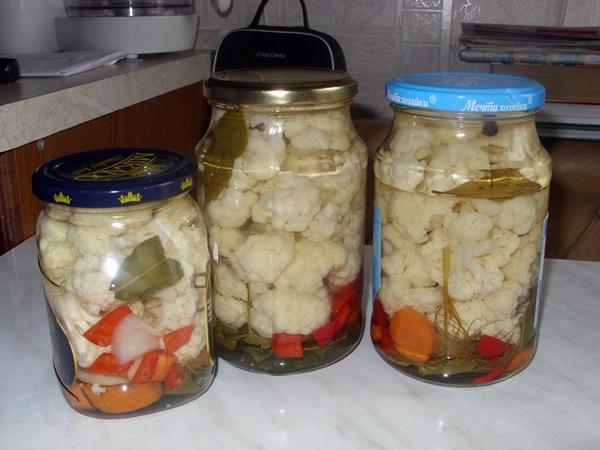
Proper storage of cauliflower allows you to preserve your harvest. Canning vegetables in jars provides your family with ready-to-eat salads and cold appetizers.
To prepare hot dishes – vegetable soups, side dishes, vegetable casseroles – you can preserve the heads by freezing.
Prepared florets are dipped in salted boiling water for 2 minutes. Cool quickly in cold water, pat dry with paper or waffle towels, and placed in vacuum-sealed bags, containers, or simple plastic food bags. Store in freezer compartments.
Related posts:
 40 of the best recipes for delicious homemade winter preserves
 TOP 20 recipes for making homemade pickled plums for the winter
 Top 20 easy recipes for making lecho for the winter at home
 24 Best Recipes for Preserving Beets for the Winter
 20 Best Recipes for Making Delicious Zucchini Preserves for the Winter
 How to quickly prepare pickled eggplant in jars for the winter, the most delicious recipes and storage conditions for the preparations
 How to sterilize jam jars in the microwave: methods and rules
 Delicious step-by-step recipes for zucchini pickled like mushrooms for the winter