
- The benefits of sterilizing jars in a pot of water
- Choosing a saucepan
- Preparing containers before starting the process
- What to do to prevent banks from bursting
- At what temperature should you sterilize jars in a saucepan?
- How and how long to boil?
- Half a liter
- 1 liter
- Three-liter
- Is it possible to boil jars with preparations?
- With mushrooms
- With cucumbers
- With tomatoes
- With salad
If you enjoy tinkering in the kitchen and delighting your loved ones with delicious and healthy foods year-round, it's worth making preserves. To do this, you need to know how to properly sterilize empty jars in a pot of water and containers of canned food to ensure they stay fresh for a long time. You'll find plenty of helpful tips on sterilizing containers in the sequel.
The benefits of sterilizing jars in a pot of water
The advantages of this method include the following:
- Easy to make at home – hot water and a container for preserving can be found in any home.
- Along with the jars, you can sterilize the lids for sealing.
- Cleaning the vessel by boiling reliably kills germs.
Choosing a saucepan
When choosing a container for canning jars, pay attention to its width and height. Depending on the capacity of your canning vessel, choose a container that can accommodate several jars.
As for the material from which the saucepan is made, it is better to give preference to aluminum or enamel.
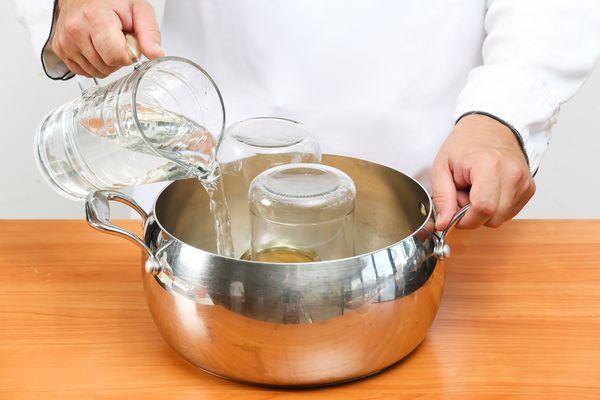
Preparing containers before starting the process
To prepare a vessel for sterilization, follow these tips:
- Make sure the jars are intact and have no cracks or chips.
- It’s better to take used jars, their glass is more durable.
- Twist-off caps must be rust-free and have a rubber seal on the inside.
- You should wash jars and lids with a clean cloth or sponge.
- Use detergents and baking soda to thoroughly rinse the container.
Take a look Also
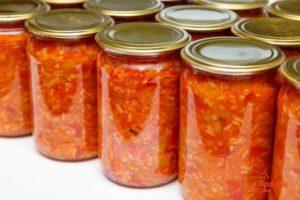
What to do to prevent banks from bursting
To avoid burns and injuries from a burst can, it must be prepared properly.
- do not place the container in a cold place beforehand;
- pour boiling water over it gradually so that it has time to warm up;
- fill with small portions of boiling water and “wash” the walls of the vessel with it;
- Preheat the jar with steam;
- Place a knife or spoon in the middle and slowly pour boiling water onto the appliance.
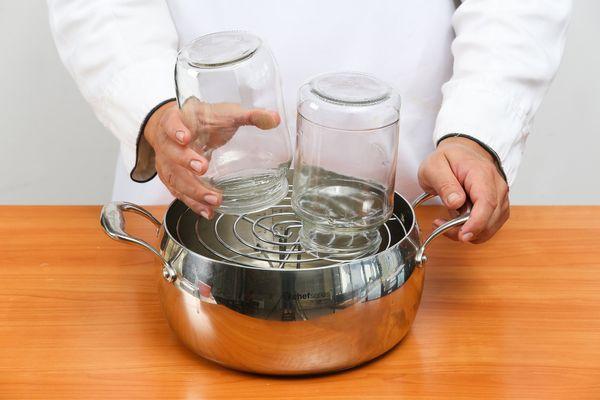
At what temperature should you sterilize jars in a saucepan?
The temperature in the pot of boiling water should not exceed 120°C. There should be no temperature fluctuations when disinfecting the container.
How and how long to boil?
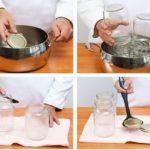
Prepare the required number of boiling containers that will fit in the saucepan. Begin sterilizing:
- a piece of fabric should be placed on the bottom of the container;
- Place the container upside down and place the lids between it;
- fill with cold water so that the liquid covers the jars completely;
- Boil the container on the stove at a temperature of no more than 120 °C for about 15 minutes.
Before canning, jars must be absolutely clean.
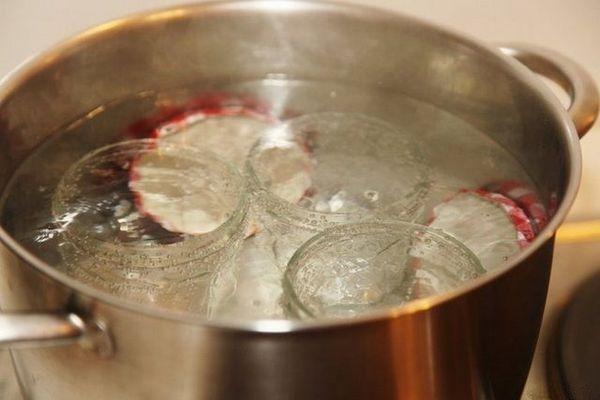
Half a liter
To boil a 0.5 liter vessel, it will be enough to keep it in water for 6-8 minutes.
1 liter
A 1 liter jar should be sterilized for 10-12 minutes.
Three-liter
Containers of 3 liters or more are boiled for at least 30 minutes.
Is it possible to boil jars with preparations?
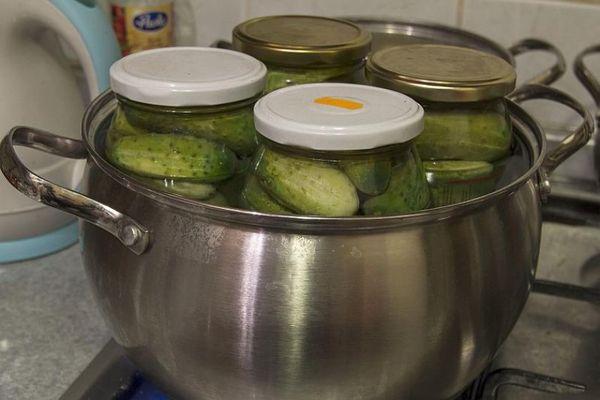
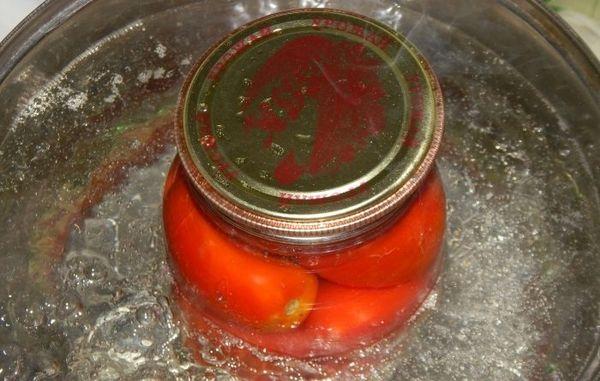
You can sterilize jars with preserves in a container of water or in the oven.
To avoid damaging the preserves:
- use new caps, without rust or damage;
- Do not use vacuum sealers to seal preserves.
- Be sure to place the jars in the pan on a piece of cloth.
With mushrooms
If you see slime in the marinade that shouldn't be there, the mushrooms should be washed.
With cucumbers
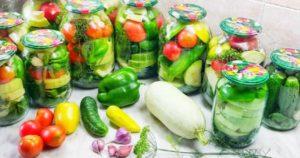
Pasteurization of cucumbers can be carried out in a pan with boiling water heated to 85 °C for 2 times longer than when sterilizing containers.
With tomatoes
You can sterilize jars of tomatoes in the oven. Open and place the jars in a slightly preheated oven. Bake at 120°C for 10-15-20 minutes.
With salad
Place the jars with salad in a saucepan on a cloth, fill to the top with liquid and boil for 10-15 or 20 minutes.
Related posts:
 How to properly sterilize jars at home and for how long, the best methods
 How to sterilize jam jars in the microwave: methods and rules
 How long does it take to sterilize jars with steam? Home cooking instructions.
 Is it possible to sterilize empty jars in the microwave? How to do it correctly and for how many minutes?
 How to properly sterilize jars with preserves, the best methods and duration
 40 of the best recipes for delicious homemade winter preserves
 How to quickly prepare pickled eggplant in jars for the winter, the most delicious recipes and storage conditions for the preparations
 Making finger-licking good eggplant caviar with peppers and tomatoes