- Why are jars sterilized?
- What to do to prevent banks from bursting
- At what temperature to sterilize?
- Processing time depends on the capacity of the can
- For half a liter
- 1-liter
- For 3 liters
- Preparing jars for canning
- Sterilization methods
- In the microwave
- For a couple
- In a pan of boiling water
- In an electric or gas oven
- In a multicooker
- In an air fryer
- In the dishwasher
- In a steamer
- Sterilization of jars with potassium permanganate
- Do jars need to be dried after sterilization?
- Rules for sterilizing lids with rubber seals
Many people wonder how best to sterilize jars. To achieve success, it's important to follow the procedure correctly. This will help kill pathogenic bacteria and preserve the quality of the preserves for a long time. Jars can be sterilized in a microwave, oven, or steamer. Sometimes, a dishwasher or air fryer is used for this purpose.
Why are jars sterilized?
The sterilization process is time-consuming and significantly complicates the preservation process. However, avoiding this procedure is quite difficult.
Why is it recommended to sterilize jars? This procedure is essential to kill pathogenic bacteria.
Heat treatment helps eliminate harmful microflora. This sterilization process can be used on both opened and closed jars.
If this isn't done, bacteria will begin to multiply in the finished products. This can cause them to spoil. This can be seen by the lids swelling. The brine will also become cloudy.
What to do to prevent banks from bursting
Glass jars often break during sterilization. To prevent this, take precautions. If you plan to immerse the container in boiling water, preheat it. To do this, we recommend using a small amount of boiling water and gently rinsing the container. It's also recommended to place a towel in the pan.
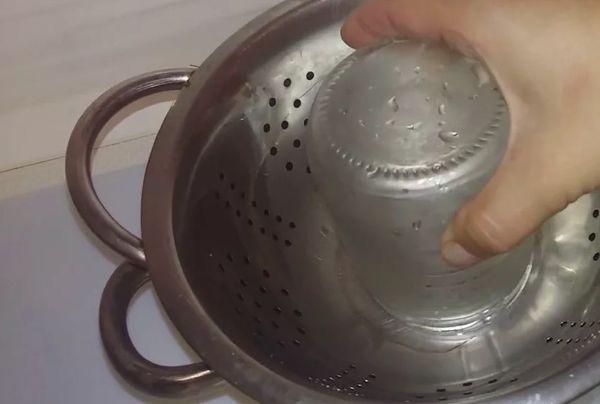
If you plan to sterilize the container in the oven, heat it gradually. Allow it to cool slightly before removing it from the oven to avoid exposing it to temperature fluctuations.
At what temperature to sterilize?
The temperature setting is selected based on the sterilization method. It can range from 70 to 200 degrees:
- in the dishwasher the temperature is at least 70 degrees;
- when exposed to steam and boiling, the temperature should be 100 degrees;
- the air fryer is set to 150 degrees;
- In the oven, set the mode to 200 degrees.
Processing time depends on the capacity of the can
The duration of temperature exposure is determined by the size of the container.
For half a liter
Small jars sterilize fairly quickly. It takes literally 10 minutes.
1-liter
Such containers should be processed for about 15 minutes.
For 3 liters
Three-liter containers require more time. They require a longer sterilization time—25-30 minutes.
Preparing jars for canning
Canned foods can be exposed to pathogenic bacteria. If not sterilized beforehand, fermentation can cause spoilage. This manifests as cloudy brine. Lids also often bulge.
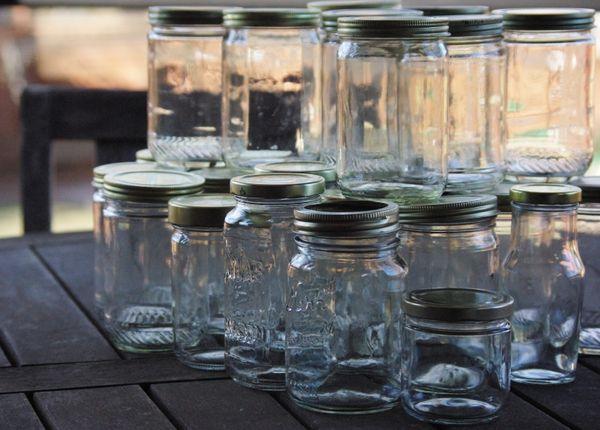
Therefore, before preparing preserves at home, it is worth following these rules:
- Inspect the jars. They should be free of cracks or other damage. If there are any, the lid will come off.
- Empty jars should be washed with warm water and a cleaning solution. Then, dry them with a towel or let them air dry. Only dry jars should be sterilized.
Sterilization methods
There are different processing methods, each of which has its own specific characteristics.
In the microwave
This is a simple method. Add 1-2 centimeters of water to each jar and microwave for 2-3 minutes. The power setting should be 700-800 watts. When the liquid boils, steam is produced, which destroys all bacteria. If you don't add water, the glass container may crack.
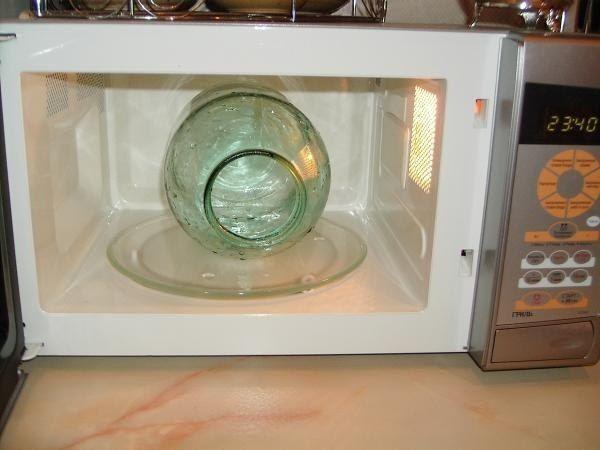
If you need to process 3-liter jars, add a glass of water. Place these jars on their sides and place them in the oven.
This method has only one drawback—the microwave's small size. However, it offers a number of advantages: it saves stovetop space, reliably handles containers, and keeps the air in the kitchen fresh.
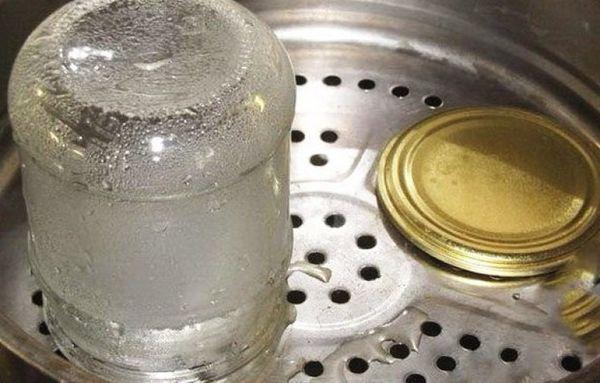
For a couple
To use this method, you'll need a teapot, a Turkish coffee pot, or other small-mouthed vessel. Once the teapot boils, you can place a jar over the spout. It's also possible to place it in the neck of a Turkish coffee pot.
One-liter containers are sterilized for 7-10 minutes, and three-liter containers for 15 minutes. After complete sterilization, no water droplets will appear in the container.
In a pan of boiling water
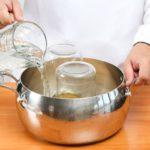
To process the jars in a double boiler, you can use a saucepan. Fill it with 2/3 of water and place the jars inside. They should be filled with water. It's important that the jars don't touch each other. Therefore, place cheesecloth between them.
Then turn on the stove and wait until it boils. The lids are often sterilized at the same time as the cookware. The downside of this method is that it fills the kitchen with steam.
In an electric or gas oven
To process jars this way, place the container in the oven and preheat to 150 degrees Celsius. Keep the jars at this temperature for 15 minutes. Three-liter jars should be processed for 25 minutes.
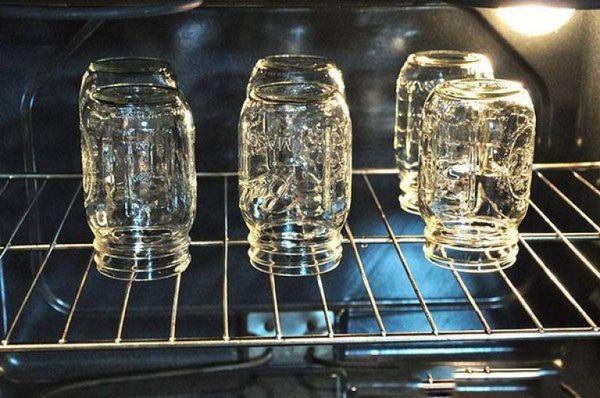
To remove and replace jars, use oven mitts. It's important that they are completely dry, otherwise the jars may crack. This method helps kill a wide range of bacteria.
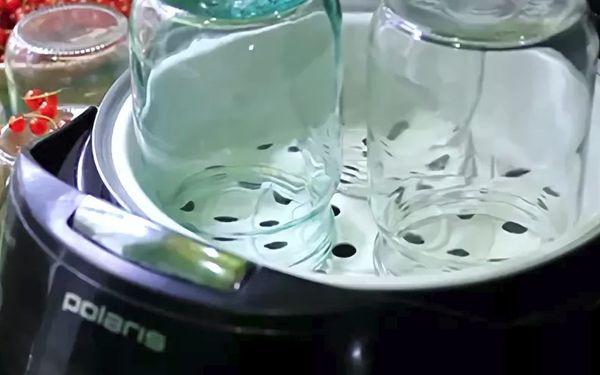
In a multicooker
To process jars using this method, fill the bowl to the second level and cover with a lid. Once the liquid boils, place the jar upside down and begin sterilizing. To do this, set the jar to the "Boil" or "Steam" setting. The sterilization process should last 5-7 minutes.
The process is complete when condensation appears and runs down the sides. The jars can then be removed and filled with ingredients.
In an air fryer
To process a jar using this method, remove all unnecessary items, such as racks and grates. Only the bottom rack should be left in the device. If tall containers require processing, a special ring should be installed in the air fryer.
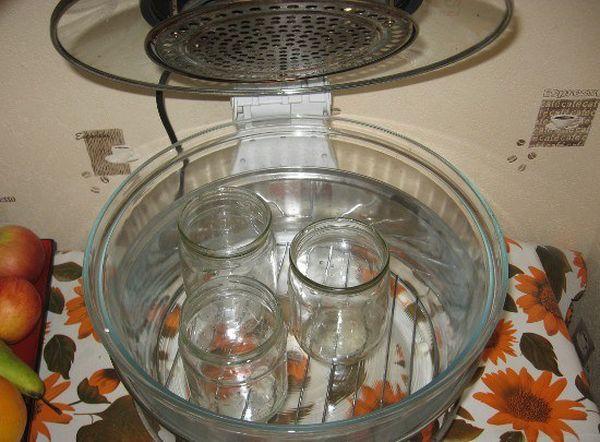
Place the dishes in the air fryer and cover with a lid. It's important to set the sterilization mode to 120-150 degrees Celsius. The process lasts 10-15 minutes.
In the dishwasher
This method is considered less common because the dishwasher must have a sterilization function. To properly perform the procedure, load clean jars into the machine and turn on the wash cycle. The temperature setting should be set to the highest setting. This method is suitable for processing 20 jars.
In a steamer
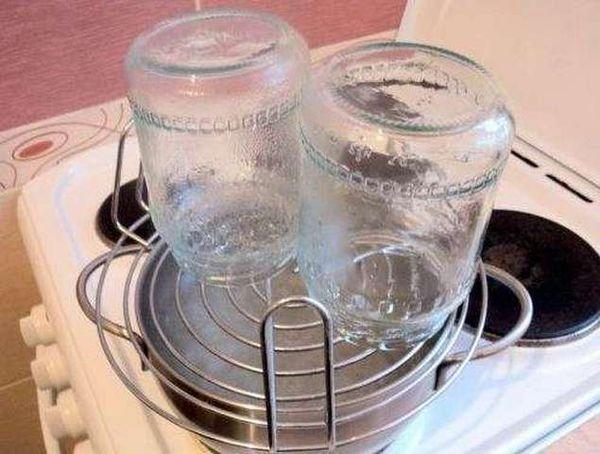
The easiest way to sterilize jars is in a steamer. To do this, place the jars upside down and set the steamer to boil for 15 minutes. As the water boils, the jars are sterilized. This is a fairly simple method that requires minimal time and effort.
Sterilization of jars with potassium permanganate
This substance has a pronounced antimicrobial effect. To disinfect the jars, you'll need a saturated solution. Fill the jars halfway with it, then add warm water and cover with lids. Leave the jars in this solution for 10 minutes, then turn them over and leave for 5 minutes.
After the specified time has elapsed, the jars should be turned upside down and left for another 5 minutes. Then, drain the liquid. To remove any remaining liquid, rinse the jars with boiling water.
Do jars need to be dried after sterilization?
After the procedure, there's no need to dry the containers. They will dry naturally under high temperatures. When sterilizing containers in the oven, no water is used at all. The same applies when using an air fryer.
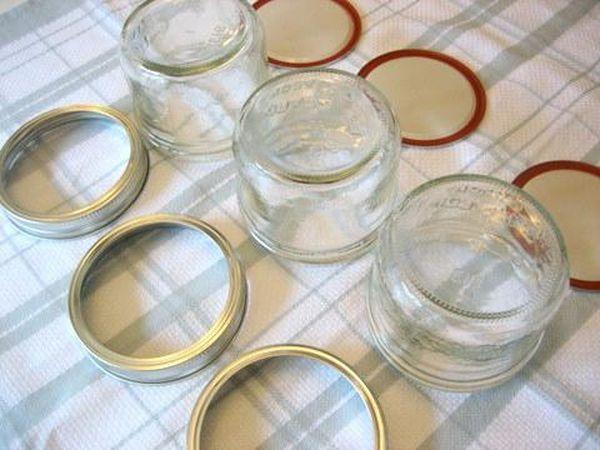
When washing jars in the dishwasher, place them on a clean towel. Do this upside down.
If a little water remains in the container, this is perfectly acceptable. This is because the microbes have been destroyed. In this situation, it's acceptable to make preserves and store them.
Rules for sterilizing lids with rubber seals
Not only jars but also lids need to be treated. They also accumulate hazardous substances and pathogens.
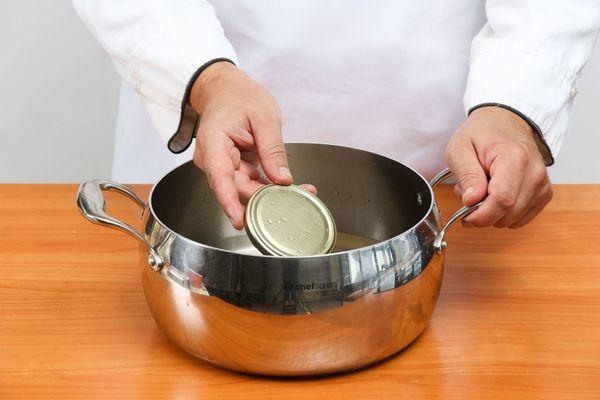
Lids with rubber seals require specific storage conditions. It's not recommended to place them in the oven or convection oven. In these situations, it's recommended to remove the seal and sterilize it in boiling water. In other situations, lids with rubber seals can be sterilized with the jars.
Sterilizing jars is a crucial step in canning. This procedure helps eliminate harmful microorganisms and extend the shelf life of preserves.
Related posts:
 How to sterilize jam jars in the microwave: methods and rules
 How long does it take to sterilize jars with steam? Home cooking instructions.
 Is it possible to sterilize empty jars in the microwave? How to do it correctly and for how many minutes?
 How to properly preserve compotes for the winter, methods for sterilizing jars, and the main problems
 How to properly sterilize jars with preserves, the best methods and duration
 Methods for planting and propagating cherries at home
 How and how long should you sterilize jars in a pot of water at home?
 Making finger-licking good eggplant caviar with peppers and tomatoes