
Apricots contain a rich vitamin complex and are beneficial both fresh and canned. Many housewives prepare apricot jam with almonds for the winter using various recipes. The jam can be made from whole apricots, slices, with or without kernels. Regardless of the preparation method, jam serves as a preventative measure against cardiovascular diseases, anemia, and low blood count.
The subtleties of making apricot jam
To ensure that your jam turns out tasty and healthy, it's important to follow a few rules when preparing it.
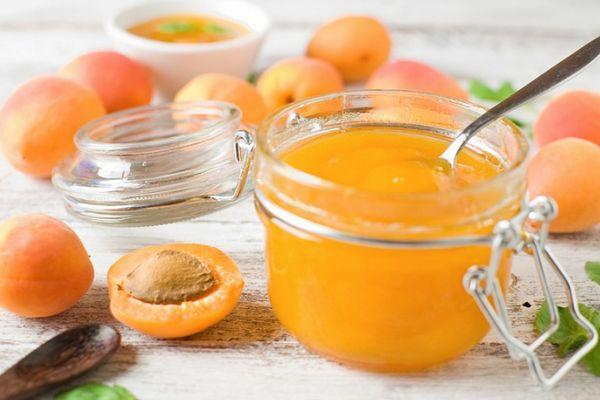
Including:
- While cooking, do not stir the fruit mixture to prevent it from losing its shape. Shake the container occasionally.
- When adding sugar to the apricots, add it gradually so it doesn't fill all the spaces between the apricots. Otherwise, the fruit will become overcooked and too soft.
- When preparing jam with seeds, you should choose varieties with sweet kernels, as they do not produce poisonous hydrocyanic acid.
- Any foam that forms on the surface should be removed from the pan, as it can spoil the taste and create bitterness.
Preparing the main ingredients
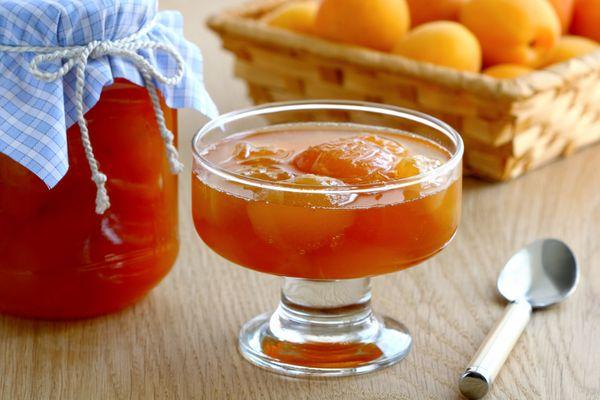
Any variety of apricots can be used for cooking. The selected fruits should be firm, undamaged, and free of dents and other defects. If using whole apricots for jam, they should be pierced in several places and blanched for 5 minutes at 80-90 degrees Celsius (176-194 degrees Fahrenheit), then immediately cooled.
The standard recipe calls for 1 kg of fruit and sugar, 250 g of water, and 100 g of nuts.
Apricot and almond jam for the winter
This classic recipe for apricot jam with almonds doesn't require any special culinary skills. To make this delicacy, simply follow these simple instructions:
- separate the fruits from the seeds or take whole fruits and stew them;
- mix the resulting mass with sugar and bring to a boil;
- add almonds and cook for 10 minutes, stirring occasionally;
- Place the finished product into sterilized jars.
Take a look Also
Apricot jam with pitted almonds
This seedless jam recipe is one of the most common. It calls for thoroughly washing the fruit, removing the stems, and cutting it in half along the groove. The fruit is placed cut-side up in a saucepan and covered with hot sugar syrup. The resulting mixture is left to sit for 24 hours, then brought to a simmer over low heat and cooked until the desired consistency is reached. Finally, vinegar essence and vanilla are added.
Apricot jam with almonds and lemon
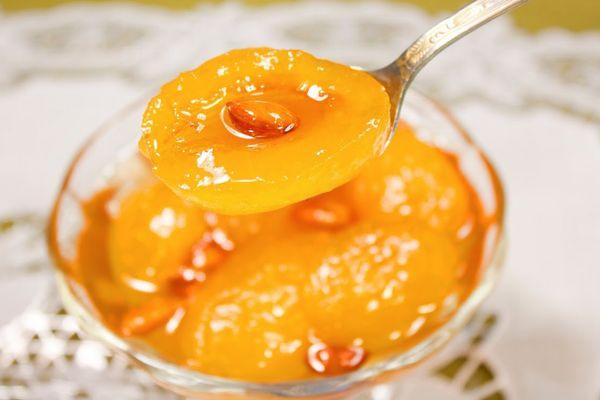
To add variety to the apricot flavor, you can add spices to the recipe. Adding lemon juice or a couple of tablespoons of zest will impart a citrus aroma. It's recommended to add half or a whole lemon per 1 kg of the main ingredient. Using more citrus may result in a tart finished product. Mix the lemon with the simmering mixture of apricots and sugar syrup. Follow the standard recipe for the remaining steps.
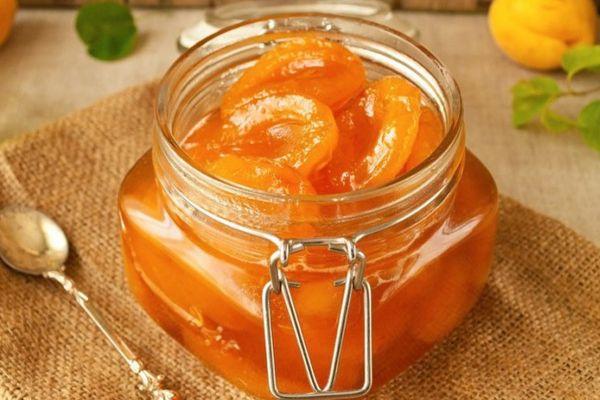
Tsar's Apricot Jam with Almonds
The most exquisite recipe is considered to be royal jam with nuts inside the fruit. To prepare it, you need:
- Carefully remove the pit from the apricots without damaging the fruit itself. To do this, you can make a small cut and insert a round-handled utensil or similar object into the indentation.
- Place an almond into the fruit's hole.
- Place the fruit in a saucepan and mix with sugar syrup.
- Constantly skimming off the foam, wait until it boils, remove from the stove and leave to stand for 10-12 hours.
- Continue cooking the resulting mass in three stages with similar time intervals.
- Pour the jam into jars and wait until it cools completely, turning the jars upside down.
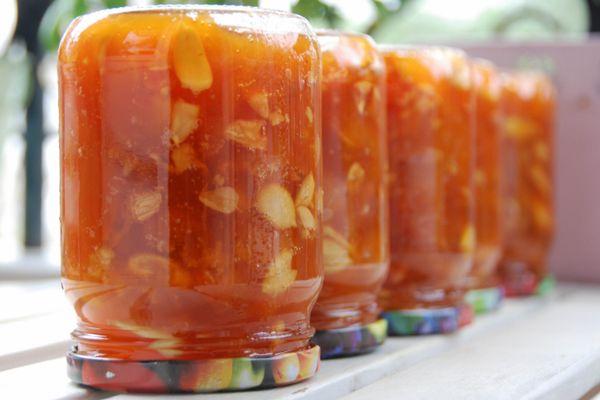
Storage of finished product
Jars for storing finished jam should be washed, rinsed with boiling water, and dried in the oven. Exposure to moisture can cause mold. When sealing the jars with tin lids, pour the jam while hot, filling the empty space completely. Jars can be left at room temperature, out of direct sunlight.
If you pack the jam when it has cooled, it is enough to cover it with parchment paper.In this case, the product should be stored in a cool, dark place. It's best to consume jam with added seeds within the first year, as prolonged storage causes the seeds to release harmful substances.
Related posts:
 14 Best Step-by-Step Recipes for Making Apricot Jam for the Winter
 What to cook with apricots for the winter and 19 best step-by-step recipes
 Simple step-by-step recipes for making melon jam for the winter and tips on choosing the fruit and storing the preserves
 27 Best Homemade Pear Jam Recipes for the Winter
 15 simple recipes for making blueberry jam at home with apple and lemon in a slow cooker
 Simple step-by-step recipes for making lingonberry jam for the winter
 12 simple recipes for making apricot jam with walnuts for the winter
 TOP 10 recipes for jam from garden and wild strawberries for the winter, in a slow cooker and on the stovetop