
For a gardener, understanding how to preserve their harvest during the cold season is incredibly important. This allows them to turn their farming hobby into a true asset, providing themselves with additional supplies for months to come. Knowing how to freeze harvested apples for the winter in a regular freezer allows you to delight your loved ones with free fruit even during the coldest months.
Peculiarities of freezing apples at home
There are some nuances that are important to consider before beginning this project. The less time passes between harvesting and freezing, the better. As for rotten and overripe fruits, despite their appetizing appearance when frozen, they will turn into a puree upon defrosting, which you're unlikely to want to eat.
That is, the fruit must be ripe enough but not damaged. To keep fruit fresh for a full year, you'll need a fairly powerful freezer. Such a freezer will preserve the fruit's nutrients and vitamins in nearly the same quantities.
Of course, fresh apples are more nutritious, but frozen apples retain 90% of the benefits of this fruit. Considering that high-quality apples can be quite difficult to find in winter, organic fruit from your garden is just the ticket.
When properly frozen, these fruits can be enjoyed on their own, combined with other foods, or in dishes. You can make compotes and other culinary feats, as the number of recipes that use apples is truly enormous.
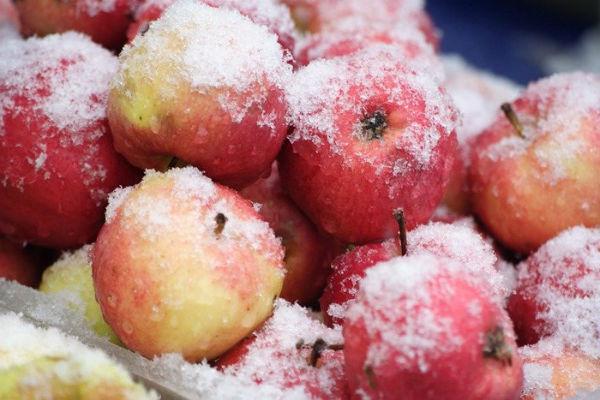
Which apple varieties are best?
Of course, the first question is which variety to choose. Really, any sweet and sour variety will do, but there are some nuances depending on the final freezing purpose. If you want to preserve the sweet flavor, Gala or Fuji are best, while Golden Delicious or Jonathan are best for making pies.
The thing is that these two varieties will be able to hold their shape much better, which is certainly important for the filling, if we are talking about baking.
As for the other varieties, it's very difficult to say which will taste better frozen for a particular person. It's worth trying different varieties to settle on one. However, even if a gardener grows only one sweet and sour apple variety, whatever it is, freezing will at least preserve its nutritional properties.
Even if the taste changes slightly, it's easy to find a dish that perfectly complements these fruits. Finally, the sheer variety of cooking methods negates the importance of choosing the apple variety, as the most suitable method can be selected depending on the apple variety.
Preparing fruits for freezing
Before storing, wash the fruit thoroughly. It's best to do this under running water. Then, wipe each apple dry. The rest depends on the specific freezing method.
Required temperature
The freezer must be cold enough. That's why you shouldn't freeze apples unless your freezer can reach -18ºC or below. Otherwise, the quality of the product will be compromised.
Methods for freezing apples for the winter
There are many ways to preserve apples in the freezer. However, the most common are the following:
- Whole fruit.
- In parts.
- Dry freezing.
- In sugar syrup.
- In the form of puree.
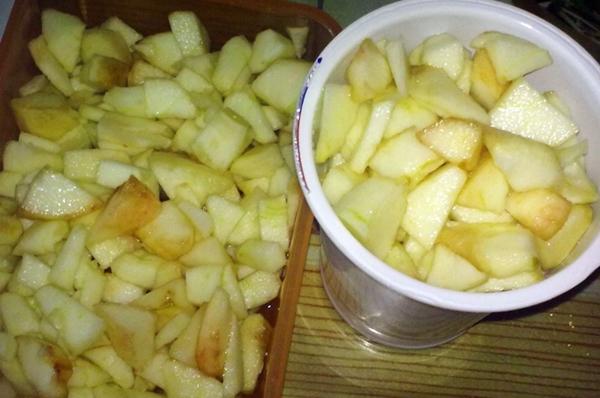
Each method has its advantages. For example, pre-sliced apples are easier to use in fruit salads, while pureed apples make a great pie filling.
Whole fruit will appeal primarily to aesthetes and those who want to preserve as many nutrients as possible. After all, this method leaves the fruit's skin intact, meaning it will lose fewer valuable components during storage. Furthermore, it's quicker to prepare.
However, other methods of freezing fruit won't take much time if you approach the process wisely. The difference in minutes spent is so small that it's practically unimportant.
When choosing a freezing method, it's important to first determine your ultimate goal. This will make it easy to determine the best form for preserving the fruit. While it's important to consider the variety, don't overemphasize it.

In its entirety
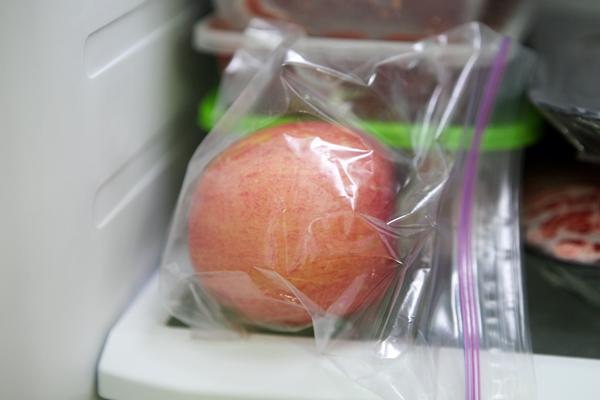
This is an interesting method, especially for those who love the look of frozen fruit. Fresh fruit is washed and thoroughly dried, after which the core is removed with a suitable knife. The apple is then placed in an ascorbic acid solution (a mixture of 15 g of ascorbic acid and 50 g of water). The fruit is left in the solution for several minutes.
The fruit is then placed in a freezer bag and stored. The fruit, prepared this way, is used, among other things, to make compote.
Even if such an apple is kept in a powerful freezer for six months, its valuable qualities will be preserved.
In slices
For many, this will be the most sophisticated and at the same time practical option. The fruit is cut into slices, then the stems and seeds are removed. After this, the fruit is laid out on a cutting board. It is important that the board is dry. Arrange the slices correctly in a single layer, avoiding any contact.
Now, without delay, place the fruit in the freezer. After three hours, pack the apples. A plastic container or bag will do. It's important to approach the packing process carefully and ensure that neither moisture nor excess air gets into the container or bag.
The sliced apples are carefully removed and then arranged in small portions. This is why you'll need several containers. Apples prepared this way, stored in a modern freezer, will be a boon for lovers of various dishes.
Freeze-drying
This method isn't easy, but it produces fruit that separates easily after freezing. Wash and dry the fruit and cut it into wedges. These slices are laid out either on a tray or on a baking sheet covered with paper. The wedges are placed in a single layer, ensuring they don't touch.
The product is then frozen for three hours. After this time, the slices are packaged either in special freezer bags or plastic containers. Whatever container is used, it must be hermetically sealed. The apples are then frozen in this form.
In sugar syrup
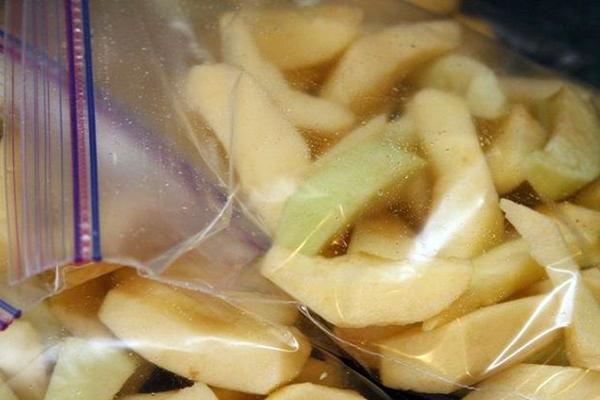
If you follow this recipe, you'll get an interesting dessert. First, make the syrup. Mix 15 grams of ascorbic acid with 450 grams of sugar and 750 grams of water. Then, add sliced apples to the mixture. The syrup should be cold. Let it sit for 24 hours.
The pieces are then scalded with boiling water, placed on baking sheets, and finally chilled in the freezer. After this, the products are placed in bags. When sealing the bags, ensure that as little air as possible remains. It's time for the final freezing.
Preparing puree
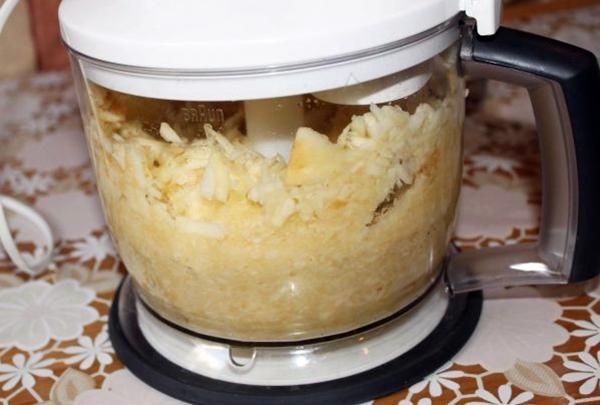
To prepare this dish, the apples need to be peeled and then sliced. Depending on your preference, you can add sugar or not. Then simmer the apples over low heat for 15-20 minutes. Allow the apples to cool.
The apples are pureed using a blender, and the resulting puree is poured into jars or containers. The resulting product is frozen. This puree makes a wonderful filling for pies or other culinary creations.
Storage
The freezer must be powerful enough to keep the apples well-preserved. The shelf life of such products is six to twelve months. Avoid storing multiple apples in one container, or at least avoid filling it to the brim.
In conclusion, it's worth noting that frozen apples are a great way to save money during the winter. While these fruits don't contain as many nutrients as fresh ones, they're at least an environmentally friendly option that can satisfy without causing any harm.
Related posts:
 Is it possible to preserve apples for the winter at home and how do they last?
 27 Best Homemade Apple Jam Recipes for the Winter
 The best recipes for pickled apples at home for the winter in a 3-liter jar, using the cold and hot methods
 Simple recipes for thick apple jam and confiture for the winter at home
 The best recipes for drying apples for the winter at home, and which fruits to choose
 Step-by-step recipes for pickling whole and sliced apples at home for the winter in jars
 14 Best Recipes for Making Whole Apple Compote for the Winter
 13 Best Recipes for Making Amber Apple Jam in Slices for the Winter