
- Description and characteristics of the Bull's Heart tomato
- Advantages and disadvantages
- Varieties of the variety
- How to plant a tomato in open ground?
- When to plant tomatoes?
- Preparing seeds for planting
- Planting seeds for seedlings
- The intricacies of picking tomato seedlings
- Growing in a greenhouse
- Growing in open ground
- Features of plant care
- Watering, fertilizing, pollination
- Mulching, tying
- Pinching out side shoots, shaping the bush and rationing the yield
- Diseases and pests
- Ventilation of the greenhouse
- Harvesting, ripening, and use of the crop
- Preparing seeds for planting next season
- Reviews from gardeners who planted
The Bull's Heart tomato is a sweet and fleshy vegetable, somewhat reminiscent of a heart in shape. It's less watery than other tomato varieties. When grown properly, some fruits can weigh up to 0.5 kilograms. This variety isn't grown by large agricultural companies and is rarely available at the market. However, it's a favorite among gardeners. All gardeners should learn how to grow this magnificent variety.
Description and characteristics of the Bull's Heart tomato
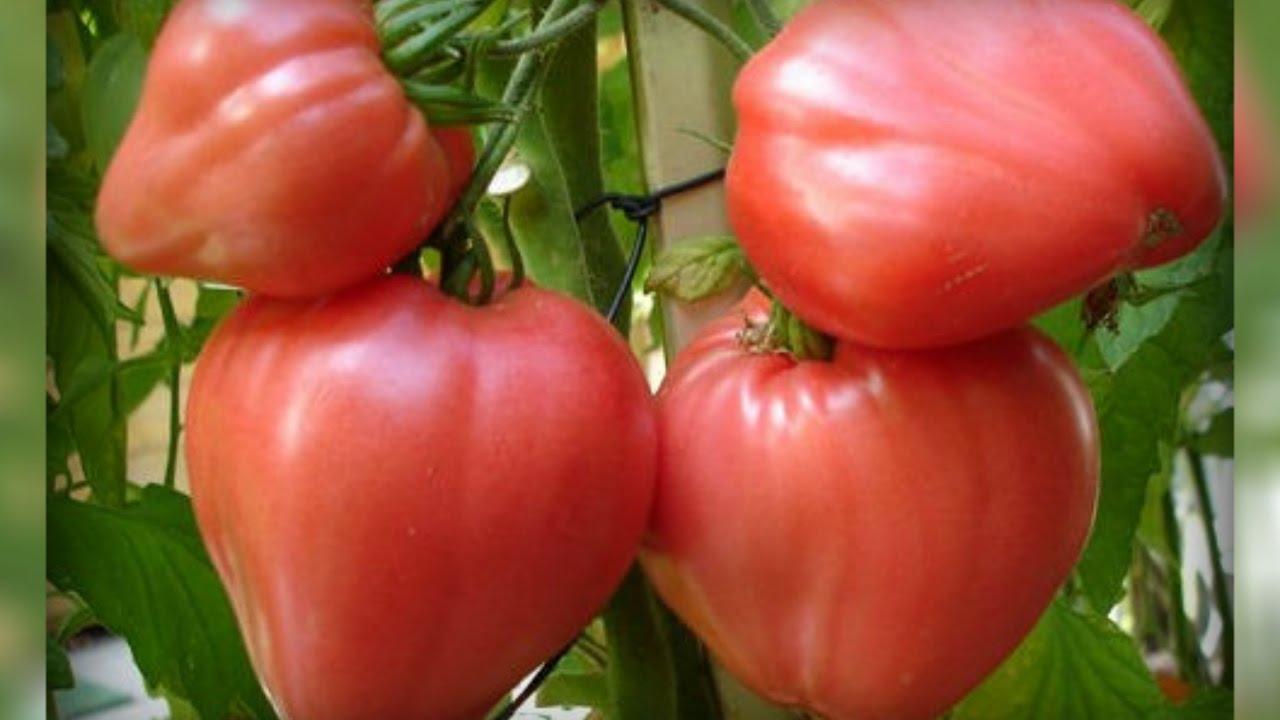
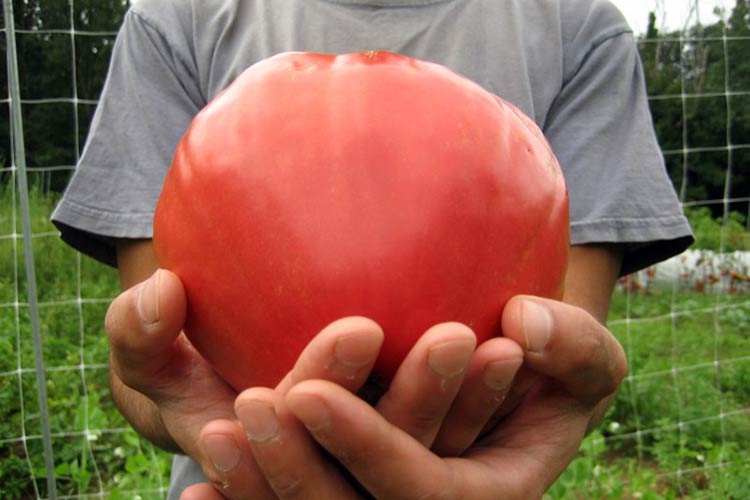
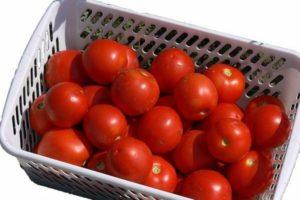
The Bull's Heart tomato, although fleshy, is juicy and sweet, producing larger fruits than other tomato varieties. It is grown for salads and canning. These tomatoes are disease-resistant, store well, and retain their flavor even after processing.
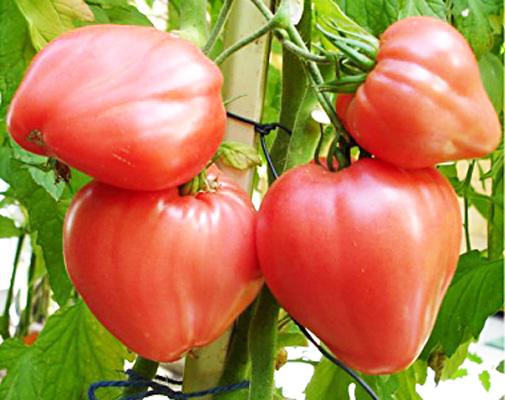
Tomatoes grow on tall, spreading bushes, reaching 1.5 meters in height. Tomatoes of this variety ripen only 132 days after the first shoots emerge. Fruits of varying shapes and sizes can grow on a single stem. The lowest inflorescences typically bear up to three large fruits. Smaller, oval-shaped tomatoes grow at the top of the bush. The stem must be tied as it develops. This variety produces up to 6-8 clusters and then stops growing. It is a determinate variety.
The tomatoes themselves are raspberry-red. However, breeders have developed several varieties of this cultivar. Some produce pink, yellow, dark red, and brown tomatoes. The leaves are green and medium-sized. The skin is thick and resistant to cracking. A single bunch can hold up to five tomatoes.
This variety has gained popularity among gardeners due to its high yield. It's much higher when grown in a greenhouse. A single large plant can yield up to 12 kilograms of ripe tomatoes. If grown outdoors, they may not have time to ripen. This is a late-ripening variety. In a garden bed, its yield is up to 5-8 kilograms.
Advantages and disadvantages
Advantages:
- excellent yield;
- simultaneous tying of brushes;
- the flower brush is often laid down;
- The planted seedlings have time to ripen in open ground.
Flaws:
- needs good fertilization;
- stops forming new ovaries early;
- growth is limited to a flower cluster at the top of the bush;
- forms many side shoots that need to be removed;
- the bush needs to be tied up;
- a stem loaded with ovaries can often get sick.
Varieties of the variety
There are several varieties of Bull's Heart tomatoes. All have a similar shape. However, they differ in the color of the ripe fruit and taste.
Description of varieties:
- Pink.
The fruits are large, pinkish-crimson in color. They ripen late and have a long shelf life. They are disease-resistant. One bush yields 5-12 kilograms. They are grown for salads and tomato juice.
- Red.
The fruits are large, fleshy, and red in color. The flesh inside is very firm. Fruits of varying weights ripen on a single bush. The yield is average.
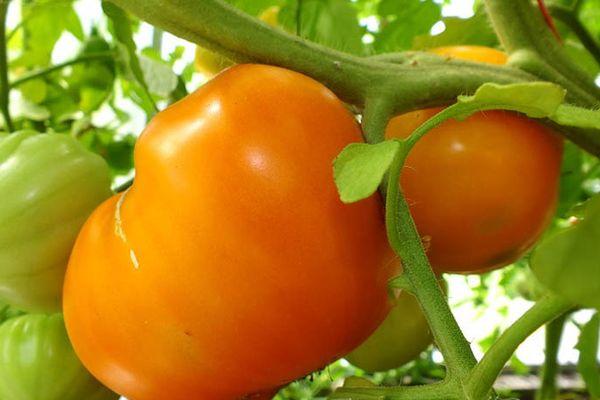
- Orange.
They are characterized by a low yield. They are best planted in a greenhouse. The fruits are large, orange, and cone-shaped. The flavor is sweet and sour.
- Golden.
Yellow tomatoes with a sweet taste. The fruits are large. The yield is low (up to 8 kilograms).
- Black.
Ripe fruits are a brownish-burgundy color. They are large in appearance, have tender flesh, and few seeds. They love sunlight. A single bush can produce up to 12 kilograms.
- Giant F
Large-fruited tomatoes. Each one weighs from 0.2 to 0.5 kilograms or more. They are red in color. The flesh is tender and sweet.
How to plant a tomato in open ground?
Tomatoes are typically propagated using seedlings. This method allows for an early harvest even in open ground. Tomatoes are grown in beds or greenhouses. The choice of planting location depends on the climate of the specific region.
Given the long ripening period of tomatoes, they are best planted in garden beds in warm climates. In areas with harsh climates and short summers, tomatoes are planted only in greenhouses.
When to plant tomatoes?
Tomatoes are planted in the garden as seedlings. At this point, the seedlings are already 1.5-2 months old. The seeds are first sown in small trays in February or early March. For 60 seedlings, you'll need two 30 x 40 cm boxes. The depth of the container is about 15 cm. The seedlings are transplanted into the garden bed at the end of May.
Preparing seeds for planting
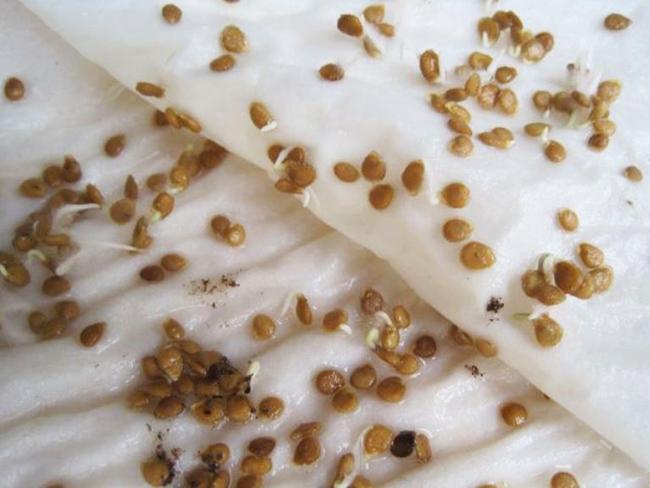
Before planting, disinfect the seeds in a weak solution of potassium permanganate. The seeds can also be treated with Fitosporin. Soak the seeds in water for at least 12 hours before sowing.
Planting seeds for seedlings
Seeds for seedlings should be sown in small wooden or plastic boxes. The soil should be well-drained and consist of soil, humus, sand, and fertilizer. You can buy ready-made peat substrate at the store.
Sow seeds 2 centimeters deep. First, moisten the soil with warm water. Cover the soil with plastic film. Remove the film when seedlings emerge. Water the soil regularly and avoid allowing it to dry out. Feed the seedlings with a solution of organic matter and ash. If the seedlings are growing in a greenhouse, avoid overwatering the soil. Otherwise, the plant may become diseased.
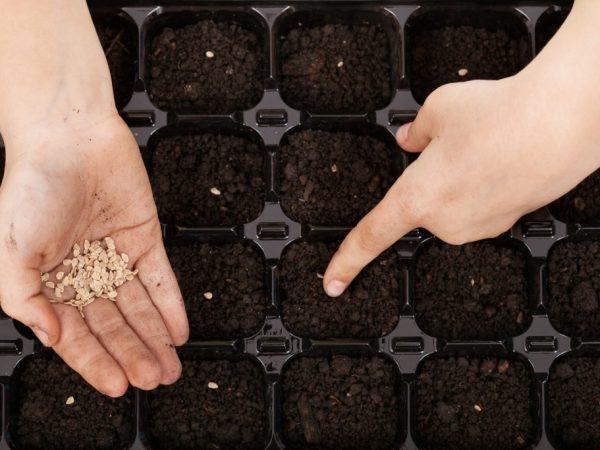
Small trays with seeds are kept on a windowsill or in a greenhouse. The room should be well heated. When planting seedlings early, supplemental lighting is provided during the dark hours.
The intricacies of picking tomato seedlings
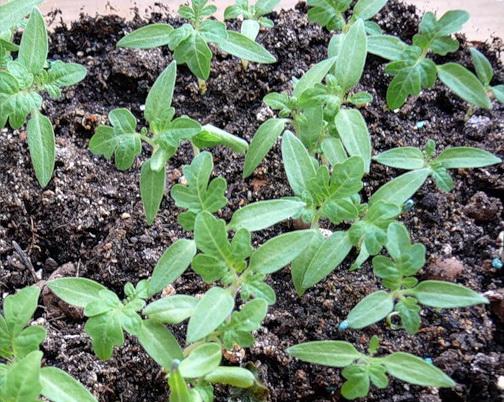
When the seedlings have two true leaves, they are pricked out. The plant is removed from the soil and replanted in a larger container. This slows down the growth of the foliage slightly, but allows the root system to develop properly.
Growing in a greenhouse
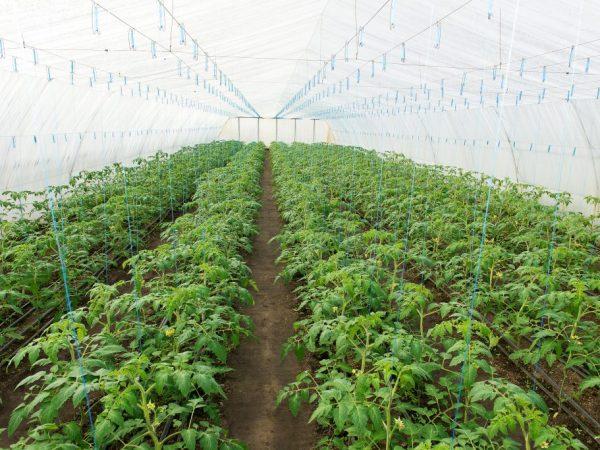
Seedlings are planted in a heated greenhouse in April. There should be no more than four plants per square meter. After planting, the tomatoes are watered and tied up. Each bush should have one or two stems. The second stem is formed from the first shoot. The remaining leaves and shoots are removed.
Each plant should produce eight fruit clusters. A good harvest is achieved with regular watering and fertilization. Greenhouse-grown tomatoes require additional pollination.
Growing in open ground
Before planting in the garden, the seedlings are hardened off. They are first sprayed with a Zircon solution, which boosts their immunity. Then, the young plants are acclimated to the new conditions for two weeks. The plants are planted in the garden at the end of May, with 3-4 stems per square meter.
The soil itself is prepared for planting in the fall. It is dug over and fertilized with humus. Tomato beds are used after carrots, cabbage, onions, and cucumbers. In the spring, shortly before planting, the soil is dug over again and leveled. Organic and mineral fertilizers are added to the soil.
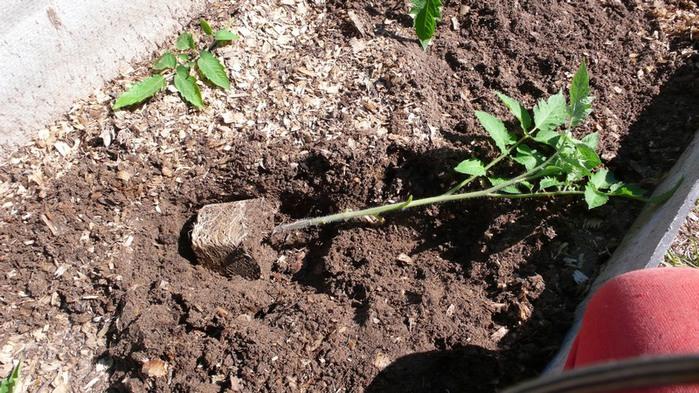
Tomatoes love full sun. Choose a sunny spot for them. The seedlings are planted deep in the soil, but the leaves are not covered with soil. Water the tomatoes immediately afterward.
Features of plant care
Tomato care (step by step):
- watering;
- top dressing;
- bush formation and pinching out side shoots;
- tying up long stems;
- loosening the soil and laying mulch;
- pollination;
- pest control.
Watering, fertilizing, pollination
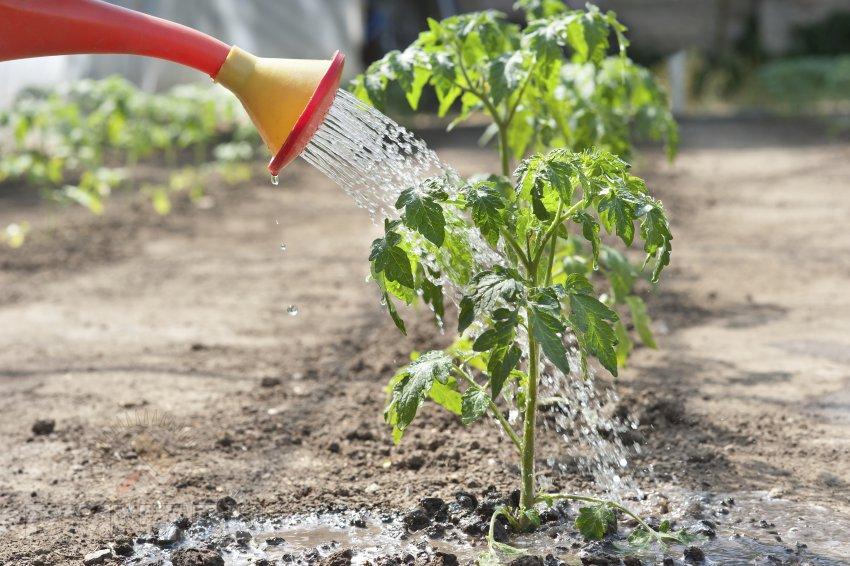
Regular watering is recommended for tomatoes. Water two or three times a week. Drip irrigation can be used. Water should be soft and warm. Tap water is not recommended. It's best to water tomatoes after full sun or in the evening. The soil should be moist to a depth of 30 centimeters.
Tomatoes need to be fertilized on time. Every two weeks. Avoid overfertilizing them. Tomatoes are usually fertilized several times. The first time is when the seedlings are growing. Then, before flowering, and again when the fruit sets.
Fertilizers are carefully applied to the roots. Fertilizers are not given while tomatoes are ripening, as this can lead to excessive foliage growth. Initially, seedlings are fertilized with phosphorus and nitrogen supplements, and then with potassium when the fruit is forming.
Tomato yield depends on good pollination. Pollen quality deteriorates at temperatures below 10°C (50°F) or above 35°C (95°F). Overheating often occurs in greenhouses, so regular ventilation is essential. If the fruits are grown in a greenhouse, they require additional pollination. This is achieved by gently shaking the plants.
It is also recommended to place honey plants (rapeseed, mustard, basil) that are loved by bees near the greenhouses – this way the insects will get inside the greenhouse.
Mulching, tying
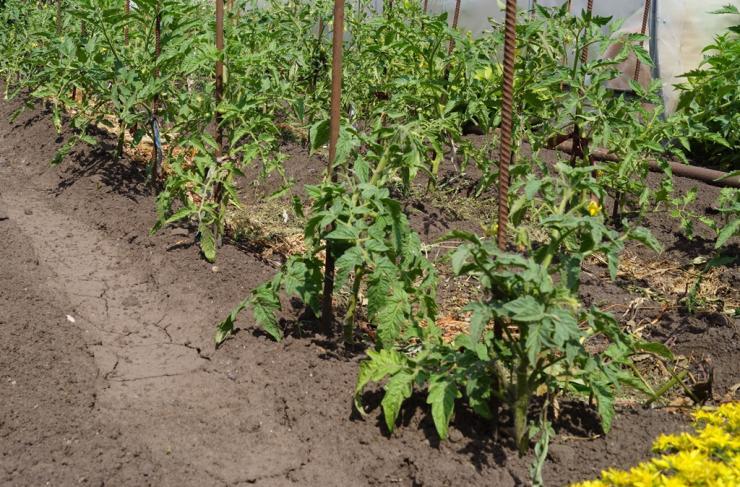
The soil around the bushes is regularly loosened, weeded, and the bushes themselves are topped with soil. You can protect the tomatoes with a thin layer of mulch. This is made from straw or dry tree bark.
The bushes must be tied up, as the plant has tall stems. Tomatoes require support. This is made from wooden stakes up to 1.8 meters high. Several stakes can be placed near a single plant. The bush is tied to the stake with rope.
Pinching out side shoots, shaping the bush and rationing the yield
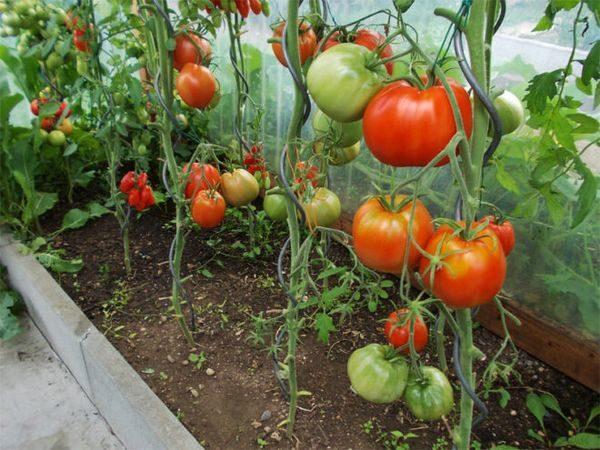
The bush should have one or two stems. The second stem is formed from a side shoot. Lower leaves and shoots should be regularly removed, except for the last leaflet. Excess shoots take away nutrients and slow the plant's growth. Because of them, the fruit ripens later.
For a good harvest, it is enough for 8 clusters of fruits to remain on the bush.
It's recommended to leave only two tomatoes on the very first cluster. It's best to remove the rest, as they can weaken the young plant. The remaining clusters should have five fruits each.
Diseases and pests
This tomato variety is disease-resistant. It can sometimes be affected by pests. Tomatoes can become infected with late blight if overwatered. Brownish spots appear on the leaves, stems, and fruits. Tomatoes don't like overly wet and cold soil. Plants affected by fungus are removed from the garden bed. The remaining plants are treated with fungicides such as Ridomil Gold or Bravo. Alternatively, you can use folk remedies such as garlic infusion, solutions based on wood ash, copper sulfate, laundry soap, and table salt.
Ventilation of the greenhouse
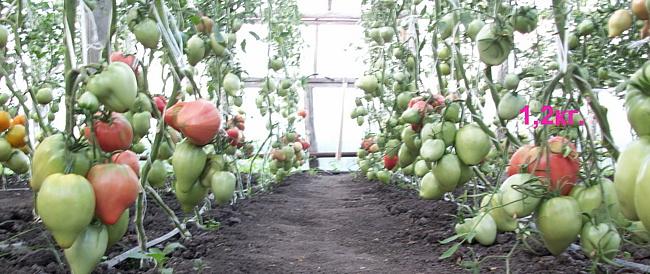
Stagnant air and excess moisture can lead to diseases. To prevent this, the greenhouse must be regularly ventilated. Excessively hot air can reduce the quality of pollen. The greenhouse should be warm but cool.
Harvesting, ripening, and use of the crop
Tomato harvesting begins as the fruits ripen. They are typically picked from early August to mid-September. Fruits that aren't ripe before frost are also removed from the garden. They ripen gradually in a crate. The large, sweet tomatoes are used in salads. They are also used to make tomato juice, paste, sauce, ketchup, and adjika.
Preparing seeds for planting next season
Seeds for planting can be purchased ready-made or dried yourself. Only ripe fruits are used for harvesting. They are cut in half. The pulp containing the seeds is scooped out, the seeds are separated, and they are washed with clean water. The seeds are dried on paper. The dried seeds are stored in a glass jar with a lid.
Reviews from gardeners who planted
Gardeners associate this variety with summer and sunshine. They are delicious to eat, picked straight from the bush. They produce a good yield. Excess leaves and stems must be regularly removed from the bush, otherwise the yield will be low. Gardeners recommend avoiding planting seedlings too close together. Each plant should have support.
Related posts:
 Description of the best varieties of black tomatoes for open ground and greenhouses
 What varieties of tomatoes are best to plant in a polycarbonate greenhouse?
 16 Best Quick Pickled Tomato Recipes for the Winter
 15 simple recipes for pickling tomatoes in jars for the winter
 TOP 17 recipes for pickled sweet tomatoes for the winter
 Description of the best tomato varieties for open ground in the central zone
 Recipes for pickled tomatoes in apple juice for the winter – finger-licking good
 The 14 Best Tomato and Aspirin Recipes for a 3-liter Jar for the Winter