
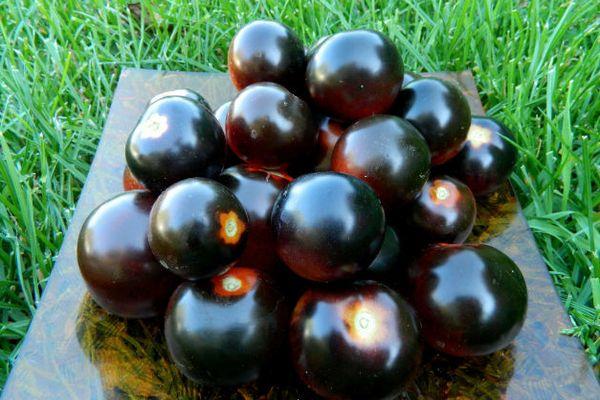
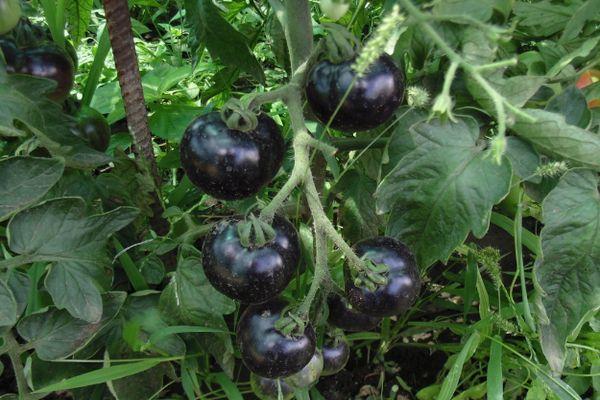
Gardeners love the Black Bunch F1 tomato for its unique appearance, excellent taste, and rich vitamin and mineral content. The Black Bunch hybrid tomato variety is distinguished by its small fruit size and beautiful dark purple color, giving it a cherry-like appearance.
What is a Black Bunch tomato?
Characteristics and description of the variety:
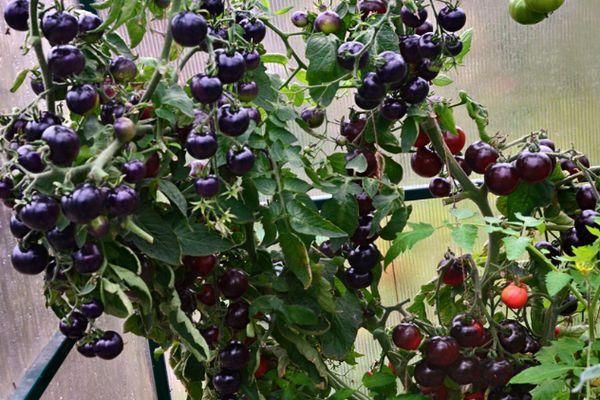
- Black Bunch tomatoes are arranged on a truss like blackcurrant clusters. This cluster-like formation and ripening of the fruit distinguishes this variety from others.
- First generation F1 hybrid.
- The Black Bunch tomato variety was developed through a long-term selection process, crossing small-fruited tomatoes with wild dark-colored tomatoes that grow in Chile.
- Suitable for growing in greenhouses, open ground, and hotbeds that require insulation during frosts and cold weather.
- This variety is indeterminate, not a standard bush. The average plant height is 1.5 m.
- The stem forms thick, grows strong, and curls strongly.
- The number of leaves is average.
- Several simple clusters form on the stem, on which the fruits grow.
- The roots are developed and grow without deepening.
The leaves have an interesting shape: they are diamond-shaped, dark green, and wrinkled.
The first inflorescence appears above the 7th leaf. Subsequent inflorescences form every other leaf. A single inflorescence yields up to 10 fruits.
Black Bunch is an early-ripening variety, with a growing season lasting almost 80 days. This period begins after the seeds are sown in the ground, and the first shoots emerge, which are then transplanted into the ground, either outdoors or in a greenhouse. These tomatoes transport well and retain their marketable appearance even after long periods of storage in crates.
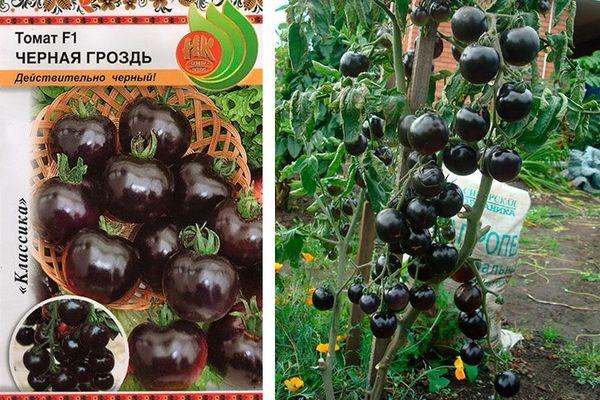
The plants are resistant to most diseases that affect nightshade crops. A distinctive feature is their high yield. With proper care, according to gardeners and horticulturists, a single bush can yield almost 6 kg of delicious fruit.

Description of the fruits of the Black Bunch variety:
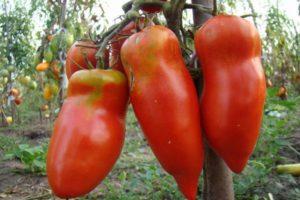
- The fruit has a slightly ribbed shape and is round.
- The diameter of the tomatoes is 5 cm.
- The weight of one tomato varies from 50 to 70 g.
- The fruits are covered with a thin, dense, smooth skin.
- The pulp inside the tomatoes is dense, fleshy, and dark red in color.
- The color of ripe fruits is black-purple, eggplant-like, and unripe tomatoes are dark green, then they turn pink, then blue, and then dark blue spots appear.
- In the middle, the number of seed chambers can be one or two.
- The taste of tomatoes is reminiscent of plums: a tomato flavor with a sweet undertone.
Vegetable growers have positive reviews of this variety. The hybrid Black Bunch variety is used for fresh salads, sandwiches, hot dishes, and canning. The fruits do not crack during canning and remain whole. Tomato juice can be made in small quantities rather than in large quantities. Tomatoes of this variety are excellent for making pastes, sauces, and ketchups.
How to Grow Tomatoes
Breeders have succeeded in developing a tomato variety that has gained popularity among consumers due to its black color and excellent taste.
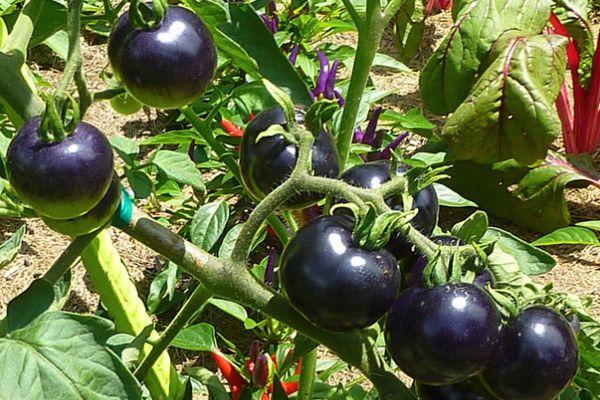
The black color comes from anthocyanins, which have a positive effect on the human body. Specifically, they improve skin appearance, stimulate heart and brain function, and fight cholesterol.
For outdoor cultivation, it's recommended to choose a sunny site protected from strong winds. The soil for planting seedlings should be amended with organic fertilizer and loosened to ensure a light, neutral soil.
The Black Bunch variety can be planted anywhere in the country. Before planting, treat the seeds with a weak solution of potassium permanganate. Seedlings are sown in March. Make the seedbeds 2 cm deep in the boxes, with 2 cm between each hole. The temperature in the room where the boxes with seedlings will be kept should not fall below +25ºС.
When three leaves appear, transplant the seedlings. The bushes are transplanted into containers up to 300 ml in volume. Fertilize the seedlings with minerals if necessary. Harden off the plants two weeks before transferring them to their permanent growing site. At 50 days old, transplant them into open ground or a greenhouse.
Plants are trained into a single stem, and side shoots should be removed every 10 days. During the growing and vegetative periods, fertilizing and preventative spraying with pest control agents can be done occasionally. If the bush is leaning, it should be tied to supports.
Related posts:
 Description of the best varieties of black tomatoes for open ground and greenhouses
 Description of 30 varieties and types of Muscat grapes, planting, cultivation and care
 Description of the Sweet Bunch tomato, reviews, and yield of the variety
 Description of the hybrid tomato Chudo-Grozd F1, cultivation of the variety
 80 Best Eggplant Varieties for Different Regions with Descriptions and Characteristics
 Description and characteristics of the Red Bunch tomato variety, its yield
 Planting times and care guidelines for black radish in open ground
 Description and characteristics of the 60 best sea buckthorn varieties, how to choose depending on the region